

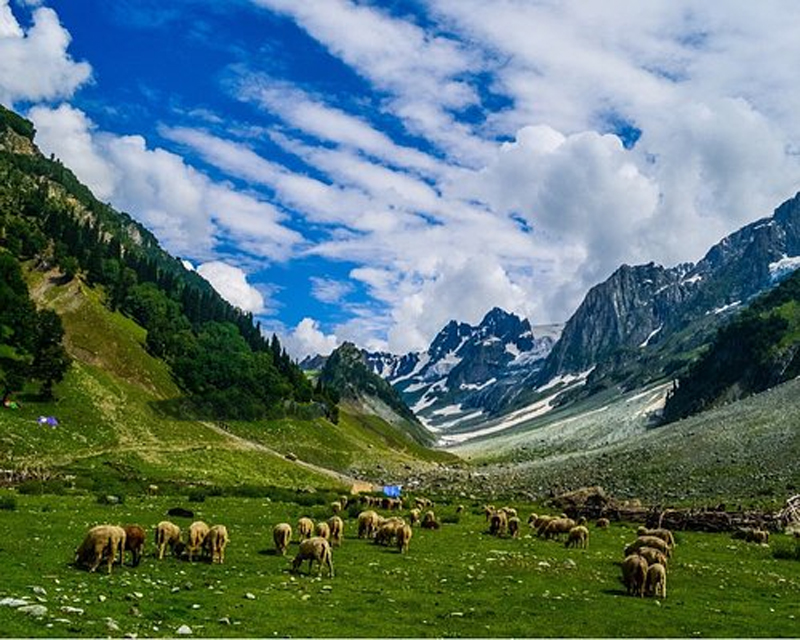
The Himalayan brown bear, an emblem of Kashmir’s rich biodiversity, now faces an increasingly uncertain future as its habitat in Sonamarg is carved up by growing tourism and infrastructural projects. The findings from the recent NGT report, brought to light by the Jammu and Kashmir Pollution Control Committee, depict a grim scenario of habitat encroachment, rampant waste disposal, and neglect that now threatens the bear population in Sonamarg. The once serene haven for diverse wildlife has become an ecological concern as expanding tourism activities and insufficient waste management further exacerbate habitat loss. It is crucial to address these challenges, not only to preserve the brown bear population but to protect the region’s ecological balance and natural heritage.
Sonamarg has long been cherished as a scenic gem in Kashmir, attracting visitors for its natural beauty and spiritual importance as a stopover for Amarnath Yatra pilgrims. However, as noted in the NGT report, tourism-related construction-including hotels, guesthouses, markets, and restaurants-has fragmented the region’s wilderness. As tourism grows unchecked, so does the human footprint, pushing animals, including the Himalayan brown bear, out of their natural habitats. Habitat fragmentation has severe consequences for wildlife, often leading to the isolation of animal populations and disruption of natural foraging and breeding patterns. The introduction of roads and tunnels further compounds this disruption, exposing animals to more frequent human interactions and making them vulnerable to road accidents and poaching. The Himalayan brown bear, already endangered, now finds its habitat and food sources diminishing rapidly, with 75 percent of its diet reportedly consisting of human waste. This diet change not only reflects an alarming dependency on human trash but poses health risks to the animals, from plastic ingestion to nutritional imbalance.
Central to this problem is the ineffective waste management system in Sonamarg. According to the JKPC report, the region generates 7-10 metric tonnes of waste daily, spiking to 20 metric tonnes in peak seasons. The Sonamarg Development Authority has a facility for solid waste management, yet the conditions around it are distressing. Untreated waste piles up around the facility, while heaps of improperly managed compost emit odours and attract animals like bears to feed off the garbage. Bears, who should be hunting or foraging in the wild, are drawn to these garbage dumps, increasing the risk of human-wildlife conflict. This dependency also leads to changes in bear behaviour, making them more aggressive or dependent on easy-to-access food sources, ultimately affecting their survival skills and natural behaviours.
To safeguard Sonamarg’s wildlife and preserve its ecological beauty, a strategic, balanced approach is necessary. The NGT’s directives for improved waste management-such as secondary waste segregation, fencing around facilities, prohibiting open dumping, and installing weighbridges-are essential to mitigate some of the waste issues. Environmental authorities must implement these directives immediately and conduct ongoing monitoring to ensure compliance. Penalising the Sonamarg Development Authority for violations is an essential accountability measure; however, proactive efforts to create a sustainable waste management model must accompany enforcement.
Kashmir’s tourism potential is inseparable from its natural wealth, which includes unique flora and fauna like the Himalayan brown bear. Long-term measures to safeguard the brown bear’s habitat should include habitat restoration efforts, such as reforestation programs and establishing wildlife corridors to reduce the impact of fragmented land. It is time for tourism stakeholders, local authorities, and the state to collaborate on a tourism model that respects ecological limits. Adopting sustainable tourism practices-such as limiting tourist numbers, reducing waste, and promoting eco-friendly lodging-can preserve the environment while allowing people to experience Kashmir’s natural beauty responsibly. This issue is not just about saving one species; it’s about safeguarding an entire ecosystem that forms the heart of Kashmir’s natural identity. Through a combination of policy reform, community engagement, and stringent enforcement, Sonamarg can continue to thrive as a destination where nature and tourism coexist harmoniously.
 Follow our WhatsApp channel
