

NEW DELHI, Apr 10 : The Government on Friday assured that the country’s power, fuel and maritime sectors remain stable despite the evolving situation in West Asia, as multiple ministries briefed the media on current preparedness and measures being undertaken.
The Ministry of Power stated that India’s electricity system continues to function with resilience, supported by an installed capacity of more than 531 GW, over half of which comes from non-fossil sources.
With a strong transmission backbone of nearly five lakh circuit kilometres and an inter-regional transfer capability of about 120 GW, the system remains robust and well-positioned to handle both immediate and long-term demand.
Coal stocks are being closely monitored, imported coal-based plants are being fully utilised, and maintenance of thermal stations has been deferred to add nearly 10,000 MW of additional capacity during the summer.
The commissioning of thermal, hydro, renewable, battery storage and pumped storage projects is being accelerated between April and June. In the long term, the country is steering towards energy independence, with total capacity projected to rise to about 874 GW by 2031-32 and non-fossil energy expected to exceed 67 per cent of the mix.
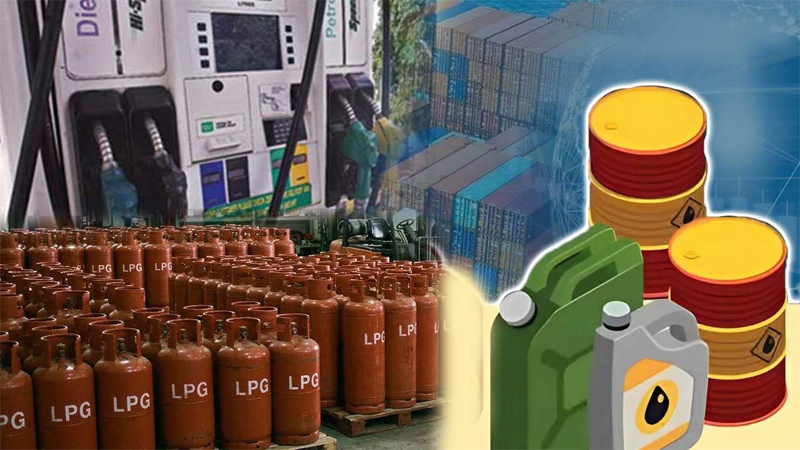
On the fuel availability front, the Ministry of Petroleum and Natural Gas confirmed that domestic supplies of petrol, diesel, LPG and PNG remain adequate. Citizens were urged to avoid panic buying and rely only on official communication. Digital LPG bookings have risen sharply to 98 percent across the industry, and deliveries continue without disruption, supported by 92 percent Delivery Authentication Code-based verification.
Enforcement agencies have intensified action to curb hoarding, with nearly 1.2 lakh raids conducted so far, leading to the seizure of over 57,000 cylinders, more than 950 FIRs and 229 arrests. Oil Marketing Companies have also strengthened monitoring through surprise inspections and have penalised over 200 LPG distributors for violations.
Commercial LPG allocation has been restored to 70 per cent of pre-crisis levels, including reform-linked allotments. Distribution of 5-kg Free Trade LPG cylinders has been significantly scaled up to support migrant workers and vulnerable groups, with around 11 lakh cylinders sold since March 23.
Natural gas supply to priority sectors remains fully protected, and allocations to fertilizer plants and industrial consumers have been enhanced. Since March, about 4.05 lakh PNG connections have already been gasified, and another 4.41 lakh consumers have registered for new connections. A new framework under the Essential Commodities Act has streamlined pipeline expansion nationwide, enabling faster PNG rollout.
The Ministry reported that refineries continue to operate at high capacity with sufficient crude stocks, ensuring uninterrupted production of petrol, diesel and LPG. Retail fuel prices remain unchanged.
India’s port operations also remain smooth. The Ministry of Ports, Shipping and Waterways confirmed that there is no congestion at any major port, and container accumulation has dropped sharply in recent weeks.
At Kandla Port, container numbers have reduced by 97 per cent while JNPT has seen a 92 per cent reduction. Adequate bunker fuel supplies are available, and no incidents involving Indian-flagged vessels have been reported in the past 24 hours.
The Ministry of External Affairs shared updates on the safety of Indian nationals amid ongoing tensions in West Asia. Since February 28, nearly 8.43 lakh passengers have travelled from the region to India on scheduled and non-scheduled flights operating through open air corridors.
Indian Missions across the Gulf and West Asia continue to operate 24×7 helplines and are assisting citizens through coordinated evacuation routes from Iran, Israel, Lebanon, Iraq, Kuwait and other affected areas.
India expressed deep concern over reports of rising civilian casualties in Lebanon, emphasising the importance of protecting civilians and respecting sovereignty under international law. The Embassy in Beirut remains in close touch with the Indian community to ensure their safety.
India is also supporting neighbouring countries during the crisis. It recently supplied 38 MT of petroleum products to Sri Lanka, while a Government-to-Government agreement on oil and gas supply to Mauritius is nearing finalisation.
(UNI)
 Follow our WhatsApp channel
