

Of People & For People
Poonam I Kaushish
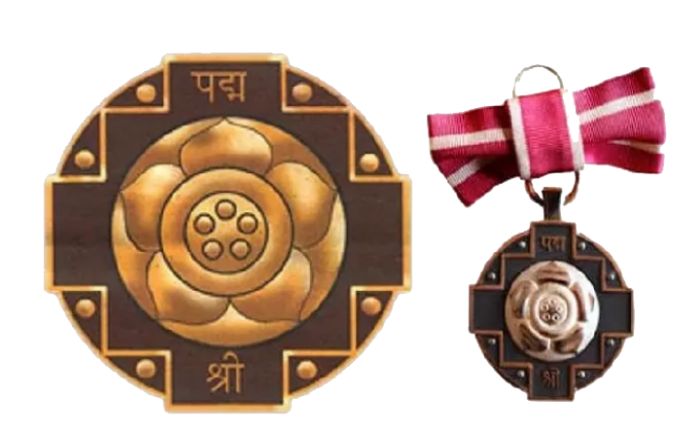
Prestige and honour vs darbari politics? Come Republic Day 26 January eve Padma Awards are grandiosely presented as a celebration of excellence. Many applaud, some sulk and the Opposition criticize triggering a political backlash, with Parties accusing Modi Government of turning national honours into a tool of political signalling. Whereby, the increased tu-tu-mein-mein by our netagan yet again puts a question mark on the civilian Roll of Honour.
Like prestigious State honours worldwide, Padma awards have always had a political angle and a national facet — and this year is no different. At first glance, Government seems to have made a genuine effort to look ideologically inclusive. Names associated with rival political traditions and sharp critics feature on the list. But a closer look suggests that this inclusivity is carefully curated and politically safe.
By bestowing Padma Vibhushans across the political spectrum to CPM founding leader and ex-Kerala Chief Minister Achuthanandan and JMM patriarch Shibu Soren marks an exciting turn in Opposition politics, and possibly allows a senior Communist leader to be felicitated for the first time in decades. Both leaders’ families have welcomed the awards.
The symbolism is authoritative, yet risk free. There is no possibility of refusal, no chance of a speech that challenges the State, no discomfort for Government. The honour allows it to claim moral breadth while ensuring total narrative control. Their political legacy matters in regions where BJP is trying to expand its footprint.
And like every year, they also reveal something deeper about how power seeks legitimacy. The 2026 list is no different. In fact, it is a textbook example of what can be called the politics of recognition.
Three of five laureates who received Padma Vibhushan hail from Kerala, a State that goes to polls this summer and where BJP has never gained more than a toehold, as does Tamil Nadu and West Bengal which too votes mid-year have netted 13 awards and 11.
Opposition angst against “election engineering” is understandable as many who feature as awardees hail from communities and regions which might play a crucial role in upcoming polls to maximise political visibility. Think. These three States which total 18% of India’s population secured 37% awards, reinforcing allegations of a political quota. Of five Padma Vibhushans, three have gone to Kerala public figures.
The fiercest reaction, however, has come from Maharashtra which delivered a blockbuster victory to NDA recently and was suitably rewarded with 15 awards. Padma Bhushan for former Governor Koshyari has reopened old political wounds. His 2019-2023 tenure was marked by controversy over swearing-in the Fadnavis Government in 2019 and remarks on Chhatrapati Shivaji Maharaj and social reformer Jyotiba Phule.
Friend-turned-bitter foe Thackeray’s Shiv Sena dubbed it “insult to Maharashtra,” alleging Centre had rewarded a person who had demeaned State’s icons and Constitutional values. Even as Koshyari identifying himself as a RSS worker dismissed criticism. “I do not work for anyone’s appreciation or criticism.”
The list also includes many people who were ideologically aligned to the ruling dispensation: RSS’s P Narayanan, 90, State Convener of Swadeshi Jagran Manch in Kerala and Natesan, a backward Hindu Ezhava community leader and General Secretary of Sree Narayana Dharma Paripalana Yogam who has faced frequent backlash over anti-Muslim remarks and calling for Hindu unity awarded Padma Vibhushans.
Beyond the political messaging, the awards are also important for unsung heroes, ordinary Indians who have made extraordinary, if somewhat little-known, contributions to public life. Grassroots workers from tribal belts or remote regions are elevated as the new face of Padma Awards. This is laudable.
Like the neonatologist who established Asia’s first human milk bank, a former bus conductor who set up India’s largest free books and journals library, an ex-railway guard who became a distinguished Dalit author, a guardian of Bundelkhand marital folk traditions, a Karbi folk singer, a painter who revitalized a 3000-year-old art form etc.
Certainly, the prestige of these awards is uplifted by the toil and fervor of aam Indians, many of whom have worked tirelessly and done remarkable work for decades struggling against the vicissitudes of life and systemic discrimination under difficult conditions. Exemplifying the dedication of ordinary citizens whose commitment to democratic values has not just endured every challenge thrown their way but also built the country over seven decades.
But politically, it serves another purpose. Their lives are outside ideological battles. They have no public record of dissent. No sharp criticism of policy. No inconvenient questions. By foregrounding them, the awards can be projected as people centric while quietly sidelining the outspoken intellectual and activist class that has traditionally questioned the State.
However, there is a striking omission. Of critics: political or social. voices which shape public debate. By honouring rivals of the past and ignoring challengers of the present, the list becomes a safe space. Even its diversity is carefully managed. It offends no one who actually matters in today’s political contest.
Raising a moot point: Does this kind of posthumous outreach and selective inclusivity actually strengthen the credibility of Padma Awards? Or does it make them feel increasingly hollow to a public that can clearly see the difference between honouring legacy and engaging with living dissent?
From one angle, supporters argue that merit has finally triumphed over ideology. From another, critics see tactical honours designed to woo specific communities and regions while keeping genuine dissent firmly outside the frame. And from a third perspective, the awards appear to operate as a closed loop, rewarding those who are silent, symbolic, or institutionally aligned.
Instituted in January 1954, the Padma Awards were to honour citizens of impeccable integrity who had excelled in a field and made stellar contributions in art, literature, science, public service and nation building.
Sadly, successive Governments treated these as favours to be bestowed in exchange of personal loyalty while ignoring deserving people in civil society. Never mind, it lowers the value, prestige and dignity of the awards.
Given the notoriety the awards generate every year, some aver they be “scrapped.” The selection process is wrong, merit is no longer the criteria, there is no transparency and people have lost faith. Others argue, the awards are necessary as a form of national recognition for meaningful contribution to society.
What next? Time has come to cry a halt to competitive ‘awardmanship.’ Specially when our national pride, honour and self-respect is at stake. Awards or nominations must be in keeping with their laudable objective of acknowledging the truly distinguished service to the nation. Not given to those who live for the moment and revel in the glory of yesteryears. Nor to the politricking darbaris! (INFA)
 Follow our WhatsApp channel
