

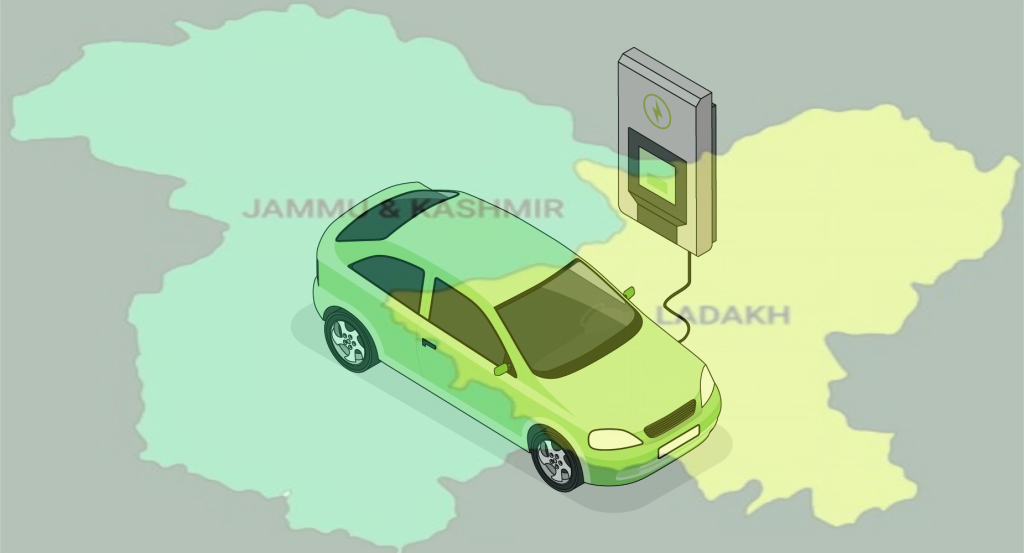
The prolonged delay in finalising Jammu and Kashmir’s Electric Vehicle (EV) Policy has exposed a troubling gap between intent and execution in an area that is no longer optional but essential. Initiated in October 2022, the exercise has now dragged on for more than three years, marked by multiple committees, repeated reviews and fresh terms of reference, yet without a firm policy outcome. In a Union Territory that is both an ecologically fragile region and one of India’s most prominent tourism destinations, this delay carries serious environmental, economic and reputational costs. Electric mobility is no longer a futuristic concept. Across India, states have rolled out well-defined EV policies that combine fiscal incentives, charging infrastructure, regulatory clarity and private-sector participation. These policies have accelerated EV adoption, reduced urban pollution and aligned local transport systems with national climate commitments. In contrast, Jammu and Kashmir-despite repeatedly acknowledging the necessity of a structured EV roadmap-continues to operate without a guiding policy framework. The result is policy paralysis at a time when decisive action is most needed.
The urgency of an EV policy in J&K is amplified by its tourism-driven economy. The Union Territory receives massive seasonal inflows of visitors, placing extraordinary pressure on its transport systems. Nearly one crore pilgrims visit Shri Mata Vaishno Devi annually, while Kashmir has witnessed bumper tourist seasons over the last few years. Although a substantial number of tourists arrive by train or air, many rely on road transport for intra-UT travel. This translates into thousands of taxis, buses, private vehicles and commercial fleets operating daily in sensitive ecological zones. J&K’s major tourist destinations-whether it is the Trikuta Hills, Gulmarg, Pahalgam, Sonamarg or the Dal Lake area-are environmentally fragile. Vehicular emissions in these areas do not merely degrade air quality; they directly threaten glaciers, forests, water bodies and biodiversity. In such a context, every possible step must be taken to minimise pollution and carbon emissions. Electric vehicles are not a luxury here; they are an environmental necessity.
Importantly, J&K already has proven, local examples demonstrating the effectiveness of electric mobility in eco-sensitive zones. The successful operation of battery-operated vehicles on the Shri Mata Vaishno Devi track for many years stands as a practical and powerful model of how clean transport can safeguard fragile ecosystems without compromising accessibility or efficiency. More recently, the growing acceptance of e-rickshaws and the introduction of e-buses in Jammu and Kashmir have further underlined the utility, reliability and public acceptance of EVs in everyday life. Despite these successes and well-known benefits, the lack of a formal EV policy remains a serious concern. Consequently, charging stations remain sparse, creating complications not only for local EV owners but also for tourists arriving with electric vehicles. This discourages green travel and perpetuates dependence on conventional, polluting transport modes.
The economic and administrative logic for swift action is compelling. A comprehensive EV policy would clarify incentives for vehicle buyers, fleet operators, and charging infrastructure developers. It would enable the planned establishment of charging stations at strategic locations-railway stations, airports, major city parking areas, bus terminals and tourist hubs. Simultaneously, the Government can incentivise the installation of EV chargers at major hotels, especially along highways and popular tourist circuits, through tax rebates or viability gap funding. City parking authorities, too, must be directed to prioritise EV infrastructure to encourage behavioural change among commuters.
Once a robust charging network is in place, J&K can explore progressive measures such as a green tax at major tourist destinations for polluting vehicles. This would not only discourage high-emission transport in sensitive zones but also substantially boost revenue collection, which can be reinvested into sustainable infrastructure. In this sense, EV adoption represents a rare win-win scenario: cleaner and cheaper mobility for citizens and tourists, and new revenue streams alongside environmental protection for the Government. The onus squarely lies on the Government to finalise and notify the Electric Vehicle Policy without further drift. For Jammu and Kashmir, protecting ecology, sustaining tourism and embracing modern mobility are deeply interconnected objectives aligned with EV policy.
 Follow our WhatsApp channel
