

Sanjay Sharma
As we know, any change-especially when it involves technology-often brings both curiosity and apprehension. When smart metering was first introduced, people had many questions. Would it increase their bills? Would it run faster? and many more. The uncertainty was expected. However, through extensive awareness campaigns and demonstrations, the department addressed public concerns by explaining the benefits of smart meters compared to conventional electronic types.
After my article on smart metering was published in local newspapers, I have also been receiving numerous queries via email, reflecting the growing interest and curiosity among the public about new technologies. Among the queries, many people also ask about the recently launched PM Surya Ghar Muft Bijli Yojana.
It may therefore be said that what started with scepticism soon turned into widespread acceptance, with a significant reduction in public queries over time and a large number of households voluntarily opting for smart meter installation, overcoming initial confusion and hesitation. Today, over 7 lakh smart meters have been installed across J&K, and by 2026, all the remaining consumers will also be provided with smart meters under RDSS, thereby accomplishing 100% smart metering in J&K. This means that well-informed consumers eventually embrace progressive initiatives when their advantages are clearly communicated.
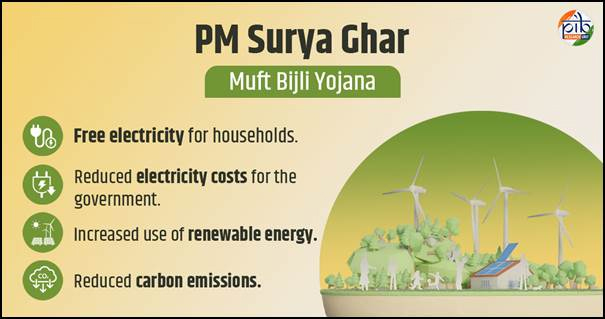
Now, as J&K embarks on yet another transformative journey with the PM Surya Ghar Muft Bijli Yojana, a flagship scheme launched by the Government of India, we again have the opportunity to reap maximum benefits from the scheme. However, despite the buzzword ‘Muft’, I am surprised and concerned by the public’s hesitation in availing its advantages. In my view, this scheme is a bonanza for everyone-from economically weaker sections to affluent house holds-truly a win-win for all. Yet, its limited adoption, despite unprecedented promotion seems to stem from a misunderstanding of the very word ‘Muft’ itself, which has not been effectively communicated.
Many people question, “The government calls it ‘Muft Bijli’, but if only a partial subsidy is provided, how is it free?” Others ask, “If we have to take a loan to install a rooftop solar system, how can it be called ‘Muft’?”
With the intent to address the concerns, I would like to clarify the doubts, dispel misconceptions, and explain how we can fully leverage the benefits of the scheme. While banners provide details such as eligibility criteria and application procedures, there are still unanswered questions. I will strive to address these gaps and provide deeper insights into the scheme. By understanding its true essence, the people of J&K can make informed decisions and avail themselves of the full benefits it offers.
Q: Why is the scheme called ‘Muft’ when we have to invest our own money and provide our rooftop?
A:At first glance, the scheme may not seem “Muft” (free), but in reality, it is completely cost-free both today and in the long run. Here’s how:
You can make the entire process cost-free without having to invest any money upfront. Public sector banks/J&K Bank offer collateral-free loans up to Rs 2 lakh at an interest rate of 7 percent, available through the Jan Samarth portal, integrated with the National Portal.
All you need to do is take a simple loan from a listed bank, and the bank will pay for the cost of installing your solar system. As for paying back the loan, your monthly instalment (EMI) will be even lower than what you’re saving on your electricity bill. In fact, the money saved on your electricity bill will be used to pay for the solar system, so you’re essentially paying for the system with the money you would have spent on your electricity bill.
For example, let’s say you install a 3-kW solar system by availing loan. Your EMI would be around Rs 750 per month for ten years. Meanwhile, your solar system will generate about 300 units of electricity each month, saving you roughly Rs 1,200 on your electricity bill (at an average domestic rate of Rs 4 per unit). This means, even after paying the loan EMI, you will save Rs 450 every month.
Once you’ve paid off the loan, you own the system completely, and the electricity it generates will be yours to use for free! So, if your electricity usage is less than the power your system produces, you may end up paying almost nothing for electricity.
Alternatively, if you choose not to take loan and decide to pay for the solar system upfront, you can recover your entire investment in about 4 and a half years through the savings on your electricity bill. This means you will get back the money you paid for the system within 4 and a half years.
For example, if you install a 3-kW solar system, you will pay Rs 1,59,500 upfront. Within a month, you will receive your subsidy of Rs 94,800 from the Government (which includes Rs 85,800 as the central subsidy and ?9,000 as the UT subsidy) directly into your account. So, effectively, you pay a net cost of Rs 64,700 only. With your solar system generating about 300 units of electricity each month, you can save roughly Rs 1,200 on your electricity bill every month. This means you will recover your entire investment within 4 and a half years. After that, all the electricity your solar system produces will be completely free!
So, whether you choose to take a loan or pay upfront, you will enjoy free electricity based on the capacity of your solar system.
Q:What is the lifespan of a solar system?
A: A solar system typically has a lifespan of 25 years. However, with proper maintenance as mentioned above, the panels may continue to generate electricity even beyond this period.
Q: My house is located in an area where there are voltage issues. Can I install solar?
A:Yes, you can install a solar system even if your area experiences voltage issues. If the voltage problems are minor, your solar system should still work well with the high-quality inverter provided under the scheme. However, if the voltage issues are severe, the electricity department (discom) will send staff to assess the situation and fix it, such as by changing the phase, upgrading the LT lines, or installing a new distribution transformer. Additionally, a stabilizer at your home can help manage voltage dips and ensure your solar system runs smoothly.
Q: How would I know that my house is suitable for installing Solar system?
A:For efficient solar power generation, your rooftop should get at least 4-5 hours of direct sunlight daily. In terms of space, a 1 kW solar system needs about 90-100 sq. ft. of rooftop area. So, for a 3-kW system, you would need around 270-300 sq. ft. of space, and similarly for larger systems.
To easily check if your home is suitable for a solar system, simply register on the National Portal for PM Surya Ghar Muft Bijli Yojana. Soon after registration, the discom officials will visit your home to assess the feasibility and guide you through the installation process.
Q: How long does it take to receive the subsidy after installing the solar system?
A: The subsidy is usually credited within one month after the installation of your solar system.
If you have availed bank loan to install the solar system, the subsidy amount will be directly credited to your loan account.
If you paid upfront using your own funds, the subsidy will be transferred directly to your registered bank account.
Q: Will I be paid if my solar plant generates more than my household consumption?
A: If your solar system generates more electricity than you use, the excess power will be fed into the grid. This extra power will be banked under your consumer ID and used to offset your electricity consumption in the coming billing cycle. In simple terms, you’ll see reduced electricity bills in the coming months.In this regard, the J&K Electricity Regulatory Commission (JERC) regulations will apply.
Q: How long does it take to install a rooftop solar system?
A: The installation itself takes about 2 days once the feasibility study of your house is done. However, the whole process-including vendor selection, assessment, and signing the agreement-may take around one week.
Q: What maintenance is required for the solar system?
A: For the first five years, the vendor will handle all Operation & Maintenance (O&M), similar to the free servicing you get when you buy a car. So, you won’t need to worry about regular maintenance during this period.
Even after five years, solar systems need very little maintenance, but a little care can help them last for decades. Here’s what you need to do:
Clean the panels regularly – Simply rinse off dust, dirt, or bird droppings with water and wipe with a soft cloth or sponge.
That’s all! A small effort for a system that saves you a lot on electricity bills. Keep your solar system in good shape, and it will keep saving you money!
Q: What happens if my solar system stops working or needs repairs?
A:If your solar system faces any issues, don’t worry! As mentioned already, the solar system under the scheme comes with a 5-year free maintenance period. During this time, the vendor will handle all repairs and servicing at no cost.
After the 5-year period, different parts of the solar system have separate warranties. For example, the solar panels come with a 25-year warranty, while the inverter has a 10-year warranty.
Moreover, all the components which are being installed under the scheme are of standard make with their service centers available locally. Complaint booking in case of any issues can be done over telephone like you do for your other household appliances.
Q: Do I need to revise my sanctioned load if I want to install a solar system?
A: No, you do not need to revise your sanctioned load to install a solar system with a capacity equivalent to or less than your sanctioned load. However, if you intend to install a solar system with a capacity higher than your sanctioned load, your sanctioned load will automatically be enhanced to match the solar system’s capacity as per the facility created under the scheme.
Q: There is a buzz that people get zero bills after installing Rooftop Solar. Is it true?
A: Yes! As per our survey, many people are indeed receiving zero electricity bills after installing rooftop solar. With solar generation at your own home and the ability to monitor and control your consumption through a Smart Meter, you can significantly reduce or even eliminate your electricity bill.
If your solar system generates the same amount of electricity you consume, your bill can be zero or even negative (if you produce more energy than you use, the extra will be credited to your future bills). To achieve a zero bill, your solar system should be the right size for the amount of energy you use.
For example, a typical household might have the following usage:
* One air conditioner (1.5 ton) running for 10 hours a day (~12 units/day)
* Lighting load of 63 W (7 LEDs) running for 7 hours (~0.4 units/day)
* One Refrigerator running round the clock (~1.6 units/day)
* Two ceiling fans running for 12 hours (~1.6 units/day)
* One washing machine running 1 cycle/day (~1 unit/day)
This gives an average daily consumption of around 17 units, or 500 units per month. If you install a 5-kW solar system, it will generate around 500 units per month, which would cover your entire electricity use and result in zero electricity bills!
(The author is OSD PDD Government of J&K)
 Follow our WhatsApp channel
