

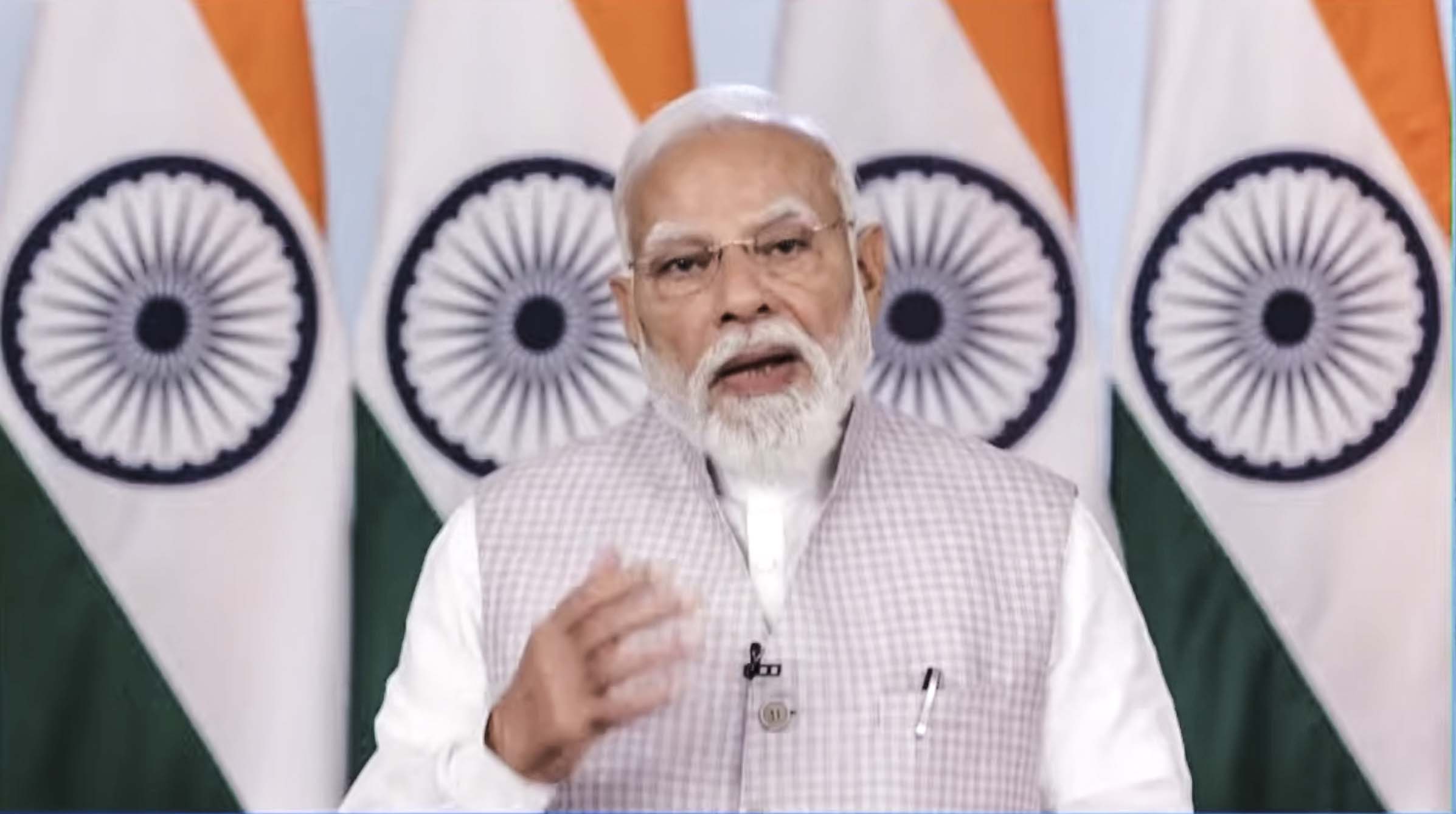
Jaishankar makes suo-motu statement in Parliament
NEW DELHI, Mar 9:
Prime Minister Narendra Modi on Monday chaired a high-level meeting with senior members of the Government and security establishment to assess the rapidly evolving conflict in West Asia and its possible implications for India’s strategic and economic interests.
Follow the Daily Excelsior channel on WhatsApp
The review meeting, held in New Delhi, was attended by Home Minister Amit Shah, External Affairs Minister Subrahmanyam Jaishankar, National Security Adviser Ajit Doval, and Chief of Defence Staff Anil Chauhan.
Officials familiar with the discussions said the leaders reviewed the security situation in the region, potential risks to Indian citizens abroad, and the broader impact the conflict could have on energy supplies and global trade routes.
Earlier in the day, Jaishankar informed the Rajya Sabha that the Prime Minister was personally monitoring developments in the region as hostilities continued to intensify.
“The Prime Minister continues to closely monitor the emerging developments, and relevant ministries are coordinating to ensure effective responses,” he told the House.
Providing an update on the Government’s response, Jaishankar said advisories had been issued for Indian nationals in Iran and that authorities were in regular contact with citizens across the Gulf region. Ensuring the safety of Indians abroad, he emphasised, remained the Government’s foremost priority.
The Minister said the Embassy of India in Tehran was functioning normally and had been actively assisting Indian nationals, including students affected by the conflict. According to him, some students had already been relocated to safer locations as a precautionary measure.
He also noted that the Government was working to help Indians stranded in countries such as Qatar and Jordan and facilitating arrangements for their safe return if required. “Our missions are in constant touch with Indian citizens and are extending all necessary assistance,” Jaishankar said.
Addressing concerns related to maritime security, the External Affairs Minister said the conflict had already begun to affect merchant shipping operations in the region. He informed Parliament that two Indian mariners working on commercial vessels had died while another remained missing amid disruptions linked to the hostilities.
Jaishankar warned that the situation carried serious geopolitical and economic consequences for India, given the country’s close economic and demographic ties with the region. “This ongoing conflict is of particular concern to India. We are a neighbouring region and have obvious stakes that West Asia remains stable,” he said.
He pointed out that nearly one crore Indians live and work across Gulf countries, forming one of the largest expatriate communities in the region, while several thousand Indian students and professionals are based in Iran.
The Minister also highlighted the region’s importance to India’s energy security, noting that a large share of the country’s crude oil and gas imports originates from West Asian nations. Prolonged instability, he cautioned, could disrupt supply chains and affect global energy markets.
Reiterating India’s diplomatic approach to the crisis, Jaishankar said New Delhi continued to advocate dialogue and restraint among the parties involved. “Dialogue and diplomacy remain the only viable path forward,” he said, recalling that India had already issued a statement on February 20 urging all sides to avoid further escalation.
The developments were discussed in Parliament amid protests by Opposition members demanding a broader debate on the conflict and its potential implications for India’s economy and security. Meanwhile, the government signalled that it would continue closely tracking the situation as tensions across West Asia evolve. (UNI)
 Follow our WhatsApp channel
