

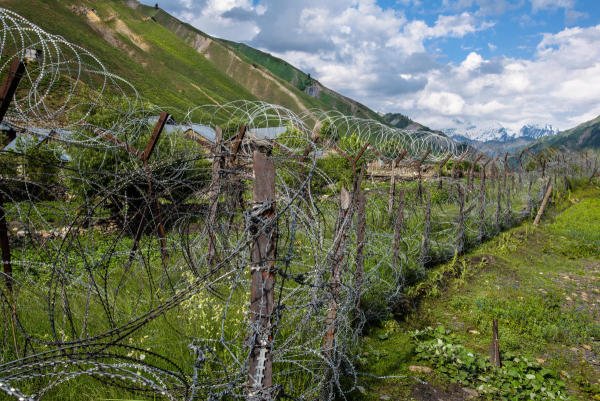
The visit of a high-level team from the Union Ministry of Home Affairs and senior Border Security officers to the International Border in the Hiranagar sector of Jammu’s Kathua district underlines the gravity of the persisting infiltration threat. Despite years of counter-infiltration measures-barbed wire fencing, night vision systems, and electronic surveillance-terrorists continue to slip through into Indian territory, often undetected, and wreak havoc across multiple districts in Jammu and Kashmir. Despite the extensive border infrastructure, this continued infiltration is a national security concern of the highest order and deserves urgent, results-orientated attention. The Jammu Division shares the maximum stretch of border with Pakistan, spanning the Kathua, Samba, Jammu, Poonch, and Rajouri districts. This geography has rendered the region more vulnerable to infiltration and, by extension, terror attacks. Time and again, these districts have witnessed deadly encounters, targeted killings, and pitched gun battles. The tragic loss of four policemen in the Ghati area of Kathua in March this year, during an encounter with infiltrated terrorists, only exemplifies the dangerous pattern of infiltration and cross-district movement of terror groups.
Perhaps the most alarming element in the current security scenario is the ability of terrorist groups to move freely across multiple districts once they have breached the border. Intelligence reports and operational experiences reveal that the same group of terrorists is often found to be involved in multiple attacks spread across different areas-be it Hiranagar, Billawar, Rajouri, or even further into Kashmir. This fluid movement, facilitated by overground and underground networks of sympathisers and logistical handlers, has serious implications. It reflects not only a porous border but also a compromised internal security grid that fails to intercept or block their progress effectively.
Therefore, the recent high-level assessment at the IB in Hiranagar is a timely and much-needed intervention. Led by Joint Secretary (J&K Affairs) Prashant Lokhande and involving senior officers from the Intelligence Bureau and BSF, the team’s review of border outposts, anti-tunnelling efforts, and local intelligence collection is critical. Notably, the involvement of local villagers, who often serve as the first line of civilian surveillance, is an important community-centric step. Their insights can help security forces better understand evolving patterns of infiltration.
However, plugging infiltration routes alone will not be enough. The enemy no longer restricts its activities to the border; it exploits internal weaknesses and support systems. Over the years, Pakistan-backed terrorists have perfected the art of using local guides, overground workers, and sleeper cells to navigate unfamiliar terrain and evade capture. It is imperative that policing and internal intelligence be upgraded significantly, especially in border districts. Police posts behind BSF pickets and the induction of Village Defence Guards are welcome steps but must be accompanied by advanced training, coordination, and proactive intelligence sharing.
Equally important is the strategic opportunity now available. After the success of Operation Sindoor, which decimated a major group of infiltrators, Pakistan’s morale has taken a hit. This window must be seized to neutralise the threat entirely. We know where the training camps are located across the border. We have the technological capability to intercept communications, detect movement, and monitor terrain. The time for defensive posture has passed; it is now time for a decisive, proactive strategy to eliminate infiltration at its root.
Security agencies have decades of experience now and the operational capacity to implement a coordinated, multi-pronged counter-infiltration strategy. This must include satellite surveillance, high-frequency drone patrols, and AI-backed data analytics to detect tunnel activities and riverine crossings. The repeated incidents of terrorist sightings and attacks in the Jammu Division cannot be normalised. Each instance erodes public trust, destabilises local economies, and emboldens hostile elements across the border. The Centre’s current seriousness, as reflected in the recent visit, is commendable. But this momentum must translate into durable outcomes-both at the border and within the UT. Let the present be the final chapter in the long and painful saga of infiltration. It is time to deliver the final blow.
 Follow our WhatsApp channel
