

Col (Dr) Adarsh Sharma
Coloneladarshsharma@gmail.com
A recent study by the Indian Institutes of Management (IIM) on Ayodhya has presented a compelling case study on the transformative power of temple tourism in India. The findings are both striking and instructive. With over 11 crore devotees visiting the Shri Ram Temple within just six months of its inauguration, Ayodhya has experienced an unprecedented economic resurgence, reshaping not only its spiritual landscape but also its socio economic fabric.
The study underscores how faith based tourism has catalysed large scale growth across multiple sectors. Hospitality infrastructure has expanded rapidly, transport networks have strengthened, local businesses have flourished, and employment opportunities have multiplied. From street vendors and small traders to large hotel chains and tour operators, the economic ripple effect has permeated every layer of society. Ayodhya today stands as a living example of how structured spiritual tourism, when backed by planning and infrastructure, can transform an entire regional economy.
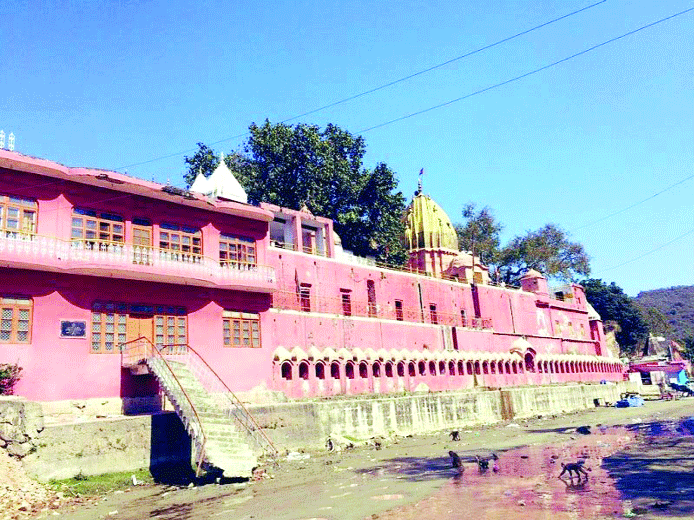
This development should serve as an eye opener for regions like Jammu, often revered as the “City of Temples,” yet still holding immense untapped spiritual tourism potential. The Jammu region is blessed with a dense spiritual geography that includes the sacred Tawi riverfront, Devak at Purmandal, Uttar Behni, Akhnoor, Udhampur, and the globally renowned pilgrimage base of Katra.
If developed with foresight and integrated planning, these locations can evolve into vibrant spiritual and cultural corridors. Clean and revitalised riverbanks, maintained water levels at Aarti sites, riverfront beautification, pilgrim amenities, and regular devotional events can create not only a deeper spiritual experience but also sustained economic opportunity for local communities.
A particularly significant thought emerges when examining developmental priorities around Katra. Instead of allocating substantial resources toward establishing a medical college, an alternative visionary pathway could have been to position Katra as a Global Spiritual Hub of Learning.
With its divine aura and uninterrupted inflow of pilgrims to the Holy Shrine of Mata Vaishno Devi, Katra possesses extraordinary potential to develop into an international centre for Meditation, Yoga Sciences, Vedic Studies, Spiritual Healing, and Consciousness Research. Institutions dedicated to Sanatan knowledge systems and wellness tourism could attract global seekers, scholars, and practitioners, placing Katra prominently on the world spiritual map alongside other renowned destinations.
Such an ecosystem would not only enrich the pilgrim experience but also generate sustainable employment, promote cultural scholarship, and create a knowledge driven devotional economy across the Jammu region.
Encouragingly, models of faith driven regional development are already emerging elsewhere. Himachal Pradesh has demonstrated this through its temple tourism initiatives. What began successfully in Kullu is now being replicated in Mandi, illustrating how spiritual tourism, when integrated with environmental care and infrastructure development, can transform local economies while preserving cultural heritage.
A similar vision can be extended to Katra. By retaining and managing water flow in the sacred Ban Ganga, organising grand devotional events, and enhancing the aesthetic and spiritual ambience of the pilgrimage route, the entire journey experience can be elevated to global prominence.
Despite being among the most visited pilgrimage destinations in India, second only to Tirupati Balaji in footfall, the Shrine Board of Mata Vaishno Devi still has vast scope to think innovatively. Integrated pilgrim circuits around Jammu, destination development projects, wellness retreats, and cultural festivals can significantly enhance visitor engagement while ensuring inclusive prosperity for local residents.
The Ayodhya experience offers immense food for thought. It demonstrates that temple tourism, when guided by vision, planning, and administrative willpower, can become a cornerstone of economic growth, cultural revival, and regional pride.
The time calls for bold, out of the box thinking that harmoniously blends faith, learning, wellness, infrastructure, and cultural resurgence into one integrated pilgrimage ecosystem.
If pursued strategically, Jammu too can script its own story of spiritual led transformation.
 Follow our WhatsApp channel
