

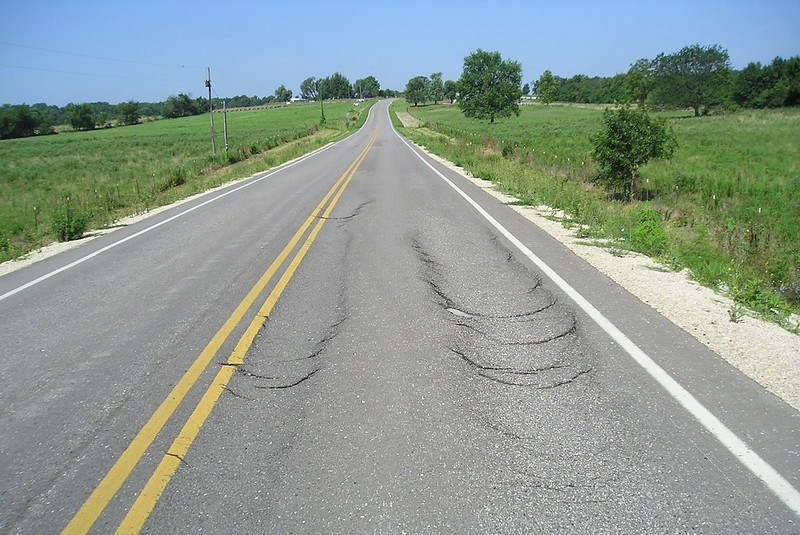
The alarming statistics presented by Union Road Transport and Highways Minister Nitin Gadkari should serve as a wake-up call for the nation. Faulty road construction, a pervasive issue that directly leads to thousands of fatalities each year, must be treated as a serious crime. Gadkari’s call to make such negligence a non-bailable offence, holding contractors, concessionaires, and engineers accountable, is a significant step towards addressing a crisis that claims nearly 1.72 lakh lives annually. India has the unfortunate distinction of being the global leader in road accidents. In 2023 alone, five lakh road mishaps were reported, leading to an appalling loss of life. Among these fatalities, 66.4% were young individuals aged 18-45 years-a demographic that represents the backbone of the nation’s workforce and future. These statistics highlight the systemic issues in road infrastructure and the urgent need for accountability. One of the most glaring contributors to these accidents is the poor quality of road construction. From poorly designed curves and inadequate drainage to unmarked speed breakers and weak bridges, the consequences of substandard construction are deadly. Gadkari’s assertion that faulty road construction should be treated as a criminal act is both timely and necessary. It is not just negligence; it is a violation of the right to life and safety.
Currently, accountability in road construction and maintenance is almost nonexistent. When accidents occur due to defective roads, the blame often shifts to drivers or external factors, conveniently ignoring the root cause. Contractors and engineers, whose lapses in planning and execution contribute to hazardous conditions, escape unscathed. This culture of impunity must end. Making faulty road construction a non-bailable offence would serve as a strong deterrent. It would ensure that those responsible for compromising road safety face tangible consequences, including imprisonment. This proposal must be backed by robust enforcement mechanisms and transparent investigations to identify and prosecute the culprits effectively. Additionally, engineers and contractors involved in road projects should be required to adhere to strict quality standards, with regular audits to ensure compliance.
While the Government’s role in ensuring safe road infrastructure is paramount, other stakeholders must also contribute. Gadkari’s call for partnerships between the Government, industry, and civil society to set up driver training and fitness centres is a step in the right direction. The Ministry of Road Transport and Highways’ commitment to spending Rs 40,000 crore to rectify black spots on highways is commendable. Black spots are locations on roads where accidents frequently occur due to design flaws, poor visibility, or other hazards. Identifying and addressing these spots can significantly reduce fatalities. However, this initiative must be complemented by preventive measures. New road projects should undergo rigorous safety assessments during the planning and construction phases. Advanced technologies such as GIS mapping, AI-based traffic management systems, and real-time monitoring of road conditions can be leveraged to enhance safety. Additionally, involving local communities in identifying hazardous road conditions can provide valuable insights and foster a sense of collective responsibility.
India can draw inspiration from countries that have successfully reduced road accident fatalities. Sweden’s “Vision Zero” initiative, which aims to eliminate road traffic deaths and serious injuries, is a model worth emulating. It emphasises a holistic approach, combining safer road designs, strict enforcement of traffic laws, and public awareness campaigns. Similarly, Japan’s focus on rigorous driver training and high-quality road infrastructure has resulted in one of the lowest road fatality rates globally.
Reducing road accident fatalities by half by 2030, as envisioned by the Ministry of Road Transport and Highways, is an ambitious but achievable goal. To realise this vision, India must adopt a multi-pronged approach that includes criminalising faulty road construction, enforcing stringent quality standards, enhancing driver training, and promoting public awareness.
 Follow our WhatsApp channel
