

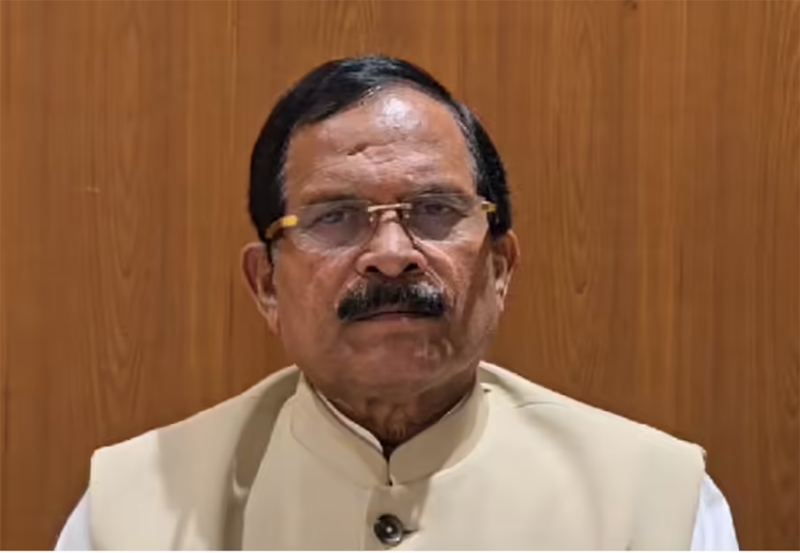
NEW DELHI, Mar 7: The peak power demand is projected to be around 270 GW this summer and there will no affect on regular electricity supply due to West Asia crisis, Minister of State for Power Shripad Yesso Naik said on Saturday.
Ministry of Power had projected 277 GW of peak power demand during last summer (April 2025 onwards). Peak power demand in June 2025 was 242.77 GW.
According to the government data, the peak power demand met or the highest supply last month rose slightly to 243.15 GW from 238.06 GW recorded in February 2025.
The peak power demand touched an all-time high of about 250 GW in May 2024. The previous all-time peak power demand of 243.27 GW was recorded in September 2023.
Talking to reporters on the sidelines of ‘Lineman Diwas’ here about the LPG price hike against the backdrop of West Asia crisis, the minister said,”This is an emergency situation. There is something (affect) here and there. But in the power sector we are moving ahead in a way that there will be no disturbance (in supplies). Peak power demand will be 270GW this time (summer) and will not go beyond that.”
Domestic cooking gas LPG price on Saturday was hiked by a steep Rs 60 per cylinder, the second increase in rate in less than a year, as oil companies pass on a part of the spike in global energy rates that followed the West Asia crisis.
Lineman Diwas is organised by the Central Electricity Authority and Tata Power Delhi Distribution. On this occasion, a special song ‘Lineman Geet’ along with ‘Safety Pocket Book’ was also launched.
The minister also lauded the efforts of linemen for ensuring regular electricity supply and urged them to take all safety measures and protocols while doing their duty.
He noted that every year, many accidents occur during electrical works; some result in serious injuries and some in the loss of precious lives.
The most painful fact is that many of these accidents could have been prevented, he pointed out.
“We must take a pledge that any avoidable accident is no longer acceptable. Safety should not be limited only to rules; it must become our work culture. The mandatory use of PPE, strict confirmation of shutdowns before work, regular training, and accountability-all these should be our priorities,” he said.
Today, he said that like smart grids, real-time monitoring, AI-based predictive maintenance, drone inspection, and sensor-based fault detection can give prior indications of potential failures.
This will reduce the need for emergency and hazardous tasks, he stated.
Data analytics can be helpful in identifying accident patterns to prevent them. Digital systems can minimize human errors.
In other words, the power system of the future should not only be reliable but also safe and robust, he suggested.
As India moves towards a grid equipped with modern and renewable energy, the safety systems must become equally advanced and strong.
Along with technical upgrades, safety upgrades are also mandatory. Modernization of infrastructure must go hand in hand with modernization of safety practices, he added. (PTI)
 Follow our WhatsApp channel
