

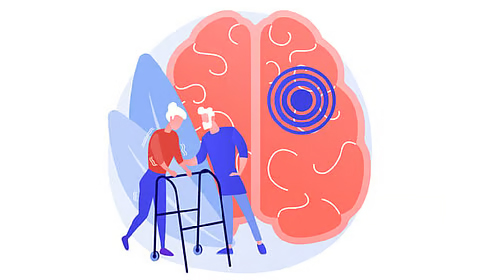
New Delhi, Feb 5: A study has suggested that treatments for Parkinson’s disease could potentially be doubly efficacious by targeting a brain network linking cognition and action, rather than brain regions responsible for movements.
Parkinson’s disease is a neurodegenerative condition affecting movements, sleep, motivation and thought processes. Common symptoms include tremors, stiffness and walking difficulties.
Researchers, led by those from China’s Peking University and Washington University in St. Louis in the US, analysed data gathered from 863 people with Parkinson’s disease receiving treatments shown in previous studies to improve symptoms, including deep brain stimulation and medication.
Deep brain stimulation involves sending electrical signals to a specific brain area via surgically implanted electrodes.
Findings published in the journal Nature show that brain regions commonly affected in Parkinson’s disease connect more strongly to the somato-cognitive action network (SCAN), identified as a brain network in recent years for linking cognition with movement and bodily state.
The connection was found to be increased in Parkinson’s disease but not in other disorders affecting movements, the researchers said.
The treatments analysed were found to reduce this SCAN hyperconnectivity, bringing it closer to levels seen in healthy volunteers, they said.
For example, targeting the SCAN instead of brain regions associated with movement doubled the efficacy of transcranial magnetic stimulation treatments, a non-invasive method that stimulates neurons using magnetic fields.
The SCAN could be a potential candidate for explaining the broad range of symptoms experienced in Parkinson’s disease, the team said.
“This work demonstrates that Parkinson’s is a SCAN disorder, and the data strongly suggest that if you target the SCAN in a personalised, precise manner, you can treat Parkinson’s more successfully than was previously possible,” co-author Nico U. Dosenbach, professor of neurology at Washington University’s School of Medicine, said.
“Changing the activity within SCAN could slow or reverse the progression of the disease, not just treat the symptoms,” Dosenbach said.
The findings suggest that changes to the brain network may be central to how Parkinson’s disease affects the body’s functioning and could help guide future treatments and brain-based therapies, the researchers said.
They added that further research is needed to confirm how best to use the study’s findings in clinical care. (Agencies)
 Follow our WhatsApp channel
