

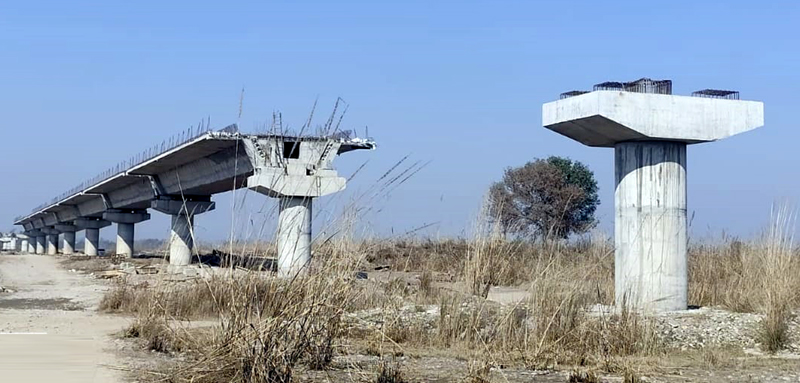
When the foundation stone for the 1,640-metre Pargwal bridge over the Chenab was laid, it was envisioned as a lifeline – not just a piece of infrastructure. The bridge was meant to slash the distance from 55 kilometres to barely 14. For over 30,000 residents living under the constant shadow of Pakistani shelling, this bridge is the difference between evacuation and entrapment during crises. For the Army and BSF, it is a strategic artery, crucial for troop movement, logistics, and rapid deployment to forward areas. And yet, nearly nine years after work was sanctioned, the project languishes in a limbo of excuses, procedural mishandling, and administrative indifference.
The story of the Pargwal bridge is, unfortunately, a familiar one in Jammu and Kashmir’s infrastructure narrative-ambitious deadlines announced with fanfare, followed by years of sluggish execution and spiralling costs. Sanctioned in January 2016, the project was given a 30-month completion schedule. But the Jammu and Kashmir Projects Construction Corporation squandered nearly two years in finalising tenders before the Public Works (R&B) Department stepped in. This initial delay set the tone for what was to follow-a cascade of missed deadlines, halted work, and contractual disputes. In the competitive infrastructure landscape of the 21st century, such delays are unacceptable and reflect poorly on the capability of a Government agency entrusted with public projects. The R&B Department fared no better. Repeatedly citing factors like the COVID-19 pandemic, monsoon disruptions, and “poor flow of funds”, officials have failed to mask the real issue-a lack of effective project management and accountability.
There can be no justification for delays stretching years beyond the pandemic’s peak. The argument of “rainy season” affecting work in a project that has been ongoing for nearly a decade borders on the absurd-weather contingencies are standard considerations in any well-drafted tender. The claim of slow central fund flow is equally questionable, given that allocations under the Central Roads Fund follow defined schedules. If payments were delayed, the onus lies on the state executing agency to escalate, resolve, and maintain continuity. Contractors refusing to work due to unpaid liabilities-in this case, Rs 15 crore pending- underscores a systemic flaw. Tender documents clearly specify payment timelines, and contractors are within their rights to suspend work if the Government defaults. What is more troubling is that such stoppages are recurring in multiple projects across J&K. This demands a deeper investigation into why so many contractors abandon work and whether tender conditions include effective deterrents or safeguards against such eventualities.
From a strategic standpoint, every year of delay is a liability. This is not a bridge in an urban setting with multiple alternative routes – it is the only feasible evacuation path for dozens of villages during cross-border firing. Its absence forces residents to depend on a single road at Suyya No. 1, dangerously close to the border and often inaccessible during heavy shelling. The military, too, loses precious hours in reaching forward posts. In a border zone where seconds can make the difference between life and death, a delay of years is not just a statistic; it is a risk multiplier.
Equally concerning is the acceptance of such delays as routine. After nine years, the fact that officials still speak in hypotheticals reveals a disturbing absence of urgency. The cost implications are inevitable – with each passing year, project expenses escalate, requiring new approvals, fresh fund allocations, and more bureaucratic wrangling. In this digital era, where project dashboards can provide real-time updates to senior authorities, it is baffling how such slippages continue unchecked. The Chief Minister’s office should maintain a live list of all delayed projects, complete with explanations, revised timelines, and names of responsible officers. Such transparency would not only enable course correction but also ensure accountability-the missing link in J&K’s public works system. The Pargwal bridge is not a luxury. The agencies responsible must be made to answer through time-bound action reports reviewed at the highest levels. After nearly a decade, the people do not need another deadline.
 Follow our WhatsApp channel
