

Bullets found at blast site under police lens
NEW DELHI, Nov 16: In a major breakthrough in the Red Fort area car bomb blast case, the National Investigation Agency has arrested a Kashmir resident who had allegedly conspired with “suicide bomber” Dr Umar Un Nabi to carry out the terror attack, which claimed 13 lives.
Follow the Daily Excelsior channel on WhatsApp
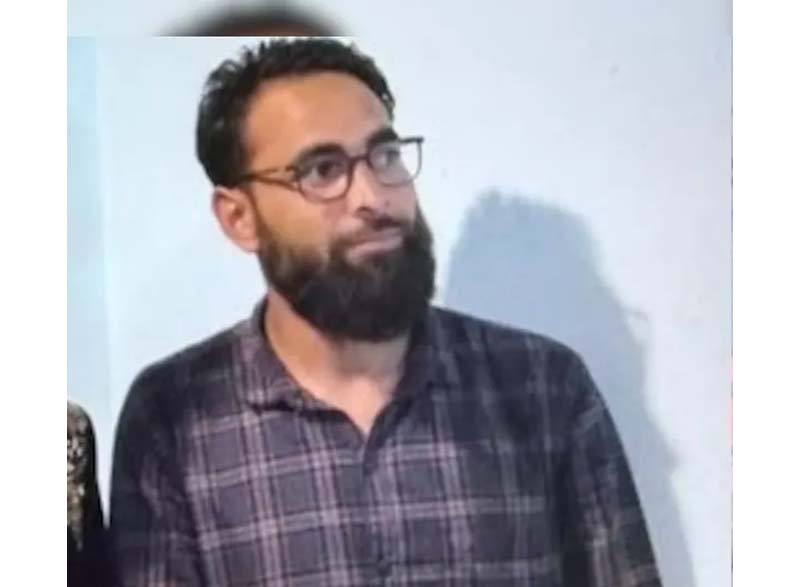
Amir Rashid Ali, in whose name the car involved in the blast was registered, has been arrested from Delhi by the NIA, the federal probe agency said in a release.
The NIA had launched a massive search operation after taking over the case from the Delhi Police.
Investigations by the probe agency had revealed that the accused, a resident of Samboora in Jammu and Kashmir’s Pampore, had conspired with the “suicide bomber”, Umar, to unleash the terror attack.
Amir had come to Delhi to allegedly facilitate the purchase of the car, which was eventually used as a “vehicle-borne Improvised Explosive Device (IED)” to trigger the blast, the NIA said.
This was the first time the probe agency has described Dr Umar Un Nabi, who was behind the wheel when the car exploded near the Red Fort on November 10, as a “suicide bomber”. Also, NIA has for the first time used the term “vehicle-borne IED” for the car.
The NIA has forensically established the identity of the deceased driver of the “vehicle-borne IED” as Umar Un Nabi, a resident of Pulwama district of Jammu and Kashmir and an Assistant Professor in the General Medicine Department of Al Falah University in Faridabad.
The anti-terror agency has also seized another vehicle belonging to Umar. The vehicle is being examined for evidence in the case, in which NIA has so far examined 73 witnesses, including those injured in the blast.
Working in close coordination with Delhi Police, Jammu and Kashmir Police, Haryana Police, Uttar Pradesh Police and various sister agencies, the NIA is continuing its investigation across states.
It is pursuing multiple leads to unearth the larger conspiracy behind the “bombing” and identify others involved in the case, the release said.
Meanwhile, security agencies are probing three bullet cartridges, two of them live rounds, recovered from the debris near the Red Fort blast site, a source said on Sunday.
The empty shell and two live bullets — a calibre not permitted for civilian use — were found close to the burnt Hyundai i20 car, which exploded on November 10 near the iconic Delhi monument, killing 13 people and wounding more than two dozen.
According to the source, the 9mm rounds are generally issued to specialised units or individuals with explicit permission.
“The staff deployed at the spot were also asked to check their issued ammunition, but none was found missing. The cartridges were there, but there was no weapon to fire them. We are trying to understand the entire matter that how the bullets reached the spot,” said the source.
The person said that security agencies are also preparing to re-create the entire route of the accused, Umar Nabi, from the time he left Faridabad, visited Nuh in Haryana, and had tea in Delhi – the whole sequence leading up to the blast. Authorities are stitching together call records, tower locations, and CCTV footage from over 50 cameras for the recreation.
“The reconstruction will include every check-post crossed, all parking entries, and each location he visited or halted at, to identify whether any person met him, followed him, or aided him. Connecting the dots is critical to understanding the hours Umar spent in the NCR,” the source said.
Meanwhile, angles of the probe continue to expand.
The source said that security agencies are examining a strong hawala trail, suggesting that the arrested doctors — Muzammil and Shaheen — may have received funds through illegal channels.
Initial scrutiny has indicated transactions of nearly Rs 20 lakh, suspected to have originated from foreign-based handlers.
Investigators are verifying whether the amount was routed to the three for the procurement of chemicals and logistics. Evidence recovered so far points to a structured financial link, with about Rs 3 lakh apparently spent on purchasing fertiliser.
Experts are also suspecting the use of Triacetone Triperoxide (TATP) to make the bomb.
Nicknamed ‘mother of satan’, TATP is extremely unstable, highly sensitive to shock, heat, friction and electrostatic discharge.
All components used in the blast, a compound including ammonium nitrate that significantly amplified its explosive potential, are under the lens.
Parallely, security agencies continue to examine the involvement of people linked to Al-Falah University in Haryana’s Faridabad. According to sources, teams of security agencies have been visiting the university daily, checking attendance logs, staff records, and movements of people who may have been in contact with the arrested doctors.
A female doctor associated with the institution has been detained for questioning, a source said. The move came after several people known to be in touch with Umar, Muzammil, and Shaheen were found missing from campus.
A large part of the probe involves tracing dozens of vehicles parked near Umar’s car in the hours leading up to the explosion.
Officials said a detailed log of each vehicle entering the Sunehri Masjid parking area during that three-hour window has been prepared.
The log includes registration details, entry-exit timings, driver identities, and vehicle ownership particulars.
Investigators are questioning the drivers and owners to determine whether anyone noticed Umar stepping out of the car, meeting someone, or allowing another person to approach the vehicle.
“Security agencies are showing Umar’s photograph to these people to confirm whether he was alone. Even seemingly insignificant movements can help establish whether someone else may have planted or adjusted the explosive,” the source said.
A bomb-detection team remains deployed at the parking lot as a precaution.
Meanwhile, the Delhi Police registered two separate FIRs against Haryana’s Al-Falah University, following red flags by the University Grants Commission and the National Assessment and Accreditation Council.
The FIRs, lodged by the Crime Branch, pertain to alleged cheating and forgery linked to suspicious accreditation claims.
Earlier, another FIR under sections related to criminal conspiracy was lodged to probe the larger network behind the blast.
Raids are being made in Delhi, Haryana, and Uttar Pradesh to gain insights into the chemical procurement, financial transactions, hideouts, and the movement of suspects. (PTI)
 Follow our WhatsApp channel
