

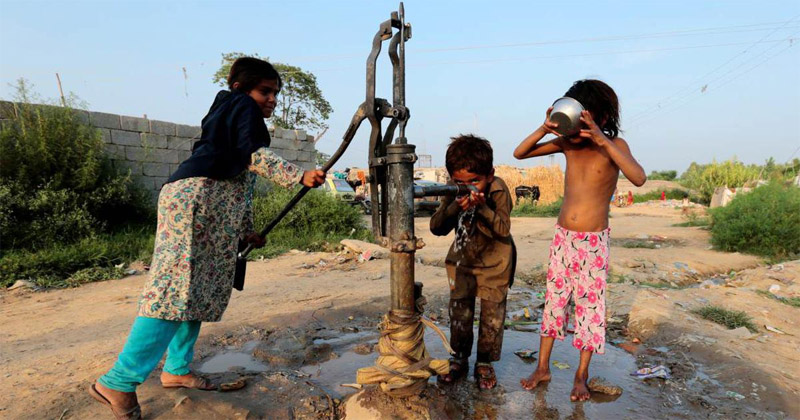
ISLAMABAD, Dec 9 : Pakistan’s water crisis continues to worsen as the country saw a sharp drop in its per capita water availability, due to a population explosion and the pressure of meeting the said surge, as per the latest report of the Pakistan Ministry of Water Resources.
“From 2017 to 2023, the population rose by 40 million, causing a reduction of 154 cubic metres per person in annual water availability,” the ministry stated in its findings.
According to the report submitted to the National Assembly, the national population is projected to reach 288 million by 2030, with per capita water availability expected to fall by another 795 cubic metres, as per local media.
Province-wise, there is a sharp disparity in the annual per capita water availability in the country, with Khyber Pakhtunkhwa and Punjab witnessing a drop of 679 cubic metres, and 760 cubic metres respectively, making them comparatively well off.
The drop is particularly acute in Sindh and Balochistan which recorded water resources per person at 1,169, and 928 cubic metres respectively, heightening their water scarcity.
While Pakistan blames India for its water-crisis, citing New Delhi’s IWT (Indus Waters Treaty) suspension as a scapegoat for its own failures in managing its water problems, India’s abeyance of the IWT – enacted post the deadly Islamabad-linked terror attack in Pahalgam, Kashmir, on April 22 – is currently a non-factor, given that Indian authorities are yet to begin construction of any storage dams, or hydro power plants along the Western rivers, automatically negating the argument.
One of the most water vulnerable states in the world, much of Pakistan’s water crisis is due its own lack of taking any substantive measures, such as failure in modernising irrigation, building new canals, replacing eroding and ageing infrastructure, lack of storage dams, along with massive deforestation and unplanned urbanisation greatly exacerbating the problem.
The country’s Minister for Food Security and Research Rana Tanveer Hussain said the country has been suffering an annual 10% – 15% decline in crop production.
In a written reply during the NA session, he warned that these losses could further mount, reaching a possible 30%, due to the nation’s poor harvesting, management, storage and transportation infrastructure.
Hussain added that eliminating these losses could save Pakistan as much as $1.8 billion each year, underscoring the scale of the economic impact on the agriculture sector, citing climate change effects and the inadequate transportation systems nationwide being two of the major contributors for financial losses in crops.
(UNI)
 Follow our WhatsApp channel
