

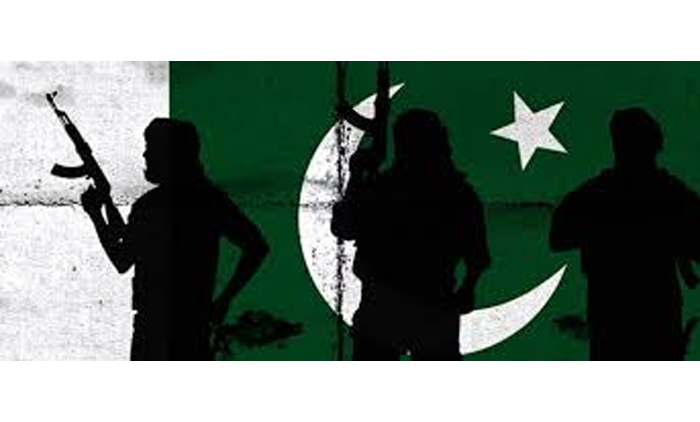
The latest assessment by the US Congressional Research Service, which once again identifies Pakistan as a hub for a wide spectrum of terrorist organisations, comes as no revelation. For India-and indeed for much of the international community-this is a long-established reality. What the report does, however, is reaffirm with institutional clarity a pattern that has defined Pakistan’s security doctrine for decades: the systematic cultivation, sheltering, and instrumental use of militant groups as tools of state policy. The classification of 15 terror outfits operating from Pakistani soil, of which 12 are designated as foreign terrorist organisations under US law, underscores the scale and diversity of this ecosystem. From globally orientated entities such as Al Qaeda to India-centric groups like Lashkar-e-Taiba and Jaish-e-Mohammed, Pakistan’s landscape resembles less a passive sanctuary and more a structured “terror factory”. These organisations, driven largely by extremist ideology, operate across geographies-from Afghanistan to Pakistan-occupied Jammu and Kashmir-forming a layered network of violence with both regional and global reach.
India has borne the brunt of this policy for nearly four decades. The list of attacks linked to Pakistan-based groups-from the 2001 Parliament assault to the 2008 Mumbai carnage, from Pathankot and Uri to Pulwama-is extensive and well documented. Successive Indian Governments have submitted dossiers, shared intelligence, and engaged diplomatically with regimes led by figures such as Benazir Bhutto, Nawaz Sharif, and Pervez Musharraf. Yet, these efforts have yielded little substantive change. Islamabad’s consistent fallback-a blanket denial and the “non-state actor” argument-has served as a shield against accountability. The credibility of such denials stands fundamentally undermined by historical facts. The discovery of Osama bin Laden in Abbottabad, deep within Pakistan’s territory, by US forces remains one of the most glaring indictments of the country’s duplicity. It exposed not just the presence of high-value terror operatives but also raised troubling questions about state complicity or, at the very least, wilful blindness.
Equally concerning is Pakistan’s adaptive modus operandi. When international pressure leads to the banning of a particular outfit, it often re-emerges under a different name, with the same leadership, infrastructure, and objectives intact. This cycle has rendered global counter-terror frameworks less effective, exposing gaps in enforcement and political will. Even oversight mechanisms like the Financial Action Task Force, which placed Pakistan on its “grey list” in 2018, have had limited long-term impact. While Islamabad undertook cosmetic measures leading to its removal in 2022, the deeper ecosystem of terror financing and ideological radicalisation remains largely unaddressed.
The consequences are now rebounding internally. Pakistan today ranks among the countries most affected by terrorism. Fatalities, which had declined to 365 in 2019, have surged dramatically to over 4,000 in 2025. Violence in regions like Khyber Pakhtunkhwa and Balochistan reflects a blowback effect-where groups once nurtured for strategic depth have turned inward, destabilising the state itself. This duality-being both sponsor and victim-illustrates the inherent unsustainability of Pakistan’s long-standing approach. For India, the response has evolved from restraint to calibrated deterrence. The surgical strikes following the Uri attack and the Balakot airstrikes after Pulwama marked a doctrinal shift, signalling that cross-border terrorism would invite direct retaliation. More recent operations under Operation Sindoor targeting terror infrastructure across the border reinforce this message: that the cost of proxy warfare will no longer remain one-sided.
Yet, the issue transcends bilateral tensions. A nuclear-armed state grappling with economic distress, internal instability, and entrenched terror networks poses a grave risk to global security. The persistence of radicalisation-often rooted in segments of the madrassa system-continues to feed this cycle. The distinction between “good” and “bad” terrorism, long embedded in Pakistan’s strategic thinking, has proven both flawed and dangerous. The CRS report should therefore be read not merely as an academic assessment but as a warning. Incremental measures and periodic crackdowns are insufficient. What is required is sustained, coordinated international pressure-diplomatic, financial, and strategic-to compel Pakistan to dismantle its terror infrastructure comprehensively. Considering the current geopolitics and emerging alliances, Pakistan’s situation is quite perilous. Until the breeding grounds of extremism are decisively eradicated, the threat will persist-not just for India, but for the wider world.
 Follow our WhatsApp channel
