

Harsha Kakar
Kakarharsha@gmail.com
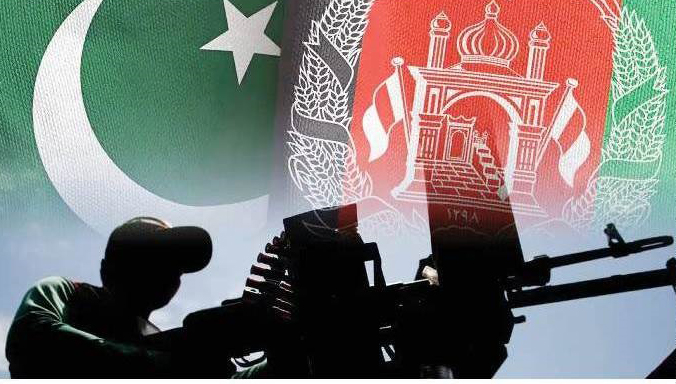
The latest round of Pakistan-Afghanistan talks, held in Istanbul, mediated by Turkey and Qatar, has collapsed. These talks were led by intelligence chiefs on both sides, which meant that Pakistan’s polity had no role, as also Rawalpindi’s intent was to coerce Kabul to adhere to their terms under threat of military action. This was laced with announcements of sharing information on presence of terrorist groups on Afghan soil.
The Pak side was led by their DG ISI, while the Afghan delegation by their head of Intelligence. Pakistan had attempted to browbeat the Taliban but failed to gauge their determination. Most importantly, the tenuous ceasefire, agreed to in Doha in the first round of talks, would remain in place.
Pakistan wanted the Taliban to take all responsibility for militant activity on their soil as also contain and neutralize all TTP (Tehreek-e-Taliban Pakistan) members in Afghanistan. This was Pakistan’s sole agenda and they were unwilling to bend unless Kabul acceded and provided a written undertaking. The Taliban had their own concerns, which the Pak delegation refused to consider.
Kabul’s concerns included Pakistan stop using trade as a weapon by closing borders, thereby blocking Afghan exports as also the inhuman manner in which Afghan refugees were being expelled and in their garb members of the ISKP (Islamic State – Khorasan Province) infiltrated into Afghanistan. The ISKP, supported by the ISI, seeks to overthrow the Taliban regime. Kabul also demanded Pak stop US drone flights from using its airspace.
While the Taliban officially denied the existence of TTP its soil, Pakistan ignored concerns of Kabul. It had mentioned in earlier talks in Doha that it has an agreement with the US for drone flights, which it cannot break. Accusations by both sides appear to hold water but demanding that only one side bends, while the other believes in its military power, is not the manner by which conflicts are resolved by dialogue. Pakistan also claimed Qatar favoured Afghanistan, while Kabul believed Turkey supported the Pak perspective.
Pakistan’s defence minister hinted at what the future would be when he mentioned ‘talks are over’ and that the ceasefire would remain in place unless ‘violated from the Afghan side.’ In reality, it is Pakistan violating the ceasefire and targeting Afghanistan. It appears that Rawalpindi is seeking an excuse to engage in conflict with Afghanistan.
There is a belief within Pakistan’s military circles that it alone has the ability to subdue the Taliban, when major powers like Russia and the US failed. After all it is a neighbour, not located at a distance. It has, in recent days, been hinting at hitting Afghanistan compelling it to accede to its terms.
After being routed in Operation Sindoor and the recent conflict with the Taliban, Pak believes that compelling Afghanistan to accept its terms, would re-build the image of the army. While Pakistan’s information war hid reality of its losses in both conflicts, the truth is well known to those who matter.
Another reason for engaging in a conflict with Afghanistan could be that the Pak senate and subsequently the country would soon be debating the 27th amendment, which would provide their failed marshal indirect control over the country. It would also send the message that the Pak army alone stands between those who seek to destroy the country, boosting their reputation. A victory over Afghanistan would seal the debate in favour of the failed marshal.
However, such a thought may be disastrous for Rawalpindi.Operations against India are justified on religious grounds as also India is a historic adversary, controlling water essential for survival of Pakistan. Pakistan’s history books have engrained in their public that India seeks to break the country and hence is an enemy. Pakistanis also believe that without Kashmir they are incomplete as a nation.
Afghanistan, on the other hand, is a brother Muslim state, targeting whom may not be acceptable to the public as also all political parties.Religious leaders within Pak may also not be supportive of the conflict. Calls for peace, after the initial round of conflict, came largely from Muslim nations as also mediation was done by Qatar and Turkey.
Further, Pashtuns, who dominate Afghanistan, have close linkages with their brethren in Khyber Pakhtunkhwa. Pak Pashtuns are unlikely to support operations as also could rise up in arms against the state. The Baloch, who have their bases in Afghanistan could intensify operations against Pak forces, adding to their concerns. Even within Afghanistan, Pakistan has lost support due to their airstrikes resulting in civilian casualties.
Imran Khan’s PTI, which governs KP, has close ties with Afghanistan, had mediated with the TTP during their reign, would also not support the conflict.Other political parties would begin believing that the army acts on its own forcing the nation into avoidable conflicts. This could impact passing of the amendment.
In case Pak gets drawn into another prolonged conflict, as the US and Russia did, the result could go against the army. Pakistan’s economy is sinking and would only deteriorate further. Its army cannot battle rising discontent amongst the masses and a nation whose forces are trained for prolonged guerilla war on one side, with another powerful nation on the other border, as after all Operation Sindoor has only been paused.
Pak is unwilling to understand that its disagreements with Afghanistan are historic as Kabul has never accepted the Durand Line. It has attempted to handle both its border disputes, Kashmir and the Durand Line, by force and backing terrorism but failed every time. It has never understood the power of diplomacy and dialogue. Afghans are well aware of Pakistan’s military capabilities.
Further, growing Indo-Afghan ties, opening of Chabahar port for Afghan exports, has reduced dependency on Karachi. Increased influence of India is an added imaginary threat to Rawalpindi. Such is their concern that they term the TTP and Baloch as Indian sponsored. As India’s influence increases, the ability of Islamabad to dominate Kabul reduces.
If Rawalpindi resorts to airstrikes, the Taliban could respond by ground attacks, forcing Pak into a conflict, which could prolong, derailing its economy and benefitting India. If it re-engages in dialogue, it sends a message of surrender after much bravado of threats. It is caught between the devil and the deep sea.
The author is Major General (Retd)
 Follow our WhatsApp channel
