

By Sanjeev Pargal

Harshdev Singh, a former Minister even tore off the papers in the House before walking-out saying Jammu region was being discriminated in construction of roads. He asked Rural Development Minister Ali Mohammad Sagar to rectify the mistake committed in ordering tenders for construction of the roads. He said the MLAs and not the Deputy Commissioners should be taken into confidence in identification of model villages.
At a time when most of the MLAs from the opposition benches were on their feet protesting on a variety of issues mainly what they called `pick and choose’ in sanction of model villages and discrimination with Jammu in construction of PMGSY roads, Speaker Mohammad Akbar Lone had to intervene to ask the members to make decorum of the House and don’t convert it into ‘‘free for all’’.
‘‘You can ask for it (a supplementary, a question or raise any other issue) but there is a way. Eight to 10 MLAs can’t be allowed to speak on one question. I have asked Gaffar Sofi (PDP MLA) to raise the issue. Let him speak”, Mr Lone said as most of the MLAs from BJP, BJP rebels, Jammu State Morcha and even Congress including Ghulam Mohammad Saroori, Mohammad Sharief Niaz, Vakar Rasool, Ashok Bhagat and Krishan Chander Bhagat were on their feet on the issue of construction of PMGSY roads and model villages.
NC MLA Nazir Gurezi entered into arguments with the Speaker saying he was not being allowed to raise the issue.
“Don’t do this. You are no body to ask me whom I have to allow to speak”, an angry Speaker said as Mr Gurezi walked-out of the House.
Mr Lone said every MLA has a right to raise the query but there is a way out. “Here no body knows who is asking what as all MLAs stand up collectively. You have raised the issue of model villages. I have allowed Abdul Rehman Veeri, MLA PDP but all of you have started shouting”, he regretted.
Despite the statement by the Speaker, PDP chief whip Abdul Gaffar Sofi continued to shout saying he has first been allowed by the Chair to raise the issue but no body was listening to him. PDP MLA and former Minister Javed Mustafa Mir supported his party colleagues.
A shouting Gaffar Sofi was in middle of the House. PDP MLAs led by Mehbooba Mufti staged a walk-out in the Assembly. However, PDP MLA Peer Mansoor Shah didn’t join the walk-out as the Speaker had switched over to his question. Mansoor Shah left the House after raising the question and supplementaries.
The PDP MLAs were protesting against discrimination in allotment of model villages in the segments held by them.
After the PDP walk-out, NPP Legislature Party leader and former Minister Harshdev Singh, his colleague, Yashpal Kundal, JSM MLA Ashwani Sharma and BJP MLA Jugal Kishore were on their feet protesting discrimination with Jammu region in construction of PMGSY roads.
Harshdev displayed tenders in the House saying roads were being constructed in Kashmir with 75 mm thickness including 50 mm bitumen and 25 mm macadamisation while in Jammu only 20 mm bitumen would be laid.
‘‘As PMGSY is 100 per cent Government of India sponsored scheme, the State Government didn’t have to spend even a penny on it. Still it was a case of brazen and blatant discrimination with Jammu that thickness of roads in the Kashmir valley has been notified as 75 mm as against just 20 mm in Jammu.
‘‘If your officers were involved in it take action against them but such a sheer discrimination with Jammu would not be tolerated”, Mr Singh said as he tore off the papers, threw them in the House and staged a walk-out.
Mr Sagar assured the agitated MLAs that he would look into the issue and rectify if any wrong has been done.
JSM MLA Ashwani Sharma, NPP MLA Yashpal Kundal and BJP MLA Jugal Kishore also staged a walk-out on the issue. Mr Kishore had heated arguments with Mr Sagar before walking-out of the House.
BJP rebels including Prof Gharu Ram and Bharat Bushan also protested in the House on discrimination in sanction of the model villages and roads under PMGSY.
Earlier, the entire PDP staged a walk-out in the House when Speaker didn’t allow the PDP members to raise supplementaries on the issue of power.
‘‘The question pertained to Chenani. There is no scope for other MLAs to raise the supplementaries”, the Speaker said turning down the request of the PDP members to ask supplementaries on the question of MLA Chenani Krishan Chander Bhagat.
‘‘It (the power) may be a problem but here I won’t allow supplementaries”, Mr Lone said.
However, PDP Legislature Party leader Mehbooba Mufti said the electricity was problem of everybody and the party MLAs should be allowed to raise the issue.
All PDP MLAs led by Ms Mufti staged a walk-out as they were not allowed to raise supplementaries.
NC MLA from Kishtwar Sajjad Kitchloo said the PDP had its convention at Nagrota and that was why they had staged a walk-out.
BJP MLAs including Ashok Khajuria, Jugal Kishore, Sham Choudhary and Sukhnandan Choudhary also created uproar in the House on the issue of Roshni scheme. They said the Government had ignored genuine cases of Roshni.
‘‘Roshni has become `andhera’ (darkness)”, they remarked.
Later, speaking to reporters outside the Legislative Assembly, PDP Legislature Party leader Mehbooba Mufti observed that there was nothing wrong in the demand for conversion of death sentence of Balwant Singh Rajoana into life term. Rajoana was facing death penalty in the killing of former Punjab Chief Minister Beant Singh and was scheduled to be hanged on March 31.
‘‘There is no one bigger than Rajiv Gandhi. If Sonia Gandhi can ask for converting death sentence of Rajiv killer into life imprisonment, there is nothing wrong in doing so here in case of Rajoana.
‘‘Terror is to be dealt on humanitarian basis also. Death sentence is no solution”, Mehbooba said.
Asserting that corruption is a social issue, she supported social activist Anna Hazare’s crusade against corruption.
“Corruption is a social issue. Politicians are at helm of affair in this country but they are facing maximum charges of corruption,” Ms Mufti said.
She said it is good that at this age, Hazare is fighting against the menace adding, “Anna is supported by public because common man was fed up with corruption.”
The PDP leader alleged that no work is done in any department without ‘bribing’ the officials adding, “money is required for getting employment, development of the area and everywhere we go today.”
Hazare is fighting against corruption and this is high time, she said adding, “We must support his crusade against corruption.”
Ms Mufti sought registration of FIR against Jammu and Kashmir Cricket Association president Dr Farooq Abdullah in connection with embezzlement of funds.
“Some of the members of the working committee of JKCA also want Dr Abdullah to quit as association head,” she said.
Dr Abdullah ‘misused’ JKCA funds for his personal benefits, Ms Mufti said, adding, that funds worth crores of rupees were being sanctioned by the BCCI to the JKCA for the welfare of the cricket every year but it is unfortunate that they were ‘misappropriated’ by the association head for his personal use.”
Mehbooba further alleged that registration of case against JKCA general secretary Ahsan Mirza is a ‘drama’.
“The police have been directed by the JKCA president to lodge FIR against the general secretary but no action was initiated further,” she alleged and added that the JKCA president himself is not clear on distribution of funds and he should also be ‘booked’ for embezzlement of funds.
The PDP leader added that Dr Abdullah was in London to attend Indo-Pak summit on June 26-27 last year when the transaction of funds was made.
“If former IOA chief Suresh Kalmadi, DMK MP Kanimozhi and former Telecom Minister A Raja can face action for corruption, then what were the reasons that Dr Abdullah is being treated as holy cow and no action has been initiated as yet against him,” she added.
Asserting that corruption has reached its height in the State, Mehbooba said: ‘‘everybody from top to bottom, including the Chief Minister and his brigade of Ministers and ruling party’s legislators were involved in the menace.’’
Don’t make it free for all: Speaker Two walk-outs by PDP; NPP, BJP, JSM protest discrimination
Sanction needed to prosecute Armymen in Pathribal case: Centre *MoD files affidavit before SC
NEW DELHI, Mar 26:
The Centre today told the Supreme Court that it needs four months to decide on sanction for producing the Army officials charged with a “fake encounter” in Pathribal in J&K 12 years ago in which seven people were killed, saying matter involves the sensitive issue of human rights.
“It is the joint stand of Home and the Defence Ministries that prior sanction is needed to institute legal proceedings against Army officers as per AFSPA,” an affidavit filed by the Ministry of Defence before a bench of Justices B S Chauhan and Swatanter Kumar said.
The affidavit said “since the matter involves sensitive issues, including human rights, a practical solution should be found very expeditiously”.
It said the Centre would pass appropriate and judicious order on sanction for prosecution of eight Army personnel involved in the case.
The apex court, which is examining the immunity to Army personnel for encounters killings under Section 6 of the Armed Forces Special Powers Act (AFSPA), was told by CBI that the protection granted in the law cannot be allowed to be “misused” in discharge of official duty.
The agency had during the last hearing said that the incident was “cold-blooded murders” and the accused officials deserve to be meted out “exemplary punishment” and should not be protected by AFSPA.
“It was a fake encounter with a motive…It can’t be termed as discharge of duty by the Army and these Army officials should not be protected by AFSPA,” senior advocate Ashok Bhan, appearing for CBI, had said.
CBI had said no prior sanction was required for prosecuting the Army officials and the need to ensure “public confidence in the rule of law and dispensation of justice” warranted their prosecution.
Bhan’s submission was contrary to the stand taken by Additional Solicitor General P P Malhotra, who appearing for the Army officers, said prior sanction was mandatory for prosecuting the officials who otherwise are innocent.
The bench, which had asked CBI to explain what was the meaning of the expression “acting in discharge of duty or acting in purported discharge of the duty,” as provided in Section 6 of the AFSPA, posted the hearing for April 2.
The apex court had asked the Centre to convey its stand as to whether five officials, including a Major General, can be tried under the Army Act.
The Defence Ministry and CBI have differed on the immunity enjoyed by the Army under controversial AFSPA and other regular laws in encounter killings.
Malhotra, on behalf of the Centre, had denied that fake encounter killings had taken place in the specific case pertaining to J&K and another case relating to Assam pending before the apex court.
Another Additional Solicitor General Harin Rawal, appearing for CBI, had also insisted that they were “fake encounters.”
Rawal insisted the accused Army officials did not enjoy any immunity from prosecution while Malhotra argued they enjoyed protection in discharge of their official functions.
The bench passed the direction on a CBI’s application for vacating the stay granted by the apex court on the trial in a J&K court relating to the killing of 7 people by the Army allegedly in retaliation to the killing of 36 civilians by militants at Chattisingpora in 2000.
Rawal had earlier argued though the right to immunity under 197 CrPC was available to the officers but in the present case it has not been sought by the accused but by senior Defence Ministry officers, which was contrary to the law.
At an earlier hearing, irked by the Centre’s diverse views, the bench had said “you cannot say that an Army man can enter any house and commit a rape and say he enjoys immunity as it has been done in discharge of official duties.” (PTI)
Lip Plumpers
Shahnaz Husain
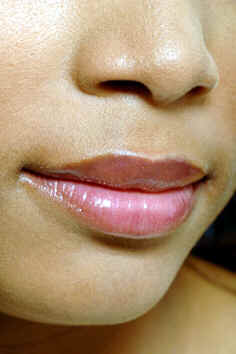 Lip plumping lipsticks have a temporary effect. These are products that cause the lips to swell and look fuller. On the other hand, one can go for a more permanent solution like lip implant surgery. Dermatologists and plastic surgeons also use injections to plump up the lips. Hyaluronic acid fillers or bovine extracted collagen are injected for lip augmentation. However, I always feel that surgical and invasive procedures should be adopted with some amount of caution.
The skin of the lips is thin and delicate. That is why certain ingredients can irritate the lips and make them swell slightly. For example, ingredients like camphor and menthol are used in lip plumpers, because they cause a slight swelling of the lips. Some of the lip plumpers contain moisturizers that make the lips appear smoother, while others are like a foundation. It is first applied on the lips and when lipstick is applied over it, the lips look fuller. Lip gloss, which is said to make blood vessels dilate, are also used to make the lips look more full.
Essential oils, like cinnamon and ginger, are also used to make the lips look fuller. If applied on the lips, they irritate the skin mildly and also cause blood to rush to the lips. This makes the lips swell up slightly and thus look fuller. However, essential oils should not be used by themselves. Look for lip balms or lip creams containing such essential oils. The effects of such products are temporary. They need to be re-applied in order to maintain the look for a longer period.
Other ingredients, like Niacin and Retinol also cause the blood vessels to expand and increase blood flow to the lips. In fact, Retino and ingredients like alpha-hydroxy acids help to increase collagen and give fuller lips over a period of time. Alpha-hydroxy acids occur naturally in fruits and milk. However, using fruits directly on the skin will not have the same effect. In the case of AHAs, the active ingredients are specially extracted and broken down into a form that can be easily absorbed by the skin. .) The way a lip plumper may be applied depends on the particular product. For example, it may come in a tube with a long foam tipped applicator. Plumpers which are more solid may be applied with the finger tips, or a lipstick brush. If you go for a lip plumper, first do a patch test in the inner wrist, so that your skin does not react to any of the ingredients.
For a home made lip plumper, you can add 2 drops of cinnamon essential oil OR clove oil to your lip gloss. Essential oils should not be used by themselves.
Or, melt two tablespoons of beeswax and one tablespoon of olive oil. Add to this one teaspoon ginger juice. Store in a small jar in the fridge.
The effects of such home remedies are temporary and therefore, short lived. They need to be re-applied.
Personally, I feel one can take the help of make-up to make the lips look fuller, or pouted.
To give the illusion of a pout, apply lipstick all over the lips, leaving out the centre. Then, apply a lighter coloured lip gloss on the centre.
To make lips fuller, first apply foundation that is one shade lighter than your normal skin colour. Apply a light touch of powder to “set” the foundation. Wait for a few minutes. Then outline the lips just outside your normal lip line. Use the same colour lip pencil as the colour of your lipstick. Then apply light coloured glossy lipstick on the lips, using a lip brush. Avoid matte lipsticks and use glossy ones to make the lips look fuller.
Tips to Change Bad Dental Habits
Dr Bhavneet Kaur
 “But I always brush my teeth”. This is the first reaction when people come to know they have a dental disease. Many people practice good dental care like brushing their teeth but surprising to them they still suffer from dental diseases. The most common reason for this is that much of the damage to the human mouth is done as the result of bad dental habits that people do without being aware of it. It is probably engaging regularly in one or more bad dental habits that can undermine the good ones and compromise your dental health. The good news is, none of these actions are addictive beyond the psychological level, and all can be overcome by conscious awareness and a decision to do something else. Here’s the list of ten of the worst dental habits, why they’re harmful, and what you can do i.e the tips to stop them:
Night time feeding: A majority of our bad habits start when we are children, or sometimes even when we are still infants. For example, many parents put their young children to sleep using a bottle of milk or juice. The sugars in this seemingly innocent bedtime drink can damage a child’s mouth, resulting in the phenomenon known as “bottle mouth.”
Tip: If you have started this bad habit with your children, there is an easy solution: gradually add water to the bottle each night, until eventually you are giving the child a bottle of pure water at bedtime.
Crunching hard objects: Few people keep the pits of fruit such as peaches, apricots, and plums in their mouth to suck on and then crunch on it. People enjoy snacking on popcorn kernels .It’s also commonly obseved that people after slurping down an ice-cold soda or iced tea then enjoy crunching the leftover ice. What’s the harm? The brittleness can put undue stress on a tooth and actually can cause teeth to fracture. Or they can cause microscopic cracks in the surface of the enamel, which could lead to bigger dental problems over time.
Tip:The best way to deal with this harmful dental habit is to switch to crushed ice in drinks, or better yet, substitute something that’s healthier to chew, such as carrots or apple chunks.
Using teeth as cutting tools: It is commonly observed that people rely on their teeth for a number of odd jobs such as chewing pens, pencils, handle of eyeglasses, to tear open a bag of chips, uncap a bottle of nail polish or cold drink, to straighten a bent fork, or to rip a price tag off a clothing. This can be hard on your teeth, traumatizing them or causing the edge of a weakened tooth to chip off or even fracture. In addition to causing stress fractures on your teeth, you could be irritating your joints and chewing muscles. Teeth are simply not built for this, and can easily be damaged from this type of abuse.
Tip: To help you break this habit the best principle of using the right tool for the job applies here.When cutting anything, use a knife, scissors or bottle openers and never your teeth. For overcoming the urge of chewing, you can chew gum instead, but beware: dental studies have shown that excessive gum-chewing can also cause damage to your chewing muscles.
Using wrong Toothbrush type: Some people think the firmer the toothbrush, the better. This isn’t so, especially for older adults. With advancing age, there may be certain physiological recession and gums may push back exposing the roots of the teeth often increasing sensitivity. The root is covered with cementum, which is worn away more easily than enamel. A brush with too-firm bristles may irritate the gums and lead to sensitive teeth.
Tip: Consult your dentist before buying a toothbrush to know which toothbrush might be best to maintain your dental health, depending on your individual gum and tooth problems.
Not Brushing or Flossing Properly:
Some people floss and brush their teeth regularly, but not often enough and using a wrong technique. You should aim to brush twice a day, be sure to replace your toothbrush every three or four months and always use the right technique to brush those germs away.Flossing teeth should be done properly.
Tip: If you aren’t sure if you floss properly – and dentists say many people aren’t – ask your dentist for a demonstration on your next visit. If you have children, be sure to buy them child-sized brushes so they fit their hands and mouth, and are easier to use.
Using toothpick as a substitute for dental floss:
This goes back to the principle of the right tool for the right job. A toothpick has its place, but it is not in the tight spaces between teeth. Floss is needed in these areas to remove plaque and food debris. Trying to force a toothpick into these places can injure gum tissue. Toothpicks can also break off and leave pieces of wood wedged between teeth.
Tip: Avoid use of toothpicks as far as possible as there are other better inter-cleaning aids. Just in case you use it, always be gentle with a toothpick, and never chew on one. Also, use only toothpicks with rounded ends.
Avoiding a dentist: Many people have a phobia of sitting on a dental chair for a checkup so they visit a dentist only when they have extreme pain. Also in order to save their money people try avoiding a dental visit least realising that it only accounts to a more expensive and invasive treatment in the long run.This is the most common bad habit and it is very important to be removed. Understand visiting a dentist regularly can infact help you overcome your fears apart from making you aware of what needs to be done to attain an optimum oral health.
Tip: The best way to curb this bad habit is to visit your dentist regularly.
Indian hockeytronics….
S. Charandeep Singh
 Hockey is an outdoor sport played between two groups of 11 players each, on a turf or a hard mud surface with hooked or bent sticks and a hard ball. The object is to drive the ball into the opponents goal by hitting it with the stick, the game is also called ‘Field hockey ‘ to distinguish it from ‘ice hockey’, which is a very similar but much faster game played on the hard frozen surface of ice.
The stooping low performance of the Indian mens hockey team in the 2008 Bejing Olympic qualifier had kept the team out of the Olympics after eighty years of dominance and had painted an ignominious picture but the young team in the recent qualifier had shown great skill under their Australian coach Michael Nobbs and have qualified for the London Olympics after emphatically defeating France by eight goals to one. Indian womens field hockey team also could not qualify for the London Olympics but their win in the 2002 commonwealth games had inspired the making of bollywood hit film chak de india that has inspired millions of Indians across the world.The recent win of the mens hockey team has raised high hopes in the minds of every Indian. This perhaps has made them curious to know more about hockey.
Historically, it is difficult to state with any certainty when or where hockey was first played however there are evidences that some form of game resembling modern hockey was played nearly 4000 years ago. In ancient Egypt even on the wall of a tomb built about 2000 B.C at Beni hasan in the Nile valley near Minia, there is a drawing which shows two people ‘Bullying’ as in modern hockey. Before the discovery, it was believed that hockey originated in Persia in 500 B.C .The reason for this is that polo was played by the Persians about that time and it was thought that hockey was a direct descendant of this game .It seems more likely , however that polo was a refined and more aristocratic variation of hockey, which was played earlier.From Persia the game travelled to Greece and was later taken up by the Romans. The Romans developed their own version of the game, which they called pagnacia’ which was played with a bent stick, the ball was made of leather, packed with feathers. Some form of hockey, though called by different names, was also played in several European Countries many centuries ago. In Ireland it was called ‘Hurley’,the people of Scotland had their own version of the game which they called ‘Shinty’. Both these games were played with a ball made of cork or rubber covered with layers of string wrapped round it. The stick was made of oak wood and was fashioned by the players themselves by cutting off a piece of wood with a natural bend at one end.
In France the game was popular in the 15tn Century. The French called their game ‘Hoquet’ which is the old French word for the land staff or crook, hooked at one end, used by shepherds. It is assumed that the word ‘Hockey ‘was derived from the French word. Another country where hockey took early root was Holland, which had its own brand of the game, which was played with a large , rather soft ball . But the country to which modern hockey owes its origin is England, where it was popular towards the middle of the 16th Century. This game was called ‘Bandy’. Even earlier, around 1425, another form of hockey known as ‘commock’ or comocke’ was played in England .The name was perhaps derived from the word ‘caman’, the Gaelic for bent stick’. The first clear mention of hawkie’ or ‘hockie’ to give its original spelling , occurs in 1838.
As hockey became popular, efforts were made to draw up proper rules and further changes occurred in 1875.An important land mark in the game, and the real birthday of modern hockey is January 18, 1886, when the British Hockey Association was born. King Edward VII, then Prince of wales, became the first president of the association. By then Hundreds of hockey clubs had been formed all over England and they all became members of the British Hockey Association.The most important rule, which has made hockey what it is today , was the introduction of the striking circle or ‘D’ as it is called .The author of this rule was Edgell Westmacott of the Teddington Hockey club, who is generally regarded as the father of modern Hockey. Another far reaching improvement was made in 1889 when a cross bar replaced the tape across the two goal posts. Three years later, the use of a goal net made the work of the umpire easier.
Hockey was introduced into India by the British . In the early years, it was confined almost exclusively to British and Indian soldiers and was especially popular among Indian sepoys . It was in fact their main sport. The nurseries of Indian Hockey were the hundreds of cantonments in the country, where it was almost the only sport of the Indian Sepoys. The greatest players the game has ever known, the Fabulous Dhyan Chand, whom the world called a ‘wizard ‘ learnt hockey as a sepoy.
The birth of Indian Hockey, as far as civilian teams are concerned, dates back to 1885, when the first hockey clubs were formed in Calcutta. At about the same time , the game spread to Bombay , which also became an important hockey centre. The first important national Tournament was the Beighton Cup Tournament which was inaugurated in Calcutta in 1895. The next year the Aga Khan Tournament was started in Bombay. The Punjab took to hockey in a big way and from the army units it spread to educational Institutions and was included in the Punjab University Sports tournament on 1903. The same year Lahore Gymkhana Club held the First Open Hockey Tournament in the country .
Hockey was included in the second Olympic Games in paris in 1900. But, the match was played as an exhibition event. Hockey was included in the Olympic games, for the first time as a competitive sport, in the fourth games held in London, The first -ever Olympic Hockey match was played between Scotland and Germany on October 29, 1908. Another 12 years went by before hockey again figured in the Olympic games at Antwerp (Belgium) in 1920 . However the decision of the international Olympic Committee to revive the hockey tournament, beginning with the IX Games in Amsterdam in 1928 gave India the opportunity to stake her claim for world honours.
On February 19, 1928 the Indian Hockey Federation named a team of 13 players and three more who were studying in England were selected to join the team Finally on march 10 , the 13-member team sailed from Bombay but the event evoked little Public interest. Only three people -two officials of the Indian Hockey federation and a solitary journalist -were present to see the team off. From these insignificant beginnings began the glorious and exciting saga of Indian Hockey, with the first ever national team leaving the shores of India in quest of International glory. And so at last to the Olympics India played her first Olympic match on May 17 and defeated Holland 3-0 in the final on May 29. Thus the birth of a new Olympic champion took place in Amsterdam.
The news of Indian success at Amsterdam spread like wild fire in every nook and corner of the nation and was received with great joy and pride by Indian at Home. To Millions of people in India, the Olympics were until then only a name. Indian Victory thus not only helped the growth of the Olympic movement in India, but also established hockey as the country’s national game.
In 1932 India went to los Angeles to defend the Olympic title and trounced the Americans 24-1 in the finals. India excelled and Defended the Olympic title for the second time at the Berlin Games (1936) riding on the very crest of world fame and at the peak of excellence .Leading from the front was the ‘wizard’ Dhyan Chand who was making his farewell appearance in the games. By a curious coincidence, but at the time of hardly any consequence, India met Germany in the final on August 15, which 11 years later saw the birth of India as an independent Country. While the British were responsible for introducing the game into India, especially among Indian Sepoys, they did not look upon India’s International participation with favour. The British Hockey Association was conscious of the superiority of Indian hockey and it was not prepared to risk defeat at the hands of a subject people .For this reason the British Avoided contact with India in international matches for long time. Great Britain kept away, on one pretext or another , from the Olympic games Hockey Tournament from 1928 to 1936. This was rather surprising as England had won the gold medal in the two earlier Olympics in which hockey was included. Even when the Indian Team visited England on its way to the 1928 Olympic games, the British did not field a national team against it. however in their first meeting in the final of the London games India beat England and retained the Olympic Gold Medal.
For today’s sportsmen who are playing for free country, it perhaps is difficult to understand the feelings of Indian sportsmen who had to play under a foreign flag but the high sense of patriotism and dedication of the Indian team was touchingly demonstrated when the team assembled in the dressing room prior to the match. Before taking the field all the players reverently saluted the tricolour of the Indian national congress which their assistant manager had taken with him to Berlin.
The scene shifted in 1952 to Helsinki, Capital of Finland, . Once again India main interest was centered on the fortunes of the hockey team.Holland challenged the Olympic champions in the Final but lost 1-6 and india won the Olympic hockey crown for the fifth time in the row. Apart from the honour of leading his country to victory in the Olympic, the Indian Captain , ‘Babu’ had the distinction of becoming the first Indian to be awarded the helms Trophy, America’s Nobel prize for sport. The award was made to him as “the best Sportsman of Asia in 1953, and the best hockey player of the world in the 1952 Olympics”. The Indian team to the Melbourne Olympic games (1956) was captained by Balbir singh. Playing in the final in the Sixth Olympics in succession India clashed with Pakistan for the first time since the partition of India and in a hard-fought match India won by one goal, scored midway through the second-half by R.S Gentle from a short-corner.In the 1964 Tokyo games the first Olympics on Asian Soil, India made a bold bid to regain her supremacy in world hockey.and defeated Pakistan to regain the title. India entered the Olympic Hockey Tournament for the ninth time in a row in the Mexico City Games in 1968. The match was awarded to India by the Jury of the International Hockey Federation . India met Australia in the semi Final but crashed to a 1-2 defeat and were unable to enter the final for the first time in 40 years.but India regained the title in the 1980 Moscow olympics and thus indian men’s hockey team remained dominant in Olympic competition winning eleven medals in twelve olympiads between 1928 and 1980 including six successive gold medals from 1928-1956 and in 1964 and 1980 besides one silver and two bronze medals.
Over the years, Hockey has become increasingly popular and today there are thousands of hockey clubs in the country and several thousand active players. The game is specially popular in educational institutions, the Railways and the services. The number of Competitions have also multiplied and there are more than 200 recognized tournaments played at the National , state and district levels as well as competitions for schools colleges, universities, Railways and services.
Although it was the British who introduced hockey to India, once the Indians took over the game they revolutionised the techniques of play. Making hockey a game of skill and agility with their short , controlled passes and remarkable ball control , the Indian hockey team dominated Olympic after Olympic and for several decades India Remained Unbeaten In a game which, though born in England, flourished in India They not only covered themselves with glory but also made every Indian hold his head high in the arena of world sport. Thus the time has come when our team must show their strength , the Indian hockeytronics and regain our old glory in the field of hockey.
(The author is a KAS officer)
KarakoramThe highway of death and dismay
Col J P Singh, Retd
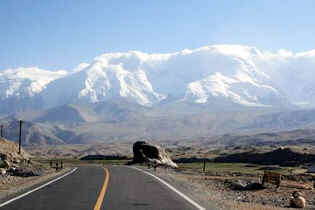 Gilgit-Baltistan remained cut off from Pakistan till 1986 due to rugged terrain, harsh climate and lack of accessible roads. During summers people walked across mountain passes to reach Rawalpindi. To facilitate travel, Pakistan started construction of Karakoram Highway (KKH) to connects Gilgit to Rawalpindi. On 28 Feburary 2012, it is on this highway that a civil bus, going from Rawalpindi to Gilgit was attacked. All passengers were taken out, searched and segregated. 18 of the 26 passengers were killed on the spot. This tragic news horrified the listeners. All the casualties were Shias. The bus was stopped in Sunni inhabited Khyber Pukhtunkhwa region, 200 Kms from Rawalpindi. This is one of many such tragic incidents on this highway, gradually turning it into highway of death and dismay.
Presidential elections crucial for Congress
By Harihar Swarup
Troubles of Congress-led UPA-II Government seem to be never ending. It began with the 2G scam, followed by controversy over Lokpal, FDI in multi-brand retail, and on the question of setting up National Counter Terrorism Centre. The Congress suffered a major setback when it was trounced in assembly elections in five states including the key state of Uttar Pradesh. Unexpected defeat in Punjab was a big jolt to the ruling dispensation.
Another major challenge is in the offing in forthcoming Presidential election slated for July. This will be followed by election of the Vice-President who is also Chairman of the Rajya Sabha. The Congress and allies cannot get its candidate elected to the President’s post on their own. A broad consensus will have to be evolved on a successor to Pratibha Patil. Congress has, however, a better chance of winning 2012 Presidential candidate if it fields a candidate “more acceptable” and cutting across party lines. To achieve this objective, regional parties like Samajwadi Party, AIADMK and BSP will have to be consulted and taken into full confidence. An analysis conducted by the Centre for Media Studies says no national party can get its nominee elected in July elections without the support of the regional parties which account for a quarter of nearly 11 lakh electorate. UPA has not got the numbers on its own to get its candidate elected, but it has a better chance to mobilize support by having a more acceptable and much beyond party line candidates. The UPA has little over 40 per cent of total votes against 57 per cent it had in 2007. Presidential poll, the analysis says, adding that the Congress has 31 per cent of the total votes against 24 per cent of the BJP.
The electorate for the coming Presidential polls is expected to be 10,98,882. Regional parties-SP, AIADMK and the TDP and the Left –will have to be taken on board in getting the required numbers in the Presidential election. “In fact, no candidate can become the next President of India without the support of as many of its group of regional parties. More specifically, support of any two of three regional parties-SP, Left and BSP-are essential for winning”, says the analysis.
In this context, it says, leaders like Pranab Mukherjee and Dr. Karan Singh can mobilize support cutting across party lines. As the UPA’s candidate, Pratibha Patil had won 57 per cent of the votes in 2007. The Congress, which has 206 members in the Lok Sabha and 71 in the Rajya Sabha, has only 31 per cent of the votes. The main opposition BJP-led NDA has 51 seats in the 238- member Rajya Sabha and 114 in the 543-member Lok Sabha, making up 24 per cent of the votes. However, 58 current members of the Rajya Sabha have retired and with fresh election this arithmetic has changed. The BJP-led NDA is in power in nine states, including Bihar and Madhya Pradesh, while the Congress and its allies are in power in 14 states, including Maharashtra and Rajasthan. Therefore, the regional parties will play a decisive role in the presidential election.
“Regional parties, irrespective of whether they group themselves as a front or not, stands in the way of UPA getting the required numbers in this election”, says the Centre for Media Studies. This account for about a quarter of UPA votes, including the Left parties, BSP, SP, Biju Lok Dal, AIADMK and Telugu Desam Party. Political parties have interpreted the recent coming together of regional parties on one platform and opposing the formation of the proposed NCTC, as significant ahead of the Presidential election. A BLD leader said Patnaik was testing the waters ahead of the Presidential poll.
Nitish Kumar and Jayalalithaa, besides other opposition Chief Ministers, will have a powerful role in deciding the Presidential candidate. Support of a minimum of two of the regional Chief Ministers is essential for winning. Mayawati, though down but not out, could still make a difference and may even decide the candidates for Presidential and Vice-Presidential elections.
If the efforts of a consensus on a Presidential candidate fails, there will be election with battle lines clearly drawn as seen ten years back when APJ Abdul Kalam, put up by the NDA and, supported by the Congress, won by defeating Capt. Lakshmi Sehgal , set up by the Left parties and the Janata Dal.
It is too early to hazard a guess as to who could be a consensus Presidential candidate. There has been faint whispering that Kalam could again be sponsored for the highest office of the land. His last term went on well an he is non-political too. Name of Gopal Krishna Gandhi, a grand son of Mahatma Gandhi and former West Bengal Governor was also heard. Finance Minister Pranab Mukherjee’s name is very much there.
Closely will follow the Vice-Presidential election. Pattern of the Presidential election will be repeated in this poll. Still more difficult at this stage is to guess who would be next Vice-President. Heard in some quarters that Wajahat Habibullah, former Central Information Commissioner, may emerge as a dark horse. (IPA)
Growth with less energy
By Dr Bharat Jhunjhunwala
Chief Minister of Tamil Nadu, Ms Jayalalitha has given the green light to the Kudankulam nuclear power project. A report of the World Bank also places availability of electricity as the main constraint to economic growth. Indian businessmen have been hollering for increase in supply of coal by Coal India Limited. The earth’s capacity to produce electricity, however, is limited. It is not possible to raise the consumption of energy of the 1.2 billion Indian citizens to the levels of the West. We will have to, therefore, necessarily find ways of attaining economic growth with less consumption of energy. Every country must dovetail its growth process to its natural endowments. For example, the rulers of Saudi Arabia do not rant that they require more water for sustaining economic growth. They grow dates instead of grapes and sugar cane. We must similarly adopt a growth strategy that is in tune with our natural resources.
We have help coming. There is much evidence that economic growth in India is no longer linked with higher levels of energy consumption. A study titled “Electricity consumption and economic growth in India” by Sajal Ghosh of Indira Gandhi Institute of Development Research, Mumbai found an absence of long-run relationship between economic growth and electricity consumption. Implication is that economic growth leads to higher consumption of electricity but higher consumption of electricity doe not lead to economic growth. The study concludes, “Electricity conservation policies can be initiated without deteriorating economic side effects. In another study, titled “Electricity Prices in India” by Pierre Audinet of International Energy Agency, Washington concludes: There has been a “sharp decrease of the ratio of electricity consumption growth to GDP growth in the 1990s (in India).”
This same phenomenon has been observed for China. Fengqi Zhou has made a study titled ‘Economic development, energy, and the environment in the People’s Republic of China’. Zhou tells us: “Energy consumption per 10,000 yuan GNP decreased from 13.36 lee in 1980 to 9.3 lee in 1990. Nearly two-thirds of this was saved indirectly through changing macroeconomic structures; the rest was saved directly by industrial enterprises. This indicates a de-coupling of energy consumption and economic growth” Similarly S.-H. Yoo of Hoseo University, Republic of Korea says in a study that “uni-directional causality runs from economic growth to electricity consumption in Indonesia and Thailand without any feedback effect. Thus, electricity conservation policies can be initiated without deteriorating economic side effects in the two countries.”
The reason of this decoupling between energy consumption and economic growth is that high price of electricity impacts growth in only a few energy-intensive industries but saves many hidden costs of environment like global warming. The final impact of lower consumption of energy is positive if the savings from hidden costs is greater than the costs from higher price of energy. The argument that we need to increase production and consumption of energy to sustain economic growth, therefore, does not hold.
The straightforward method of dealing with the problem is to discourage energy-intensive industries like aluminium and steel and promote the services sector. Likewise we must discourage energy-intensive crops like grapes and sugar cane and encourage coarse grains that consume less water. Our businessmen do not understand this because they are enthralled by the Western growth model.
The demand made by our industrialists for increased production of domestic coal by Coal India Limited (CIL) is really a ruse to access the scarce natural resources at a low price. There is a conflict of interest between the producers and consumers of electricity. High price of electricity is beneficial to the producers while low price is beneficial to the consumers. The strategy adopted by them to get out of this contradiction is to seek low price for domestic coal. Then the price of electricity too will be low and both producers and consumers can make merry. They have demanded increased production by CIL so that cheap domestic coal is made available aplenty. Coal could, of course, be imported and the shortage of electricity removed. But international prices of coal are high. Therefore, they want domestic production to be speeded up so that cheap domestic coal can be made available in greater quantities. In other words, the issue is not inefficiency of CIL but the cheap price of domestic coal. Note that the price is cheap because the Government imposes fewer taxes on this resource.
The capacity of earth to produce energy is limited. Mankind will necessarily have to adopt consumption patterns and life styles that are energy-extensive. The solution is to increase the price of coal as well as other sources of energy such as uranium, oil and water; and reduce consumption so that we do not hollow the earth and leave it denuded for the future generations. This is not to justify the inefficiency of CIL. However, increased efficiency should lead to more tax collections and not to higher sale of cheap coal.
Another aspect of the matter is the pattern of domestic consumption of electricity. Data from the 17th Electric Power Survey indicates that between 2004 and 2012 domestic consumption is expected to increase by 7.4 percent pa. In comparison the consumption for ‘production’-inclusive of agriculture, manufacturing and commercial-is expected to increase by a meager 2.7 percent pa. Implication is that increase in generation of electricity is required more for consumption than production. This is not to decry increase in domestic consumption which is justified on its own. This is to point out that increased generation is not such a major bottleneck for economic growth.
There is need to reduce domestic consumption as well. The monthly electricity bill of the house of a top industrialist in Mumbai is Rs 74 lacs. It is common for kothis in Delhi to burn electricity worth Rs 25,000 for a family of four. Then there is a car for each person. Such consumption of energy would add little to the welfare of the country while it imposes huge costs on future generations by depleting natural resources. A back of envelope calculation indicates that diversion of mere two percent of electricity produced at present is sufficient to provide lifeline consumption of 30 units per month to all unelectrified households of the country. Instead of diverting this small amount of electricity, the Government has embarked upon increasing generation to provide for luxury consumption by the richer sections.
Conclusion is that electricity is not the major bottleneck for economic growth. We can further minimize the impact of less generation by discouraging energy-intensive manufacturing and encouraging service sectors. This will be in tune with our endowment of natural resources. We should increase rates of electricity for domestic consumption should be made highly progressive with, maybe, a rate of Rs 20 per unit for consumption beyond 1000 units per month per family. The solution to energy crisis lies not in perpetual increase in generation and consumption of energy. On the contrary the solution will lie in reducing the consumption of energy to levels that are sustainable in terms of the capacity of earth.
UGC sponsored national seminar at SMVDU concludes
Excelsior Correspondent
JAMMU, Mar 25: A two day UGC sponsored National Seminar on Wireless Communication and Networks with special emphasis on Adhoc and Sensor Networks was organized by School of Electronics and Communication Engineering of Shri Mata Vaishno Devi University on March 24 and 25.
The focus of the seminar was on providing a platform for the researchers, academicians, industry personnel and students from various parts of the country to interact and learn about the new inroads being made in the field of Wireless Networks and Sensor Networks. Prof. Vinod Kapoor, HoD of E&CE, NIT Hamirpur while delivering the keynote address, emphasized the importance of Optical Communication and Networks in the field of day to day communication and the establishment of the internet backbone.
Convener of the seminar, Asstt. Professor Sumeet Gupta said that it was the duty of Technical University like SMVDU to provide platform for such excellent interactions in the exciting field of Communication and Sensor Networks in J&K which generally is seen as being technologically backward.
Prof. Dilbagh Singh from NIT Jalandhar spoke about the application of Wireless Communication and Networks in the field of Tele-medicine and Body Area Networks. Prof. Narottam Chand expounded on the technical aspects of Wireless Adhoc and Sensor Networks while K S Nagla, NIT Jalandahr, spoke about Robotics. Dr, Ankur Gupta from MIET and Dr. Vipan Kakkar from SMVDU spoke about Network Management and VLSI aspects in Sensor Networks.
A session using Qualnet Simulation Software and Sensor Node Test Bed and e-content development was arranged. About 120 participants from Karnataka, Rajasthan, Himachal, Punjab, Haryana, Uttrakhand, Delhi and J&K attended the seminar where Research papers were presented by number of faculty and student researchers highlighting the progress being made in their respective areas.
Co-Convener S B Kotwal and Ashish Suri, Astt. Professor said that they were extremely encouraged by the feedback of the participants and ensure that such events would be organized regularly for the benefit of the academic community at large in J&K. S B Kotwal presented the vote of thanks at the valedictory function.
After Panchayats, powerful Urban Local Bodies in offing: Slathia, Rana

 JAMMU, Mar 25: Minister for Industries and Commerce Surjeet Singh Slathia and Political Advisor to the Chief Minister Devender Singh Rana said that after the successful conduct of Panchayat elections and establishment of Panchayati Raj in the State, Omar Abdullah led Coalition Government in the State is keen to see powerful Urban Local Bodies functioning in cities and towns for developing the urban areas on modern lines.
Minister for Industries, Surjeet Singh Slathia while addressing a public meeting at Ward No. 32, Gole Talab Tillo, organized by Dharamveer Singh Jamwal, ex- Deputy Mayor, said that the Chief Minister Omar Abdullah wants people to be actively involved in governance at all levels. He said the Chief Minister is determined to transfer the power from the Secretariat to the democratic institutions at grass root and make people masters in the process of development.
Slathia presenting a detailed account of the achievements registered by the coalition Government in the State during last three years said that measures are in place to bring about an all round change in the development scenario reaching out to people in all areas.
He said the importance of local bodies to address local issues of development at towns and cities level is of significant nature. He asked the people to be fully ready to participate in the upcoming urban local bodies elections to select the best candidates and lay edifice for the comprehensive development of towns and cities.
Speaking on the occasion, Devender Singh Rana, Political Advisor to the Chief Minister said that like Panchayats, the urban local bodies in the State would be made powerful to decide on development issues at their level. He said Omar Abdullah wants to empower urban local bodies so that these effectively deliver on the ground and attend to the local public development needs adequately.
He said that the new urban local bodies would not be a farce as was done in 2002 when these institutions were elected but without transferring any powers to the corporators and local bodies representatives, thereby making them redundant and an exercise in futility.
“Omar Abdullah led Coalition Government is determined to make corporators powerful and local bodies institutions functional”, Rana said asking the people to participate in these elections in large numbers electing the best possible candidates who will be always at their beck and call and help resolve their problems.
Rana said the Chief Minister Omar Abdullah is taking the Government from Civil Secretariat to the door steps of the people so that specific public requirements in specific areas are addressed specifically and effectively. He said the Omar led Government wants the local developmental issues are properly tackled locally by the local representatives and as such wants to empower and strengthen grass root democratic institutions to ensure comprehensive, transparent and visible development.
Addressing the gathering Mushtaq Ahmed Bukhari, Vice Chairman for Development of Pahari Speaking People and Rattan Lal Gupta provincial president National Conference Jammu province gave a brief of the historical initiatives and measures taken by the present National Conference-Congress coalition Government under the leadership of Omar Abdullah for the holistic development of the state.
The public meeting was also addressed by Vijay Lakshmi Dutta, provincial president J&K National Conference Women Wing, Chander Mohan Sharma, Taranjeet Singh Tony, Ashok Singh Manhas and others.