

AUSTIN, TEXAS, Apr 21: An 8-foot-tall bronze statue of country singer Willie Nelson in his trademark braids was unveiled in Austin, Texas, on Friday, an unofficial pot-smoking holiday. Nelson, who has long advocated legalizing marijuana, sang “Roll Me Up and Smoke Me When I Die.” The statue features the country music legend sitting on a stool with his acoustic guitar, Trigger. Even the W sign at the nearby W Hotel wore braids yesterday. (agencies)
“High School Musical” and “Hannah Montana.”
LONDON, Apr 21: Reports of a falling out between Simon Cowell and ITV, partners on ratings juggernauts “Britain’s Got Talent” and “The X Factor,” have been blown out of proportion, his spokesman said on Friday. Cowell’s televised talent competitions are among the commercial channel’s biggest draws, generating millions of pounds in advertising income and helping it compete with rival BBC’s increasingly aggressive reality TV drive. (agencies)
Under pressure, Disney film boss Ross resigns
LOS ANGELES, Apr 21: Rich Ross resigned under pressure as chairman of Walt Disney Co’s
Avenues in Tourism Sector
 Devika Nanda
Tourism is a buzz word in the economies of both developed and developing nations. It chips in to the growth and development of the native lands where it is being practiced. Its vitality can be observed from the stastical data of 2011: Direct contribution to GDP and employment generation was US $2 trillion and 98 million respectively across the world. While talking about the indirect contribution in the same year it accounted for US $6.3 trillion GDP and 255 million jobs globally. This depicts the festering importance of tourism for any nation but the fact is that many parts of the world are still ignorant about the multifariousness of the field of tourism and they consider it only as a leisure activity. In reality Tourism is like an umbrella which encompasses the following flourishing fields:
Discipline:
Tourism is a vast field of study that encapsulates the concepts of anthropology, sociology, history, psychology, archaeology, ethnography, geography , accounting, economics, marketing, leisure, management and various other disciplines. It is the systematic study of the methods used in tourism industry. It teaches how to deal with people , their psyche and other important events taking place in the domain of tourism. It keeps people updated regarding the latest trends taking place in the travel and tourism and provides them with the knack to deal with cross cultural problems reducing the world into one global village. It enhances our knowledge regarding the existing and virgin tourist destinations. This know-how can equip the research scholars to come up with novel topics, notions, ideas and explore them with the tools of this discipline which can ultimately lead to new studies and add to the existing literature essential for thriving the tourism industry.Many private and public tourism organizations have created a new job position for tourism research scholars where dextrous and competent researchers can make their mark and add colours to travel.
Entrepreneurship:
Tourism industry is the only industry which has a shoe for every foot. It has immense scope for those who believe in ‘ Being your own boss'(YOB) approach. It is commonly observed that those who are creative, innovative, responsible and have the ability to influence others have an inherent dislike to work under or for others. But due to lack of resources they are bound to work for the success of other people. Tourism is the field that one can opt for san entrepreneurial career with full investment of his caliber and less monetary inputs. It allows one to work and make profits even with virtual offices. Initially, the only machine that a modern day tour entrepreneur requires is a computer and a space of few feets. So in order to be an effective entrepreneur in tourism one needs the competency to sense the opportunity and exploit it with the right attitude.
JOB:
Tourism also provides the job ‘Just obey your boss’ option for those who prefer an easy life, have poor risk taking capacity, lack initiative and prefer to be directed. In the present era, many national and multinational companies like KUONI, SITA, TUI, COX & KINGS, SOTC etc are dealing in tourism and they have vast job opportunities for the tour professionals. Most of the job vacancies are solicited and can be easily spotted in employment portals. Handsome salaries , job security and good prospects of growth are being offered as per the ability of the individuals.
FOREIGN EARNING:
Tourism has the potential to earn huge foreign currency and add to the strength of our economy. In 2011 ,India witnessed 6290319 foreign tourist arrivals and earned 77591 crores of foreign exchange which is self-convincing regarding the richness of tourism.
Thus, we can conclude that tourism is a multi -dimensional and a multi- sectoral activity which can go a long way in eradicating unemployment and earning huge profits. For this the need is to realize the importance of tourism and introduce it as a discipline and a field of study both at the school and college level. Various diploma and degree courses can prove handy in spreading the awareness regarding the blossoming avenues of the tourism.
(The author is a School of Hospitality and Tourism Management,University of Jammu)
Eating to Stay Fit and Healthy
B L Razdan
“You are what you eat’.” and “One should eat to  live and not live to eat” are the two often quoted old adages, in discourses relating to eating food. Obviously, if you want to lead a healthy life, you have to eat healthy food. Many people are fond of “good food” and there are those that believe that in life if they are not able even to eat to their liking and heart’s content, of what use is this life to them. I do not have any quarrel with those who openly declare such preferences about the food they take, both in quality and quantity, and in consequence, fill the coffers of the pharmaceutical manufacturers, one of whom had projected “a bright future” in one its of annual balance sheets stating that in the coming decade there would be significant increase in some categories of diseases in India, when their cash registers would start ringing.
As for others let me quote Chandogya Upnishad (verse: 7.26.2) which unambiguously says, “When food is pure, being becomes pure”. The holy Bhagwat Geeta (in verse: 17.8) categorically says that swatta food increases duration of life, purifies existence and gives strength, health, happiness and satisfaction….and that such foods are wholesome and pleasing to the heart.
Obviously, the importance of food in life cannot be gainsaid. But the culinary skills acquired by us over the centuries of making varieties of tasty food nudge us to eat more than necessary. Add to it the use of so many spices that had lured Columbus onto a sea voyage to discover India (but discovered America instead) and we cannot help taking an extra helping if only to pamper our taste buds. Even as there is nothing wrong with having a good sense of taste, we need to be aware of what we eat and how much we eat, if we want to stay healthy.
Lately an overwhelming tendency to have tasty and convenient food is increasingly being noticed. That what we call junk food is fast catching up with our health and if we do not wake up, we may literally pay through our nose to fight the life-threatening diseases that obesity gives birth to. Several years ago, the Centre for Science and Environment (CSE) had, after reliable laboratory tests, informed us about the harmful effects of some cold drinks promoted by the MNCs. More recently, it has released a study referring to the harmful substances in some of the snacks brought into India by these MNCs. Expectedly, the MNCs jumped, engaging PR firms to clarify that they are misunderstood without effectively countering the findings. The CSE study should, therefore, serve as a wake-up call for all of us and should prompt us to adopt healthy eating habits both in the family and in social circles.
It would be worthwhile to mention some plain facts, which require no research but can be gauged through sheer common sense. A juice brand sells mango nectar that can easily have seven to eight spoons of sugar per glass. A small packet of instant noodles is nothing but unrefined, processed starch. The malt-based, so-called nutritional milk additives for children are mostly sugar. Fried potato chips and burgers with patties stuffed inside that remain frozen for months together before being served are obviously not healthy. Our traditional sweets and salty snacks called namkeens and the samosas and bujhias too do not do any good to our health.
Almost every person who gains weight does not know how it happened! “Paani ka ghee ban jaata hai” is the common refrain. Well, let me be honest and tell it is all because the calorie intake has crossed the permissible limit or in other words, we ate too much for our genuine requirements of food. To lose weight, we need to cut back on calories. By this we don’t mean that we do something drastic and greatly reduce our eating portions. We can gradually cut back on our food intake and cut calories without drastically impacting our diet. Here are a couple of tips
Start the meal with a salad. Eating salads is a healthy way to cut down on the calories. It is nourishing, filling and can be made appetizing if cooked correctly using the right ingredients. We should, however, take care not to load the salad with cheese, mayo sauce, bacon or any other fattening ingredient. Eating a substantial amount of simple salad will automatically limit the main course intake and thus will lead to consuming fewer calories.
Stuffing oneself with food at the dinner table, apart from being certainly regarded as bad table manners, leads to high calorie intake, which is not desirable.Yes, wasting food can make one feel guilty, but stuffing oneself with it will only make one over-weight. Ideally, we should place orders for meals that come in small portions when dining out or just split the meal with the partner. Studies have proved that seeing or smelling good food can release hormones that make our stomach growl. So, the next time the tummy makes those awful noises, do not simply assume it to be a hunger call.
Chew more. The longer you take to chew your food, the better it will digest and the lesser will be the intake. The more you chew; the prolonged chewing will be processed by the brain, which has a mind of its own, as consuming more in terms of quantity. Therefore, this is a way of cheating the brain into thinking that enough has been eaten to satiate the appetite, when, in fact, there has been lesser intake.
Control the quantity. If one cannot give up on a particular food item, then make sure that moderate portions are taken. Don’t over eat and certainly don’t eat a lot of food during one meal. Space out the meals and thoroughly regulate the portions. Always remember: small is beautiful.
Avoid tea and coffee calories. It is quite understandable that a stressful work day requires us to drink lots of tea and/or coffee. But if we are serious about cutting back on the calories, then let go tea and coffee both. If, however, one can’t give up on it entirely, then one must, at least, drastically limit their intake.
It is as simple as that. This simple alteration in our daily habit will benefit us hugely and balance our body weight. If we do not pay any heed to the timely warning, we shall be paying a heavy price in the coning decade. Obesity levels will increase, fitness will decline and heath care costs will rise. One set of MNCs will make profits out of us by making us unhealthy and the other set of MNCs will make profits out of us by selling medicines and treating us, of course, for a price. The choice is clearly ours.
Cough and Cold medicines Rational use in children
Dr Rashmi Sharma
 Parents usually bring children to doctor’s clinic with acute respiratory tract infection (ARTI) with history of cough, fever, sour throat, blocked nose, difficulty in feeing etc. In both developed and developing countries the incidence of ARTI per child per year is 6-8.Cough and cold syrups are one of the most commonly used / sold medicines in India. These syrups (containing the decongestants- ephedrine, pseudoephedrine, or phenylephrine, and the antihistamines- diphenhydramine, brompheniramine, chlorpheniramine) are available both as prescribed drugs (by prescription of doctors) and over the counter drugs (without doctor’s prescription). Drops/ syrups like sinarest, cinaryl, triminic etc. are frequently brought by parents with or without doctor’s advise for their infants (less than one year) and children .
Cough and cold products contain ingredients like: decongestants (for unclogging a stuffy nose), expectorants (for loosening mucus so that it can be coughed up), antihistamines (for sneezing and runny nose), and antitussives (for quieting coughs). Histamine is similar in structure to biological amines like acetylcholine,adrenaline, serotonin, etc and hence, antihistaminic interfere with these biologic amine receptors and interfere with their actions. Sedative effect and paradoxical excitement caused by their use along with poor clinical evidence of them as effective antitussives agent in children make them unfavourable as antitussive agent in children. Most of the decongestants (both nasal drops and oral syrups) contain sympathomimetic drugs. These drugs produce stimulation of heart and central nervous system, constriction of blood vessels and dilatation of bronchi. Topical decongestants if used for 2-3 days can result into rebound dilatation of blood vessels in nasal mucosa leading to stuffiness which is problematic in young children and infants who are nose breathers. Moreover, dose of topical agents could not be monitored which is often associated with systemic absorption of drug and its relativeside effects(sedation or excitement of central nervous system, convulsions, tachycardia etc.). Psychic disturbances reported among children following oral phenylpropanolamine administration include irritability, sleep disturbances, hallucinations, aggressiveness (particularly in younger children), and seizures. Severe hypertensive episodes have been reported following phenylpropanolamine ingestion. Pseudoephedrine is relatively safe than other sympathomimetic agents. In a study of 81 965 prescriptions of pseudoephedrine to children under the age of 19,only one hospitalization (for a seizure) which could have been related to use ofPseudoephedrine. Antihistamines are the mainstay of therapy for allergic rhinitis and the resemblance between cold symptoms and symptoms of allergic rhinitis led to the use of antihistamines for the common cold. However, histamine is not present in increased concentrations in persons with upper respiratory infections. Hence, there is no rationale for their use in the common cold. Promethazine, an antihistamine widely used for its anti-emetic and sedative properties, has been reported to cause agitation, hallucinations, seizures, dystonic reactions, sudden infant death syndrome, and apnoea. However, the efficacy of promethazine as a sedative could lead to its misuse by parents who may have to cope with a screaming child. Second-generation antihistamines have fewer anticholinergic and sedative effects ,but with poor efficacy.
However, in 2008 US Food and Drug Administration (FDA) has advised against the use of over-the-counter cough and cold medicines in children less than two years of age. FDA also advised to use these medicines in children aged 2-11 years with caution. FDA advised to have extreme caution in children of any age with history of neurological disorders, seizures, hypotonia, heart disease, and in view of the risk of respiratory depression, it is advised that a child under two years of age should not be given any kind of cough and cold product containing decongestants or antihistamines, without seeking the advice of a healthcare provider. In January 2008, manufacturers voluntarily removed over-the-counter (OTC) infant (less than 2 years of age) cough and cold products from the market due to safety concerns. But, even now cough and cold products designed for older children are frequently prescribed by doctors and used by parents for children less than 2 years. These medicines were used in younger children by making self-styled dose adjustments like half of the dose of older child. However, there are reports regarding serious side-effects and even deaths in children under 2 years due to accidental ingestion, unintentional overdose, or after a medication dosing error. However, various simple ways can be used to make parents stress free by giving relief to their little ones. These recommendations are:
” A cool mist humidifier helps nasal passages shrink and allow easier breathing (warm mist humidifiers can cause nasal passages to swell and make breathing more difficult); *Saline nose drops or spray keep nasal passages moist and helps avoid stuffiness;* Nasal suctioning with a bulb syringe either with or without saline nose drops, works especially well for infants less than a year old ;* Acetaminophen (paracetamol) or ibuprofen can be used to reduce fever, aches and pains;*Drinking plenty of liquids will help the child stay well hydrated.
“It is further advisable to follow the dosing directions on the label of any OTC medication for children above 2 years, understand that these drugs will NOT cure or shorten the duration of the common cold, check the “Drug Facts” label to learn what active ingredients are in the products because many OTC cough and cold products contain multiple active ingredients, and only use measuring spoons or cups that come with the medicine or those made specially for measuring drugs. If one is using more than one OTC cough and cold medicine to a child always check whether they have same or similar “active ingredients,”(danger of over dose). OTC cough and cold medicines with childproof safety caps should be stored out of reach of children to avoid accidental overdosing.
(The writer is pharmacologist working as Asist. Surgeon Emergency Hospital Vijay Pur, Jammu)
Actor of many hues
 The legendary actor Ashok Kumar’s family today comprises his eldest daughter Bharati Jaffrey, grand-daughter Anuradha Patel and daughter-in-law Meena Ganguly. “Our father was everything one expects in a father and more,” recalls Bharati Jaffrey, remembering the days she spent with her illustrious father. “He was loving, affectionate and gave us the freedom of space and choice to do whatever we wished to do. He didn’t bring his studio back home and was full of jokes that would send us into peals of laughter.”
Mother Shobha Rani Ganguli played the disciplinary role in the family. “His multifaceted talents that reached out to areas and fields that had nothing to do with films, was amazing,” Jaffrey adds.
In memory of this philanthropy and his multifaceted character, his children and grand-children have formed the Ashok Kumar Foundation to commemorate their father’s multi-faceted talents.
Ashok Kumar who this writer had the good fortune of interviewing at his residence in Chembur, Mumbai, was the first actor in Hindi cinema to usher in the natural style of acting where dialogues are delivered as people talk in real life. This is interesting in the backdrop of his film-script-like entry into films as an actor. He was a lab technician at noted Bombay Studio when studios were the epicenter of filmmaking and stars worked on monthly salaries. During the shooting of a film, the leading lady ran away with the actor who was playing the hero. She happened to be the wife of the studio proprietor too. She was brought back pronto but the hero was shown the door. Who then would substitute the hero? The shy lab technician was persuaded to step in. He stepped in with great reluctance. The rest, as the clichéd saying goes, is history.
Ashok Kumar’s long and illustrious career is a happy mix of genres from action films, ghost dramas, family entertainment, through comedy to thrillers to musicals to literary classic and satire. Any listing of names would be just a small drop in the ocean of his performances. He has left behind a great legacy for the next generation to watch, view and learn from.
Ashok Kumar was one of the first actors wise enough to invest in another line of business and attain success in it too. In those days many actors and actresses wasted their wealth in their heyday to repent later. He had invested in a poultry farm which soon became a big supplier to many big and small hotels in and around Mumbai.
He was a brilliant homeopath and for 45 years he practiced homeopathy as an exercise in social service on Sundays and on his shooting holidays.
Moushumi Chatterjee, who acted with him in many films, says that one of her daughters was hit by a severe back pain once which the doctors could not give a happy solution. “I asked him to look into the case and he asked me to bring my daughter to him. He treated her for some days and the pain was not only cured but it never came back,” says Moushumi. “The Ashok Kumar Foundation donates homeopathic medicines to a clinic that takes medical care of deprived and poor children. It also funds solid scripts and its first benefactor was the Marathi film Shwaas that went on to bag many awards both in India and abroad,” says Meena Ganguly who looks after the entire workings of the Foundation.
“He had a passion for learning. He learnt to write his dialogue in Urdu from Dilip Kumar; he spoke French and German fluently. He used to say that one should be open to learning till one dies,” says Jaffrey. The rickety antique car used in Chalti Ka Naam Gadi was Ashok Kumar’s favourite. He helped his cousin when the latter was in trouble to produce Bimal Roy’s Parineeta in which he played Sekhar opposite Meena Kumari. He rescued Kishore Kumar when the latter invariably landed with massive backlogs in his income tax dues.
“Our father didn’t like his daughters to enter the films. But we have it in our blood; so how can we not come in? We never went anywhere near a studio when we were in school. But our youngest sister Preeti became one of the most talented comediennes in Hindi cinema and I made a career in television and in a few films. My daughter Anuradha has also done some good films. So, the bloodline begins to speak no matter how much you want to silence it,” says Bharati laughing at memories of happier days.
One of his sons-in-law, Deven Varma, husband of his second daughter Rupa had a long and successful career in films and a very close friend of his father-in-law. Actor Kanwaljeet, married to Anuradha Patel, is also into films and television. His son Arun Ganguly did just one film which was a disaster and never returned.
The actor was a chess player, a practicing astrologer and also a very good painter. “When he learnt that I am basically a painter by qualification and profession, though I switched over to acting, he made it a point to visit every single one of my painting exhibitions whenever I held them in Mumbai,” recalls actor Amol Palekar who was a fresh actor when he did a role with Ashok Kumar in Basu Chatterjee’s film. Late actor Iftekar who was an old friend, was his daily companion for chess so Ashok Kumar became a lonely man after his companion’s demise.
When he stopped working, his sat on a comfortable chair in his bedroom with his paintings decorating every empty space in the room. There were some knick-knacks scattered around and he picked on his nebuliser to take a few breaths as he had serious respiratory problems that had stopped him from smoking. He felt very lonely he said and wished that those who came to interview him would stay back and watch some of his films along with him on video. Unfortunately, few young journalists with deadlines to submit could spare the time to spend for an old and lonely actor. (TWF)
A journey in the lap of Himalayas
Amidst this grand spread of vivid beauties, the 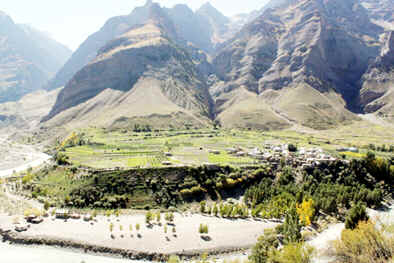 mountains, the streams, the meadows and the snowline of Himachal are a true spectacle that can inspire many a artist – be it poet, painter or philosopher. A drive on the Manali Keylong Leh route passing through the high altitude of Lahaul and Spiti district of Himachal Pradesh offers a blend of all this and much more. A travel on this route is nothing but a poet’s delight and a photographer’s heaven.
Given the adverse road conditions and unfavorable weather, one needs a passion to venture into this one of the most challenging roads of the country. It is advisable to carry full winter gear in all weathers. The first encounter with unpredictable weather can start as early as Solang valley, barely 10 km out of Manali when the bright, radiant Sun can be overshadowed by a dark cloud within seconds.
Travelers generally take the first halt at Marhi, which, besides being a chai-pakora station, is also the reporting centre for all vehicles plying on Manali Leh route. After a hot cup of tea and paying obeisance at a local temple, one moves ahead on the most mesmerising ascent of the journey – the gigantic Rohtang Pass which stands tall at 3979 metre on east Pir Panjal range. Gorges and colossal rocks scare the challenge the travelers on one side while a gigantic Himalayan range casts a spell on the other! Maneuvering many needle-shaped turns, with slopes exceeding 40 degree, and encountering lonely stretches, much hustle and bustle awaits the visitors atop Rohtang. The Pass, which in Tibetan means a pile of corpses, leaves everyone awestruck with its grandeur and humility!!
The Himalayas, which look gigantic upon ascent, bear a plain look at the Pass. Altitude is the sole indication of enormity. The mountain, though huge, remain humble before humans atop! The Pass, notorious for its unpredictability, is also known for Beas Kund – a spring – the source of river Beas, which originates subtly underneath a blue and grey closed structure. A few serene moments at the Beas Kund convey that rivers, however fiery, have a humble origin!
Humility is best taught there than elsewhere!
A few turns later, one encounters a place with many flags. At 4111 metre, this is the highest point of Rohtang. Vendors often crowd there with stalls for chana-kulchas. Who can resist these hot, nee warm, snacks in the biting cold and chilly breeze? Alongside, one can also enjoy ride on the newly introduced all weather bikes, giving a feel of a mini adventure sports arena.
The real beauty begins beyond Rohtang, where the nature unfolds its mystique, virginity and purity! The lofty Himalayas seem to be kissing the sky. Due to high altitude, the Sun gets so close that the shadow of clouds can be clearly seen on mountains – a rare spectacle, that deserves to be aptly captured. One can witness the distinct change in vegetation. The tree-line gets away, making way for small bushes. The mountains become naked, sandy and rocky. In the absence of thick forestry and reduced distance between ground and the sky, the sharp glare of the Sun makes the donning of goggles inevitable.
A few kilometers later, one enters Khoksar, the first village of Lahaul Valley. The stopover, at the bank of river Chandra, present a typical hill side atmosphere – a river bank, a suspension bridge, a giant naked rocky mountain, bad road, a PWD Rest house alongside and small roadside shops offering paranthas, noodles, momos, rice and Siddu, a local dish. One ought to push in something, as this is the only major stop on this road, before reaching Keylong.
As one moves deeper into the Lahaul valley, the terrain becomes so beautiful that one forgets the displeasure of travelling on unmetalled roads. At many places, mountain streams flow over the road whereas at many other places, the pot holes, accumulated rainwater, landslides, bumpy tracks are the only signs of what we call a ‘road’. Unmindful of this, one must enjoy the grandeur of Himalayas, interspersed with waterfalls, streams, rocks and gorges. Wild roses and alpine flowers deck the slopes in an unforgettable feast of colours. Suspension bridges add excitement to adventure. Atop one such bridge, one can see the beautiful Sissu fall cascading over the cliff from a high valley between two mountains. Crossing another bridge takes one to Tandi – the confluence of rivers Chandra and Bhaga. From here, the two rivers travel in unison as ChandraBhaga. The meeting point, with rocky ranges and a plain village Ghoshal in the background, is so spectacular that it appears in promotional photographs for this region.
Mountains, rivers, plains, greens all meet at one point and create a breathtaking display of the richness of nature. After humility, unity is another lesson taught by Nature on this route!
Legends add feather to this natural crown of Tandi. It is believed that the marriage procession of Lord Shiva, passing through the tall mountains, had left sinusoidal imprints, visibly distinct from other impressions on this range. There are other mythological stories relating to Draupadi and Rishi Vashishta. Tandi is said to have come from two words ‘Tan Di’, i.e. Rishi Vashishta is said to have relinquished his body at this point.
Travellers need to top up their tanks at Tandi, which has the last fuel station before Leh, another 365 km from this place.
Spending moments of leisure at Tandi, one drives ahead for Keylong – a name that ignites passion and challenge; a name that epitomizes undaunted human spirit of living in frozen conditions and virtual solitude.
For travelers looking to go beyond, Keylong is the ideal place for a night halt, as it is headquarter of Lahaul and Spiti district. Besides a HP Tourism Hotel, Keylong has many private hotels. One can visit nearby Udaipur valley or proceed towards Leh, through the beautiful Jispa valley and the famous Darcha valley. Keylong town also has a small monastery besides a local market (called as The Mall – akin to any other hill station!) which sells items such as woolens, handicrafts and olive oil.
Whichever direction one takes the next morning, one cannot afford to miss the eternal charm of a dawn in Lahaul.
A gleam of light peeps through the curtains and wakes up the tourists quite early. Pulling open the curtains can leave everyone, and not just a nature-lover, overwhelmed. The morning Sun is golden and glaring. The meadows are shining and splendid. The cattle graze quietly and birds chirp politely. The moments are full of cheerful calm and radiant resonance. It is a unique experience to wake up to such a serene yet extravagant morning, which echoes Dickinsons’s verse,
“Nature’s first green is gold, her hardest hue to hold; her early leaf’s a flower, but only so an hour.”
One can look forward to the journey beyond, fully overcome by the Mystical nature – indeed incredible and unfathomable!
Heritage Conservation and Development
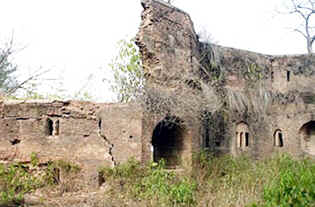 World heritage is the shared wealth of human kind. Protecting and preserving this valuable asset demands the collective efforts of the international community. The world heritage Day is an opportunity to acknowledge the diversity of cultural heritage that is shared by human kind. The day raises public awareness around the efforts that are required to protect and conserve world heritage, by drawing attention to its vulnerability. Each year the International Day for Monuments and Sites celebrates a different aspect of our collective heritage. The 2012 theme has been chosen to mark the 40th anniversary of the UNESCO world heritage convention which was adopted in 1972.
On 16 November 1972 the General Conference of UNESCO adopted the “Convention Concerning the Protection of World Cultural and Natural Heritage” – commonly known as the World Heritage Convention – . The Convention included both cultural and natural heritage in a single document, and consecrated the idea that there are properties whose significance and values exceed the boundaries of the country where they are located, and whose loss or deterioration would imply the impoverishment of the humanity as a whole. The recognition of a property to be of world heritage significance implies the awareness of a shared inheritance and common engagement for its conservation and legacy to future generations; in this sense, the Convention can be considered a tool to foster respect for cultural diversity, international cooperation and understanding, and peace among nations. In the World Heritage Day 2012, the focus is on “World Heritage and Sustainable Development: the Role of Local Communities”. ICOMOS makes a number of suggestions on how to celebrate the World Heritage Day, which include:
* Visits to monuments and sites, and restoration works, possibly with free admission;
* Articles in newspapers and magazines, as well as television and radio broadcasts;
* Hanging banners in town squares or principal traffic arteries calling attention to the day and the preservation of cultural heritage;
* Inviting local and foreign experts and personalities for conferences and interviews;
* Organizing discussions in cultural-centers, city halls, and other public spaces.
* Exhibitions (photos, paintings, etc)
* Publication of books, post-cards, stamps, posters
* Awarding prizes to organizations or persons who have made an outstanding contribution to the conservation and promotion of cultural heritage or produced an excellent publication on the subject.
* Inaugurate a recently restored monument
* Special awareness raising activities amongst school children and youth
* Promotion of “twinning” opportunities, defining areas for co-operation; exchange of speakers; organization of meetings and seminars, or the editing of joint publications.
The World Heritage Convention is considered the most successful of all the UNESCO conventions: it has been ratified by 188 States Parties, and the World Heritage List currently includes 936 properties located in 153 States Parties, which comprise 725 cultural sites, 183 natural sites and 28 mixed sites.
There are 27 world heritage Properties in India out of which 22 are cultural properties and 5 are natural properties. These include Taj Mahal, Ajanta, Elora and Elephanta Caves, Konark temple, Statue of Lord Mahavira at Mahabalipuram, Khajuraho Temples, Darjeeling Himalyan Railway, Kaziranga National Park, Koelkaro National Park, Bodhgaya, Sundarbans National Park and, Manas Wild life sanctuary among others.
Jammu and Kashmir has 5 such sites which include Wular Lake, Tso Moriri and Surinsar-Mansar Lakes. The state has at least 28 monuments and sites that bear testimony to our rich cultural heritage. These include Mughal arcade and spring at Verinag, Kartanda Sun temple, Bumzuva cave and temple, all in Anantnag district, Ancient Stupa excavated remains, Sankaragaurisvara temple, Ancient stupa, Chitya and monastery, Mosque and other ancient remains on the Wular lake Island, all in Baramula district, Fort at Akhnoor, Buddhist ancient site at Ambaran, Ancient Fort and palaces at Ramnagar, all in Jammu district, Rock cut sculpture in Kargil district, Ancient temple of Harihara at Billawar, Rock carving of Devi Riding a Loin at Basohli, Vishesvara and other cave temples at Basohli, all in Kathua district, and Buddhist monastery at Lamayuru in Leh district.
There are many more which need inclusion, like Forts at Hiranagar, Jasrota and Basohli and magnificent gate of red sandstone at Mansar Lake. Sadly baring a few, all the monuments and sites have been neglected and are crying for renovation and protection. For weather and current development paradigm are proving ruinous to them.
World heritage sites are facing severe challenges related to resources extraction and developments in their surrounding areas. “Heritage, observes Iriana Bokoya, Director General of UNESCO, “stands at the crossroads of climate change, social transformation and processes of reconciliation between peoples. Heritage carries high stakes for the identity and belonging of peoples, for the sustainable economic and social development of communities”,
Apparently, we need to strive towards the effective conservation and protection of natural and cultural heritage. While aware of the development needs at the local, regional and global levels, we need to establish and maintain a dialogue with all the stake holders and provide sustainable conservation solutions for everyone involved. For that to succeed, the current development model needs a rethink.
(The writer teaches geography at the G.D.C Kathua)
The ignored Paradise
With an area of about 8000 kms amidst almost 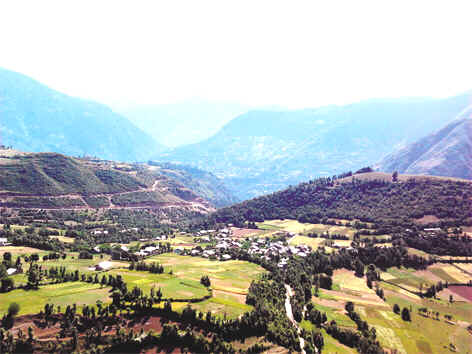 mountainous and hilly topography like that of Kashmir, Himachal or Ladakh region, district Kishtwar has its boundaries touching the valley on its north-west side and Ladakh region on its north-east with lahul spiti valleys of Himachal in the south-east and Doda district on south-west. The entire district is full of hills and mountains, forests & vegetation. The population or demography is mixed. Hindus, Muslims SCs, STs, Sikhs and Bodhs are reside herewith amity and brotherhood. The population is found settled upto an altitude of 9500 ft. above MSL in the hilly and upper regions. The district has four tehsils namely Marwah, Padder, Chhatro and Kishtwar with respective Hqrs at Navpachi, Atholi, Chhatroo and Kishtwar, respectively. Almost entire district receives snowfall during a good winter. The climate is similar to that of valley of Himachal.
With a high potential for tourism the district is full of hidden charm, wonderful sites and alluring, spots, health resorts, attractive tourism locations, famous historical and religious places, sacred shrines and monuments. The forests are full of mineral wealth, variety of timber and trees of highest quality, drugs and herbs and other medicinal shrubs and plants like mushroom, chilgoza, black zeera, artemisia, saffron besides the other forest resources of tremendous utility. Mineral wealth if properly explored and extracted can become a boon to generate revenue particularly the huge sapphire reserves mines of Machail Padder.
Tehsil Kishtwar with HQ at Kishtwar extends upto Galhar in the east, Palmar in the north, Thakrai etc. in the west and Sarthal Saroor, Bunjwa in the south-east. At Sarthal the prominent holy famous temple of Mata Asht-Dash-Bhuja” i.e. Goddess with 18 arms i.e. Mata Sarthal Dev ji is located where people and devotees come round the year to pay their obeisance and get blessings. At Rakna Palmar there is famous holy Ziarat as also at Bhanderkote where sacred temples of Lord Shiva and Durga Mata are also located where people throng to pay their obeisance. At Saroor, Bimal-Nag and in Bunjwa a charming spot Devigole are the Centre of Tourism attraction for their enormous beauty and grandeur worth seeing. At proper Kishtwar, we have a holy Gurudwara where many Sharadhaloos come to have blessings.
Tehsil Paddar with H.Q at Atholi is 62 kms away from in the east of district H.Q. Kishtwar and has much of its own to offer. From Atholi 1 km away on the other bank of river Chenab is located the other famous spot Gulabgarh where many Govt. offices are located. The confluence point of river Chenab and tributary Bhote-Nallah is really very fascinating which none can afford to miss. The most religious and sacred Shrine of Mata Chandi is located at an altitude of 9500 ft. at Machail where lacs of yatries and devotees come to pay their obeisance every year during famous Machail Yatra during August.
One can’t and must not afford to miss the chance of visiting. Gumpas of Bodh religion which happen to be 3 kms away from Machail and has much of its own to offer. All the foot journey form, Padder Gulabgarh to Machail of 40 kms length is a treasure of a nature’s glimpses, attractions, expeditions, enroute temples, caves, art and gallery, bubbling streams, springs, lushing greenery snow clad peaks and even naked mountain peaks.
The nature’s smiling creativity in the two magnanimous waterfalls of the entire volume of Bhote river provides a very thrilling experience and a feast of excitement to every passer-by which no camera eye can afford to miss. The Govt must channelize its all energy to complete the construction of road from Gulabgarh to Machial on war-footing basis to boost tourism and provide easy access to the sacred shrsine of Chandi Mata the holy glimpses of the sapphire mines. A famous hot-water spring at Tata Pani (Kundal) has its own importance where streams of people rush to have a bath to get rid of joint pains and skin disorders.”
Similarly Chhatroo tehsil with its H.Q. at Chhatroo has a charm of its own amidst its topography, geography, landscape, bubbling streams, meadows, valleys green fields and forest ranges. Chingam is really fascinating and thrilling location, where natural beauty and providential touch has its own say. The work on Kishtwar – Sinthan road is nearing completion and in due course of time this shall throw open a historic journey for the tourists to enter into the valley or leave the valley with a new thrilling experience through a new landscape, routes and peoples to have sweet memories of the trip.
Marwah-Wadwan and Dachhan area of tehsil Marwah has unique charm of its own to attract tourists. The green lush meadows of the region amidst thick and natural forest ranges makes one forget the earlier landscapes one would have come across and makes one feel that the nature does smile in the interior cut-off isolate places for serenity and that the providence has descended itself here to settle in this charming and fascinating land surrounded by forest wealth. The green meadows bubbling streams and lushing water falls together with hot water spring at Rinie Nallah and the wild life sanctuary in the area provide a feast of attraction to the visiting eyes which no camera can afford to miss from its focusing lens. The area is still un-connected from the district H.Q. Kishtwar and the work of connectivity is very slow and calls for immediate attention of the Govt. to open out this beautiful landscape to tourist community at the earliest.
Commanding an altitude of 5300 ft. above M.S.L. the district H.Q. Kishtwar 231 kms NE of the winter capital Jammu connected by NHIA – NHIB and about 180 kms S.E. of summer capital Srinagar also connected by a highway is situated majestically on a plateau formation stretching over a length of 6 kms and a width of about 2 kms amidst wonderful picturesque mountain ranges with the mightly river Chenab following at its foot forming a semiloop to provide a dimension of additional attraction to its location.
The population of the district H.Q which is also the tehsil H.Q comprising town, mandal & other localities including NHPC colony and its complex is about 65 thousand. The Dul-Hasti Power Project of 390 MW Power generation with its HQ campus at Kishtwar and colonies at headsite Dool and damsite at Shalimar has been a boon to develop the area and its activities.
With mountain ranges all around and lush green fields lulling the area, the District HQ if caught in the camera eyes from a height or through an aerial view appears a paragon of beauty. Amidst all this Kishtwar district H.Q. has a great privilege of heaving a flat, smooth stretch of ground (Plateau) locally known as Chowgaan which has a natural grass turf that transforms it into a soft green carpet as if a God given gift and a blessing in disguise reminding one and all to preserve its originality its configuration its dignity and charm for all times to come. It is, in fact, the face of Kishtwar the grace of Kishtwar and the praise of one and all. Right from Moughal period kings, princess, historian, people of all shades by the tourists, trekkers, sportsmen or outsiders all have eulogized its grace and importance. It is of historic, religious, social, cultural and educational significance. At its one end is located the famous holy Ziyarat of Shah Asar-ud-Din Sahib while at the other end is the famous red Gori-Shanker temple.
Many religious social and cultural, ceremonial, educational and even sports functions are held here in this ground throughout the year besides political and administrative functions. One the northern end of this Chowgan there is an aerodrome of about 1 km length where Aeroplanes like Dacotta 7 other types have been landing since early 50s at the time of need and helicopters very often. There is full scope for regular air service provided the Govt. gives attention to this vital aspect. At district HQ Kishtwar and in its close neighbourhood there are a dozen of attractive spots like Tund, Aarsi, Tailmuchi, Bharnoyan, Drab, Cheer-Har, Indra Nagar and Bhanderkote the confluence of river Chenab and Marsudhar river; Sarkoot lake, Chhar-Chinar etc. which if properly taken care of and developed by the Tourism Deptt. Or by the Kishtwar Development Authority in the real earnest, can serve as the best feast for the tourist culture.
So there is not an iota of doubt that Kishtwar is an ignored treasure of tourist pleasure seeking kind attention of Chief Minister and the Tourism Minister to come out open heartedly without any reservations to boost the tourism potential of Kishtwar and other such areas of the State which need Govt’s utmost attention to bring them on tourist map. It is appealed to the CM and the Tourism Minister to deliver justice by bringing all the historic, scenic of the religious sacred shrines of Kishtwar.”