

LONDON, May 31: China lacks a coherent global strategy to match its growth, power, wealth and ambition, a new report by a prominent UK think-tank has said.
The study finds that China’s foreign economic policies are confused or even contradictory because they are driven by domestic politics and priorities rather than by any grand strategic plan, said a statement issued by London School of Economics.
This means that China may not be in full control of its overseas investments and resources, while “muddled attempts” to increase its regional power may be making America stronger, the report says.
The report – China’s Geoeconomic Strategy – has been published by LSE IDEAS, the centre for international affairs, diplomacy and strategy.
It draws together insight from eight China experts – who include academics, journalists and policy analysts.
A report by the centre on India in March had concluded that India is not a superpower and will not become one in the foreseeable future, based on analyses by experts including noted historian and commentator Ramachandra Guha.
The report on China says that while China’s military might is expanding, according to author Jonathan Fenby, its policy towards its neighbours has been confused.
Sabre-rattling over control of the South China Sea has only alarmed neighbours such as Vietnam and the Philippines and led them to seeker closer alliances elsewhere, it says.
Fenby writes that China knows “the US will remain the principal military power in East Asia and that any serious attempt to challenge it will only drive other countries further into its arms… Even in its own backyard Beijing lacks strategic coherence”.
He adds: “That may reassure states which would fear a determined, coordinated Chinese approach, but it also opens up the possibility of miscalculations and makes dealing with the PRC more difficult.”
Another expert, Jie Yu, argues that this uncertainty also extends to commerce and overseas investment where the close relationships between the Chinese government and companies (even private companies) can stifle their effectiveness.
She writes: “Their close association and somewhat submissive relationship with the Chinese government have impeded their overall business plans. Chinese companies are particularly vulnerable – not to mention complacent when they operate abroad. China’s competence in ‘buying up the world’ has been grossly over-estimated by the West.”
The report’s editor, Nicholas Kitchen, concludes: “Not only is China not conducting a coherent geoeconomic strategy, it is often not in direct control of the policies it has. Nor is China necessarily that competent in the international economic arena. Significantly, these failings of foreign- economic policies are increasingly producing diplomatic difficulties for China.” (PTI)
China does not have coherent global strategy: LSE
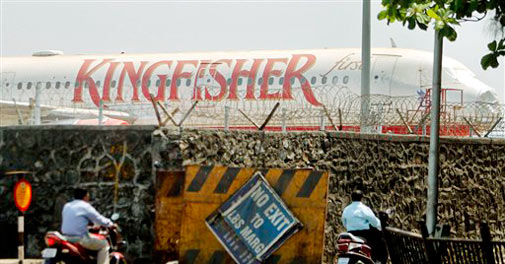
MUMBAI, May 31: Troubled carrier Kingfisher Airlines’ loss widened to Rs 1,151.53 crore in the fourth quarter of 2011-12 due to steep hike in fuel prices and sharp depreciation of the rupee.
It had net loss of Rs 355.55 crore in the January-March quarter of 2010-11, Kingfisher said in a filing to the BSE.
It has been facing financial troubles for almost a year now. The airline, which never made a profit since inception in May 2005, posted a net loss of Rs 2,328 crore in 2011-12 against Rs 1,027.39 crore in 2010-11.
“Operational cost savings were offset by a steep hike in fuel prices and sharp depreciation of the Indian rupee, which negatively impacted over 70 per cent of the cost base,” it said in a statement.
During the quarter, income from operations stood at Rs 741.28 crore as against Rs 1,626.65 crore.
Due to paucity of funds, the air carrier now operates only 110 flights a day with a fleet of 20 aircraft as against 400 flights per day last year with 66 planes.
“The company has a focused fleet re-induction plan and hopes to be back to full-scale operations in the next 12 months backed by a recapitalisation plan that the company is actively pursuing and confident of achieving,” Kingfisher said.
Kingfisher Airlines has a debt of Rs 7,057.08 crore. The airline had a 6.4 per cent market share in March, and was ranked below the budget carrier GoAir, which cornered 7.5 per cent market share in the same period. (PTI)
Michael Jackson’s sleepless note pulled from auction
LOS ANGELES, May 31: A note written by Michael Jackson in which he complains of being unable to sleep has been withdrawn from auction at the request of the late singer’s ex-wife Lisa Marie Presley, the auction house said.
Jackson, who died in 2009 after asking his doctor to give him a powerful anesthetic to help him sleep, wrote the note to Presley sometime between 1993-1996, when they were close friends. The two later became husband and wife.
“Lisa I truly need this rest I haven’t slept litterally (sic) in 4 days now. I need to be away from phones and business people. I must take care of my health first Im’(sic) crazy for you,” reads the handwritten note, scrawled on yellow paper.
Julien’s Auctions, which had listed the letter in an upcoming celebrity memorabilia sale, said on Wednesday it pulled the note from its Music Icons auction on June 23rd and 24th at Presley’s request.
“I’m assuming that it’s because the note is of a personal nature, and we want to honor the request and continue our good relationship with Ms. Presley,” chief executive Darren Julien said yesterday.
The “Thriller” singer had struggled with insomnia for several years while alive. His personal physician, Dr. Conrad Murray, told police shortly after Jackson’s death that the 50-year-old pop star pleaded for help sleeping during a long, restless night at his home on June 25, 2009, the day he died.
Murray was convicted last year of involuntary manslaughter after delivering a fatal dose of propofol – normally used to sedate patients for surgery – and a cocktail of sedatives to Jackson.
(agencies)
New trials test concept for the non-obese
NEW YORK, May 31: Cristina Iaboni had the dubious distinction of being not quite obese enough. For all the pounds on her 5’5” frame, she did not meet the criteria for bariatric surgery to help control her type-2 diabetes.
Yet six years of medications and attempts at healthy living had failed to rein in her blood glucose, leaving Iaboni terrified that she was on course to have her kidneys fail “and my feet cut off”—common consequences of uncontrolled diabetes.
Then the 45-year-old Connecticut wife, mother of two and head of human resources for a Fortune 500 company, lucked out. In 2009 she met with Dr Francisco Rubino of Weill Cornell Medical Center in New York. He had just received approval to study experimental surgery on diabetics with a relatively lean weight-to-height ratio, or body-mass index (BMI). Iaboni was among his first subjects.
Three years on, she has dropped 50 pounds to reach a healthy 145 and has normal blood pressure without medication. That isn’t too surprising: Weight loss is the purpose of bariatric surgery and often reduces blood pressure. More remarkable, Iaboni no longer has diabetes.
She is not the first patient with diabetes, which can be triggered by obesity, to be cured by weight-loss surgery. But she is a rarity for having it with a BMI well below 35 and over. That’s the level at which the American Diabetes Association says surgery “may be considered” and that Medicare and some private insurers cover. And Iaboni’s diabetes disappeared months before she shed much weight.
Her experience has raised an intriguing possibility: that some forms of bariatric surgery treat diabetes not by making patients shed pounds. Instead, by rerouting part of the digestive system, they change what signals the gut sends to the brain and the brain sends to the liver, altering the underlying causes of diabetes.
If proven, bariatric surgery may help people with type-2 diabetes who are less obese, overweight or even of healthy weight. And it might be effective against the currently incurable type-1, or “juvenile,” diabetes, too.
“Every textbook says that diabetes is chronic, irreversible, and progressive,” said Rubino. “But we have thousands of patients who once had diabetes and now do not.”
“INSUFFICIENT” EVIDENCE
Bariatric surgeons have long been prone to declaring victory against diabetes way too soon, before large-scale, long-term data proved their case. “The evidence for the success of bariatric surgery in patients with a BMI below 35 is not very strong,” said Leonid Poretsky, director of the Friedman Diabetes Institute at Beth Israel Medical Center in New York City. “Most of the studies have been very small and not well controlled.”
The American Diabetes Association rates the evidence that bariatric surgery can cure diabetes as “E,” the lowest of four grades. It calls data on patients with a BMI below 35 “insufficient,” and says the procedure cannot be recommended except as part of research.
The immediate risks of bariatric surgery are small—a 0.3 per cent chance of dying within 30 days of the procedure. But a small fraction of patients develop infections, leaking from the stomach into the abdominal cavity, or gallstones, and it can cause nutritional deficiencies: There is less intestine to absorb vitamins and minerals, raising the possibility of osteoporosis and anemia.
Despite these red flags, the surgical option is attracting intense interest because the quest to cure diabetes has become almost desperate. In type-1 diabetes, the pancreas does not produce enough insulin, a hormone that moves the glucose in food into cells. In type-2 diabetes, cells become resistant to insulin. In either case, glucose remains in the blood, damaging cells and blood vessels, sometimes severely enough to cause blindness, kidney failure, or gangrene requiring foot or limb amputations.
In 2010, 8.3 per cent of adults worldwide had type-2 diabetes (11.3 per cent did in the United States), resulting in direct medical costs of 376 billion dollars (116 billion dollars in the United States). By 2030, the global incidence is projected to rise to 9.9 per cent, partly because of the rising obesity rate, with costs reaching 490 billion dollars.
The possibility that bariatric surgery could cure diabetes emerged about a decade ago. A long-term study of thousands of patients in Sweden reported in 2004 that both gastric bypass and banding improved diabetes in many subjects. A 2008 study of 55 obese patients found that 73 per cent of those who underwent gastric banding saw their diabetes disappear after two years, compared to 13 per cent undergoing standard medical treatment such as medication, diet and exercise.
In 2009, surgeons at the University of Minnesota analyzed 621 mostly small studies of bariatric surgery in obese, diabetic patients. Their conclusion, reported in the American Journal of Medicine: 78 percent no longer needed medication to control their blood sugar. They’d been cured. Lap banding had the worst results, worsening diabetes in some patients.
But most patients in these studies were obese, many morbidly so. (The average BMI was 48.) The improvement in glucose control could therefore be credited to the patients’ weight loss, which averaged 85 pounds.
Rubino had a hunch that something else was at work. As a research fellow in diabetes at Mount Sinai Hospital in New York in 1999, he was reviewing the medical literature one day for guidance on how to best perform bariatric surgery on a man with a BMI of 80. He found papers from the 1950s and earlier reporting that surgery for peptic ulcers had cured diabetes.
Ulcer surgery removes a portion of the stomach and reconstructs a connection to the intestine, much as gastric bypass does. Few diabetes experts had noticed the old papers; they were published in surgery journals, which endocrinologists seldom read.
His serendipitous find led Rubino to other papers describing operations on the digestive tract that cured diabetes, something that, according to medical textbooks, was unthinkable.
“Within two weeks of surgery and sometimes sooner, these patients were off their insulin, off their diabetes drugs, and with normal blood glucose levels,” said Rubino. “That was too fast to explain by weight loss.”
Yet that’s how experts explained bariatric surgery’s effect on diabetes, especially as the procedure took hold in the 1990s. Few surgeons focused on how quickly the condition disappeared, said Rubino, “or they speculated that patients weren’t eating much after the surgery, and that’s what cured their diabetes.”
He began pursuing the idea that surgery might improve diabetes directly, rather than through weight loss. “I was ignorant of diabetes, so I wasn’t burdened by too much knowledge,” Rubino said. “Something that might have seemed heretical didn’t seem impossible to me.”
Rubino modified the popular gastric bypass surgery, called Roux-en-Y, to test his idea on diabetic lab rodents. In the classic operation, the stomach is pinched off so it can hold less food. Surgical cuts keep the rest of the stomach and the top of the small intestine, called the duodenum, from receiving any food. Instead, the stomach empties directly into the bottom of the small intestine, the jejunum. In Rubino’s variation,
Curing diabetes via surgery, without weight loss=2 duodenal-jejunal bypass (DJB), the stomach is untouched, but the rest of the procedure is the same.
The rats that Rubino operated on beginning in 2000 were cured of diabetes much more quickly than their weight fell. It was the first rigorous evidence, from a well-controlled study, that gut surgery has an anti-diabetes effect.
In 2006, Rubino was ready to move from rats to people. Two patients, with BMIs of 29 and 30, underwent his procedure. Their blood sugar levels returned to normal within days, though they lost no weight. In his most recent trial, reported in March in the New England Journal of Medicine, Rubino and colleagues at Catholic University in Rome performed standard gastric bypass surgery or a procedure similar to DJB on people with type-2 diabetes. After two years, 15 of 20 bypass patients and 19 of 20 DJB patients no longer had diabetes.
Curiously, although patients shed pounds, there was no correlation between weight loss and blood glucose, the key marker of diabetes. “Bariatric surgery is more effective on diabetes than obesity,” said Rubino. “Patients don’t become lean, but they do not have diabetes anymore.”
FROM GUT TO BRAIN
Research from the University of Toronto, reported online this month in Nature Medicine, may finally explain why. It examined the effects of bypass surgery on rats with type-1 diabetes, which is considered even harder to treat than type-2. Normally the jejunum receives only digested mush, as nutrients have already been absorbed in the duodenum, explained lead researcher Tony Lam.
Bypassing the duodenum allows the jejunum to receive an influx of nutrients for the first time, said Lam. Sensing them, the jejunum sends a “got glucose!” signal to the brain. The brain interprets that as a sign of glucose overabundance and orders the liver to decrease glucose production. Result: The rats no longer have diabetes.
“I believe that similar mechanisms are taking place in surgery for type-2 diabetes,” said Lam. “It strengthens the case for the surgery treating diabetes independent of weight loss.”
His rat study shows why lap banding and stomach stapling are less effective against diabetes than gastric bypass. Banding causes diabetes to go into remission in about 50 percent of patients, probably due to weight loss, said endocrinologist Dr Allison Goldfine of the Joslin Diabetes Center in Boston.
In contrast, the diabetes-remission rate after Roux-en-Y is 80 to 85 percent. “The improvements in blood glucose with Roux-en-Y appear to occur very early, by day three after surgery, so patients are being discharged with no medication,” she said. Something other than weight loss “must be going on.”
Goldfine has launched a study of diabetics with BMIs of 30 to 42 to compare outcomes after lap band surgery, Roux-en-Y, and intense medical management.
A year ago, Rubino began the first large study for type-2 diabetes patients with a BMI as low as 26, where “overweight” begins. The cost of the bypass surgery is covered by a grant from Covidien Plc, which makes laparoscopic instruments and surgical staplers. He aims to enroll at least 50 patients, following them for five years; he has operated on 20 so far.
(agencies)
To always be prepared, Boy Scouts start welding
SOMERSWORTH, NEW HAMPSHIRE, May 31: It’s not quite fly fishing or hiking, but welding is the latest merit badge Boy Scouts can earn – part of a full-court press to attract fresh talent to the critical occupation.
More than 140,000 new welders will be needed by 2019 to replace retirees and meet rising demand from natural gas drillers, steel producers, automakers and more, according to the American Welding Society (AWS).
The group helped the Boy Scouts of America award its first welding merit badge in March, hoping to offset waning interest in welding due to a cultural focus on four-year liberal arts degrees at the expense of community colleges and trade schools, industry experts say.
“The Scouts start realizing that welding could lead to a viable career,” said Sam Gentry of the AWS. “It’s not just something to fix a fence.”
Among the roughly 450,000 U.S. Welders, the average age is 55, and fewer than 20 percent are under the age of 35, according to AWS data.
Starting pay for welders is $45,000 per year. Welding engineers – those with advanced degrees – typically have a starting annual salary of $100,000.
Contrast that with the median US annual household income of 49,445 dollars, according to the Census Bureau.
Welding, though, is not the cushiest job.
The roughly 2,800 degrees Fahrenheit needed to weld, the sparks, and the painstakingly slow process – it can take hours to weld only a few feet – do little to endear this skilled trade to notoriously impatient youth.
Some older welders have delayed retirement because of the weak economy, prompting concern that when they finally decide to hang up their welding guns, there won’t be enough younger welders to replace them, said Kelly Zelesnik, dean of engineering technologies at Lorain County Community College in northeastern Ohio.
“The fear is that we’re going to lose a lot of talented welders and welding technicians and not have anyone to back-fill the jobs,” she said.
In addition to the Boy Scouts partnership, the AWS has boosted the amount in scholarships it doles out each year.
It also built a $500,000 trailer equipped with “virtual” welding machines with the help of Lincoln Electric Holdings Inc . Last weekend, the machine made a pit stop at the Indianapolis 500 car race to tout the welding profession to young auto fans.
The machines mimic the touch, sight and sound of the welding process – everything except the pungent smell of smoke from molten metal, known as a fume plume.
There are several types of welding, but generally the process involves using a gas-powered heat torch to combine two pieces of metal by melting another piece of metal – usually in wire or stick form – between them. (agencies)
Iran cancels $2 bln dam deal with China – report
BEIJING, May 31: Iran has cancelled a 2 billion dollars contract for a Chinese firm to help build a hydroelectric dam in the country, Chinese state media said today, a move that risks upsetting Beijing, one of Tehran’s most important economic and political allies.
Iranian President Mahmoud Ahmadinejad is due to visit China next week for a security summit, where he is expected to hold talks with his Chinese counterpart, Hu Jintao, on Iran’s disputed nuclear programme.
In March 2011, Iran’s official IRNA news agency said China’s Sinohydro Corp. Had signed a contract with Iranian hydro firm Farab to build the dam, described as the world’s tallest, in Iran’s western province of Lorestan. It was designed to support a 1,500-megawatt power station.
The Global Times, a popular tabloid owned by Chinese Communist Party mouthpiece the People’s Daily, said the Iranian government had decided to cancel the contract. The report did not cite sources or give a reason for the cancellation.
But it quoted Iranian media reports as saying Iran’s central bank was “dissatisfied” with financing options offered by China.
Sinohydro was not immediately available for comment.
China and Iran have close energy and trade ties, and Beijing has repeatedly resisted US-led demands to impose tougher economic sanctions on Iran to curb its nuclear ambitions.
However, differences have arisen between China and Iran in the development of Iran’s oil and gas resources.
State-owned China National Petroleum Corporation was given a month’s deadline by Iranian Oil minister Rostam Ghasemi in April to make a serious start on the giant South Pars gas field after 32 months of delay.
In September last year, Reuters reported China’s reluctance to progress with oil and gas investments in Iran.
Many foreign companies have been forced to pull out of the Iranian energy sector due to the fear of sanctions, but state-owned Asian firms are less susceptible to Western pressure to stay away from the Iranian market. (agencies)
Syrian consul in the US resigns over Houla killings
UNDATED, May 31: An honorary consul of Syria in the United States resigned, telling NPR his decision was motivated by the killings of more than 100 civilians in the Syrian town of Houla over the weekend.
‘You get to a point where your silence or your inaction becomes ethically and morally unacceptable,’ Hazem Chehabi, Syria’s Honorary Consul General in California, told NPR’s Morning Edition yesterday.
‘The recent barbaric massacre that took place in the town of Houla, for me it was a tipping point and was a point beyond which one could not justify remaining silent and/or remaining in a position that may be perceived, correctly or incorrectly, as having ties to the Syrian government,’ he added, according to a transcript of the remarks.
(agencies)
First private spaceship to reach space station
CAPE CANAVERAL, FLA, May 31: Space Exploration Technologies’ Dragon spaceship was poised to wrap up a pioneering test flight, the first by a private company to the International Space Station, and head back to Earth today.
Dragon became the first privately owned vehicle to reach the 100 billion dollars research complex, a project of 15 countries, tomorrow when astronauts used the station’s robot arm to pluck it from orbit and latch it onto a berthing port as the spacecraft sailed about 402 km above the planet.
The bell-shaped capsule, which was partly financed by NASA, was scheduled to be detached from the station at 4:05 am EDT 1335 today and released from the station’s crane about 90 minutes later. Splashdown in the Pacific Ocean about 907 km southwest of Los Angeles is expected at 11:44 am EDT 2114 IST.
Space Exploration Technologies, or SpaceX, successful recovered a Dragon capsule from orbit during a previous test flight in December 2010.
“We’ve done it once, but it’s still a very challenging phase of flight,” SpaceX mission director John Couluris told reporters yesterday.
The United States has been without its own transportation to the station since the space shuttles were retired last year. Rather than build and operate a government-owned replacement, NASA is investing in companies such as SpaceX with the intention of buying rides for its cargo – and eventually astronauts – on commercial vehicles, a far cheaper alternative.
“The ability to get to (the) space station on our first time, to not only rendezvous but then to berth, transfer cargo and depart safely are major mission objectives. We would call that mission alone a success,” Couluris said.
The successful trial run is expected to clear SpaceX to begin working off its 12-flight, $1.6 billion NASA contract to fly cargo to the station.
A second commercial freighter, built by Orbital Sciences Corp is expected to debut this year.
“Our plans are to carry out a test launch in the August-September time frame and the demonstration mission – same as what SpaceX impressively just did – in the November-December time frame,” Orbital spokesman Barry Beneski wrote in an email to Reuters.
Orbital has a similar contract to deliver space station cargo, valued at 1.9 billion dollars.
After leaving the space station, SpaceX’s Dragon capsule is expected to fire its steering jets to leave orbit and begin its plunge through the atmosphere.
Recovery ships owned by American Marine Corp of Los Angeles, will be standing by to pick up the capsule and bring it back to the Port of Los Angeles, a trip that should take two or three days.
From there, Dragon will be taken to a SpaceX processing facility in McGregor, Texas, and unloaded and inspected.
The company’s last test will be to see if it can speedily return some equipment coming back from the station to NASA within 48 hours, a practice run for ferrying home precious science samples when Dragon begins regular cargo hauls.
The rest of the 590 kg of gear returning on Dragon is due to be sent to NASA within two weeks, said flight director Holly Ridings.
“Because this is a test flight, specifically the program made sure that there’s not anything coming home that we couldn’t afford to not get back,” she said.
“I know it’s a really important capability to prove for NASA and for the space station program as we go forward, since this vehicle has the unique capability to return cargo,” Ridings said.
The only vehicles currently flying to the station that return to Earth are Russian Soyuz spacecraft, which primarily are used to transport crew and have little room for cargo. The other freighters are discarded and burn up in the atmosphere.
(agencies)
Attempt to paint India in negative colour on Iran: Rao
WASHINGTON, May 31: India has said that there is an attempt to paint it in negative colour on the issue of importing oil from Iran, arguing that it needs enormous energy for its 1.2 billion people.
“Somehow there has been, sorry to say this, some attempt, I don’t know for whatever reasons, to paint India in very negative colours,” Indian Ambassador to the US Nirupama Rao told a select audience here at the Atlantic Council – a think- tank – while responding to questions on importing Iranian oil.
Rao asserted that India has been transparent on this issue with international partners given its enormous energy security needs.
There is no attempt by India, as is being alleged in certain quarters, to “camouflage payment” of its oil imports from Iran, she argued.
“India has been extremely upfront and has been able to engage in a very frank dialogue with all our partners on this issue,” Rao said.
“There are energy security needs for India, but we understand there are certain constraints about importing oil from Iran. We are certainly cognizant of those realities. Obviously the amount of oil, we import from Iran has come down,” she said.
“We are a net oil importing country. About 75 per cent of our oil is imported. Iran has been one of our traditional suppliers and many of our refineries are catered to process Iranian crude. But the circumstances today have become more and more difficult for any country to import crude from Iran,” she said.
“We are also cognizant of US concerns, and have remained closely engaged on the Iranian issue. Crude imports from Iran have a steadily declining share in India’s total oil imports – dropping from a level of over 16 per cent in 2008-09 to almost 10 per cent in 2011-12, and these are expected to decline further in 2012-13,” Rao said.
In her remarks, Rao said India believes that while Iran has rights to peaceful uses of nuclear energy, it must simultaneously and rigorously fulfill the treaty obligations which it has acceded to.
“We have consistently maintained that Iran must cooperate with the IAEA to address and resolve all outstanding issues that continue to raise doubts in the minds of the international community. India has scrupulously adhered to the multilateral sanctions against Iran as mandated by the United Nations,” she said. (PTI)
Justin Bieber accused of battering man taking photos
LOS ANGELES, May 31: Los Angeles County sheriff’s deputies are investigating a complaint that Canadian pop sensation Justin Bieber roughed up a man who was taking pictures of the performer at a suburban shopping center, police said on Monday. Deputies were called on Sunday to an outdoor shopping area in Calabasas, about 23 miles northwest of Hollywood, by a man who reported having just had an altercation with Bieber, the sheriff’s department said in a press statement.
(agencies)