


Urinary Tract Infections in Children
Health Crisis at the Border
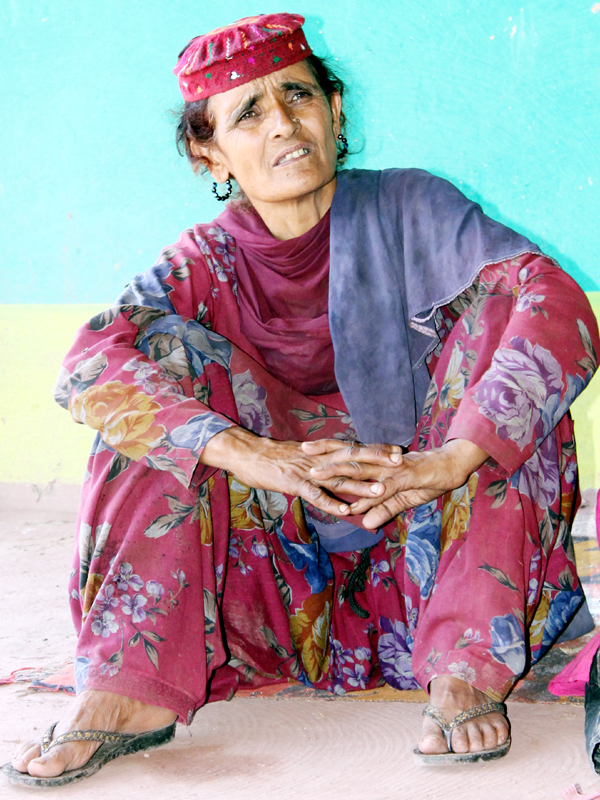
Shokit Ali
The new Union Health Minister Harsh Vardhan, who assumed office last weekhas raised hopes of the Indian citizens by promising that the Government would work to provide ‘health insurance coverage for all’ through a national insurance policy for health.
“The Rashtriya Swasthya Bima Yojana of the ministry of labour is working fine in some states but its reach is limited to BPL (below poverty line) families. I plan to rope in all economic groups and make the health ministry a sort of regulatory body for oversight on existing microhealth insurance programme in the villages and cities of India,” said Vardhan, adding that the new Government can learn a lot from micro-health insurance instruments developed by NGOs, self-help groups and small private entities.
Definitely a step worth welcoming in a country where low levels of public spending on health has been a matter of much discussion. In particular, the amount spent as a percent of GDP has been the focus of discussion, as it is an indicator of the priority accorded to health in the planning process of the country.
With the Government not spending enough on healthcare, the price is being paid by the common man, especially those who fall below the poverty line (BPL). Whatever the entitlements under various schemes for the BPLs, they often do not reach the intended beneficiaries.
The National Rural Health Mission (NRHM) launched with much fanfare on 12th April 2005 was intended to provide accessible, affordable and quality health care to the rural population, especially the vulnerable groups. Under the
NRHM, the Empowered Action Group (EAG) States as well as North Eastern States, Jammu and Kashmir and Himachal Pradesh have been given special focus. Undoubtedly, the programme has changed the healthcare scenario in these inaccessible areas but one cannot term it a success as much more needs to be done.
One such village awaiting the Government’s attention towards its pathetic healthcare situation is Banloi, 20-25 kilometers from Mendhar town in Tehsil Mendhar. What makes this village, and the entire tehsil for that matter, different from other areas in the district is its strategic location near Krishna Ghati, right at the Line of Control in Border District of Poonch. Mendhar has always been in the news for ceasefire violations, cases of infiltrations from across the border and extreme weather conditions. But what is it to live in this isolated region of the Northernmost Indian state of Jammu and Kashmir? This can be best explained by its inhabitants themselves.
“I had to carry my ailing wife on a cot to the nearby Primary health care center, when she was fighting for her last breath. Despite doing everything possible to save her life, we could not reach the center on time. She died right before our eyes on that cot,” shares forty-five year old Mohammad Maroof from village Nar Banloi, adding how absence of basic amenities like roads, health care center has made life miserable in this border village.
That is not a case in isolation. Sixty-year old Mohammad Ismail died under similar circumstances. Villagers believe that until an honest Government officer visits their village and assesses the situation himself, ‘stars will keep falling from the sky’ (a local expression for ‘people will continue to die’). “After our older generation is gone, who will pass on the heritage of our value systems to the younger generation?
Considering the wealth of serene beauty that nature has bestowed this village with, the development challenges its inhabitants face leave a visitor numbed.
Makhana bi, in her late fifties, shared her story of pain and difficulty. “A few months ago, I had terrible pain in my stomach. Because there is no road, it took us six to seven hours to reach the hospital in Mendhar town where the doctor gave me an injection, prescribed some medicines and handed me another injection to be taken two days later. But once back to the village, I couldn’t find a single person who could administer the shot. No health worker was available in the entire village. I wept over my destiny and threw away the injection.”
During cross-border firing, the need of health care centers is felt even more when villagers are literally locked inside their houses. Sharing his experience, Mohammad Hafiz says that whenever cross firing, shelling and bombarding takes place from across the border, it results in larger numbers of casualties and deaths in this village. In the last two years, more than seven lives have been lost in cross-border violence with no immediate health care being provided by either the Government or the security forces.
When the Sarpanch of Banloi Panchayat was contacted, he admitted that there is only one health center located quite far from the villagers. “And, even if one manages to reach the center in time, there is no guarantee that one will find the staff to attend to the patient. Banloi is a large village which definitely needs a health center of its own. To meet the needs of both Banloi and Nar Banloi, we require two centers,” rues the Sarpanch, highlighting the indifference of the administration that has turned a blind eye to the many appeals by the Panchayat heads.
There is only one request from the villagers of Banloi Panchayat: a better future for the younger generations. After facing the same set of challenges that their elders faced many decades ago,, they want the existing and the coming generation to be a part of an inclusive India where the Government cares enough to ensure that every scheme that they have launched or are going to launch, benefits all equally. They too want to share smiles with the rest of the world. One uncomfortable question that finds an echo across villages in the area, insistently demanding an answer, is: “Why are we not treated as equal citizens of this country, considering we are the first ones to face the bullets that come from the other side?”
(Charkha Features)
A robust challenge to cynicism
M.J. Akbar
More has been written about Indian Muslims than has ever been done for them. If they could convert six decades of Congress hypocrisy into cash, Indian Muslims would have been living like monarchs in fairy tales. The facts of their existence are more harsh.
Very rarely has this acrid truth been distilled as neatly as Prime Minister Narendra Modi did with a single example during his powerful speech to the Lok Sabha during the debate on the President’s address. Three sentences were sufficient: “When I was young, I saw a Muslim mechanic repairing cycles [in his shop]. Today his third generation is doing the same thing. Why is their condition still so abysmal?”
Why? Why are they trapped in a swamp? Why is the grandson not taking his business forward with the help of a degree of technical education? Why has this family skill-set become stagnant? Why has that shop, symbolic of a hundred thousand such establishments across India, remained a hole in the wall? Congress, which has risen to power on Muslim votes for decades, has no answers.
The consequences were spelt out with equal clarity: “If any organ of the body is not healthy, the body is not healthy…” A strong nation cannot have a weak limb. The Prime Minister knows that this limb must be strengthened. Poverty hobbles a nation and, as he said, the first duty of Government is to destroy this curse wherever it exists, among the oppressed, tribals, Dalits, minorities or in any caste demographic. We cannot let an Indian child go to bed hungry. Why cannot we have a simple home with a toilet for every Indian family by 2022? Broadband in every village? Electricity around the clock? A clean country, rid of garbage and filth that poisons life and nature, by 1919, as a tribute to Mahatma Gandhi on his 150th birth anniversary? These are not luxuries in the 21st century: they are bare necessities.
Every speech by a Prime Minister addresses many audiences, particularly in this age of multiple mass media. The most significant feature was the Prime Minister’s challenge to the cynicism of many in the political super-elite, who have acquired such a vested interest in failure that they seek to bury every dream before pregnancy. An India where 65% of the population is young will not accept this. Trust Indians, Modi said, and they will make it happen. History was witness to the power of Indians. Mahatma Gandhi turned the mightiest empire in history, that of the British, into jelly when he rescued Indian nationalism from the narrow confines of the political class and converted our freedom struggle into a mass movement. There has to be a mass movement again for freedom from hunger, homelessness, and indeed helplessness.
Innovative politics is barren without innovative policy; and Modi will seek new ideas from the intellectual malls of our nationwide brainpower, as well as mine fresh options from the recesses of government thinking. This will require a critical mass of ideas, held together by radical sinews. A hundred new “Rurban” cities cannot be built with bricks designed a hundred years ago. Any grand vision is so easily punctured by slipshod shortcuts in implementation.
The principal objective has been stated in the President’s speech: poverty alleviation, the template phrase that defined the approach of previous administrations, is not enough. The Modi government wants poverty elimination. Was everyone in that great hall of Parliament listening? The heavy-lidded languor of some MPs was evidence of the size of the task ahead. But closed eyes are less of a problem than closed minds; and the biggest hurdles will come from the obstinate who did not want to hear what they had just heard. One is not talking just of Rahul Gandhi, who seems so disinterested in the very concept of Parliament that he did not know which language he wanted to take his oath in, and kept fiddling with his mobile phone during the PM’s speech. Rahul Gandhi is going to be a problem for Congress, not for government. The larger reference is to those for whom a seat in Parliament is a source of personal gain rather than public service.
The Prime Minister refused the camouflage of generalizations, of phrases like “criminalization of politics” which seek to soothe public opinion without aiming to do anything specific about MPs facing criminal charges. The PM had a simple solution for the widespread belief that too many MPs have criminal records: the accused should demand a fast track verdict within a year. The innocent can remain in the House; the guilty could shift to less salubrious quarters.
Regressive aspects and elements of the status quo are being dismantled, piece by piece. This is an attempt at reformation, not a revolution; an effort to cleanse the temple of democracy, not to demolish it. This is neither going to be easy, nor quick. But the process has begun.
Urinary Tract Infections in Children

Dr Vijay Kundal
Urinary tract infections affect about 3 percent of children in the United States every year. UTIs account for more than 1 million visits to pediatric surgeon offices every year. Urinary tract Infections(UTIs) are caused by very small organisms such as bacteria, viruses and fungi. Bacteria are the most common cause of UTIs. Normally, bacteria that enter the urinary tract are rapidly removed by the body before they cause symptoms. However, sometimes bacteria overcome the human natural body defenses and cause infection.
Causes of UTI
Most UTIs are caused by bacteria. The urinary tract has several systems to prevent infection. The points where the ureters attach to the bladder act like one-way valves to prevent urine from backing up, or refluxing, toward the kidneys, and urination washes microbes out of the body. Children who often delay urination have more chances to develop UTIs. Regular & timely urination keeps the urinary tract clean by flushing away bacteria. Holding in urine allows bacteria to grow. Producing small quantity of urine because of less fluid intake can also increase the risk of developing a UTI. Chronic constipation, a condition in which a child has fewer than two stool movements per week, can increase, the risk of developing a UTI. When the bowel is full of hard stool, it presses against the bladder and bladder neck, blocking the flow of urine and allowing bacteria to grow.
High risk groups in UTIs
Throughout childhood, the risk of having a UTI is 2 percent for boys and 8 percent for girls. Having an abnormality of the urinary tract, such as urine reflux from the bladder back into the ureters, increases the risk of a UTI. Boys who are younger than 6 months old who are not circumcised are at greater risk for a UTI than circumcised boys the same age.
Are UTIs serious?
Urinary tract infections can make children feel very ill with vomiting, pain abdomen and high temperature. If infections enter the kidney, the infection can cause a scar to form on the kidney. Scars on kidneys can cause problems with how well the kidney functions and with high blood pressure. It is therefore very important that urinary tract infections are treated without delay to prevent these kidney scars formation. Some acute kidney infections, infections that develop suddenly-can be life threatening. Chronic kidney infections-infections that recur or last a long time-can cause permanent damage, including kidney scars, poor kidney growth, poor kidney function, high blood pressure. Because UTIs are less common in boys after the first 4 weeks of life, so a boys with a UTI should be assumed to have an some abnormality of the urinary tract until proven otherwise.
Signs and symptoms of a UTI
Symptoms of a UTI range from slight burning urination or unusual-smelling urine to severe pain and high fever. A child with a UTI may also have no symptoms. Children may have a high fever, irritability, decreased appetite. Some may have only a low-grade fever, nausea, vomiting, and diarrhea; or just sense of being unwell. Older children with UTIs may complain of pain in the middle and lower abdomen. They may have increased urinary frequency, excessive crying and burning urination & passing only a few drops of urine. Children may leak urine into under clothings or bedsheets. The urine may look cloudy or bloody. If a kidney is infected, children may complain of pain in the back or side below the ribs. Parents should immediately report to a doctor if they suspect their child has any of above mentioned symptoms.
Diagnosis of UTIs
A urine sample will be collected and examined. Some of the urine will be examined with a microscope. If an infection is present, bacteria and sometimes pus will be found in the urine. A urine culture should also be performed. The doctor may also order a sensitivity test, which tests the bacteria for sensitivity to different antibiotics to see which medication is best for treating the UTIs.
Treatment of UTIs
Most UTIs are caused by bacteria, which are treated with antibiotics. The choice of medication and length of treatment depend on the child’s history and the type of bacteria causing the infection. When a child is sick or unable to drink fluids, the antibiotic may need to be given through intra venous route. Otherwise, the medication-liquid or tablet-may be given by mouth. The medication is given for at least 3 to 5 days and possibly for as long as several weeks. In any case, the medication should be taken for as long as the doctor recommends. Antibiotics should not be stopped because the symptoms have gone away. Infections may return and resistant UTI may develop if the medication is stopped early.
Prevention of UTIs
If a child has a normal urinary tract, parents can help the child avoid UTIs by encouraging regular visit to the toilet. The parents should make sure the child takes plenty of fluids if infrequent urination is a problem. The child should be taught basic hygiene techniques after using the bathroom to keep bacteria from entering the urinary tract. Loose-fitting clothes and cotton underwear allow air to dry the area. Parents should consult the pediatric surgeons about the best ways to treat constipation. Children with a UTI should drink as much as they wish and not be forced to drink large amounts of fluid.
Take home message
Urinary tract infections (UTIs) usually occur when the body fails to remove bacteria rapidly from the urinary tract. UTIs affect about 3 percent of children in the United States every year. Most UTIs are not serious, but chronic kidney infections can cause permanent damage. A UTI in a young child may be a sign of an abnormality in the urinary tract that could lead to repeated problems. Symptoms of a UTI range from slight burning with urination or unusual-smelling urine to severe pain and high fever. A child with a UTI may also have no symptoms. Parents should consult there pediatric surgeon/urologist if they suspect their child has a UTI.
(The author is Consultant Neonatal & Pediatric Surgeon at Dayanand Medical College and Hospital Ludhiana )
Inner Voice
A PIECE OF MIND
A piece of mind
Searches for the peace of mind
In this world
Which is full of treachery and illusion.
A piece of mind
Aims for the peace of mind
In this mortal package
Which is not short of selfishness
And full of eccentricity without any delusion.
A piece of mind
Lives a billion lives
To attain the ultimate peace of mind
In each and every phase of life
Where ‘struggle is true and ease
Is farce’ is the only truth.
A piece of mind
Sometimes dies to give a birth
To the peace of mind
With impromptu decisions in this world
Where a single failure is highlighted
Over a stack of million winnings.
A piece of mind
Desires the peace of mind
So as to attain solace
Where there is no place for any
Melodrama or exaggerated emotions.
A piece of mind
Just wants the peace of mind
Which lies ultimately in “I”
And not in “you”.
But a piece of mind
Searches for the peace of mind
Being absorbed in thoughts of
“You” whereas the peace of mind is
Only a step ahead of that “I”
And “You”.
A piece of mind
at last, only desires eagerly for the peace of mind
Knowing the harsh fact that
It is like a guest, and will leave after
A short-while
And h’ve to go on an errand
For it’s search all over again,
Again and All over again…
Aditi Magotra
GCW, Gandhi Nagar,, Jammu
QUEEN NATURE
Flowers, sunshine, bees and trees
Animals, plants and cool breeze
And all other creatures
Are under queen nature.
Waterfalls and high mountains,
Winter, summer, fall and rain,
This is the beautiful side of nature.
But hell hath no fury like her.
Floods, earthquakes, tsunamis and storms,
Even man the conqueror of world can’t fight her,
For she’s as dangerous as beautiful.
She satisfies his needs which is great,
But his greed she cannot tolerate.
She has some powerful forces,
Water, wind, air and land
She dictates their moves and courses.
They are her faithful servants,
Through them she expresses her beauty,
Through them she shows her fury,
All of them humbly do their duties.
She’s not a mother ,she’s a queen,
She can be loving, she can be mean,
She’s the beauty of heaven,
The ferocity of fire,
The calmness of air,
The liveliness of water,
She’s God’s favourite daughter.
Arushi Shukla
MY SISTER
You were younger,
With considerable gap,
When you were baby,
You played in my lap.
I became a teacher,
Then you were a taught,
Competing your classmates,
Honour you brought.
You got service,
And always pleased your boss,
Maintained your family,
Without any loss.
Two sons are married,
The husband is retired,
You remained ill,
And physically tired.
I remember the days,
Your ‘Love’ and “Devotion”,
I paid for you attention,
Without any contention.
I found you smiling,
Never saw you in wrath,
I saw your birth,
And I am bereaved with death.
In the last moments,
Your cheeks were numb,
I called you loud.
But you remained mum.
You reached the pyre,
In a long procession,
” Indra” allowed drizzling,
Before your cremation,
The gloomy situation,
Gave me a grave hurt,
The flames pained me,
And injured my heart.
The rites will be complete,
By days eleven,
I pray to “God”, “Your soul”,
May get peace in heaven.
Vidhya Rattan Sharma
Gujroo Nagrota
THE EXPRESSIVE NIGHT
In the night, the quiet breeze,
blowing from the mountains,
flying over the seas,
creating a soothing cover,
at every moment as it reaches.
In the night, the green, shady trees,
singing the songs, of their lovely dreams,
In the night,
the silence of the air prevailing here & there,
murmuring in my ear:
the creation of the night spreaded everywhere.
In the night, the unrested moth,
hovering around the light,
In the zest and zeal.
In the night, the bright charming moon,
unique in the sky, dancing with the clouds.
In the night I feel very light,
I feel very cool,
I feel very lonely with firm of the night,
It says many words,
It forms many dreams
The night full of darkness
The night full of secrets
The night full of silence
The night an end of the day.
Riya Raina
Class 10th
Durga Nagar
Maize, bajra extend losses on adequate supply
NEW DELHI, June 14: Maize and bajra extended losses for the second day at the wholesale grains market today following higher supplies against subdued demand.
However, other grains including wheat and rice basmati moved in a tight range in scattered deals and settled around previous levels.
Traders said adequate stocks following increased supplies against easing demand from consuming industries mainly kept pressure on maize and bajra prices.
In the national capital, maize and bajra fell further to Rs 1,200-1,210 and Rs 1,250-1,255 from previous levels of Rs 1,225-1,230 and Rs 1,260-1,265 per quintal, respectively.
Following are today’s quotations per quintal:
Wheat MP (deshi) 2,160-2,360, Wheat dara (for mills) 1,485-1,490, Chakki atta (delivery) 1,500-1,505, Atta Rajdhani (10 kg) 220, Shakti bhog (10 kg) 220, Roller flour mill 810-830 (50 kg), Maida 830-850 (50 kg) and Sooji 920-940 (50kg).
Basmati rice (Lal Quila) 10,400, Shri Lal Mahal 10,000, Super Basmati Rice 9,500, Basmati common new 8,500-9,000, Rice Pusa-(1121) new 7,400-9,100, Permal raw 2,150-2,200, Permal wand 2,200-2,300, Sela 2,600-2,700 and Rice IR-8- 1,800-1,850, Bajra 1,250-1,255, Jowar yellow 1,400-1,420, white 2,325-2,525, Maize 1,200-1,210, Barley 1,300-1,310. (PTI)
The eternal values

Ajit Singh Nagra
We live in deeds not years, in thoughts not breaths, In feelings not in figures on a dial. We should count time by heart throbs. He most lives, who thinks most, feels the noblest acts the best and considers that the spirit alone is substance and the matter is a manifestation of spirit and that as divorced from spirit matter is illusory. All worldly pleasures are momentary and entail pain that consume our body slowly like sweet poison.
We are living in the age of mental stress and strain, storm and strife due to attachment with the perishable material things. Our unquenchable thirst for gold and ungovernable madness for transitory pleasures have landed us into the vortex of mental affliction, irritation and restlessness. We have become morally corrupt, intellectually dud, socially alienated, economically wretch to float aimlessly in all directions to swoop down upon the heap of dirt and dust to swell our pockets and purses with money and material. Our defective system of education lays stress on bookish knowledge through parroting without understanding to obtain high percentage, to become a corrupt bread earner who works little and gains more. This cancer of corruption percolates in our whole system from top to bottom in all fields of public life and due to absence of moral values, none is to ameliorate this rotten system.The man has lost his mental peace and he has to thrive on dose of some narcotics or liquor to sleep at night.
The advanced nations are also worst hit due to lack of moral education and cut -throat competition for material gains. Mrs Hillary Cliton, the consort of the former U. S. A. President presents a meaningful picture of the American society when she visited the ailing Senator Atwater in a hospital to know his health as he was suffering from dreadful cancer. He was groaning with deep agony and anguish and he remarked that there was ”Spiritual Vacuum”” in the American Society because their hearts throb without love and fellow- feelings. People love to tame the pets[Dogs and cats] but they have no time for their aged and sick parents who languish in all solitude in the old people ‘s houses due to erosion of moral values in the selfish young generation of present times.
Our and saints have given the gospel of universal love and compassion by inculcating in us the virtues of Truthfulness,charity hospitality, generosity magnanimity pity, benevolence sacrifice renunciation and tolerance to knit the mankind into one family.Their wisdom, enlightenment and awakening aim at dispelling the mist of ignorance.The universe is the composition of five elements- the earth Air, Water, Fire Ether [sky] and all living beings undergo four stages-birth, growth decay and death or dissolution. But the spirit or soul is imperishable as it is a part of God or divine illumination that acts as living force to provide vigour, vitality and vibration.The knowledge of spirit is spiritualism.The word moral has come from mores that means conventions or norms. Ethics is called the science of morality and it is rooted in ethos which signifies character. The religion is derived from Latin word Rigare that means to unite, to solidify as it cements man with man and man with God.Our eastern philosophy teaches us to love each other but the cunning and callous people use it as a tool to divide each other by fanning the fire of hatred and communalism.
Mind is an illumination provided it is tamed through discipline self- restraints rigorous mental exercise and austerity.It needs spiritual nourishment. The body is a vehicle and mind is its horse to draw it. Our five senses are its reigns and it is controlled by reasoning. Greed , Lust and anger are the gateways of hell. The senses are the windows of knowledge. Mind can be tamed by shutting the doors of senses.
Anger is a madness that causes more harm to our personality, deforms our looks, disturbs our peace and deprives us of good digestion and sound sleep. It spreads like fire through transformation from husband to wife, from parents to children and vice versa in the family and from boss to subordinates in the office and and it finds its target on the meek or the harmless innocent. When you are angry, clip your mouth tightly and donot utter any word .Any word spoken in anger will hurt the feelings of others and will end in repentance.Physical injury sustained can recover, its scar will heal up and be forgotten but the harsh words cut deep irritate and the heart bleeds.
One should cultivate the habit of early rising, the ambrosial hour to enjoy the tranquility, calmness and divine bliss. We should sit in meditation for a little time in quiet posture to have an introspection to find the nectar through super consciousness, illumination and contemplation. Mind is a seat of eternal bliss and it is not a matter.Lord Buddha advocates that the eightfold path—Right Faith,Right Action ,Right Speech Right Efforts, Right Mindfulness, Right View, Right livelihood and Right concentration can tame the mind.Every religion is based upon eternal values .The suffis or the mystics propagate Wahad-ul-wujud or unity of Being, Haq and Khalaq, the creator and the created, craving for direct communion with Him and attaing absorption in Him through Tauba[repentance] Wara [abstinence] Zuhd [piety] Faqr [poverty] Sabr [Patience] Shukr [gratitude] Khauf [Fear] Raja [hope] Tawakkul [contentment] and Riza [submission to the divine will] The eternal values are the precious treasures of our wisdom and they have universal application and our existence is not worthwhile without them.

Cat tales
Maneka Sanjay Gandhi
The first book I wrote is called Brahma’s Hair and it was about the mythologies around Indian plants. How much of mythology is simply story and how much true fascinates me.
There are about a 100 recognised breeds of cats. Most of them are just mutations of the original species. The original breeds have legends that are truly interesting.
The Birman is a revered cat breed from Burma.The temple of the golden image of Goddess Tsun Kyan-Kse was attended by the Kittahs or monks of whom the head, Mun-Ha, always meditated in front of the Goddess. Accompanying him in his meditation was Sinh, the white cat . One night Mun-Ha was killed by Siamese invaders as he meditated. Sinh placed his paws on the monk’s robes. Facing the Goddess, Sinh’s fur became as golden as the statue and his eyes became the beautiful sapphire of the Goddess. His legs, tail, ears and face became a velvety rich brown. His paws became white.
The Kittahs closed the bronze doors of the temple, saving it from the invaders. The next morning, the remaining cats had been similarly transformed. As the priests argued about Mun-Ha’s successor the cats surrounded the youngest of the Kittahs to succeed him. It is believed that when a Kittah dies, he will be reincarnated as a Birman cat before attaining Nirvana.
The heavy furred Norwegian Forest Cat originated in the forests of Norway around 4,000 years ago, and is considered one of the oldest cat breeds. According to legend, enchanted felines roamed the forests for centuries, disappearing and re-emerging at will. Eventually, the cats came out of the forests to live with farmers. Viking ships sailed with Forest Cats on board. In Nordic folklore, Freya, goddess of love, beauty, fertility, and the home, travelled across the sky in a fiery golden chariot with two huge cats pulling it. One cat was black and the other one white, one male, one female. Freya controlled the sunshine and rain and farmers who sat out bowls of milk for stray cats were rewarded for their kindness with bountiful harvests.
Another old cat is the silent French Chartreux originating from Asia Minor. The breed came to France through returning Crusaders who brought back these blue-grey cats from Syria as gifts to French monks of the Carthusian order, whose metallurgical expertise had provided swords for the conquests. According to legend, Chartreux cats kept by the monks, on islands like Cyprus and Malta, would leave the monastery in the morning to kill poisonous serpents. In the evening, when the monks rang the bells, they would return to the monastery for their evening dinner. It is said that, like the monks, Chartreux cats took on their vow of silence. Some Chartreux still pose as if praying, sitting with front paws raised together, gazing heavenward.
The tailless Manx breed originated before the 1700s on the Isle of Man. Apparently the Manx lost its tail because it was late arriving in the Ark, and Noah accidentally jammed its tail while closing the door. Another legend claims that the Manx is the offspring of a cat and a rabbit, explaining why it has no tail and rather long hind legs. Manx cats move with more of a hop than a stride, like rabbits.
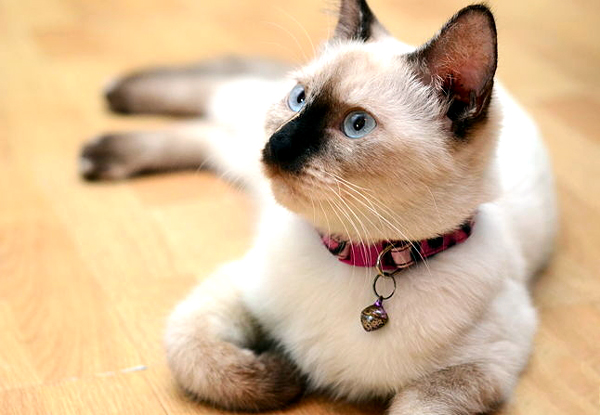
From Thailand come two cats : The Siamese, held in such high esteem that no one except the King and the royal family were permitted to own them. It was said that when Siamese kings died, their souls would pass into a Siamese cat, so that he could be present at the coronation of the succeeding king before attaining heaven. When a person of high rank died, one of these cats was selected to receive the dead person’s soul. The cat was sent to a temple to spend the rest of its days living a life of great luxury, which had been provided by the departed one’s relatives in an attempt to receive blessings.
Some Siamese cats have a kinked tail. Legend has it that a cat ancestor voluntarily kinked its tail so as to provide a safe place for the princess’ rings while she was bathing. Another fable accounts for both the cross-eyed feature as well as the kink. Once, when all the men of Siam left their homes to defend their kingdom, two cats – one male Siamese, Tien, and one female Siamese, Chula – remained in order to guard Buddha’s golden goblet in the sacred temple. Tien left to find a priest. The female never once glanced away from the goblet, wrapping her long tail around its stem to prevent theft in case she should fall asleep. She gave birth to kittens with a kinked tail and crossed eyes.
The Korat is a blue grey cat. These cats are carried by farmers in ritual processions meant to bring rain to the fields. It is known as the good-luck cat of Thailand and a pair of Korats are often given to brides on their wedding day to ensure a happy marriage.
The Egyptian Mau is the only naturally spotted breed of domestic cat. Considered a personification of the Sun God Ra as far back as 1400 B.C, they were worshipped as deities, cherished as pets, protected by laws, and mummified and mourned upon their deaths. One of the legends of Mau is that he killed the monstrous serpent deity, Apep the God of Evil and protected Persea the Tree of Life.
The Persian cat, with its long flowing coat and open pansy-like face has been written about as early as 1684 B.C. According to mythology the cat was created on Noah’s Ark: Alarmed at the increasing number of mice Noah asked God for help; God ordered him to rub the lion’s nostrils, whereupon the lion sneezed out a pair of cats. This myth is at the root of the Persian folk belief that the cat is vain because it fell out of a lion’s nose,
One legend tells the story of a merchant who came across a band of robbers attacking a man. The merchant fought off the thieves and cared for the injured stranger. When he recovered, the stranger told the merchant he was a magician and promised him one wish. The merchant told the magician that he liked to sit under the sparkling stars at night and watch the smoke curl from a crackling fire.
The magician took a swirl of smoke, a spear of fire and the light of two stars. He created a cat with a fire tipped tongue, smoke grey fur and sparkling eyes. It was the first Persian cat.
From Turkey comes two species: The Turkish Van Cat with a red tail and a red spot on its head. They are the only cats to like playing in water. Legends state, that the Van Cat accompanied Noah on the Ark and, being impatient, jumped off the Ark and swam to shore to Mount Ararat.
(To join the animal welfare movement contact gandhim@nic.in, www.peopleforanimalsindia.org)
Sports Sphere
 Born on January 20, 1994, Akshar Rajeshbhai Patel is a cricketer who plays as an all-rounder for the Gujarat cricket team. He is a left-hand batsman and slow left-arm orthodox bowler. He was signed up by the IPL franchise Mumbai Indians in 2013 and then by Kings XI Punjab in 2014 IPL Auctions.
Patel took 6 for 55 in Delhi’s first innings. This was his first five-wicket haul in his first-class career in only his second match.
Patel played just one first-class game in his debut season for Gujarat, but had a more successful showing in 2013. Slotted primarily as a bowling allrounder, the left-arm spinner got his first IPL contract with Mumbai Indians ahead of IPL 2013, although he was on the bench for the entire season.
He was one of the key contributors to India Under-23s’ title win in the ACC Emerging Teams Cup 2013, with seven wickets, including a four-for in the semi-final against UAE. He is a handy lower-order batsman, he was one of the consistent performers for Gujarat cricket team in the 2013/14 Ranji Trophy, finishing the season with 369 runs at an average of 46.12 and 29 wickets at 23.58.
In early 2014, he was named the BCCI Under-19 cricketer of the year for the 2012/13 season. He had an impressive season with Kings XI Punjab in IPL 2014 with 17 wickets .
After excellent performance in the 2014 IPL, Akshar was rewarded with a place in the Indian ODI squad for the tour to Bangladesh.
When Sanship Patel spotted his younger brother’s name in Kings XI Punjab’s starting line-up for their opening game, he wasted no time. He rushed to a neighbour’s house to borrow a projector, promising to return it once IPL7 was over. The wait was finally over after all for Kheda’s Patel family.
For his consistent performance, Akshar Patel has got the National Selectors’ nod and has been picked in the Indian Team squad on Tour to Bangladesh.
Identify the Player:
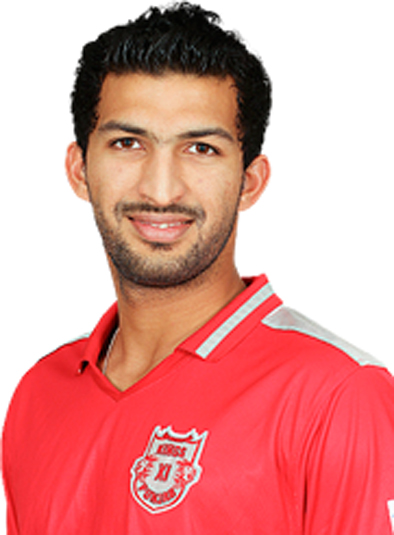
Write a brief description about him in 250 words.
Questions of this week:
1. Who will lead Team India in ODI Series against Bangladesh?
2. For which team Unmukt Chand played in IPL-6?
3. Who top scored for KXIP in IPL-7 final?
4. Which team emerged winner between Jammu and Reasi in the Inter-District Under-14 Boys Cricket Tournament?
5. Who is Ramdayal Punia?
Answers of the last week:
1. KKR 2. RCB 3. Manish Pandey 4. Pulwama 5. J&K’s Under-19 cricketer.
The best entry of this week was received from Sanjay Dhar, R/o Lane No-1, H-No 3, Upper Laxmi Nagar, Sarwal, Jammu.
The other entries of the week were from Tushar Mahajan, 55 Lower Laxmi Nagar, Sarwal, Jammu; Anju Rani of Trikuta Nagar, Jammu; Nitin Kumar of New Plots, Jammu: Rajeev Pakherta of Talab Tiloo, Jammu and Sunil Singh of Samba.
Dear Contestants, please send your reply within five days to:-
Sports sphere, Daily Excelsior
C/o Excelsior House, Janipur, Jammu. Pin 180007
Or through e-mail: sportsquiz@dailyexcelsior.com