

A boatman waits for riders on the banks of river Chenab in Akhnoor on Sunday. —Excelsior/Rakesh
A boatman waits for riders on the banks of river Chenab in Akhnoor on Sunday. —Excelsior/Rakesh

Defence Minister Arun Jaitley addressing a press conference in Srinagar on Sunday. —Excelsior/Amin War
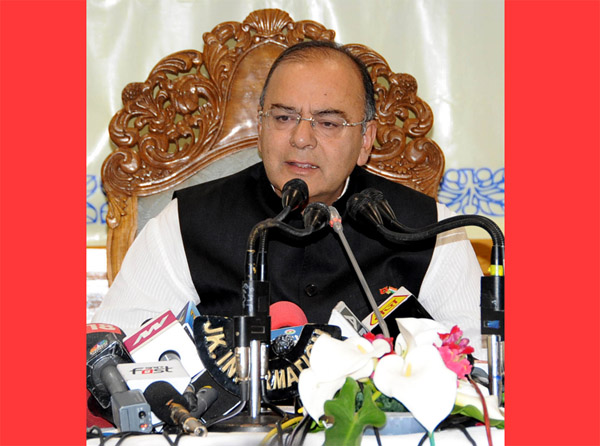
Defence Minister Arun Jaitley addressing a press conference in Srinagar on Sunday. —Excelsior/Amin War
Grey practices pose risk for cos doing biz in India: Report
NEW DELHI, June 15: Corporates need to have robust risk management system in place to guard against grey practices that “represent a sizable and often overlooked source of risk to companies doing business in India”, says a report.
“Designed to maximise profit through deception, grey practices are the day-to-day schemes involved in the use of mass registration addresses, shell or one day companies, opaque ownership structures and cash generation tactics,” according to global risk consultancy Control Risks.
In its white paper titled ‘Grey Practices: fuelling fraud and corruption in the Indian business environment’, the firm said that grey practices pose a significant risk to companies doing business in the country.
Control Risks Director (India and South Asia Corporate Investigations) James Owen said grey practices can turn what might at first sight seem like a legitimate business deal into a situation fraught with legal, regulatory and reputational risk.
“Neither clearly nor explicitly illegal, grey practices are short-cuts… And financial sleights-of-hand employed by many individuals and companies to conceal more serious fraudulent and corrupt activity,” the white paper said.
Malpractices in particular have been noticed mainly in sectors such as pharmaceuticals, construction, engineering, infrastructure and liquor, it said.
“They (grey practices) flourish – like elsewhere around the world – in a business environment creaking under weight of burdensome red tape and bureaucracy and where the nexus between business and politics is extremely close,” the white paper said.
With regard to pharma sector, the report has cited various kinds of malpractices including stealing of intellectual property leading to the production of counterfeit and generic medicines.
However, Owens said that changes are taking place.
“The rules of the game are slowly starting to change. Whether the catalyst is popular indignation against bad governance, a tightening in domestic anti-corruption legislation or the example being set by some of India’s multinational brands, the overarching goal seems to be one of greater accountability,” the white paper said.
The enactment of the Companies Act 2013, for the first time defined fraud and gives specific penalties, requires higher standards of governance, it added. (PTI)
Competition Commission again probes air fares movement
NEW DELHI, June 15: Amid sharp fluctuations in air fares, Competition Commission is once again probing whether cartelisation among airliners is influencing the movement of ticket prices.
The Competition Commission of India (CCI), has the mandate to keep a tab on unfair trade practices at market place, has started the investigation into the matter after getting a reference from a Parliamentary panel.
A source close to the development said the Commission is investigating the movement of air fares to check whether there are anti-competitive practices involved.
“We are investigating the air fares issue,” the source told PTI.
It could not be immediately ascertained when the Commission began its fresh probe into the matter.
Competition Commission had looked into the matter of air fares movement in the past and on those occasions, it could not find evidence of cartelisation. Earlier, the fair watchdog had found that air ticket prices were moving in tandem with the forces of demand and supply.
Since January this year, SpiceJet in particular had initiated a fare war on several occasions, forcing other airlines to follow suit by frequently providing steep discounted advance purchase tickets.
This was apparently done keeping in mind the competition from the new airline AirAsia India, which has been promising tickets at 35 per cent cheaper than the existing rates. AirAsia launched its operations on June 12. (PTI)
Dengue-like chikungunya virus reported in El Salvador
SAN SALVADOR, June 15: Salvadoran health authorities have confirmed that a dengue-like disease that has been spreading across the Caribbean has now appeared in the Central-American country.
Health Minister Violeta Menjivar said at least 1,200 people have been formally diagnosed with the chikungunya viral disease, although the positive testing must still be confirmed by the US Centers for Disease Control and Prevention.
Menjivar, interviewed by state-run Channel 10 television, said that cases were found on the outskirts of the Ayutuxtepeque municipality just outside the capital San Salvador.
In that area at the end of May, the ministry’s epidemiologists and infectious disease specialists detected an outbreak of a rare viral disease that caused fever and skin rash, which they said affected at least 181 people.
She said suspected cases were also found in residents in two other area on the edge of northern San Salvador.
The mosquito that transmits chikungunya — the Aedes aegypti — is the same one that spreads dengue.
The health ministry has asked people “to eliminate breeding sites” at their homes.
There is no vaccine or treatment for chikungunya, which has infected millions of people in Africa and Asia since the disease was first recorded in 1952.
It has also spread to southern Europe — with an outbreak in Italy in 2007 and southern France in 2010 — and arrived in the Caribbean last year, appearing in Martinique and Saint Martin.
Chikungunya produces symptoms similar to dengue, including high fever, joint pain and skin rash.
The disease’s name is derived from an east African word meaning “that which bends up,” referring to the way that patients are stooped over in pain. (AGENCIES)
Ukraine protest after rebels down military plane, killing 49
LUGANSK (Ukraine), June 15: An irate mob smashed the Russian embassy’s windows in Kiev and threw a Molotov cocktail against its walls in the wake of the downing by pro-Kremlin rebels of a military plane that killed 49 troops.
Yesterday’s violence came as top Russian and Ukrainian officials met for gas talks in Kiev but failed to make immediate progress, agreeing instead to resume negotiations today in a bid to avert an imminent cut in Russian supplies that would also affect large swathes of Europe.
The United States accused Russia of helping the insurgency by sending tanks and rocket launchers to the pro-Moscow rebels — a charge the Kremlin denied.
A commander in the rebel-held eastern city of Lugansk, where the plane was shot down, showed pieces of the Il-76 transporter’s charred debris in a wheat field a dozen kilometres (around eight miles) outside the airport.
The man known to his unit as Mudzhakhed (Sacred Fighter) said the plane tried to dump fuel after the rebels hit its engines. The heavy transporter crashed on its second landing approach after being hit by heavy machine gun fire.
He listed the mostly Russian-speaking region’s grievances against the new more nationalist leaders in Kiev.
“They brought machine guns and ammunition,” Mudzhakhed said. “We do not like people telling us what to do.”
Ukraine’s Western-backed President Petro Poroshenko vowed to deal the rebels “an adequate response” after the attack and signalled an imminent intensification of an offensive being waged against the insurgents. He proclaimed today a national day of mourning.
Poroshenko spoke moments before a crowd of several hundred smashed windows in the Russian embassy building and overturned several luxury cars belonging to its staff before pulling down its tricolour with the help of a wooden pole.
Later they threw a Molotov cocktail, which hit the wall of the building, but was quickly extinguished, according to an AFP reporter on the scene.
Russia condemned Kiev police inaction as “a grave violation of Ukraine’s international obligations”.
Washington also delivered Kiev a rare rebuke by urging “authorities to meet their Vienna Convention obligations to provide adequate security”. (AGENCIES)
^^^^
Cos bet on internal talent mgmt tools to tackle skill crisis
NEW DELHI, June 15: At a time when employers in India are struggling to find suitable candidates against vacant positions, HR experts are betting on internal talent management tools such as cross-functional promotions that help in resolving manpower crisis in any organisation.
Experts believe that cross-functional promotion of internal talent is very critical for any firm as this approach enables well-rounded development of employees.
Cross-functional promotions allow people within a company to apply for vacant positions in different functional areas such as engineering, sales, marketing and HR.
Companies like PepsiCo, Sapient, Pitney Bowes have active cross-functional development programme.
“Internal job posting process is a platform that empowers all employees to drive their own career and make conscious decisions. Every open role in PepsiCo is first up for grabs for the internal population before a search is activated externally if required,” PepsiCo India Director (Talent Acquisition) Raman Singh said.
The success of this process is backed by strong factual evidence where over the last three years more than 70 per cent of open roles have been filled internally, many of which have been cross functional, Singh added.
Elaborating on Sapient’s cross-functional promotions, Prashant Bhatnagar, Director-Staffing and Hiring, SapientNitro India, said, “Cross-functional promotions are a proven strategy in developing talent and realising their full potential.”
At Sapient, the Vice President of Learning and Organisation Development comes from our Consulting business, having spent many years with the clients before moving into this HR role.
Likewise, Sapient’s Senior Vice President and Head of People Team has a background in Program Management.
Customer communication and management solutions provider Pitney Bowes also applies a multi-layered approach with the objective to ensure the right talent with right potential is available when needed.
“Last year, 10 per cent of the workforce in Pitney Bowes India had an opportunity to participate in our cross- functional development programme,” Manish Chaudhary, Vice President, WW Engineering at Pitney Bowes, said.
Moreover, this HR tool — developing internal talent — can also be helpful in succession planning and retention of employees.
“Today the talent pool is not just diverse, it is truly global. Any company that is trying to succeed at a global level has to take heed of the fact that their talent will be from a wider demography than ever seen before,” Jyorden T Misra, Managing Director, Spearhead InterSearch, said.
Moreover, this also serves as a powerful retention tool as it provides motivation of being identified as the key player of the organisation. (PTI)
Omaxe eyes 20% rise in sales booking in FY15 at over Rs 2500cr
NEW DELHI, June 15: Realty firm Omaxe is expecting about 20 per cent increase in sales bookings this fiscal at over Rs 2,500 crore.
The company’s sales bookings fell by 11 per cent during last fiscal to Rs 2,107 crore against Rs 2,373 crore in the year before.
In terms of volume, sales bookings fell by 31 per cent to 7.83 million sq ft in 2013-14 fiscal. However, the average realisation grew by 29 per cent to Rs 2,692 per sq ft.
Giving outlook of sales bookings for the current 2014-15 fiscal in a conference call with analysts, Omaxe’s CEO Mohit Goel said: “…In terms of bookings which were Rs 2,100 crore last year, we are expecting a jump of around 20 per cent”.
“In terms of area, it is going to be very difficult for me to give you the area because this year we sold around 7 million square feet. Probably again we will be expecting around 8 to 9 million square feet but the average realization, average rate per square feet would increase. So, that is why our revenues would increase,” he added.
Omaxe’s net profit fell by 26 per cent at Rs 78.52 crore during 2013-14 fiscal against Rs 105.68 crore in the previous year. Consolidated income from operations declined 22 per cent to Rs 1,623 crore as against Rs 2,078 crore during the period under review.
On the debt status, Goel said: “As of March 31, 2014, the gross debt equity ratio of the company stood at 0.48, while the net debt equity ratio for the company stood at 0.37. Gross Debt for FY’14 stood at Rs 1,049 crore, while the net debt stood at Rs 806 crore.”
Delhi-based Omaxe has presence in nine states across 30 cities. It is executing about 125 mn sq ft of area currently, comprising 14 group housing, 18 integrated township and 10 commercial projects. (PTI)
CII suggests action plan for revival of NBFCs
NEW DELHI, June 15: Industry body CII has suggested a five-point agenda to breathe life into the country’s NBFCs, which are grappling with a steep rise in NPAs, slow loan growth and elevated funding costs amidst a stringent regulatory environment.
The action plan focuses upon meeting funding requirements of the sector, maintaining the existing NPA classification norms, bringing NBFCs under the ambit of the SARFAESI (Securitisation and Reconstruction of Financial Assets and Enforcement of Security Interest) Act, addressing concerns on capital adequacy requirements and resolving tax-related issues.
“The non-banking financial company (NBFC) sector needs to be integrated to the core of Indian financial system with adequate policy support to help meet the financing needs of the economy and achieve financial inclusion,” CII Director General Chandrajit Banerjee said.
Clarity on the policy road-map for the NBFC sector for the next 10 years would promote systematic and organised development of the sector, he added.
While NBFCs assets as a percentage to the GDP have risen from 8.4 per cent in 2006 to 12.5 per cent in 2013, the NBFC sector has a share of just 8 per cent in the total financial sector assets of the Indian economy, Banerjee said.
To give a boost to the NBFC sector, there is a need for a robust framework for safeguarding depositors’ interest and strengthening customer protection, CII said.
Extension of the SARFAESI Act to the NBFC sector will go a long way towards the orderly growth and development of the sector, the industry chamber suggested.
This much needed reform will be a level playing field for NBFCs vis-à-vis banks and empower them to recover their NPAs without court’s intervention, it said.
CII said that a robust NBFC sector is critical for the banking sector to meet the funding needs of the economy.
“To help meet the funding requirement of the NBFC sector adequately, there is a need to support financing from major sources, including banks and mutual funds, as also to promote access of funds through other routes like corporate bond market and external commercial borrowings,” it added.
At present, NBFCs need to classify a loan as NPA if the borrower defaults for 180 days as against 90 days for banks.
The RBI has suggested the 90 day rule to apply for NBFCs too. Since NBFCs cater to unbanked customer segment with no collaterals and irregular cash flows, there is a need for maintaining the existing norms, CII suggested.
Over the last five years, RBI has increased the total capital adequacy ratio floor from 10 to 15 per cent due to which NBFCs have been consistently raising capital.
In the current scenario, there is a strong case for maintaining the existing tier-I capital ratio, given the difficulties faced by NBFCs in raising equity, it said. (PTI)
Scrap duty on pellet exports: Pellet makers to govt
NEW DELHI, June 15: Pellet manufacturers have asked the government to scrap export duty on the steel-making input, saying that sudden imposition of the levy has cast a shadow on Rs 25,000 crore investment made by them to enhance capacity.
Pellet Manufacturers’ Association of India (PMAI) in a meeting with the commerce ministry has petitioned for removal of 5 per cent export duty, imposed in January this year, claiming that it was choking the industry and would stunt growth.
“The sudden levying of export duty of five per cent is a deterrent to exports. Hence, PMAI has requested government to remove the duty to ensure optimum capacity utilisation and see the industry does not get into a financial stress,” it said.
In the 2011-12 Budget, government had pruned customs duty on capital goods required for setting up pelletisation and beneficiation plants to 2.5 per cent from 7.5 per cent earlier to encourage use of low grade iron ore, main input for pellet manufacturing.
This move, according to the industry association, led to around Rs 25,000 crore investment that resulted 39 million tonnes (MT) hike in installed capacity to 62 MT in March 2014 from 23.5 MT in 2011-12.
“Over Rs 25,000 crore have been invested in the industry. A large part of this expansion was financed by bank loans. The adhoc and sudden changes has raised a question mark on the stability of policies based on which investments have been committed,” PMAI said.
Indian steel makers do not use mainly low-grade iron ore in the absence of proper technology. PMAI said since domestic demand for pellets has been lower, capacity utilisation of the industry was down leading to stress on the performance of the industry.
The Standing Committee on Coal and Steel had in February also asked the government to roll back the duty as the “increase defied logic”. (PTI)
&&&&