

Ammunition seized by Army and police in Gandoh, Doda on Friday. —Excelsior/Tilak Raj
Cops shift an accident victim to hospital in Uri on Friday. —Excelsior/Aabid Nabi

Cops shift an accident victim to hospital in Uri on Friday.
—Excelsior/Aabid Nabi
Delhi varsity Shenanigans
Men, Matters & Memories
M L Kotru
For the fourth running day, as I write, I find thousands of young Indians, wide-eyed and bright, boys and girls from Delhi and distant Sates, braving the hellish heat, standing outside college gates and on the doorstep of Delhi University Vice Chancellor, hoping for the admission process to start. It so happens that the present set of Czars of the Education (HRD) Ministry and its vassal of the day, the University Grants Commission, seem scornful of the idea of calling it a day and to allow the admissions to the University’s 64 colleges start.
I am hopeful that by the time you get to read this the crisis inflicted on the hapless students and the parents of a few thousand, accompanying their wards on perhaps their first visit to Delhi and very keen to ensure that admission is secured in their presence.
It’s not a joke that the HRD Ministry and its head, Smriti Irani of the Saas-Bahu TV serial fame, seems to be playing on the admission-seeking thousands. One would have expected better understanding of the students’ plight from her.
Had she had serious doubts about the advisability of retaining the four-year degree course, as decreed by another HRD Minister in consultation with the University last year, replacing the earlier three-year pattern, she should not have kept her reservations to herself for the month she has held sway over the Ministry to spring it as a surprise on everyone just two days before admissions were to start.
Ms. Irani, flush from the accolades she earned from her Prime Minister for the fight she gave Rahul Gandhi in her losing campaign in Amethi, probably hoped to earn many more by using the University Grants Commission as her cat’s paw. She persuaded the UGC – it didn’t need much, anyway – to ask Delhi University to revert to its earlier 3-year degree programme. The UGC, reports have noted, virtually operated all these days from the HRD Ministry, to execute her plan. It didn’t make much sense for the UGC to have okayed the 4-year term last year when proposed by the Vice Chancellor Dinesh Singh and supported by the then HRD Minister, Kapil Sibal, who it is now alleged by the BJP,had insisted on its adoption because he was committed to doing the behest of foreign (US and British) universities.
The UGC obviously has gone flat out this time as well, when the present HRD presiding deity, Ms. Irani made her intent known.
Irani was obviously goaded by the Ahkil Bharatiya Vidyarthi Parishad and the BJP’s men in the Delhi University Teachers’ Association – not to forget the role played by the biggest NGO of them all, and the guidance sprint behind the BJP, the Rashtriya Swayamsewak Sangh – into scrapping “American agent Sibal’s” brainchild. UGC didn’t lose much time either. It quickly forgot that the Delhi University’s 93-year-old charter guarantees its autonomy; it also forgot that all such decisions fall within the domain of the University and its Academic Council.
The UGC revealed its hand on the first day of the crisis by telling the constituent colleges of the University that their funding (about 90 percent) by the UGC would be stopped if they did not adhere to the HRD diktat. The Ahkil Bharatiya Vidyarthi Parishad meantime took to staging well orchestrated rallies, with pro-reversal pro-BJP DUTA teachers joining in stage dharnas. The pro-Autonomy teachers held their own sit-ins, not to speak of the other rallies, for and against the new HRD move.
Nobody, yes nobody, seemed worried about the future of the thousands admitted last year under what was the new dispensation then. Nor was anyone seriously concerned about the suffering inflicted on the thousands of fresh admission-seekers this year.
Why didn’t anyone think of the distress the political maneuverings of the present ruling dispensation in the HRD Ministry had caused to the freshers by its obduracy? For the record and without going into the merits or otherwise of it, the change effected last year provided for students opting out at the end of two years with a diploma, getting a degree after three years and an honours degree for those who completed the four-year course.
I don’t know whether that is good or bad but the Ministry should have known that the options don’t make the four -year programme all that obnoxious. I t should have persuaded it to hold its hand till such time as it had studied the programme thoroughly, its positives and negatives. Having marked it out as a programme initiated at the behest of Western universities by the previous regime, even if it was approved by the University’s Academic Council, the BJP’s Smriti Irani would have none of it. Y’ see even the RSS was opposed to the new scheme. And how could Ms. Irani have stood up to her mentors.
A Hindi channel put across the significance of the move rather saucily by arguing that “in Modiji’s Pathshala” Smirti Irani could not have dared to say no or to suggest a second look at the initiative handed down to her. The UGC has in recent times – no, may be for the last nearly three decades – become a very pliant institution. In this very space I have had occasion to focus attention on how the Commission was subsidizing any number of “colleges” sponsored or owned by influential politicians all over the country. A college with a faculty of 80 with less than two dozen students routinely receives without any qualms the 90 percent subsidy (salaries of teachers etc) from the UGC. I had in the same piece spoken of the Chancellor of all Bihar Universities (the State Governor) telling me how he had a hundred “Vice Chancellors” of all Bihar varsities, all flaunting doctorates bartered on a quid pro quo basis, one “naqli” V.C. of a “naqli” university (both recognized and aided) exchanging doctorates as a token of being partners in crime. The UGC lost its sheen many, many years ago. All these rich fake colleges and fake universities have been allowed to be around for numberless years, cash cows, if you will, courtesy a very pliant and obliging UGC.
Exploit tourism potential
Sir,
This has reference to the news item ‘Abundance of scenic beauty but no tourism promotion’ DE June 26. God has endowed Jammu and Kashmir with numerous scenic spots which may pamper the ego of a tourist, but they have remained out of bounds for him for one reason or the other. The most common problems that afflict these spots is lack of road connectivity and lodging and boarding facilities. Unless these spots are connected with roads, these places won’t be visited by people. Even those which are connected the roads there are in a dilapidated condition.
They usually are pokemarked with potholes found here and there. For examples, the roads connecting Doda, Kishwar or Bhaderwah are not quite safe as they are not properly maintained by the concerned authorities. The sorry condition of these roads becomes a cause for visitors not visiting these places. Besides, the Tourism Department has failed to promote these spots as tourist attraction as it is obssessed only with a world known places like Pahalgam or Gulmarg in Kashmir Valley.
The Government must pay attention to these out of sight places as well as they could generate employment and in turn can boost economy of the State.
Besides, negligence may deprive us of certain valuable things as have been mentioned in the said news item.
Yours etc…
Anup Jamwal
Udhampur
India’s danger in Afghanistan
Surjeet Sarkar
In a series of aggressive moves against Indian establishments in Afghanistan, the consulate in western city of Heart came under fire recently. The security sources in Afghan establishment has confirmed that a contingent of Lashkar-e-Toiba hit squad was assigned to take hostages and lay siege on the Indian consulate in Herat. The terrorist attack was planned to coincide with the grand oath ceremony of the Narendra Modi Government in Delhi on May 26.
This is the latest in a long line of attacks on Indian establishment and interests, especially embassy and consulates in Afghanistan. In August 2013 a botched bombing against the Indian consulate in the Afghan city of Jalalabad near the border with Pakistan killed nine people, including six children. Two attacks on the Indian Embassy in Kabul in 2008 and 2009 killed 75 people. Along with diplomatic venue, two Kabul guest houses popular among Indians were attacked, in 2010, killing more than six Indians. The previous attacks have been blamed on militants from the Haqqani network, an al-Qaeda-linked group enjoying the patronage of Pakistani military intelligence.
Despite repeated assurance from the Afghan premier, it would be naïve on the part of Indian political leadership to think that the attack on Herat consulate would be the last in Afghanistan. Such attacks would continue as ISI is fighting a proxy war with India, for greater influence and authority in Afghanistan.
The reasons behind the spate of attacks are manifold. India and Pakistan have large strategic stakes in Afghanistan. Pakistan desperately wants the trophy of Afghanistan from the US, as a reward, for allying with the US, in the so-called, “war on terror”. The simmering conflict can therefore be largely attributed to the exigent need for greater control and authority over Afghanistan, in the post US scenario.
The major bone of contention has been the ongoing peace process in Afghanistan. Pakistan wants to muscle in the peace process in Afghanistan with the help of Taleban leaders under the pay roll of ISI. India has vociferously expressed its strategic fear that in the name of engaging with moderate Taleban, the pro ISI Taleban hardliner would be accommodated in the power corridors of Kabul. India’s concern is genuine and purely based on past experiences. Such an engagement would provide political leeway to advance the Pakistan agenda and edge out India from thick of things, in Afghanistan. Should ISI expand their grip over Afghanistan, they would also use the war-torn nation as the backyard for breeding terrorist and jihadi outfit with anti-India agenda.
Pakistan will however, go to any length to justify that the peace process is not durable unless and until the incumbent Government of Afghanistan accommodates key moderate Taleban leaders, in the power structure of Kabul. Pakistan sees India as the only potential threat to block the peace deal brokered by ISI. India would leave no stone unturned to stop Pakistan from milking the peace process in Afghanistan
One more plausible answer for the attack on the consulate is Kabul’s growing proximity with New Delhi and India’s growing involvement in the Hindukush. India has employed a development kitty of almost 2 billion USD in Afghan projects including roads and power infrastructure, a huge grant, even by international standards. India is the largest civilian donor in Afghanistan, after U.S. and Japan in Afghanistan. In addition to the long-standing historic and cultural ties, India’s development forays in Afghanistan have generated tremendous popular and political good will in the country beleaguered with terrorism and civil strife, spanning over three decades. In fact India, Germany and Japan are the three most popular countries in Afghanistan, as per people’s choice.
India has set up four consulates in the cities of Jalalabad, Kandahar, Herat and Mazar-e Sharif. This has given India the strategic leeway to ensure its long-term strategic interest in Afghanistan is intact, much to the dismay of Pakistan. Further the increasing soft military ties and cooperation between India and Afghan army is not going down well within the Pakistani army and jihadi forces in the region. They have always resented the South Asian democracy’s rising profile in the war-torn nation.
Pakistan fears that with the growing popularity and influence of India in Afghanistan, India will not only gain greater leverage on strategic matters in Afghanistan, but also play the Baluchistan card, much to their discomfort. Perhaps it needs to be mentioned here that Baluchistan is witnessing a political unrest and upsurge in terrorist activities and has aspirations of a separate country for the Balouchs, with greater autonomy and identity. Pakistan blames India for fanning the Baluchistan unrest and the hidden passion of the Balouch leaders.
Hence ISI will continue to influence Taleban and other extremist outfits like LeT to strike Indian interest in Afghanistan. They will continue to employ their strategic asset in the disgruntled Taleban and extremist outfits against India, in Afghanistan. The Haqqani network of Taliban, led by Mawlawi Jalaluddin Haqqani, has been a constant rabble-rouser against India, in Afghanistan. It is a fact that Haqqani network remains the blue-eyed boy of ISI and the network receives consistent mentoring, guidance and active support from ISI. The survival of this faction depends largely on their continual targeting of Indian interests and establishments in Afghanistan.
Beside these, hitting Indian interest in Afghanistan also allows ISI to make a statement about India in the international arena. This helps them to pitch Kashmir as the key for regional peace, security and stability. With the Indian security agencies bucking up their effort in taming the extremists outfit operating in Kashmir, Afghanistan is the only place left to make a statement against India.
The timing of the Herat attack also exposes the fault line within Pakistan. Pakistan’s Prime Minister Nawaz Sharif faces a huge challenge from religious hardliners and extremist forces while dealing with India. These terrorist outfits, who are opposed to any kind of improvement in ties between the two neighbors, want to create a situation where it becomes difficult for the two South Asian countries to bridge their existing gaps. The extremist forces have always thrived on anti-India sentiment and they would agitate against any bonhomie and camaraderie extended by either countries. They would derail any such friendly overtures either by attacking Indian posts in the Indo-Pak border or Indian establishment, abroad, primarily in Afghanistan.
Therefore, for the Indian leadership it will not be easy to secured Indian interest in Afghanistan. At best, the tight security and vigil would help them to thwart away such attacks, as has been the case in the previous three attacks on Indian consulates.
(India Blooms News Service/TWF)
(The view expressed in the article is of the writer and not of the agency)
JUD as terror outfit
Sir,
Refer news item ‘US names JUD as terror outfit’ DE June 26.
Better late than never. The USA has finally woken up to a reality that it ignored for one reason or the other. By including JUD in its list of terror organisation, the USA has vindicated India’s stand on the outfit.
India had been repeatedly saying to the word community that Jamat-ud-Dawa and its affiliates are dreaded terrorist organisations but work under the guise of charitable organisations and receiving patronage from Pakistani Government.
The leader of Jammat-ud-Dawa Hafiz Sayeed is wanted in India for his role in November 2008 terrorist attack in Mumbai in which thousands of people were killed.
Besides, he has been organising anti-India protests in Pakistan.What is more digusting is the fact that at a time when Pakistan Government is fighting a war against Pakistani Taliban, it is extending patronage to terror outfits like Jammat-ud-Dawa. Pakistan is not going to win war against militants unless it is determined to dismentable terror infrastructure that exists in Pakistan right now.
Yours etc…
Karnail Singh
Nanak Nagar,
Jammu
Nepal PM Koirala has first stage lung cancer
KATHMANDU, June 27: Nepal Prime Minister Sushil Koirala, who is currently hospitalised in the US, has been diagnosed with first stage lung cancer and will undergo radiotherapy from today.
75-year-old Koirala had been admitted to Memorial Sloan Kettering Cancer Centre in New York, after the doctors involved in his treatment found black spots in his lungs a couple of weeks ago.
Koirala, a heavy smoker, had been diagnosed with tongue cancer seven years ago and was cured.
“The spot seen in one of his lungs has turned out to be first stage of lung cancer,” a prime ministerial aide said quoting his personal physician, Dr Karbir Nath Yogi, who is with him in New York.
According to Yogi, surgery was not an option because of the prime minister’s chronic bronchitis.
The doctors have said that they will administer the radiotherapy from today and it will be effective for the treatment as surgery.
“We expect him to leave New York after undergoing 10-12 days treatment,” the doctor said.
Initial stage lung cancer can be curable and the treatment can be continued even after returning home, said the doctor.
Koirala became Prime Minister in February after the Nepali Congress emerged as the single largest party during the second Constituent Assembly elections.
“Seven years ago also, Koirala was diagnosed with preliminary-stage of tongue cancer and it was stopped from spreading further. The lung cancer detected this time is also at a similar stage,” Yogi said over phone. (PTI)
Tribunal upholds Sebi order against Comfort Fincap
MUMBAI, June 27: Securities Appellate Tribunal (SAT) has upheld the order of capital market regulator Sebi against Comfort Fincap Ltd in a case related to non-compliance with the disclosure norms.
Comfort Fincap was imposed with a penalty of Rs 10 lakh by the Securities and Exchange Board of India on March 20 for failing to make yearly disclosures for nearly 13 years from 1998 to 2010.
The company had subsequently filed an appeal with SAT challenging Sebi’s ruling.
In an order dated June 25, SAT said obligation to make disclosures “is mandatory”.
SAT also said that penalty for not making disclosures, as per norms, for the respective year is Rs 1 lakh per day or Rs 1 crore, whichever is lower.
“In the present case, penalty at the rate of Rs 1 lakh per day for the years 1998 to 2010 would be Rs 1 crore per year, whereas, the adjudicating officer after considering all mitigating factors set out under…Sebi Act, 1992 has imposed composite penalty of Rs 10 lakh for all the years which comes to less than Rs 1 lakh per year,” SAT said.
“In these circumstances, decision to impose penalty of Rs 10 lakh for all the years cannot be said to be unreasonable or excessive,” it added. (PTI)
Freight rates for southern centres move up
NEW DELHI, June 27: Freight rates for 10-tonne pay load section for southern destinations moved up by Rs 500 in the local truck transport market today on increased cargo movements against tight availability of trucks.
Transporters said increased cargo movements against tight availability of trucks led to the rise in freight rates for southern destinations.
Freight rates from Delhi to Bangalore and Mysore were up by Rs 500 each to Rs 66,500 and Rs 71,500, respectively.
Chennai and Vijaywada freight rates were also up by Rs 500 to Rs 68,000 and Rs 62,500, respectively.
Following are today’s freights per 10-tonne load: Jaipur 20,500 Hyderabad 60,000 Chandigarh 21,500 Vijayawada 62,500 Ludhiana 23,500 Bangalore 66,500 Kanpur 22,500 Chennai 68,000 Indore 24,500 Mysore 71,500 Ahmedabad 25,000 Pondicherry 70,000 Baroda 26,000 Coimbatore 73,000 Patna 29,000 Kochi 77,000 Surat 29,000 Thiruvananthapuram 80,000 Mumbai 30,000 Goa 57,000 Pune 31,000 Gwalior 16,500 Kolkata 33,000 Guwahati 55,000. (PTI)
Silver futures rise 0.43% on global cues
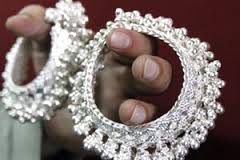
NEW DELHI, June 27: Silver prices edged higher by 0.43 per cent to Rs 45,320 per kg in futures trade today after speculators enlarged positions on a firming trend overseas.
At the Multi Commodity Exchange, silver for delivery in September was up by Rs 194, or 0.43 per cent, to Rs 45,320 per kg in a business turnover of 133 lots.
Similarly, the white metal for delivery in July traded higher by Rs 164, or 0.37 per cent, to Rs 44,800 per kg in 133 lots.
Analysts attributed the rise in silver prices at futures trade to a firming trend in the precious metals overseas as investors assessed the outlook for US borrowing costs.
Meanwhile, silver traded 0.40 per cent higher at USD 21.18 an ounce in Singapore, the highest since March 18. (PTI)