

Dr Manoj Kumar Sinha
BJP has been persistently demanding common civil code since jan sangh times. The promise of implementing a Uniform Civil Code is one of the core issues of BJP and finds mention in its manifesto. Due to lack of BJP’s own majority in parliament, Atal Bihari Vajpayee Government was not able to introduce uniform civil code due to strong pressure from NDA allies. General election (2014) gives majority to BJP. NDA allies are also not strong enough to oppose uniform civil code. In fact, most NDA allies like Shiv Sena, Akalis, are also supporting common civil Code. Under this situation, Narendra Modi Government can bring common civil code which will applicable to all citizens of India irrespective of their religions. So, the media feel that uniform civil code now is not a distant matter for India. The questions like, what is uniform civil code and how it is important for India, comes into my mind.
There are five broad sets of personal laws in India based on the religions professed by different communities. Hindu law governs all Hindus, including Buddhists, Jains and Sikhs. Muslim law applies to Muslims, Christian law governs Christians, and Parsee law applies to the Parsees. Jews have their own personal law. These personal laws cover property and personal matters like marriage, divorce, maintenance, adoption and inheritance. The different laws are governing these aspects differently for different communities in India. Thus, the laws governing marriage, inheritance or divorce among Hindus are different from those pertaining to Muslims or Christians and so on.
Uniform civil code is supposed to replace these personal laws based on the scriptures and customs of each major religious community in the country, with a common set governing every citizen in India. These laws are distinguished from public law and cover marriage, divorce, inheritance, maintenance, guardianship and adoption. Article 44 of the Directive Principles in India sets the implementation of a uniform civil code throughout the country as duty of the State. Article 44 says: “The State shall endeavour to secure for the citizens a uniform civil code throughout the territory of India.” The objective of this article is to effect an integration of India by bringing all communities into a common platform which is at present are governed by personal laws and which do not form the essence of any religion. Article 37 makes clear that the directive principles “shall not be enforceable by any court”. Nevertheless, they are “fundamental in the governance of the country”. The Supreme Court has expressed itself in favour of the enactment of a uniform civil code in the Shah Bano case and the Sarla Mudgal case. The Supreme Court in Sarla Mudgal judgement had observed that “the Government would be well advised to entrust the responsibility to the Law Commission to bring about the comprehensive legislation in keeping with modern day concept of human rights.” However, none of these comments are binding on the executive or the legislature and do not amount to orders. At best, they exert some moral pressure on the Indian state to move towards formulating a uniform civil code.
As women’s organisations and others have repeatedly pointed out, personal laws governing different communities in India have a common feature – they are all gender-biased. The personal laws are designed to keep women forever under the dominance and control of men. Women undergo many difficulties and experience severe trauma in matters concerning their marriage, divorce and inheritance. Polygamy, desertion, triple divorces are just a few examples to show the possibilities of harassing women. Indian women are formally granted equality in political rights through the Indian Constitution. Due to the different personal laws, women experience inequality, deprivation and violence. Gender issues need to be addressed very seriously. There is a need to reform the personal laws and bring about a uniform civil code to ensure not only equality between men and women but also to bring about gender justice. If it is implemented it will lay the foundation for women to overcome many social evils like dowry system, bigamy etc. which makes a woman feel inferior and degraded.
Another issue, the personal laws are the main cause of communal conflict among people. The absence of a Uniform Civil Code goes against the concept of equality which is one of the basic tenets of our Constitution. The different personal laws for different religions are undermining the credibility of the secular ethos of India. A Uniform Civil Code will also simplify legal processes involved with the matters governed by personal laws. It will also go a long way in promoting the causes of secularism, equality and national integration. It will also make the separation of the State from the religion more complete and meaningful.
Fundamentalists supporting personal laws and opposing uniform civil code say that imposition of uniform civil code will be a violation of fundamental rights envisaged by the Constitution. Article 26(b) says, “Subject to public order, morality and health, every religious denomination or any section thereof shall have the right to manage its own affairs in matters of religion.” The supporters of personal laws and their blindly followers believe that matters like marriage, divorce and inheritance are religious affairs and the Constitution guarantees freedom of such activities and therefore the Uniform Civil Code will be a violation of that. Their argument is that this code will affect the religious freedom of minorities. However, the Supreme Court has observed that marriage, succession and the other matters of a secular character cannot be brought within the guarantee enshrined under Article 26 of the Constitution. The Supreme Court said that the right to follow one’s personal law is not a Fundamental Right. However, the political parties like congress claim that the sentiments of the minorities will be adversely affected while implementing a common law. There are political parties and leaders who are always eager to hijack such burning issues to improve their vote banks.
The uniform civil code will ensure equality, unity and integrity of the nation and justice for both men and women. We must depoliticize the uniform civil code. The secular country like India needs a uniform civil code.
(The author is Assistant Professor, PGDAV College, University of Delhi)
Why India need Uniform Civil Code
inner voice
I’m Sorry Daddy
Dear daddy, I want to say sorry
For I have disappointed you.
I’ll never be able to reach your goals,
No matter what I do.
I thought I could count on you,
To help me stand up strong,
But you’r just punishing me,
For all that I do wrong.
With straight A’s all the way.
I’m sorry I screw up,
At least once everyday.
I’m sorry I disappoint you.
I’m sorry that I’m late in the evening
And sometimes am very loud.
I’m sorry for being me,
Which isn’t good enough.
I’m sorry I can’t pull myself
through,
When things tend to get rough.
I’m sorry that I’m worthless,
And not smart enough for you.
I’m sorry you don’t like my friends,
You strongly wish I was.
But no matter how you treat me,
I’ll love you just because.
I started this poem saying sorry,
And I’ll end with it too.
I’m sorry
Ravinder Bandral
Baminhal Hochack
Ramban R L K
My eyes, your eyes
Sad eyes
Glad eyes
Expressive to the core
While awake, say such more
With tears, when you are sad
With tears, when we are glad
Go dry, when nothing to cry
Become wet, when there is much to fret
They are the canvas of expression
When beautiful put right impression
Everyone adores them
None can ignore them
My eyes and your eyes
Dr. Narhari Raizada
162-A/D Gandhi Nagar, Jammu
Nature
Whatever lovely things we’ve owed;
All these miracles our Great God has bestowed
The flowers, the trees, the sun and the moon;
Every beholder gets fascinated by them so soon.
All the stars shining bright in the sky;
Perplexes my mind whenever I lie;
When I notice all the creatures attain life, procreate and die;
The question arises in my intellect how was I born and who am I.
Years ago, I was an infant and now I mature;
But I confess the best gift in my life was ever and forever nature.
Sapna Sharma
Akhnoor
I want one more
day with you
I’m so sad and depressed
Is all I want to do is rest
I go to sleep at night
But my dreams I just can’t fight
I think of you lying in that bed
And wonder if there is anything I
could have said
I wish you were still here
But I know that you are still near
I love you more than you know
I just wish you didn’t have to go
I just want one more day with you
And I know that’s you would
have wanted too
I miss you more and
more each day
I know I will see you again
But my life has just started to begin.
Udashs Rajput
G D C Ramban{R}
My dharma
Religion is a birth-mark one generally carries till death, if only in name. Great minds have said what it meant to them. Napoleon Bonaparte opined it was religion that kept the poor from murdering the rich. Dalai Lama revealed: ‘This is my simple religion. There is no need for temples; no need for complicated philosophy. Our own brain, our own heart is our temple; the philosophy is kindness.’ And Desmond Tutu had this to say on religion, ‘When the missionaries came to Africa they had the Bible and we had the land. They said ‘Let us pray.’ We closed our eyes. When we opened them we had the Bible and they had the land.’
We have our own conscience to tell us the good from bad, we have society’s code of conduct to govern our every-day behaviour, there are laws proclaimed by the Government to keep our baser instincts in check; and the more evolved among us have their spirituality to elevate them to the higher planes of existence. Where is then any need to bind ourselves with yet more trappings of this or that religion?
‘Has the stuffy heat of a dry July day gone to your head, son, that you are asking such a foolish question?’ caw-cawed an enraged Kaga Bhushundiji. ‘It is religion that sets apart man from the rest of animals!’
‘Ram, Ram, Kagaji,’ I said with excessive show of courtesy, ‘do cool down. It ill behoves a celestial being of your lofty stature to lose temper. You have appeared before me of your sweet will to answer my queries, Most Venerable One. Now be good enough to disabuse me of my doubt.’
Kagaji cooled down. In a tone befitting an icon of wisdom he began, ‘Dharma is the step-ladder that takes a person from the lowliness of bestiality to the heights of a pious living and upon her death to the Param Dham, the House of Ultimate Bliss….’
‘But Kagaji,’ I interjected ‘you are mixing up ‘Dharma’ with ‘religion’. The one enjoins upon the mankind duties that are essential for a peaceful and orderly coexistence on the earth, while the other divides man from man. Dharma is all inclusive, embracing not only mankind, but birds and bees, beasts and trees and all that exists in this world of ours. Religion is exclusive – only those who believe are saved, the non-believers are either brought somehow into the fold, or to put it mildly, despised altogether. Religious zealots don’t spare even their co-religionists who are seen to go astray from the narrow path. ‘
‘May be you are right, son. What you call ‘religion’ is not the same as the Dharma of the yore. O, the despicable Kaliyuga!’
‘Indeed. Look at what is happening in Iraq in the name of religion. Four of our own young men from Mumbai have flown on the sly to Iraq to fight by the side of Sunni militants. For them it is the cause of ‘defending’ their faith, though the whole world knows what brutality the ISIS has let loose in the land. In India itself Shias and Sunnis are confronting each other for what is happening among the peoples of their sects in Iraq. Why talk only of the rift between the two factions of Islam, even Sanatana Dharma, reputedly the oldest way of life in the world, is in turmoil. Shankaracharya Swami Swaroopananda Ji Saraswati of Dwarka has said that Hindus who believe in Saibaba should refrain from following Hindu rituals such as bathing in the Holy Ganga – drawing a line between the Hindus who believe in Saibaba and their brethren who don’t. As could be expected, the followers of Saibaba are up against the 90-year old seer and have filed three cases in different parts of the country against him. Swamji’s own supporters, the Naga sadhus among them – have declared that they will take to streets in support of the Shankaracharya ji. Couldn’t this unnecessary bitterness have been avoided?’
‘But, tell me, son, wasn’t Saibaba a Muslim? I heard somebody saying that he was a maans bhakshi – meat eater – and lived in a mosque.’
‘I am not sure, Kagaji, of Saibaba’s origins or how he kept his body and soul together. So what if he was born a Muslim? Don’t Hindu men and women, their heads covered reverentially; stand patiently every Thursday evening to pay their respects to the neighbourbhood Peer’s mazaar? Do they cease to be Hindus then?’
‘Shankaracharya ji is not against people worshipping Saibaba. His objection is to the Saibaba being worshipped as one of gods of the Hindu pantheon. It is strictly a question of religion, son. Why don’t you understand?’
If that be so, I would rather not remain in the confines of such a religion.”
Kaga Bhushundi SpeakEth
Suman K Sharma
‘Do you abjure religion then?’
‘I do. Save me from a religion that spreads discord between one man and the other. I have my Dharma to follow and would rather stick to my humanity, what all that means.
Dhoti and Dress Code
Prof Ramanuja Devanathan
The recent incident of preventing a Judge from entering the Tamilnadu Cricket Association Club at Chennai as he wore a Dhoti shocked the Indians who respect the tradition and dress of India. A sitting judge of the Madras High Court, Justice D.Hariparanthaman went to attend a book release function organized by the TN Cricket Association Club and was prevented from entering the club quoting the reason that he is wearing Dhoti and as per the Club rules only persons with pant and suit would be permitted. Along with him two other advocates R.Gandhi and G.R.Swaminathan both practicing at Chennai and Madurai High Courts were also denied entry. Though the Judge told the person who was at the gate that he should not be prevented as he was invited by the members of the Club saying the dress code should not be imposed on the guests who turn out for the function. The more irony is the that function was organized by a former Chief Justice of the High Court, the book was released by a former Chief Justice of Gujarat High Court and the first copy was received by a former Chief Justice of HP High Court. This is not rare incident that occurred in the world. In the 80s former Supreme Court Judge V.R.Krishna Iyer was also denied entry in the Gymkhana Club, Chennai as he was wearing Dhoti. When he was prevented, even after disclosure of his identity, he recorded his anger in the Guest Book. In USA also a night club in Minnesota posted a dress code. The attire the club advised it members not-to- wear was tacitly targeted to prevent the Blacks from entering the club. Here, the case is different as the club proposed a not-to- wear dress code for its members instead of routine what to wear attire. This instigated the blacks to protest against the vented dress code as this was targeted against Blacks. Last year on 3rd August 2013, in Dubai Metro an Indian was prevented from entering a local train as he was wearing a Dhoti which gave rise to a controversy. However, later on an official of the Roads and Transport Authority of Dubai, Ramadan Abdullah clarified that the RTA of Dubai has not prescribed any dress code and urged the victim to lodge a complaint against the incident so that the RTA could take necessary action in this regard. However, these stray incidents take place here and there and they serve as negative publicity for Indian attire.
Whenever, the Indian traditional dress was denied its place, we all rise and echo our voice together against such incidents. It is quite right. Our emotional voice is to be honoured. But at the same time how far we guard our tradition of wearing traditional dress? Wearing a dress is a personal matter and comfort and one cannot be compelled to wear this and that dress. Do we compromise this personal comfort in our life? Of course, the European taught us to wear pants and suits. We followed it and still we follow the same as it is comfortable. If the case is so why should we become agitated if a club or association prevents us for not wearing certain pattern of dress? After all we have compromised many things in our life including the dress habit.
This does not mean that we never protest against dress code. In our day-to-day life we compromised for our grown up children to wear miniskirts and half shirts with neck tie for going to school. We wish that child gets admission in a particular school and we are ready to follow any rule though how non-sense they are, for the sake of getting our child admitted in that particular school and we even prefer such schools that impose such non-sense dress code on our child than to a school that prescribes Indian Traditional Dress Code. Further, we are prepared to wear pants of certain colour say it a cocky or blue, for the sake of getting service in an organization or factory. Even our people are prepared to change their dress pattern for the sake of money and facilities to be received from the missionaries of any religion. If this is the case, why are we very much worried about the denial of a person on the basis of dress code from entering into a particular place?
This is because; we are unconsciously controlled by the National habits. Each Nation has its own tradition and way of expressing emotions. In a single State there are persons of different emotions at the same situation, some are polite, others are rude, and few are moderate in nature according to the so-called quality of water and Earth. This is the case with India also. Each person is proud of his culture and heritage of the part he belongs. We Indians become emotional if something adverse happens to our tradition. We do compromise our tradition knowingly and on compulsion. But one cannot impose non-sense conditions on us that are detrimental to our independence or against our culture and tradition. We compromised to wear even unsuitable uniform consciously. If we become a member of a club accepting all the conditions of the club then we have to follow the rules and regulations including dress code of that particular club. But if we are invited as the Guests in that club we are not supposed to follow the rules or the dress code of that club. The club should also think over this aspect and treat the invited non-members with dignity and honour. If we are employed in a foreign country accepting its immigration laws enforced there, it is binding on our part to follow the rules of that country. But if we are invited by a foreign country, we are not bound to follow the laws of that country. This is the difference between the members and invitees. The same thing happened in the case of TN Cricket Association Club that the club should not have insisted the dress code for the invited guests who are not members of that club. Another argument in this case is, that the obsolete rules prescribing dress code which was prevalent in English period should not be followed blindly even after their exit. A tiny Nation Bhutan follows strictly its traditional attire whenever their diplomats visit other countries. This sort of decisiveness is required in us. If we are determined in our perception and behavior, nobody can prevent us from expressing our National thought or wearing traditional attire. First we must feel proud of our tradition, culture and heritage, rest is assured undemanding.
Fantasy-peddling is not diplomacy
M.J. Akbar
Saints are the exception. Anyone else in the writing business, including those of us at the nether end of the business, can rarely resist the temptations of glory. The danger is obvious: vainglory, that purgatory space where imagination outstrips the boundaries of reality and ego functions on the basis of what we imagine we should be rather than what we are.
One reveals no secrets when recording that an itinerant Delhi columnist Ved Prakash Vaidik, who enjoyed his fifteen minutes of fame last week after a visit to Pakistan, has declared freedom from the desultory limits of nationalism and repositioned himself as an internationalist in the intellectual category of Rousseau and Karl Marx, the former a philosopher of the French Revolution and the latter an author of the Communist Manifesto. That is how Vaidik describes himself on his Twitter account, and who are we to argue? In his ranging role of a world citizen, Vaidik has been advocate of a solution to the vexed problem of Kashmir: a united and independent state.
This, understandably, makes Vaidik Pakistan’s ideal Indian. The reception he received during his last trip to Islamabad and Lahore included a chat with our next-door Prime Minister Nawaz Sharif and a very hearty meal with one of the world’s most despicable terrorist ringleaders, Hafiz Saeed, who organised the assault on Mumbai in 2008 and continues to live like a lord in Lahore. This information is not confidential either. Vaidik has been talking about it to anyone who has the time to listen ever since he returned to Delhi.
When journalists try and make news rather than break it, they generally offer a butterfly story: it flits around a bit and then dies a quick death, killed by a yawn or a shrug. This is precisely what had happened to Vaidik’s tale, until Congress, for reasons that continue to defy political sense, decided that it was something they could beat the Government with.
It is possible that Congress, still unbalanced after the heaviest defeat in its history, has not been able to find its thinking cap. But to imagine that it could launch a credible attack on Prime Minister Narendra Modi over terrorism only means that the party is still skewed. No contemporary leader has better credentials than Modi in our ongoing national war against terrorists. His record, as well his oft-declared convictions, speak for themselves.
It is strange that Congress did not even bother to check the names of Vaidik’s companions on this Pakistan tour. It would have discovered its own stalwarts, like Salman Khurshid and Mani Shankar Aiyar, along with fellow-travellers who have received grace-and-favour appointments in Congress regimes because of their relentless criticism of Modi. It says something about the plight of the party that a free kick turned into a self-goal.
One of the depressing aspects of Dr Manmohan Singh and Mrs Sonia Gandhi’s decade in power is that they handed virtual control of Indo-Pak relations to busybodies operating under high-falutin masquerades such as Track 2 and Track 3. In the competitive shouting match between peaceniks, Track 1 disappeared. This suited Islamabad brilliantly, for it could sustain the fiction of a relationship without having to answer hard questions about terrorism, particularly after the Mumbai attack mentored and managed by Hafiz Saeed and his allies in the Pak army and its intelligence services. Delhi became a willing party to a game where national interest was parlayed into a minstrel show.
Pakistan was able, in such a simulated atmosphere, to put forward a face it wanted to show, confident that none of the goodwill missionaries was interested in the second, more pernicious, face of the Islamabad establishment. Worse, such interlocutors missed — deliberately or unconsciously — the great changes that were taking place among the social forces in Pakistan. Hafiz Saeed cannot be touched in Pakistan not merely because he is protected by the government. His true strength lies in the support he receives from an increasingly radicalised Sunni population that is dragging Pakistan, step by violent step, towards anarchy in the name of religion. India is but one of the targets. Pakistan has turned into a graveyard for Shias as these self-proclaimed jihadists turn their weapons on anyone who does not fit their version of faith. The irony of course is that the father of Pakistan, Mohammad Ali Jinnah, was a Shia, but don’t whisper that too loudly these days. They will begin to shoot up Jinnah’s portraits next.
A shallow approach to a complex problem has driven India’s relations with Pakistan to a cul-de-sac, and no one quite knows where to go next. A low intensity war continues on our borders, even as the likes of Hafiz Saeed continue to plan another conflagration within India.
What is certain is that Delhi and Islamabad must stop this pretend-dance and grapple with harsh facts. Pseudo-diplomacy and fantasy-peddling have done enough damage.
SPORTS Sphere
 Born on February 5, 1985 Cristiano Ronaldo, is a Portuguese footballer who plays as a forward for Spanish club Real Madrid and captains the Portugal national team. He became the world’s most expensive player when he moved from Manchester United to Real Madrid in 2009 in a transfer worth £80 million (€94 million/$132 million). Ronaldo’s contract with Real Madrid, under the terms of which he is paid €21 million per year (after taxes), makes him the highest-paid footballer in the world, and his buyout clause is valued at €1 billion. He is regarded by some in the sport to be currently the best player in the world and as one of the greatest of all time.
Ronaldo began his career as a youth player for Andorinha, where he played for two years, before moving to C.D. Nacional. In 1997, he made a move to Portuguese giants Sporting Clube de Portugal. Ronaldo caught the attention of Manchester United manager Alex Ferguson, who signed him for £12.2 million (€15 million) in 2003. In 2004, Ronaldo won his first club honour, the FA Cup.
In 2007, Ronaldo was the first player in England to win all four main PFA and FWA awards. In 2008 and 2013, he won the FIFA/Ballon d’Or award for the best footballer in the world, the first Portuguese player to win the award twice.
Ronaldo is the first top European league player to reach 40 goals in a single season in two consecutive years, fastest Real Madrid player to reach 100 league goals, and the first player to score against every team in a single season in La Liga.
Ronaldo is a Portuguese international and made his debut in August 2003. He has been capped over 100 times and with 50 goals he is Portugal’s top goalscorer of all time. With Portugal he has participated in 6 major tournaments; UEFA Euro 2004, the 2006 FIFA World Cup, UEFA Euro 2008, the 2010 FIFA World Cup, UEFA Euro 2012, and the 2014 FIFA World Cup.
Identify the Player:
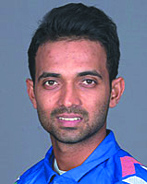
Write a brief description about him in 250 words.
Questions of this week:
1. Who was top scorer for India in the first innings of the ongoing second Test match against England?
2. For which team Pankaj Singh played in IPL-7?
3. Who won the singles title in the recently held Wimbledon Championship at London?
4. How many runs Parveen Singh scored against KCSC in the semifinal of the ongoing Chevrolet Cup T20 Cricket Tournament?
5. Who is M L Nehru?
Answers of the last week:
1. Murali Vijay 2.Sunrisers Hyderabad 3. Mikhail Elgin and Anastasia Rodionava 4. 67 runs 5. former Ranji trophy cricketer, former general secretary and former chairman, JKCA..
The best entry of this week was received from Sanjay Dhar, R/o Lane No-1, H-No 3, Upper Laxmi Nagar, Sarwal, Jammu.
The other entries of the week were from Ishan Gupta of Mishriwala, Jammu.;.Rajeev Pakhetra of Talab Tilloo, Jammu; Puneet Kumar of New Plots, Jammu; Chamel Singh of Kunjwani, Jammu and Arun Sharma of Trikuta Nagar, Jammu.
Para-military personnel chase stone pelters in Anantnag on Saturday. —Excelsior/Sajad Dal.

Para-military personnel chase stone pelters in Anantnag on Saturday. —Excelsior/Sajad Dal.
Vascular Access for Hemodialysis

Dr Arvind Kohli
Healthy kidneys clean blood by removing excess fluid, minerals, and wastes. They also make hormones that keep the bones strong and blood healthy. When the kidneys fail, harmful wastes build up in the body, the blood pressure may rise, and body may retain excess fluid and waste products and does not makes enough red blood cells. When this happens, patient needs treatment to replace the work of failed kidneys.
Hemodialysis is the most common method used to treat advanced and permanent kidney failure, hemodialysis is still a complicated and inconvenient therapy that requires a coordinated effort from whole health care team, including nephrologist, Vascular Surgeon dialysis nurse, dialysis technician, dietitian, and social woker.
VASCULAR ACCESS
One important step starting regular hemodialysis session is preparing a vascular access, which is the site on patients body where blood is removed and returned during dialysis. To maximize the amount of blood cleansed during hemodialysis treatments, the vascular access should allow continuous high volumes of blood flow.
A vascular access should be prepared weeks or months before you start dialysis. The early preparation of the vascular access will allow easier and more efficient removal and replacement of your blood with fewer complications.
The three basic kinds of vascular access for hemodialysis are an arteriovenous (AV) fistula, an AV graft, and a venous catheter. A fistula is an opening or connection between any two parts of the body that are usually separate. While most kinds of fistula are a problem, an AV fistula is useful because it causes the vein to grow larger and stronger for easy access to the blood system. The AV fistula is considered the best long-term vascular access for hemodialysis because it provides adequate blood flow, lasts a long time, and has a lower complication rate than other types of access. If an AV fistula cannot be created, an AV graft or venous catheter may be needed.
What is an arteriovenous fistula?
An AV fistula requires advance planning because a fistula takes a while after surgery to develop-in rare cases, as long as 24 months. But a properly formed fistula is less likely than other kinds of vascular access to form clots or become infected. Also, properly formed fistulas tend to last many years-longer than any other kind of vascular access.
A surgeon creates an AV fistula by connecting an artery directly to a vein, frequently in the forearm. Connecting the artery to the vein causes more blood to flow into the vein. As a result, the vein grows larger and stronger, making repeated needle insertions for hemodialysis treatments easier. For the surgery, you’ll be given a local anesthetic. In most cases, the procedure can be performed on an outpatient basis.
Arteriovenous graft (AVG)
In small veins that won’t develop properly into a fistula, patient can get a vascular access that connects an artery to a vein using a synthetic tube, or graft, implanted under the skin in your arm. The graft becomes an artificial vein that can be used repeatedly for needle placement and blood access during hemodialysis. A graft doesn’t need to develop as a fistula does, so it can be used sooner after placement, often within 2 or 3 weeks.
Compared with properly formed fistulas, grafts tend to have more problems with clotting and infection and need replacement sooner. However, a well-cared-for graft can last several years.
Venous catheter for temporary access?
For very urgent vascular access. We need to use a venous catheter as a temporary access.
A catheter is a tube inserted into a vein in your neck, chest, or leg near the groin. It has two chambers to allow a two-way flow of blood. Catheters are not ideal for permanent access. They can clog, become infected, and cause narrowing of the veins in which they are placed.
Permacath
For some people, fistula or graft surgery is unsuccessful, and they need to use a long-term catheter access. Catheters that will be needed for more than about 3 weeks are designed to be tunneled under the skin to increase comfort and reduce complications and are called as Permacaths.
Pursuing hemodialysis?
Every hemodialysis session using an AV fistula or AV graft requires needle insertion. Most dialysis centers use two needles-one to carry blood to the dialyzer and one to return the cleansed blood to your body. Some specialized needles are designed with two openings for two-way flow of blood, but these needles are less efficient. For some people, using this needle may mean longer treatments.
Some people prefer to insert their own needles, which requires training to learn how to prevent infection and protect the vascular access.
Whether one insert your own needles or not, you should know about these techniques.
Possible complications of vascular access?
All three types of vascular access-AV fistula, AV graft, and venous catheter-can have complications that require further treatment or surgery. The most common complications are access infection and low blood flow due to blood clotting in the access.
Venous catheters are most likely to develop infection and clotting problems that may require medication and catheter removal or replacement.
AV grafts can also develop low blood flow, an indication of clotting or narrowing of the access. In this situation, the AV graft may require angioplasty, a procedure to widen the small segment that is narrowed. Another option is to perform surgery on the AV graft and replace the narrow segment.
Infection and low blood flow are much less common in properly formed AV fistulas than in AV grafts and venous catheters. Still, having an AV fistula is not a guarantee against complications.
How to take care of vascular access?
One can take several steps to protect Vascular access :
* Make sure your nurse or technician checks your access before each treatment.
* Keep your access clean at all times.
* Use your access site only for dialysis.
* Active hand exercises are mainstay for access maturation.
* Be careful not to bump or cut your access.
* Don’t let anyone put a blood pressure cuff on your access arm.
* Don’t wear jewellery or tight clothes over your access site.
* Don’t sleep with your access arm under your head or body.
* Don’t lift heavy objects or put pressure on your access arm.
* Check the pulse in your access every day.
(The author is Vascular Surgeon Super Speciality Hospital GMC Jammu)
Hate Story-2

Taran Adarsh
Hell hath no fury like a woman scorned… The adage has been the essence of several Hindi films over the years. Recall INTAQUAM [Ashok Kumar, Sadhna, Sanjay Khan], OH BEWAFAA [Rajendra Kumar, Anil Dhawan, Yogita Bali], KHOON BHARI MAANG [Rekha, Kabir Bedi]… even the multi-starrer NAGIN depicted the story of an ichhadhari nagin [Reena Roy] settling scores with the men responsible for the slaughter of her ichhadhari naag-partner [Jeetendra].
Revenge sagas continue to be made to this date. Only thing, storytellers attempt to garnish the premise with passion, power play and skin show to entice the spectators in hordes. HATE STORY-2, directed by Vishal Pandya, is an erotic thriller that navigates the same route. Like the first part, the sexually explicit content is cleverly interwoven in the premise, while the female protagonist decides to get even with the oppressor.
First, the plot of the film. Sonika [Surveen Chawla] is the mistress of a high-profile politician, Mandar [Sushant Singh]. Things take a turn for worse when she falls in love with Akshay [Jay Bhanushali]. When the authoritative politician gets a whiff of their liaison, he gets Akshay brutally murdered and attempts to kill Sonika too. A crestfallen and dejected Sonika decides to seek revenge against her tormenter.
Staying faithful to the first part that was helmed by Vivek Agnihotri, HATE STORY-2 director Vishal Pandya amalgamates passionate love making scenes and high-voltage drama in the premise of the new installment, but, at the same time, also makes sure he narrates a new story with the revenge angle.
The battle lines between the tormentor and the tormented are drawn at the very start itself. The high point of the film is that the narrative holds your attention from the word go, with the storyteller making sure you don’t lose focus of the proceedings all through the first hour. A number of sequences catch your attention in this hour: Surveen’s emotional outburst as she reveals the truth to Jay and also the entire episode when Sushant murders Jay and attempts to murder Surveen.
The post-interval portions maintain the grip, but the loose ends do show up intermittently. The most glaring one being the popular Sunny Leone track that springs up from nowhere and has been used as a mere prop. Also, the sequence of events tend to get predictable at times, although a number of dramatic sequences — the entire episode at Rajesh Khera’s farm house as well as the finale, when Surveen settles the score with Sushant — camouflage the deficiencies to a major extent. As a matter of fact, the screenwriting, although veering into the conventional zone now and then, gets your thumbs up, while the director gets full marks for staying faithful to the genre and handling the dramatic sequences with expertise.
Since the film is backed by a music company [T-Series], one expects the soundtrack to be of high order and the songs live up to those towering expectations. ‘Aaj Phir Tumpe Pyaar Aaya Hai’ [melodious] and ‘Kabhi Aayine Pe’ [soulful] are wonderful compositions that have been integrated in the narrative appropriately. The locales of Goa in particular are deftly captured by the DoP. Dialogue [Girish Dhamija] are power-packed, especially the ones delivered by Sushant. The background music garnishes the dramatic portions well.
The woman-centric premise demands that the female protagonist deliver a commanding performance. Additionally, it’s imperative [thanks to the script] that she shed her inhibitions and don a bold avatar. Surveen Chawla catches you completely unaware with a no-holds-barred performance, interpreting her character with utmost confidence. Moreover, there are crucial chunks in the narrative when she has to look dejected and disheartened, which should make the viewer feel for her character, and she handles those moments with conviction. Jay Bhanushali, who has sufficient experience on television, is decent, but gets limited screen time. One has come to expect power-packed performances from Sushant Singh and the actor more than lives up to the expectations. The dark role that he gets to portray is vicious, venomous and violent and the actor encapsulates the three attributes brilliantly in his act. Siddharth Kher [as the cop] is first-rate. I’d also like to single out Neha Kaul, who portrays the part of Sushant’s oppressed wife. She’s super! Rajesh Khera is effective in a brief role.
On the whole, HATE STORY-2 is a riveting saga of a woman’s vendetta against the man who wronged her. Additionally, the combo of skin show and melodious music add tremendous value to the project. This film has the potential to woo the masses and the youth, thus springing a big surprise at the ticket window!
http://www.bollywoodhungama.com/
Caustic soda declines on reduced offtake
NEW DELHI, July 19: Caustic soda prices fell by Rs 50 per 50 kg in the national capital today owing to reduced offtake by consuming industries against increased arrivals from producing regions.
Caustic soda flake fell Rs 50 to Rs 1,900-2,000 per 50 kg.
Traders said reduced offtake by consuming industries against increased arrivals from producing belts, mainly pulled down caustic soda prices on the wholesale chemical market here.
The following are today’s quotations:
Ammonium chloride (50 kg) Rs 1,200-2,500, Acetic acid (1kg) Rs 55-65, Ammonia bicarb (25 kg) Rs 600-800, Boric acid technical (50 kg) Rs 4,500-5,200, Borex granular (50 kg) Rs 2,200-2,600.
Caustic soda flake (50 kg) Rs 1,900-2,000, Citric acid (50 kg) (China) Rs 3,800-4,000, Citric acid deshi (50 kg) Rs 3,700-4,200, Camphor slab (1 kg) Rs 400, Camphor powder (1kg) Rs 350, Glycerine (1 kg) Rs 100-170, Hexamine (1kg) Rs 95, Hydrogen peroxide (1 kg) Rs 40-50, menthol bold crystal (per kg) Rs 900, menthol flake (1 kg) Rs 830 and mentha oil (1kg) Rs 850. (PTI)