

Sir,
This refers to the news item “MPs conduct undignified, unjustified’ DE Aug 2.
Parliamentary Affairs Minister M Venkaiah Naidu has affirmed only what whole of the country knows about our elected representatives.
The behaviour of our representatives in Parliament has often drawn criticism. Despite being criticised, they do not change and allow Parliament or Assembly Houses to seen in a smooth manner. The unparliamentary behaviour not only hinders addressing any important issue like : UPSC row, it creates a disgusting feeling among the countrymen.
15th Lok Sabha also withnessed pandamonium almost on daily basis. As the Government could not work smoothly it bruised our image in the comity of nature. A sort of ‘Policy Paralysis’ came into existence which hampered growth of the country.
It is requested to all the political parties to restrain their men from indulging in such a behaviour.
Yours etc…
P L Sharma
Trikuta Nagar, Jammu
Undignified conduct
Zoe Saldana has huge respect for Britney Spears
LONDON, Aug 4: ‘Guardians of Galaxy’ star Zoe Saldana says she has a huge amount of respect for pop star Britney Spears and her positivity.
The 36-year-old actress, who starred with Spears, 32, in the 2002 film ‘Crossroads’, said she is extremely humble despite her celebrity status, reported Contactmusic.
“She was the one big, big celebrity that I met when I was starting to work in Hollywood who literally was humble. I do believe that people and children gravitate to good energy, and she’s definitely an abundance of that,” she said. (PTI)
Tampering with nature
Sir,
The landslide that struck the Malin village in Pune in which a good number of people were killed, and the whole village was flattened is attributed to ruthless cutting of trees in the area. This careless approach towards nature adopted by us is bound to result in such tragedies. The last year Uttrakhand episode a great calamity is still fresh in our mind.
That tragedy was also attributed to tampering with nature. The greed for land, and mindless competition for building concrete jungles is making our ecology so fragile that it collapses easily.
Though many people are working for protection of nature, there number is very less, and their voice goes unheard in the cacophony for development.
Developing requisite infrastructure for welfare is quite necessary but development should not take place at the cost of nature.
A balanced approach between nature and development is needed to be adopted by people to move on. Mankind can survive only if the lives in harmony with nature.
Yours etc….
Vipul Mahajan
Jammu
S’pore self-help group to counsel Indians on domestic violence
SINGAPORE, Aug 4: A self-help group for the Singapore Indian community here will hold roadshows and host radio and TV programmes over the next two months on managing domestic violence among such families.
The group, Singapore Indian Development Association (SINDA) has expressed concern about “increasing” domestic violence among Indian families here and would provide information to victims on seeking help, the Straits Times reported today.
This effort from the group would be in addition to national-level counselling centres on family violence.
About one in five reported abuse cases and personal protection order applications in courts were made against Indians, according to SINDA.
This outweighs the 9.1 per cent Indians representation in the Singapore population of 5.3 million, it pointed out.
Indians accounted for 22 per cent of new applications filed for personal protection orders in the last five years, making them the second-largest group after the Chinese, at 48 per cent, figures from the State Court showed.
Chinese accounts for about 74.2 per cent of Singapore population.
SINDA has found that alcohol abuse increases the odds of a man lashing out at his family.
Better awareness of what constitutes abuse and how to get help could account for some of the cases, SINDA said. (PTI)
Kerry’s damp squib
Vishal Sharma
US secretary of state, John Kerry has come and gone. And that too without making any substantive headline. It is rare that a US secretary of state comes visiting on a mission that involves something as significant as paving way for the PM Narendra Modi’s maiden visit to the US in September and is not seen as warming the cockles of the hearts of the establishment by way of host of agreements on issues of bilateral importance to set the tone. In fact, such preparatory visits are usually meant to transcend the most immediately possible transactional paradigm to become more substantive. This is done to ensure that the much anticipated sequel lives up to its billing and, thus, does not get reduced to photo ops only. In that sense, it appears that not everything about this visit bore a catchet of normal. And, if evidence on offer is anything to go by, both Washington and Delhi failed in this probing exercise.
John Kerry’s visit has been overshadowed by the snooping row in India. Delhi’s approach on the snooping row though has been inexplicable to say the least. In the parliament, it has been in denial mode even though some probing questions have been raised given the kind of investigative reportage in the media and the government’s bumbling defence in the matter. On the other hand, during her interactions with Secretary Kerry, Indian foreign minister was seeking answers from him on the alleged US espionage on the Indian leaders. This paradox is baffling. It is not understandable why the government would put the US in an embarrassing position on the espionage issue when it itself revealed in the House that there has been no spying on Indian leaders. On another extreme, it also does not add up that if there was indeed US snooping, why the government would studiedly hide it from the House and then inexplicably raise the issue later with Secretary Kerry in full public view and destroy the visit completely?
Or is it that the import of the statement made in the House was that it’s the US, and not the government that had spied on its minister? If it were indeed so, it should have been explicitly made clear in the House and a debate held in the matter in light of the allegations made by the perennial whistleblower Subrahmaniam Swamy. This ambivalence should not have been allowed to seep into the foreign policy domain so as to impact Kerry’s visit in the manner it has.
The other issue that has not been handled well is the trade facilitation agreement (TFA) currently under ratification under WTO. India is holding out on it as it compromises its food security by way of limiting its food stockpiling capacities and the farm subsidy regime. Delhi is saying that given the supply side uncertainities accentuated by unreliable monsoons, it can’t commit on doing what TFA mandates. It has, as a quid pro quo, asked for the creation of an enabling parallel law which caters to its needs.
US and India finding a common ground on the issue was always going to be difficult as India also needs this facility to help it to meet the demands imposed by the RtFS (right to food security), an enactment based entitlement. But, if persistently cajoled, and also, if some trade off was put on the table in the shape of a middle of the road policy trade instrument, Delhi would have been likely tempted to endorse the TFA. And US, if it so wanted, could pull off this coup, as it has done on many such occasions of logjam in the past. However, it appears both Kerry and his opposite numbers held talks on the issue holed up from their highly fortified trenches. Kerry’s talks later with PM Narendra Modi also went nowhere. Meanwhile, reports from WTO suggest that members have already made up their minds to go ahead with the agreement independent of Delhi. It is not in Delhi being left out of the bargain, for that may be in its interests, but in the progressively diminishing leverage of the US-India equation that there are reasons to be concerned about where this relationship has been heading all this while. In another times, the abiding strength of the US-India relation would have found a way out.
Kerry has also highlighted concerns underlying the delay in the passage of the nuke liability bill. The US is not happy with the Delhi’s stand on the issue. Under pressure from its industrial houses, it has been pushing for its passage in its present form in the Indian parliament. But the bill in its present form does not offer a reasonable deal by way of an adequate compensation to the victims. Nor does it peg the liability of the culpable corporate at a level which is deemed satisfactory in India. Any uptick in the compensation framework is just not acceptable to the corporates. As a nuke plant accident is an unqualified disaster, the consequential limited liability of the accused corporation as contained in the bill has become a moral dilemma for the legislators in a country, which has gone through a chemical disaster in 80s. And they still do not know what to do with it. But the more they delay it having come thus far on the issue, the more it will exacerbate the US’s discomfort with Delhi.
Given that in the face of near non issues or small issues, the US-India’s first interface has faltered, it is difficult to see how it will get going in September when Modi and Obama hold hands and stand outside the white house for a photo op. The issues that will most certainly get talked about during Modi-Obama meet are going to be India’s role in Afghanistan post US withdrawl, US’s stance on terrorism in India’s backyard, defence trade talks, middle east post ISIS, WTO issues (if they are not sorted out by then), India’s expansive look east policy, particularly in view of Japan’s (under Shizo Abe) warming up to India recently and upping the volume of bilateral trade from under Rs 100 billion to the levels close to that of US-China, that is, Rs 500 billion . All of these issues are prickly and don’t lend itself to easy resolution, especially as US and India’s views on them don’t proximate. It will, therefore, be important for the Indian establishment to lay down the clear achievables and deliverables on these issues. US-India interface can’t forever remain hostage to the stultifying bureaucracies of the two countries; our domestic polity’s world view on US and vice versa; and most importantly, to the long irrelevant Nehruvian consensus and Nixonian and Kissingerian perspectives. It is about time it found its own station.
Bajaj Auto sales rise 9% in July
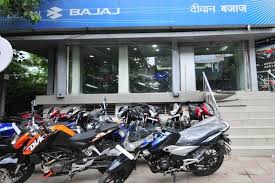
NEW DELHI, Aug 4: Bajaj Auto today reported 9 per cent increase in motorcycle sales at 2,67,841 units in July 2014.
The company had sold 2,46,828 units in the same month last year, Bajaj Auto Ltd said in a statement.
BAL said exports were up 54 per cent during the month at 1,69,755 units as compared to 1,10,023 units in July 2013.
In the commercial vehicles category, its sales stood at 51,451 units, up 49 per cent, against 34,499 units in the same month of the previous year.
The total vehicle sales of the company last month stood at 3,19,292 units, up 13 per cent, against 2,81,327 units in the same month a year ago, the statement added. (PTI)
Crude oil futures rise on overseas cues
NEW DELHI, Aug 4: Crude oil futures rose 0.28 per cent to Rs 5,991 per barrel today as speculators created positions on a firming trend in the Asian region.
At the Multi Commodity Exchange, crude oil prices for delivery in August traded higher by Rs 17, or 0.28 per cent, to Rs 5,991 per barrel, with a business turnover of 642 lots.
Crude oil prices for September were also up by Rs 12, or 0.20 per cent, to Rs 5,973 per barrel with a business volume of 45 lots.
Marketmen said the rise in crude oil futures was largely in tandem with a firming trend in Asian trade but gains were capped there following weakened demand caused by refinery shutdowns and easing concerns about armed conflicts around the world.
Meanwhile, West Texas Intermediate crude prices for September delivery rose five cents to USD 97.93 and Brent crude for September climbed 17 cents to USD 105.01 a barrel in late-morning trade on the New York Mercantile Exchange. (PTI)
Communal violence in country
Prof.M.K.Bhat
Today it is Saharanpur, yesterday it was Muzzafar Nagar and tomorrow there may be some other place. How long will this menace of communal violence go on? We have never thought seriously on the reasons for the recurrence of such incidents, other than blaming police or a politician, sometimes both. We have failed time and again to understand the agony of those who are looted, raped or burned alive. People cannot absolve themselves of their responsibilities. They have to hang their heads in shame every time for such incidents.
Since 1947, more than 5000 communal riots have taken place in our country and every second incident was more horrible than the first one. We shirk to debate these things and put them simply under carpet, which helps the anti social elements. It is no solution to this disease. Time has come when we shall rise above hypocrisy and prove to the world that we are mature enough to find a solution to such problems.
Communal riots generally develop stereotype reactions from our administration, politicians and so called dignified people at large. The rumor mills work 24 by 7, certain people in lower level of bureaucracy are transferred and become scapegoat of the incident, a judicial commission of enquiry is established whose enquiry rarely becomes public. Law will take its own course and no one will be spared goes into air as breaking news from any Minister in the Government. Opposition parties fish in the murky water for their self interest by entering into a brawl with the party in power, the latter also comes out with counter allegations.
Government boasts of everything under control after a day or two, and if things worsened further, a junior Minister may put the whole blame on ISI or Pakistan without any seriousness or investigation. The irony is that there is hardly anyone to question the concerned politician; if this is because of Pakistan where was Indian intelligence? The big claim that law will take its own course mellows down, the Mantriji grants an ex gratia as per his own thinking without any consideration as if it is out of his own pocket, not from the hard earned income of the tax payer. The police turns into a mute spectator, army silences the town, journalists get their head lines and after a few days everything calms down. There is no one to wipe the tears of one who actually bore the brunt of the whole trauma. No one cares for who died, or lost his bread earner or property. Mostly innocents have to bear the wrath of the murderous crowd and the perpetrators easily slip from the scene.
Communalism arises when a religious group tries to promote its own interests at the expense of others. It has nothing to do with, whether the group is in majority or minority. One who thinks about the betterment of the country or accepts India as the pious country of his forefathers, or abides as per constitution can never be communal despite his faith in any religion. Communalism is a menace not only for the community against which it is targeted but also in whose name it is played. It only brings disrepute to that religion and distils its true spirit.
Communalism is a British legacy. They had adopted the principle of divide and rule. They favored one community and put a cold shoulder against the other, thereby spread hatred among people and thus sowed the seeds of communalism in India. The Hindu Muslim disunity made easy for Britishers to rule India. We may have to shed away this legacy of Britishers and it may not be out of way to mention that practically we have done little in this direction despite our glorious history of oneness.
The biggest reason for such incidents is the amalgamation of politics with religion. Howsoever superficial we may try to be, but the hard core fact is that we as citizens of free India vote on the lines of caste or religion of the candidate. Politicians exploit this thinking for getting votes. People should be conscious about whom they are making their representative and shall not get into their trap. These days, communal tag is also used by people for those who are religious or speak for their people. Certain parties use it to degrade others in the eyes of public or to outdo with their competitor. This helps them to get the sympathy of so called secularists.
Political parties sometimes create sense of insecurity among minorities and then resort to appeasements to grab their votes. These appeasements only deepen the sense of insecurity and make the protected section vulnerable to the ire of the other community. There is an utmost need of applying the principle of justice to all and appeasement to none. It would have been prudent to ban persons indulging in inciting communal riot from politics throughout their lives. If courts take time and fail to judge the things, it becomes the duty of voters not to vote such a person to the legislature.
We blame the district administration for delay or inaction but have we ever tried to castigate those who are involved in organizing big congregations? Perhaps not, all those responsible for gathering a big crowd should be made accountable for any mishappening. The priest of religious organization/place where people gather and resort to unlawful activity should be held accountable. These things recur, for there is no fear of law and the culprits roam freely rather at times get elevated to a higher level by projecting themselves as the protectors of their caste or religion. There is an utmost need of fast track courts to deal with such cases and those responsible should be brought to book.
The things were made more malicious by certain history scholars who treated things on religious lines thereby lead to communal thinking in children. These scholars termed ancient history as Hindu era medieval era as Muslim history neglecting rulers from other communities. This lead to sectarian heroes of Indian history and created a wedge between two communities.
Partition of the country on religious lines further deepened the differences. Pakistan termed itself as a Muslim nation and indirectly instigated Indian Muslims who had refused to be part of the theocratic state. The elite among the community left in 1947 and thereby created a vacuum in Indian Muslims who took some time to regain their position. This vacuum was treated as indifference.
Communalism is a bigger challenge before country than poverty, economic disparity and corruption at all levels. It acts as the breeding ground for all terror related activities and onus falls on every one of us. Let us resolve not to think in sectarian ways. We as responsible citizens shall denounce actions of terrorists and their perpetrators to overcome the problem. Let the minority leave fear from their mind and act as equal partners in nation building.
India can develop economically or socially only when it will become free from communal violence. No one shall feel himself or herself as alien or special in this country -that is the true spirit of a democracy.
(The author is Deputy Director (Maims) Guru Gobind Singh, Indraprastha Univesity Delhi)
Gold futures down on weak global cues
NEW DELHI, Aug 4: Gold prices moved down by 0.24 per cent to Rs 28,153 per 10 grams in futures trading today after participants offloaded partial positions amid weak cues from global markets.
At the Multi Commodity Exchange, gold for delivery in far-month October declined by Rs 69, or 0.24 per cent, to Rs 28,153 per 10 grams in a business turnover of 72 lots.
Likewise, the metal for delivery in August shed Rs 19, or 0.07 per cent, to Rs 28,035 per 10 grams in two lots.
Market analysts said a weak trend in overseas markets put pressure on the precious metal at futures trade here.
Globally, gold traded 85 cents lower at USD 1,292.90 an ounce in Singapore today. (PTI)
Indo-US Face Off at WTO
Dr Ashwani Mahajan
Narendra Modi Government has told WTO that it will not ratify the Trade Facilitation Agreement (TFA) at the World Trade Organization (WTO) unless its concerns on food security are addressed. India has made it clear to WTO that “To jeopardize the food security of millions at the altar of a mere anomaly in the rules is unacceptable”. This stand of the Government has created a situation of a near face off between US and India.
The whole issue of food security concerns in WTO occurred at developed countries raising the issue of India exceeding the threshold limit of 10 percent of total value of food production, which could be given as subsidies. Matter gained importance after passage of food security legislation by India, ensuring provision of food grains to nearly 67 percent of population at a very low price of rupees 3 per kilogram for wheat and rupees 2 per kilogram for rice. Fact of the matter is that India has never ever exceeded the threshold limit of 10 percent, nor it is expected to exceed this limit even after full implementation of Food Security Act. Reason, why this issue has arisen is the fact that at the time of signing of WTO agreement, the base price has been pegged at prices of food grains prevailing in 1986-88. This would imply that if the Government pays a support price of 1400 per quintal today and between 1986 and 1988 the support price was Rupees 380 per quintal then the subsidy part would be calculated as 1020, which is highly inappropriate. If the same rule continues then threshold limit of 10 percent of total production is bound to increase. What Indian side in WTO wants is this simple correction in the rule that this anomaly is rectified and the base year is revised. Addressing a press conference on December 5, 2014 at Bali, Indonesia at the occasion of 9th Ministerial Conference of WTO, then Commerce Minister said, “I would like to make this absolutely clear that we have not come here as petitioners to beg for a peace clause … That it is binding on us to accept 1986 to 1988 prices and make ourselves vulnerable to disputes and calculations? The answer is a firm “NO”. This is a fundamental issue, we will never compromise.”
Compromise at Bali
In WTO’s Ninth Ministerial Conference at Bali, Indonesia, the agreement, reached after extending the conference by one more day, states that, “In the interim, until a permanent solution is found, provided that the conditions set out below are met, members shall refrain from challenging through the WTO dispute settlement mechanism compliance of a developing member with its obligations under Articles 6.3 and 7.2(b) of the agreement of agriculture (AoA) in relation to support provided for traditional staple food corps in pursuance of public stockholding programmes for food security purposes existing as of the date of the decision.”
It is notable that developed countries were trying to pressure India to make further gains in WTO negotiations by saying that India subsidies beyond the threshold limit by way of support for public food grain stockholding for food security, against which they can raise disputes.
It was imperative for the Government not to buy that argument, as the whole food security programme under the much-celebrated food security act would have been in doldrums. This agreement was celebrated by the then Government and was termed as a big victory for the Government. The official version was that by virtue of this agreement, international trade-related hurdles with regard to food security programme have been removed, as developed countries have agreed not to dispute about support for public stockholding of foodgrains for food security exceeding the threshold limit of 10 per cent of the total value of agricultural produce.
Present Issue
Now in WTO the Indian side wants that the agreement which was reached in Bali should be taken ahead and efforts are made towards finding a permanent solution in this regard. However, the developed countries want binding commitments from India with regard to Trade Facilitation Agreement (TFA), without really making any commitment towards finding a permanent solution regarding food security issue.
It is notable that TFA as pushed by the developed world could hold significant administrative and institutional burdens on LDCs and other developing countries. Meeting the obligations, as proposed, is likely to involve significant cost for the developing countries including India. Apart from building huge infrastructure (both soft and hard) including airports, sea ports, dedicated corridors and roads, it would also involve automation of customs system. It is unfortunate that no cost assessment has been made by the Government about implementing the provisions of trade facilitation. This is a fact that meeting this cost would mean a huge diversion of resources from public services such as health care, food security and education to customs administration.
Legitimacy of India’s Demand
Insistence for long term solution to the issue of disputes on food security as a bargain for agreeing to TFA is also in no way unjustified. It is notable that the disputes being raised by US against India with regard to so called ‘trade distorting subsidies’ is a clear attack on our sovereign right to protect food security of our poor. We must understand that the agreement on agriculture signed earlier has been highly skewed in favour of rich nations, as we find that after this agreement developed countries have not only continued with huge subsidies to their agriculture, but have increased the same manifold, by simply renaming and reclassifying the same as green box subsidies. This cannot be called unjust to find a solution to the possible disputes at a future date as a bargain for what the opposite party wants. Signing of TFA is going to cost India both directly (building infrastructure both soft and hard) and indirectly (in terms of flooding of imports into the country). It is notable to state here that the past Director General of WTO has claimed that the benefits accruing to developed countries from signing of TFA would be equivalent to 10 percent reduction in tariffs by developing countries.
We must understand that trade is like a war and trade negotiations are like war documents. Therefore hard selling is a part of trade negotiations. It is better to have no agreement than having a bad agreement. Protecting national interests is the duty of the state and if the Government is doing the same by linking trade facilitation with agreement on domestic food security, why should there be any objection to the same. In the name of globalisation, we cannot continue to bend ourselves to any extent.
( The author is Associate Professor, PGDAV College, University of Delhi)