

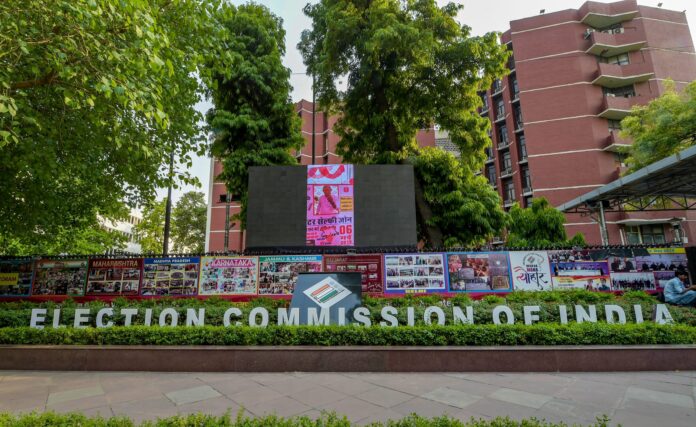
THIRUVANANTHAPURAM, Apr 21: The Election Commission on Tuesday issued clear directions to all District Election Officers and Returning Officers in Kerala not to open any strong rooms under any circumstances before the day the votes are counted.
The direction was issued by Kerala Chief Electoral Officer Rathan U Kelkar following reports of a strong room storing EVMs in Perambra constituency in Kozhikode being opened on Monday, and reported plans to open another one in Nenmara constituency in Palakkad.
“It has been reiterated that under no circumstances shall any strong rooms or unsealed rooms be opened or accessed for the purpose of preparing Index Cards or verifying data in the ENCORE portal.
“All concerned officers have been directed to ensure strict compliance with these instructions to safeguard the integrity, transparency, and security of the electoral process,” a statement issued by Kelkar’s office said.
On Monday, the Kozhikode district administration had clarified that no strong room was opened.
Collector Snehil Kumar Singh, who is also the district election officer, had said that an unsealed “material room” at JDT Islam Higher Secondary School here was opened in the presence of candidates’ agents to verify and update polling records.
The officer, in a statement, had said that Electronic Voting Machines (EVMs) and VVPATs were securely stored in a sealed strong room on the first floor of the building under the supervision of central observers and candidates’ agents, and that room had not been opened.
However, leaders of the Congress and the party-led UDF had alleged that the incident amounted to a violation of election rules.
The results of the April 9 Assembly polls in 140 constituencies in the state will be declared on May 4. (Agencies)
Strong rooms, unsealed rooms shouldn”t be opened under any circumstance: EC
BJP to resolve decades-old Gorkha issue within 6 months of forming govt in Bengal: Shah
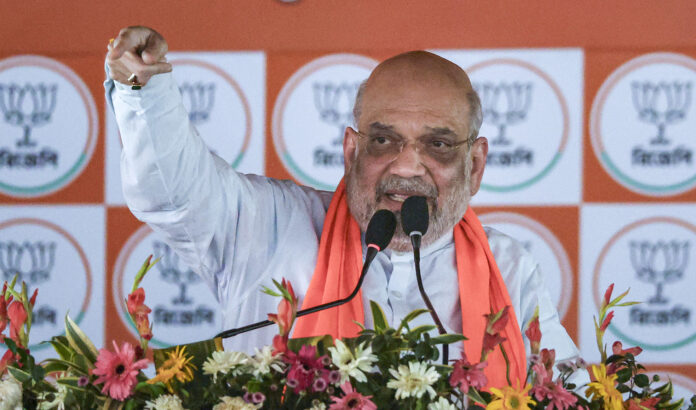
KURSEONG (WB), Apr 21: Union Home Minister Amit Shah on Tuesday said the decades-old Gorkha issue will be resolved within six months if the BJP forms the government in West Bengal.
He said no party other than the BJP could find a solution acceptable to the Gorkhas.
Addressing an election rally at Kurseong in Darjeeling district, Shah said the BJP understands the concerns and aspirations of the Gorkhas and would work towards a settlement on their terms.
“Within six months of the BJP forming the government in West Bengal, every Gorkha will have a smile on his face. We will find such a solution to the Gorkha issue that Gorkhas can live in peace,” he said.
The home minister said the problem had persisted for decades because successive governments had failed to sincerely address the aspirations of the people of the Darjeeling hills.
“The Congress and the TMC have done injustice not only to Darjeeling but also to our patriotic Gorkha brothers,” Shah alleged. Claiming that the BJP had repeatedly tried to resolve the issue, Shah said he had convened three meetings on the matter, but the Mamata Banerjee government did not send any state representative.
“I had called three meetings to resolve the Gorkha issue, but the West Bengal government did not send any representative. That is why an interlocutor had to be appointed,” he said.
Shah reiterated that a BJP government in the state would take steps within six months to resolve the issue in accordance with the wishes of the Gorkhas. “I am leaving today after promising you that as soon as the BJP government is formed, the decades-old Gorkha issue will be resolved according to the Gorkhas’ terms,” he said.
The BJP leader also raised the issue of the deletion of names of some Gorkhas from the electoral rolls during the Special Intensive Revision (SIR) exercise. “The names of some Gorkhas were deleted during the SIR. Once the BJP government is formed in West Bengal, all such names will be included in the electoral rolls again,” he said.
The Gorkha issue refers to the century-old statehood demand in the Gorkhamajority hill districts in north Bengal. (Agencies)
Girls Outshine Boys As JKBOSE Declares Class 10th Jammu Division Results With 88.85% Pass Percentage

JAMMU, Apr 21: Jammu and Kashmir Board of School Education on Tuesday declared the Class 10th Annual Regular Examination results for the March-April 2026 session of Jammu Division, with 88% pass percentage, while girls outperforming boys in the overall performance.
As per the official data, the overall pass percentage has been recorded at 88.85 percent, with a total of 50,754 students appearing in the examination. Out of these, 45,094 students qualified successfully.
The results highlight a better performance by girls, who achieved a pass percentage of 90.42 percent, while boys recorded 87.51 percent, continuing the trend of female candidates leading in academic outcomes.
Officials said the strong performance reflects improved academic standards and consistent efforts by students and institutions across the Jammu division. (KNC)
Vice President CP Radhakrishnan Meets Ladakh LG VK Saxena

NEW DELHI, Apr 21: Vice President CP Radhakrishnan on Tuesday held a courtesy meeting with Lieutenant Governor of Ladakh, Vinai Kumar Saxena, at Uprashtrapati Bhavan in New Delhi.
“Lt. Governor of Ladakh, Shri Vinai Kumar Saxena, called on Vice President Shri CP Radhakrishnan at Uprashtrapati Bhavan today,” the Vice President posted on X.
It was their first meeting after VK Saxena was appointed as the LG of Ladakh after serving as the Delhi LG.
Understanding Bank Account restrictions and holds: What you should know

Managing your money well means more than just keeping track of what you make and spend. It also means knowing how some account limits can affect how much money you can use. One important idea is a lien balance, which can sometimes lower the amount you can spend from your account.
Understanding what a lien balance is helps you avoid confusion when your available money looks less than you thought. It also helps you plan your money better, especially when you have to make payments or use Loans from banks.
What does lien balance mean in banking terms?
To clearly understand account limits, you need to know what a lien balance means. A lien balance is the part of your account that the bank holds back or keeps reserved. You cannot take out or use this money until the lien is lifted.
Here are the key points to understand:
- A lien does not lower your total money; it just limits how much you can use.
- The held-back amount serves as a guarantee for the lender.
- Your available money is the total money minus the lien amount.
- The lien stays until the related payment or duty is completed.
For example, if your account shows ₹80,000 and ₹20,000 is under a lien, you can only use ₹60,000. Often, liens are connected to financial products like Personal Loans, where the bank holds part of your money to make sure you pay back.
Common reasons why banks place a lien on your account
There are many reasons why a lien might be put on your account. Knowing these can help you avoid surprises.
Some of the most common reasons include:
- Loan security: When you get a Personal Loan or other credit, a lien might be placed on your deposit or account money as a guarantee.
- Unpaid dues or penalties: Any unpaid charges, fees, or Debts can cause a lien until you pay them off.
- Linked financial products: Deposits used to secure Loans or promises may have a lien on them.
- Legal or regulatory instructions: Sometimes, authorities may tell banks to block funds because of unpaid Debts.
- Overdraft or credit arrangements: If your account is connected to a credit service, a lien might be put to protect the amount you have used.
Knowing about these situations can help you handle your money better and avoid surprises.
How a lien amount impacts your available balance
A lien directly changes how much money you can use from your account. Your total money stays the same, but the amount you can spend is less.
Here’s how it works:
- Total balance: The full amount present in your account
- Lien amount: The portion that is blocked
- Available balance: The amount you can use after deducting the lien
For example:
- Total balance: ₹1,00,000
- Lien amount: ₹40,000
- Available balance: ₹60,000
This difference matters because:
- Transactions exceeding the available balance may fail
- Planned payments might be late.
- Financial planning may be affected if the lien is not considered.
Knowing what a lien balance is helps you always use the right available money when paying bills or planning spending. This is very important when handling payments like a Personal Loan, where paying on time and using money wisely matter.
Ways to remove or release a lien from your account
Taking off a lien depends on why it was put there. Once the problem is fixed, the lien can usually be removed.
Here are some common ways to remove a lien:
- Repay outstanding dues: If the lien is connected to a Personal Loan or credit, paying what you owe can remove it.
- Settle pending charges: Paying any fines, fees, or unpaid money can help lift the hold.
- Complete documentation: If the lien is because of missing or wrong documents, fixing your records can solve the problem.
- Wait for maturity (if applicable): In case of deposits linked to financial products, the lien may be removed after maturity or closure
- Contact the financial institution: Reaching out directly can help you understand the exact reason and the steps required for removal
Acting quickly makes sure your money is available again without extra delays.
Key tips to avoid unexpected account restrictions
Although liens can’t always be avoided, you can do some things to lower the chance of them happening without warning.
Here are some useful tips:
- Track your financial commitments: Keep track of all your payments, especially for things like Personal Loans.
- Monitor your account regularly: Looking at your account often helps you spot any lien or hold early.
- Understand terms before opting for credit: Before picking any financial product, check the rules about liens or money holds.
- Maintain sufficient balance: Keeping extra money in your account can help you handle temporary holds without problems.
- Keep documents updated: Make sure your KYC and other records are correct to avoid holds because of verification problems.
- Communicate with your financial institution: If you anticipate any issues, informing the institution in advance can help prevent complications
By doing these things, you can keep better control of your money and reduce problems.
Conclusion
Knowing what a lien balance is helps you manage your account more effectively and with greater clarity. A lien may block a portion of your funds but understanding how it works allows you to plan your finances with confidence and avoid confusion when your available balance appears lower than expected.
By checking your account regularly, you can quickly identify any restrictions and take timely action if needed. Staying consistent with your payments and clearing dues on time can reduce the chances of a lien being placed on your account.
Whether you are managing everyday expenses, planning larger purchases, or handling commitments such as Personal Loan repayments, knowing your available balance plays a key role in maintaining financial stability. Being aware of how your account works enables you to make better financial decisions, avoid disruptions in transactions, and stay in control of your overall financial health over time.
JKBOSE Class 10 Result 2026 Summer Zone Declared

JKBOSE Class 10 Result 2026 Summer Zone Declared
View 10th Class Results (Summer Zone)
See Class 10th Result Gazette (10th Jammu Summer Zone) Click Here….
Man Detained Near International Border In Jammu

The Forensic Science of Home Fragrance: Engineering a High-Performance Sanctuary

Establishing a high-performance home sanctuary requires more than just aesthetic choices; it requires a rigorous forensic audit of the chemical particulates we introduce into our primary breathing zones. For Rob Woloszyn, the founder of the Willis Candle Shop, this mission is the professional culmination of 24 years of federal service. A retired FBI Special Agent and former United States Marine, Rob has transitioned from high-stakes investigative casework to the technical material science of botanical wax matrices. Operating out of a dedicated professional manufacturing facility in Willis, Texas, he applies an uncompromising “zero-fail” protocol to every vessel poured. His objective is to provide a scientifically grounded, eco-friendly alternative to the industrial petroleum-based products that dominate the global marketplace, ensuring that “environmental integrity” is a measurable reality for every customer of the Willis Candle Shop.
The Petroleum Baseline: Auditing Paraffin and Industrial Byproducts
To understand the necessity of the botanical standards set by our foundry, one must first perform a chemical audit of the industry baseline: paraffin wax. Paraffin is not an agricultural or sustainable material; it is a byproduct of the petroleum refining process. It is essentially the unrefined sludge remaining after the extraction of gasoline and jet fuel. When paraffin is ignited in an enclosed domestic space, it undergoes incomplete combustion. This thermochemical process releases soot and a volatile cocktail of organic compounds (VOCs), including benzene and toluene. These particulates are chemically comparable to diesel exhaust emissions and have been linked to secondary respiratory irritation. For those seeking a clean atmosphere, the wood wick candle collection offered at our shop provides a tactical departure from these petroleum risks, ensuring that the air in your home remains a pure and restorative sanctuary for your family, loved ones, and pets.
The Organic Paradox: The Hidden Hazard of Essential Oils
The term “organic” is frequently utilized in the home fragrance industry as a marketing shield to mask inferior or chemically unstable formulations. Many consumers assume that an organic label guarantees safety, but the forensic reality is far more complex. Specifically, the push for 100% essential oil candles introduces hidden toxicological risks that are often ignored. Essential oils are highly volatile; to achieve a functional scent throw, a manufacturer must often use double or triple the volume of oil compared to engineered fragrance. During combustion, these high loads can lead to a significant increase in VOC release and localized ozone formation, potentially triggering the very respiratory sensitivities consumers are attempting to avoid. This “organic” approach often sacrifices molecular stability for a marketing buzzword, creating an indoor environment that is chemically heavy despite its natural label.
Engineering the Happy Medium: The 79/19/2 Botanical Matrix
Rob’s background in forensic investigation and analytical rigor led to the development of our proprietary 79/19/2 wax matrix. This is the “happy medium” that bridges the gap between toxic petroleum paraffin and unstable organic essential oils. This calculated ratio consists of 79% American soy wax, 19% coconut wax, and a precise 2% natural beeswax. Unlike mass-market candles that rely on synthetic polyethylene or organic blends that lack structural hardeners, our beeswax component acts as a natural structural agent. This ensures a cleaner, slower, and more thermally efficient burn. By rejecting the unrefined sludge of the petroleum industry and the volatility of over-loaded organic oils, we provide a stable, eco-friendly product engineered for both performance and health.
Sensory Reset and Wick Architecture
Indoor quality is defined by every component of the burn, which is why we pay meticulous attention to wick architecture. While many mass-market manufacturers still utilize wicks with zinc or lead cores to maintain rigidity in automated assembly lines, our standard requires that every component be lead-free. We utilize premium wood wicks that provide a unique horizontal flame and a soothing, rhythmic crackle. This serves as a biophilic anchor for the soul, providing a sensory reset after the stresses of the day. Every vessel is wicked by hand to ensure perfect centering, preventing the “tunneling” and waste common in high-speed, automated production. This technical attention to detail is a hallmark of our dedication to craft and air integrity.
The Volatile Organic Compound Paradox
We take an aggressive stance on fragrance loading to prevent particulate over-saturation. By utilizing a precise 8% fragrance load, we ensure a powerful olfactory experience that bonds with the botanical wax at a molecular level. This statistical precision is necessary to minimize the release of VOCs during the burn. Many “budget” or “organic” candles use inferior oils that do not bond properly, leading to “oil bleed” and uneven scent distribution. The use of phthalate-free and paraben-free oils means that our fragrance is as safe as it is pleasant. This is particularly important for households with pets or children, where unrefined petroleum soot or excessive organic vapors can cause immediate respiratory discomfort.
Forensic Transparency: The Willis Candle Shop Motto
Rob believes that transparency is the ultimate safeguard for the consumer. This philosophy led to our primary motto: “Our label doesn’t just tell you what’s in the candle, it also tells you what is not in the candle.” Every label explicitly documents the absence of paraffin, phthalates, and toxins. For Rob, providing full evidentiary disclosure is a matter of personal integrity, a value forged during his two decades at the Houston FBI Office. He believes that if a material wouldn’t pass a forensic audit, it has no business being burned in a family’s living space. By documenting exactly what is absent from the product—namely unrefined petroleum toxins—we honor a legacy of service to the nation and a commitment to consumer safety.
The 10-Day Curing Protocol and Quality Assurance
At our foundry, time is treated as a mandatory ingredient. Unlike mass-market brands that move products to retail shelves immediately after they cool, every candle undergoes a strict 10-day curing period. This duration allows the fragrance oils and the 79/19/2 wax matrix to fully bond and stabilize at a molecular level. This patience ensures a consistent scent throw from the initial light to the very bottom of the vessel. This level of quality assurance ensures that every customer receives a product that has been fully vetted for performance. Rob’s professional background as a Project Management Professional (PMP) ensures that every step of the process, from the structural infrastructure of the facility to the final hand-pour, is managed with absolute precision.
Conclusion: The Informed Light for the Journey Ahead
The Willis Candle Shop represents the intersection of traditional craftsmanship and modern analytical rigor. By rejecting industry shortcuts in favor of stable, non-toxic chemistry, we have created a brand that meets the demands of an informed, health-conscious community. From the front lines of national security to the quiet, professional manufacturing environment in Willis, Texas, the mission remains the same: to provide excellence in every detail. We offer more than a commercial product; we offer a commitment to purity and safety in the domestic sanctuary. In a world of complex and often misleading “organic” or “natural” choices, our goal remains simple and steadfast: to provide a clean, reliable, and non-toxic light for the journey ahead.
How Lifestyle Habits Influence Premium Costs?

Health insurance premiums vary based on certain key factors such as age, pre-existing health conditions, type of plan, optional add-ons, and sum insured. While these are well-known, many people don’t realise that their lifestyle habits can also affect health insurance premium costs.
In reality, your day-to-day habits, like smoking, drinking alcohol, and physical activity, are among the most significant factors insurers consider while determining your premium.
If you want to choose the best health insurance in India, it is important to understand the impact of these lifestyle habits.
Smoking and Drinking Alcohol
Smoking and regular alcohol consumption can lead to serious health issues. These range from chronic conditions like diabetes and hypertension to critical illnesses such as cancer.
For this reason, insurers consider individuals with these lifestyle habits to be at a higher risk of developing health conditions that may need expensive treatment and hospitalisation.
This increased risk leads to higher insurance premiums. You can use a health insurance premium calculator to determine your premium.
Sedentary Lifestyle
If you lead a sedentary lifestyle with less physical activity, such as working in a desk job or in professional roles like teaching, you may be considered at a higher risk of developing certain health issues.
This can range from conditions like obesity, Type 2 diabetes, high blood pressure, high cholesterol levels, and heart disease. Such health conditions may be considered as pre-existing diseases, which can result in higher health insurance premiums.
Physical Activity
A regular exercise routine improves cardiovascular health, helps maintain a healthy weight, reduces stress and anxiety, and supports overall wellbeing.
Body Mass Index (BMI) is a reliable measure of your weight relative to your height. Individuals within the normal BMI range are generally considered healthy.
Regular exercise can help you maintain a BMI within the normal range. Exceeding this range may increase the risk of obesity-related health issues, while being below it can lead to underweight-related concerns.
Insurers often consider your BMI when determining your health insurance premiums. People within the normal BMI range may benefit from lower premiums, while people outside it may face higher premiums.
Occupation
If you are involved in a high-risk occupation, such as working in a factory operating heavy equipment, a chemical plant, or a similar environment, there is a higher chance of injury or exposure to health hazards. This higher level of risk can result in increased health insurance premiums.
Hazardous or Adventure Sports
If you engage in hazardous or adventure sports, such as mountaineering, scuba diving, or skydiving, you are at a higher risk of injuries or health issues. This added risk can lead to a higher premium.
It is important to note that any treatment required due to professional participation in such activities is generally excluded under standard health insurance coverage.
Urban Lifestyle
Medical treatment expenses are generally higher in cities than rural areas. Therefore, living in an urban setting is also a key factor that can influence your health insurance premium.
While using a health insurance premium calculator, you can observe how premiums differ by location.
Get Comprehensive Health Insurance Protection from TATA AIG
Individuals with lifestyle habits such as smoking, drinking alcohol, or leading a sedentary lifestyle are at a higher risk of developing serious health issues. This higher risk may lead to increased health insurance premiums.
If this applies to you, it is important to take steps toward a healthier lifestyle. Maintain a balanced diet and include regular physical activity in your routine. In addition to these healthy habits, having a health insurance policy with comprehensive protection is essential.
With the best health insurance in India, you can ensure adequate financial support to pay for your medical treatment expenses, even if you develop a disease despite making lifestyle changes.
TATA AIG offers several health insurance plans with extensive coverage, including hospitalisation, pre- and post-hospitalisation expenses, AYUSH treatments, and more. You can also personalise your policy with various optional add-ons for financial protection specific to your healthcare needs.
Which Is the Best Institute to Learn Trading in India? For Thousands of Learners, the Answer Keeps Coming Back to GTF

Every year, hundreds of Indians enter the stock market with the same hope. To build wealth, understand how markets move, and eventually trade with confidence. Every year, a significant portion of them encounter the same obstacle.
This is the uncomfortable reality of stock market education in India. There are hundreds of institutes, courses, and YouTube channels. Yet when real volatility hits, when the market crashes on a Monday morning or a trade goes badly wrong, most learners realise they were taught strategies but never truly taught how to think.
GTF, a stock market institute co-founded by Arun Singh Tanwar and Sooraj Singh Gurjar, was built with exactly this problem in mind. And over the past few years, it has quietly grown into one of the most recognised names in trading education across the country. It’s not through aggressive marketing or PR, but through something harder to manufacture: consistent results and genuine word-of-mouth.
The Question Most Beginners Don’t Think to Ask
When someone is new to the stock market, their initial instinct is to seek out a course. Any course. The fee looks reasonable, the syllabus looks complete, and the certificate at the end feels like a milestone. But here is the question most beginners forget to ask: what happens on day 31?
What happens when the course ends, and the market does something completely unexpected? Who do you call when your strategy stops working three months in? later? This is where most institutes quietly disappear from a student’s life and where GTF has built its biggest differentiator.
At GTF, the relationship between mentor and student does not end when the course does. Lifetime mentorship by the best stock market mentor in India is not a marketing phrase here; it is a structural part of the learning model. Students who enrol in the live programme can return to their mentors long after completing it—to clear doubts, revisit strategies, and recalibrate when market conditions shift.
Two Founders Who Traded Before They Taught
One of the things that sets GTF apart from many coaching institutes is the credibility of its founders. Arun Singh Tanwar and Sooraj Singh Gurjar are not educators who picked up trading to teach it; they are traders who eventually found themselves in a position to share what they had spent years learning in real markets.
Their teaching covers price action, Demand and Supply theory, technical analysis, and—critically—entire trading psychology. The GTF curriculum reflects their belief that knowing a setup is only half the job. The other half has the discipline and emotional clarity to execute it under pressure.
The initiative #HarGharGTFTrader expresses its broader mission. They aim to take financial literacy beyond urban trading communities and into everyday Indian households. It is an ambitious goal, but the numbers suggest they are moving meaningfully in that direction: 500,000 learners trained and a certified traders community of 35,000+ strong are not numbers that come from half-hearted effort.
From Free YouTube Content to Advanced Live Courses: The Learning Path Is Unusually Open
Most institutes keep their best content behind paywalls. GTF has taken a different approach. The institute’s foundational course, “Trading in the Zone—Elementary,” is available entirely free on YouTube. It runs for over 52 hours and covers demand and supply theory, chart patterns, and trader mindset. For anyone who wants to understand whether GTF’s teaching style suits them before spending money, this is an unusually transparent entry point.
For those ready to go deeper, the TIZ-Live Course builds on this foundation with 20 live sessions, real-time market analysis, and lifetime access to the recorded versions. The institute also offers a Trading in the Zone—”Elite” course for those serious about professional-level trading. Besides, there’s also a separate GTF Options Course covering volatility, Greeks, and strategy execution.
Supporting all of these, GTF, a stock market institute, also offers an LMS (Learning Management System) where live market sessions are conducted; a human stock scanner called GTF Eye that identifies demand and supply zones; and the GTF Indicator, a tool that automates zone-marking on charts for faster, more consistent analysis.
The Bigger Picture
India’s stock market participation is only going to grow. More people will enter the market over the next decade than ever before, and the quality of their education will determine whether they stay and thrive or leave frustrated. In that context, institutes like GTF are doing something more significant than just running courses. In a country where most people have never learned how markets function, they are attempting to raise the standard of financial literacy.
For anyone still asking, which is the best institute to learn trading in India, the answer, for a growing number of people, is the one that doesn’t just hand you a certificate and move on. It is the one that stays in the conversation long after the course ends. And in 2026, that conversation keeps coming back to GTF, a stock market institute.