Thursday, May 7, 2026
E-Paper
Home Blog Page 55

UAE accuses Iran of drone attack on ADNOC tanker in Strait of Hormuz

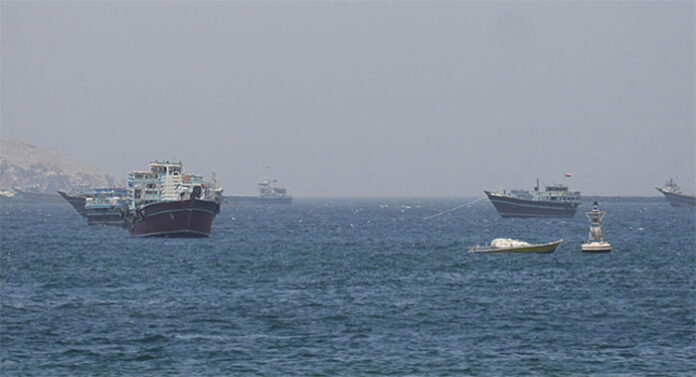
ABU DHABI, May 4 :  The United Arab Emirates on Monday strongly condemned the targeting of a tanker affiliated with Abu Dhabi’s state oil firm, ADNOC, while it was passing through the Strait of Hormuz, calling it an “Iranian terrorist attack.”

The UAE Ministry of Foreign Affairs said the tanker was targeted by two Iranian drones as it transited the strait, adding that no injuries were reported. The ministry further stated that targeting commercial shipping and using the Strait of Hormuz “as a tool of economic coercion or blackmail represents acts of piracy by Iran’s Revolutionary Guard Corps.”

Anwar Gargash, an adviser to the UAE president, said in a post on X: “These attacks confirm that the Iranian threat to the security and stability of the region is ongoing and cannot be ignored.” The statement from Abu Dhabi comes amid heightened tensions in the key waterway.

This incident comes after the Strait of Hormuz emerged as a major flashpoint in the tensions between the US and Iran following US President Donald  Trump ordering an operation: “Project Freedom” under which the US forces will escort merchant vessels through the strategic corridor using missile destroyers and over 100 aircraft.

Iran’s foreign ministry on Monday declared it is prepared to “respond to US threats” in the Strait of Hormuz, as the strategic waterway has become the latest flashpoint in the escalating standoff between Tehran and Washington triggered by Trump’s announcement of “Project Freedom”.

Foreign ministry spokesperson Esmail Baghaei, in a statement carried by the semi-official Mehr news agency, described Iran as the strait’s “guardian and protector,” making clear that any ship seeking safe passage must coordinate with Iranian authorities.

“Ships and shipping companies well know that ensuring their security requires coordination with the competent authorities of the Islamic Republic of Iran,” he said. He added that there was no reason for law-abiding nations to follow what he called “illegal actions” by the United States.

Asserting its control over the vital artery of global trade, Iran announced a new map of the Strait of Hormuz. Iran redefined the control zone in the Strait of Hormuz, stretching from the south of Mount Mobarak in Iran to the south of Fujairah in the UAE, and from the west of Qeshm Island in Iran to Umm al-Quwain in the UAE.

While acknowledging that diplomatic talks and exchange of proposals are going on between Tehran and Washington, Baghaei confirmed that Iran had received a US counterproposal, delivered through Pakistan, aimed at ending the war.

He, meanwhile, declined to divulge the details, saying the matter remains under review. He noted that Washington’s habit of making “excessive and unreasonable demands” made the proposal difficult to assess.

He also pushed back on media reports about nuclear negotiations, calling them “mostly speculation.”

Iran, he emphasised, is currently focused on one thing, and that is a complete cessation of hostilities. The direction of talks may take us beyond that, he said, and will be determined later.

Meanwhile, the IRGC’s tone on the ground was considerably less diplomatic due to the threats from the US military of Hormuz action. Spokesman Sardar Mohebbi warned that any vessel failing to comply with Tehran’s transit protocols would be “forcefully stopped.”

He said ships that coordinate with the IRGC Navy and follow designated routes would travel “safe and sound,” but that any movement outside those parameters would “face serious risks.” He urged all shipping companies and transport insurers to take the IRGC’s announcements seriously.

Taking the concerns of the countries, whose vessels have been stranded in Hormuz, under consideration, the US-led Joint Maritime Information Centre has advised ships to cross the Strait of Hormuz in Oman’s territorial waters, saying it set up an “enhanced security area”.

It’s unclear whether any vessels are attempting to cross Hormuz, or whether shipping companies and their insurers will feel comfortable taking the risk, given Iran has fired on ships in the waterway and vowed to keep doing so. The United States Central Command (CENTCOM) said that two US-flagged merchant vessels have transited through the Strait of Hormuz since the launch of Project Freedom.

Iran’s state-run IRNA news agency called President Trump’s “Project Freedom” to get commercial vessels moving in the strait “delirium”.

(UNI)

Gold futures slide to Rs 1.50 lakh/10g as oil surge, dollar weigh on bullion

NEW DELHI, May 4 : Gold prices fell by nearly 1 per cent to Rs 1.50 lakh per 10 grams in futures trade on Monday, tracking weak global trends amid a firm US dollar and elevated crude oil rates.

On the Multi Commodity Exchange (MCX), the yellow metal for June delivery declined Rs 1,149, or 0.76 per cent, to Rs 1,50,203 per 10 grams in a business turnover of 9,510 lots.

During the previous week, gold had depreciated by Rs 1,347, or nearly 1 per cent, to close at Rs 1.51 lakh per 10 grams.

“Gold prices have remained largely range-bound with slight pressure seen due to persistent inflation concerns and expectations of higher interest rates, although geopolitical tensions continue to provide downside support,” Gaurav Garg, Research Analyst at Lemonn Markets Desk, said.

In the international markets, Comex gold futures for the June contract declined USD 58.7, or 1.26 per cent, to USD 4,585.8 per ounce in New York.

“Gold prices trade lower, continuing last week’s fall, hovering near one-month lows, as strength in the dollar and surging oil prices continued to weigh on sentiment,” Manav Modi, Commodities Analyst, Motilal Oswal Financial Services Ltd, said.

Rising crude oil prices, driven by ongoing US-Iran tensions and supply disruptions through the Strait of Hormuz, have heightened concerns about energy-led inflation, prompting a wave of hawkish signals from major global central banks, he added.

The US Federal Reserve has kept interest rates unchanged but flagged rising inflation risks, while Fed Chair Jerome Powell cautioned about higher inflation risks; however, he also expressed optimism about resilient growth.

Meanwhile, the European Central Bank, the Bank of England, and the Bank of Japan have also hinted at potential rate hikes, reinforcing the higher-for-longer narrative that weighs on assets such as gold.

On the geopolitical front, uncertainty persisted as US President Donald Trump reviewed potential military actions even as Iran submitted a revised peace proposal, offering some hope for de-escalation.

However, Trump expressed dissatisfaction with the proposal, keeping markets on edge, while Iran reiterated its control over the Strait of Hormuz, sustaining risks to global oil supply.

Investors will closely monitor the PMI data from major economies and the US jobs indicators for further cues on the monetary policy cycle and the trajectory for bullion prices, Modi of MOFSL said. (PTI)

Court rejects closure report in 2017 forged will deed case, orders CB probe

Excelsior Correspondent

JAMMU, May 4: In a significant order exposing serious gaps in investigation, the court of Special Mobile Magistrate (Electricity), Jammu, has rejected the closure report filed by Police Station Domana in a 2017 cheating and forgery case involving an alleged forged will deed and directed the Crime Branch, Jammu, to conduct a thorough fresh investigation.
The order was passed by Arti Devi Koushal, Special Mobile Magistrate (Electricity), Jammu, in case titled UT through SHO Police Station Domana Versus Nemo, arising out of FIR No. 304/2017 registered under Sections 420, 467, 468 and 120-B RPC at Police Station Domana. The case was earlier transferred to the court on the directions of the Principal Sessions Judge, Jammu.
The FIR was lodged on the complaint of Raj Kumar, who alleged that accused persons, including Ashwani Kumar, Bansi Lal and Vijay Kumar, had hatched a criminal conspiracy and prepared a false and fabricated will deed in the name of deceased Soma Devi, widow of Shiv Ram. The complainant alleged that a fake person was produced before the Sub-Registrar and the forged will was used as genuine to grab landed property belonging to the deceased.
As per the complaint, Soma Devi had allegedly died in 1996, but a will deed was shown to have been attested and authenticated by the Sub-Registrar, Jammu, on June 26, 2001. The complainant further alleged that the accused projected Ashwani Kumar as the adopted son of Soma Devi and, on that basis, got the property transferred and even sold 2.5 marlas of land to his real brother for Rs 7 lakh, while another portion of land in Khasra No. 37 remained.
The police had filed a closure report on February 22, 2018, opining that the complaint was false. However, after hearing the complainant and perusing the record, the court found that the investigation had left several crucial questions unanswered and had relied mainly on documents produced by the accused persons themselves.
The court observed that the main allegations of the complainant revolved around forgery of documents, yet the Investigating Officer had failed to properly examine whether the documents relied upon were genuine or not. The court noted that the investigation focused largely on the death certificate of Soma Devi and the will deed, but did not sufficiently probe the alleged adoption, school record, identity documents, ration card record and the authenticity of the will.
In a crucial finding, the court observed that since Ashwani Kumar was claiming rights over the landed property on the basis of adoption, the adoption deed was a crucial piece of evidence and should have been collected or addressed during investigation. The court also noted that school records, Aadhaar card, PAN card and voter card of Ashwani Kumar required proper verification from concerned authorities to test the credibility of his claimed parentage.
The court further pointed out a glaring age inconsistency in the documents. It noted that Soma Devi’s age was shown as 72 years in 2001 at the time of registration of the will, but her age was shown as 90 years in 2007 in the death report relied upon by the Investigating Officer. The court observed that if Soma Devi was 72 years old in 2001, she would have been 78 years old in 2007, not 90, and such contradiction required detailed investigation.
The court also questioned why the death certificate of Soma Devi was registered only on December 23, 2017, after the FIR had been lodged on October 2, 2017, despite the claim that she had died on April 13, 2007. The court observed that the need for the death certificate appeared to have arisen after the lodging of FIR, and the Investigating Officer should have collected the actual record of the Municipal Court to examine whether any fraud had been committed even on that court.
The Magistrate also found that the ration card relied upon by the Investigating Officer had not been properly verified and that the age of accused Ashwani Kumar at the time of alleged adoption was an important legal factor which required investigation in light of restrictions under adoption law. The court said independent witnesses from the village, who may have participated in ceremonies of giving and taking the adopted child, should have been examined.
Holding that all these grey areas required proper investigation, the court refused to accept the closure report. Considering the gravity of allegations and need for scientific evidence, the court directed that the investigation should now be carried out by the Crime Branch, Jammu, a specialized wing of police.
The court sent the closure report and connected applications, objections, submissions and annexures to SHO/SSP Crime Branch, Jammu, through the prosecution wing of the court, with a direction to thoroughly investigate the matter, particularly the grey areas highlighted in the order. Since the FIR dates back to 2017, the court directed Crime Branch to make an endeavour to conclude the investigation and file a police report within 10 months from receipt of the file.

Outgoing Indian envoy meets Bangladesh FM, discusses bilateral ties

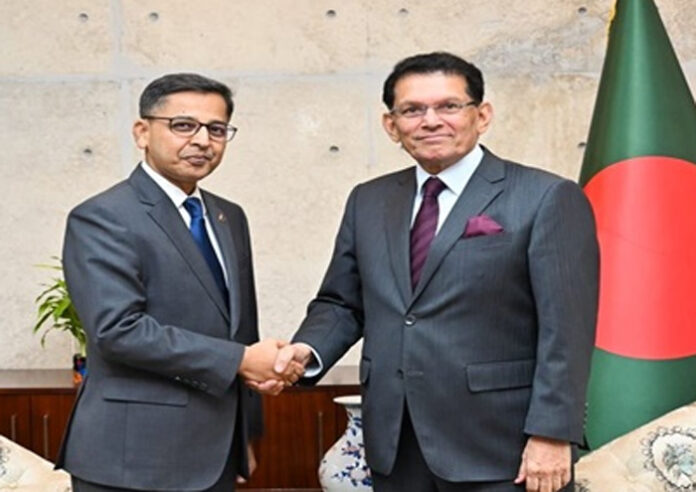
DHAKA, May 4: India’s outgoing envoy Pranay Verma called on Bangladesh Foreign Minister Kahlilur Rahman here on Monday and they reviewed developments and expressed optimism over the future direction of the bilateral relations.

High Commissioner Verma paid a farewell call on the foreign minister at the Ministry of Foreign Affairs in Dhaka, the state-owned BSS news agency reported, citing a release issued by the Indian mission.

During the meeting, they “reviewed ongoing bilateral developments and expressed optimism over the future direction of Bangladesh-India relations,” it said.

Both sides expressed confidence that the partnership would continue to grow, driven by the new capabilities and evolving aspirations of both nations, according to the state media.

Verma reaffirmed India’s commitment to work closely with the people and government of Bangladesh to further strengthen people-centric cooperation across all sectors in line with the development priorities of both countries and on the basis of mutual interest and mutual benefit.

Rahman also thanked Verma, who assumed the office of the High Commissioner on September 21, 2022, for his contributions to strengthening relations between the two neighbours during his tenure and wished him success in his new assignment, the agency reported.

Verma’s tenure as High Commissioner to Bangladesh witnessed a downturn in ties between the two neighbours, marked by political instability, economic strain and persecution of minorities, leading to a diplomatic tussle between the two neighbours.

The relations between India and Bangladesh witnessed a major downturn after the interim government headed by Muhammad Yunus came to power following the collapse of the Sheikh Hasina government in 2024.

India and Bangladesh are making efforts to rebuild bilateral ties after Tarique Rahman became prime minister following his Bangladesh Nationalist Party’s victory in the February parliamentary polls.

Verma thanked the foreign minister and the Ministry of Foreign Affairs for their consistent cooperation in advancing relations between India and Bangladesh. (PTI)

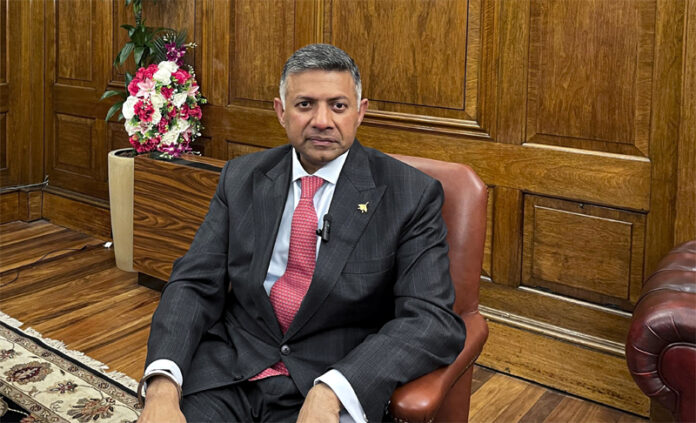
India’s new envoy to China commences tenure by paying tributes to Gandhi and Tagore statues

BEIJING, May 4 : India’s new envoy to China Vikram Doraiswami commenced his tenure on Monday by paying floral tributes to statues of Mahatma Gandhi and Nobel Laureate Rabindranath Tagore in Beijing.

Doraiswami arrived in Beijing on Sunday to take up his new assignment and was accorded a warm welcome by senior Chinese and Indian officials.

“Shri Vikram Doraiswami commenced his assignment as Ambassador of India to China by paying floral tributes to Mahatma Gandhi at Jintai Art Museum in Chaoyang Park,” the Indian Embassy said in a post on X.

He was accompanied by the Museum’s Curator, Yuan Xikun.

“Ambassador also paid tributes to Gurudev Rabindranath Tagore at the Embassy,” it said.

He earlier arrived in Shanghai on Saturday to take up his posting amid expectations that his appointment would add momentum to the current normalisation process of relations between the two countries.

Deputy Director, Asia Department of the Chinese Foreign Ministry Li Jianbo and Charge d’Affairs of the Indian Embassy Angeline Premalatha, along with senior officials of the Indian mission, received Doraiswami upon his arrival from Shanghai, officials said.

Doraiswami, a 1992-batch Indian Foreign Service officer, succeeds Pradeep Kumar Rawat.

Before his posting to Beijing, Doraiswami served as India’s High Commissioner to the United Kingdom.

The 56-year-old diplomat’s appointment in March evoked considerable interest in the Chinese official media and the Chinese strategic community.

Doraiswami, a Mandarin speaker, had served at both the Hong Kong and Beijing diplomatic missions early in his career.

He was posted as Third Secretary in Hong Kong, where he earned an elective diploma in Chinese from the New Asia Yale-in-Asia Language School before moving to Beijing in September 1996 for a four-year tenure.

Doraiswami’s appointment comes amid efforts by India and China to rebuild relations that came under severe strain following the military standoff in eastern Ladakh in April 2020, which stretched on for four years.

The two countries are currently in the process of normalising relations on all fronts, including the resumption of visas and direct flight services. (PTI)

India looks to boost LNG tank capacity as Qatar supplies stall

NEW DELHI, May 4: India is looking to expand LNG storage capacity as supply disruptions due to the conflict in West Asia and rising geopolitical risks highlight the need for greater energy security, the chief executive of the country’s largest gas importer, Petronet LNG, said on Monday.

India imports about half of its natural gas requirement, which is used to generate electricity, make fertiliser, convert into CNG to run automobiles, piped to household kitchens for cooking and used as feedstock in a variety of industries. This gas is imported in its liquid form, called LNG, in ships from countries like Qatar and the US.

Since the start of the West Asia conflict, supplies from Qatar and the UAE, which accounted for about 40 per cent of all imports, have been affected, sending New Delhi scrambling for alternative sources.

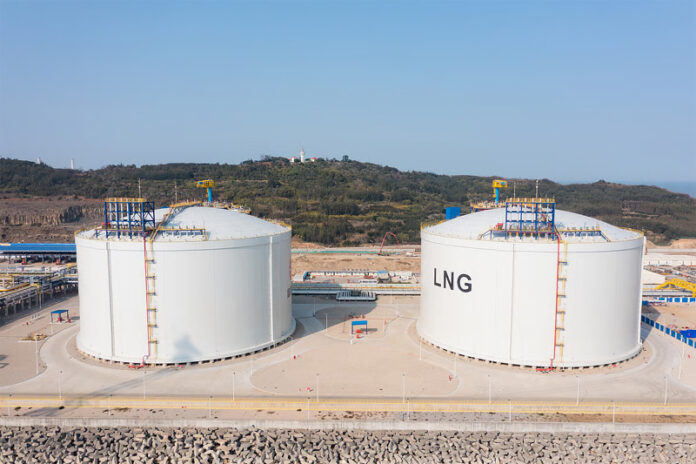
Petronet LNG Ltd, India’s largest liquefied natural gas (LNG) importer, plans to expand storage capacity by building new LNG storage tanks across multiple terminals, CEO A K Singh said at a media call announcing fourth quarter and FY26 earnings.

The company, he said, will construct two tanks at Gopalpur in Odisha, add one at Kochi in Kerala and pursue additional storage at Dahej in Gujarat, with projects expected to take about three years.

In all, seven tanks are on the drawing board, which are in addition to optimal strategic LNG reserves being evaluated at a national level to manage future crises.

Additional tankages mean more gas can be stored, which can be used to maintain normal supplies in the event of import disruptions.

Singh said Petronet has 10 out of the country’s 23 LNG tanks which in 2025-26 handled 26.5 million tonnes of imported fuel.

It has eight tanks at 22.5 million tonnes a year, Dahej import facility, and two at 5 million tonnes a year, Kochi terminal.

“We have a very good buffer but supply and drawal should synchronise. We have sufficient tanks for operational reasons but not for emergencies like war,” he said.

Petronet has two long-term LNG import contracts – a 7.5 million tonnes a year deal with Qatar and a 1.42 million tonnes a year contract with ExxonMobil.

LNG shipments from the Ras Laffan facility in Qatar have been halted since March 2 after QatarEnergy declared force majeure amid the West Asia conflict, he said, adding no cargoes arrived in March or April, with May also expected to be affected, and June supply is uncertain.

The supply disruptions led to cuts being imposed on several industrial users in order to protect supplies to priority sectors like household kitchens and CNG for transport.

Petronet’s one vessel, Disha, was loaded with LNG but got stranded after movement through the Strait of Hormuz was effectively halted following the West Asia conflict, he said, adding Qatar has told Petronet it will resume supplies once the regional situation normalises.

Asked if Qatar has specified any timeframe for resumption of supplies, he said resumption depends on normalisation of the situation and that operations will restart once conditions improve.

The conflict led to a surge in spot or current market LNG prices to about USD 24-25 per million British thermal unit during the disruption before easing to around USD 16, he said, adding that demand in India remains highly price-sensitive and requires competitive pricing to sustain growth.

Asked if Petronet has changed its long-term procurement strategy after the West Asian conflict, Singh said the company “is not advocating more long-term contracts today and will watch prices.

Current plans rely on available capacity and expected future spot buying when prices soften, noting India’s demand is price-sensitive.

Singh said Petronet historically received 9-10 cargos per month from Qatar and that none arrived in March and April with May expected to be similarly affected.

He hastened to add that the facilities in Qatar that supply to India are undamaged in the war and full supplies are expected to resume once production restarts.

Before the start of the conflict, imports were on the rise and prices were stable. “We handled almost 27 cargo or 28 cargo in January. So definitely, January and February were fantastic. It was happening, had this crisis not happened in March, we would have broken all the records,” he said. (PTI)

Jammu’s Growing Traffic Nightmare


By: Vivek Koul
vivekkoul87@gmail.com

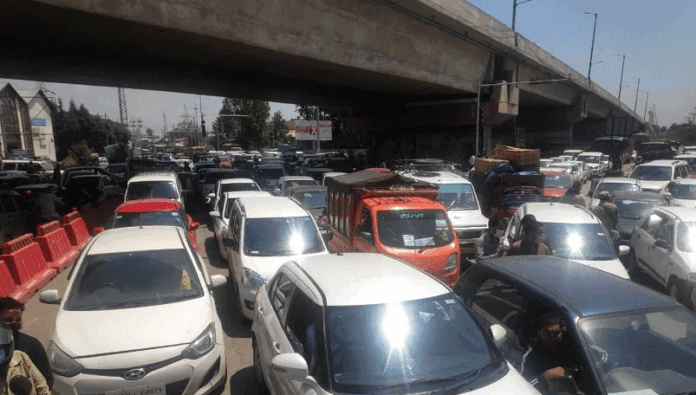
The problem of traffic congestion in Jammu has assumed alarming proportions and has now emerged as one of the most pressing civic challenges confronting the city. With every passing day, the number of vehicles on the roads is increasing exponentially, while the road infrastructure has largely remained static, outdated, and grossly inadequate to cope with this ever-expanding volume of traffic. The inevitable consequence of this imbalance is chronic congestion, prolonged traffic snarls, and an overall deterioration in the quality of urban life. Jammu, once known for its relatively smooth traffic flow and serene ambience, is today grappling with near-paralysis on several key arterial routes, particularly during peak hours. One of the most glaring examples of this crisis can be witnessed on the stretch from Talab Tillo to Canal Road. This corridor, which serves as a vital link for daily commuters, has become a persistent bottleneck where vehicles crawl at an exasperatingly slow pace. During morning and evening hours, when office-goers, students, and commercial traffic converge simultaneously, the situation becomes chaotic and unmanageable. What should ideally be a short and seamless commute often turns into a frustrating ordeal lasting hours, eroding both productivity and mental well-being. The congestion on this stretch is not merely an inconvenience; it reflects a systemic failure in traffic planning and enforcement. The condition further deteriorates on the road from Canal Road to Jewel Chowk, which has perhaps become the most congested and suffocating stretch in the entire city. The road here is exceedingly narrow and completely incapable of accommodating the enormous vehicular load that it is forced to bear daily. Vehicles remain stuck bumper to bumper, with no room for manoeuvrability, and even emergency services find it difficult to navigate through this stretch. It is not uncommon for commuters to spend an inordinate amount of time traversing this short distance, leading to widespread frustration and a sense of helplessness. Life, quite literally, comes to a standstill during peak hours, as the relentless gridlock cripples movement and disrupts routine activities.
There is an urgent and undeniable need for the construction of a flyover connecting Canal Road to Jewel Chowk to alleviate the burgeoning traffic pressure on this route. Such an infrastructure intervention would not only streamline vehicular movement but also significantly reduce travel time and fuel wastage. Flyovers, if planned and executed judiciously, can act as effective pressure valves by segregating through traffic from local traffic. Unfortunately, despite the obvious necessity, such long-term solutions continue to remain confined to discussions and proposals, while commuters continue to suffer on a daily basis. Ironically, even where road-widening initiatives have been undertaken, their benefits are being systematically negated due to lack of discipline and enforcement. The widening of the road from Talab Tillo Chowk to the Guest House was intended to ease congestion and facilitate smoother traffic flow. However, this widened carriageway has effectively been converted into an informal parking lot by motorists, who park their vehicles indiscriminately along the roadside. This rampant misuse of public road space has rendered the widening exercise futile, as the effective width available for moving traffic remains severely constricted. As a result, traffic jams and snarls continue unabated on this stretch as well. The role of traffic police and enforcement agencies becomes critically important in such a scenario. The persistent problem of roadside parking can only be addressed through strict and uncompromising enforcement of traffic regulations. Vehicles parked illegally along busy roads must be seized or penalized heavily to deter such behaviour. Without consistent enforcement, any infrastructural improvement is bound to fail. The same pattern of illegal parking and resultant congestion is visible on the Canal Road to Jewel Chowk stretch, further compounding the problem and intensifying commuter distress.
A similar and equally distressing situation prevails on the Amphalla to Janipur road, which has also become notorious for traffic congestion. This route witnesses heavy traffic throughout the day, and the absence of adequate road width, combined with haphazard parking and frequent stoppages, leads to chronic bottlenecks. The cumulative effect of congestion across multiple corridors is that the entire city of Jammu now finds itself engulfed in an unending cycle of traffic snarls. What was once limited to a few trouble spots has now spread to almost every major road and even to residential colonies. Within residential areas, the menace of wrong parking along narrow lanes has emerged as a significant source of irritation and conflict. Vehicles parked without consideration for space or access often block lanes, making it difficult for other residents to pass through and for emergency vehicles to respond swiftly. This rampant disregard for civic sense has fostered frustration, dejection, and a growing sense of lawlessness among commuters and residents alike. The absence of designated parking spaces within colonies has exacerbated this problem, pushing residents to encroach upon public lanes as a matter of routine.
Adding to the chaos is the unregulated operation of matadors and minibuses within Jammu city. These vehicles frequently stop at arbitrary locations in the middle of the road to pick up or drop passengers, as there are no clearly demarcated stoppages or strictly enforced halting points. Such erratic behaviour disrupts the natural flow of traffic and creates sudden obstructions, leading to congestion and frequent near-accidents. The lack of accountability and monitoring of these vehicles has turned them into major contributors to traffic disorder. In light of these multifaceted challenges, it is imperative for the traffic department and civic authorities to adopt a comprehensive and proactive approach. Traffic awareness campaigns must be initiated at the grassroots level, particularly within residential colonies, to inculcate a sense of responsibility and discipline among citizens. Awareness alone, however, will not suffice unless it is backed by firm enforcement and punitive measures against habitual offenders. Simultaneously, the creation of adequate and well-planned parking spaces for the general public is essential to discourage roadside and illegal parking. Road widening projects, construction of new flyovers, and development of alternative routes must be undertaken as priority infrastructure initiatives to normalize traffic conditions in Jammu city. Such measures, if implemented with foresight and sincerity, can significantly mitigate congestion and restore a semblance of order to the city’s roads. Above all, the elimination of wrong parking through strict enforcement must become a non-negotiable objective of the traffic department. Unless decisive and coordinated action is taken, traffic congestion will continue to worsen, undermining the livability, efficiency, and overall urban character of Jammu.

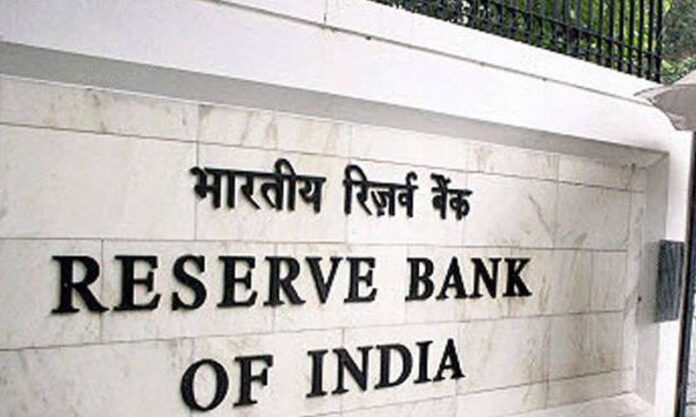
RBI cautions against misleading campaigns promising loan waivers

MUMBAI, May 4 : The Reserve Bank on Monday cautioned the public against unauthorised and misleading campaigns promising loan waivers, and asked them to refrain from associating with such individuals or entities.

“RBI has observed, with serious concern, the continued occurrence of such campaigns, through various media channels and direct outreach, by certain individuals and entities,” the central bank said, reiterating a similar caution it had issued in December 2023.

Such campaigns not only mislead the general public but also interfere with the orderly functioning of the credit system of the country, it said.

These campaigns, among others, involve false promises of waiver of outstanding dues to banks/non-banking financial companies (NBFCs); issuance of ‘debt waiver certificates’ or similar documents; and collection of fees under various pretexts, including service or legal charges, from the uninformed public.

“It is reiterated that any claims by individuals/entities offering such services are false, misleading, and liable to attract appropriate legal action under applicable statutes,” RBI said.

The Reserve Bank also emphasised that such activities undermine the stability of financial institutions, affect the interest of depositors, and engagement with such individuals/entities can result in direct financial loss.

“Members of the public are therefore requested to refrain from associating with or availing services from such individuals/entities and instead approach their lending institutions directly for any information related to their loans,” it said.

The RBI has advised the public to promptly report any such misleading campaigns to the appropriate law enforcement agencies. (PTI)

Pak foreign minister discusses regional situation with Iranian counterpart

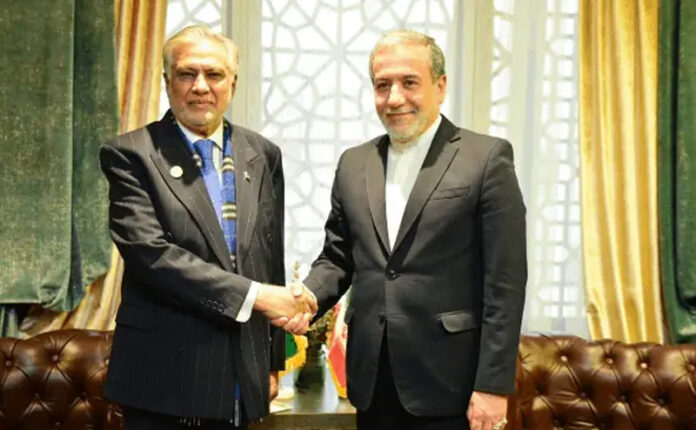
ISLAMABAD, May 4: Pakistan’s Foreign Minister Ishaq Dar discussed the situation in West Asia and Islamabad’s diplomatic efforts for peace and stability in the region with his Iranian counterpart Abbas Araghchi, officials here said on Monday.

Dar and Araghchi held a telephonic conversation late Sunday night, the Foreign Office said in a statement.

“The discussion focused on the regional situation and Pakistan’s ongoing diplomatic efforts for peace and stability in the region,” it said.

Araghchi appreciated Pakistan’s constructive role and its mediation efforts between the concerned parties.

Dar, who is also the Deputy Prime Minister, reaffirmed Pakistan’s commitment to promoting constructive engagement, underscoring that dialogue and diplomacy remain the only viable path toward peaceful resolution of issues and achieving lasting peace and stability in the region and beyond.

The development comes after US President Donald Trump said on Saturday that he was reviewing a fresh Iranian proposal aimed at ending the conflict, while expressing scepticism about the prospects of a deal.

According to reports, Iran has sent a 14-point proposal via Pakistan in response to a nine-point US proposal.

Pakistan is mediating the peace talks between the US and Iran.

The Iran war, triggered by joint strikes by the US and Israel on February 28, has been on hold since April 8, with one round of peace talks having taken place in Islamabad since then.

Pakistan hosted the first round of direct talks between Iran and the US in Islamabad on April 11, but the two sides failed to reach an agreement to end the war.

On April 21, Trump extended the two-week ceasefire with Iran indefinitely to give Tehran more time to prepare a unified proposal to end the war, just hours before the truce was set to expire. (PTI)

Long queues at fuel pumps in Latur; collector issues fresh guidelines on supply

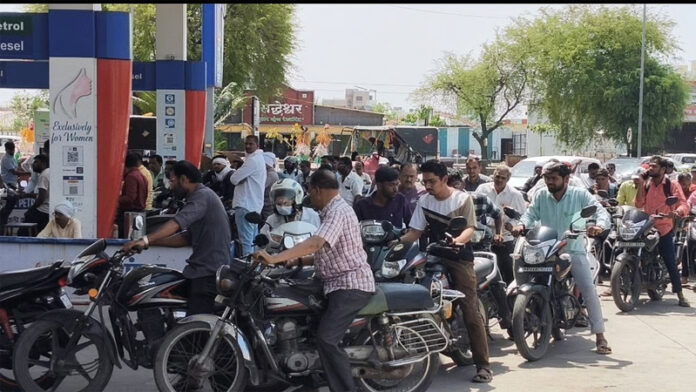
LATUR, May 4: Long queues were seen at several fuel pumps in Latur on Monday due to a reported shortage of petrol and diesel.

The shortage is being attributed to a halt in fuel supply from wholesale dealers to local pump operators, creating what officials and traders described as an artificial scarcity in the district.

Many pumps displayed boards reading ‘Diesel Out of Stock’ and ‘Petrol Not Available,’ while some dispensed fuel in limited quantities.

According to petrol pump operators, the wholesale fuel depot is located in Solapur, where tankers from Latur district have been waiting in long queues to procure petrol and diesel.

However, tanker drivers are reportedly not being allowed entry into the supplier’s premises, delaying the return of fuel-laden vehicles, they alleged.

Several outlets remained completely shut due to depleted reserves. The developments have led to panic buying, officials admitted.

Pump operators said efforts are underway to restore supply at the earliest and ensure normal fuel availability for consumers in the district.

Acting on complaints that some pumps were deliberately shutting operations despite having adequate stock, in-charge District Collector Rahul Kumar Meena issued guidelines and directives to all fuel station operators.

The decision was taken during a review meeting held via video conferencing with petrol pump owners and their representatives in the presence of District Supply Officer Venkatesh Rawlod, an official said.

“As per the new directives, petrol pump operators have been instructed not to stop fuel sales under any circumstances if stock is available. They must not refuse fuel to customers, avoid unnecessary restrictions on sales, and ensure that pumps remain operational during prescribed working hours,” he said.

Clear display of fuel prices at prominent locations has been made mandatory, along with daily updates of stock and sales records, which must be made available to inspection on demand, the official added.

Hiding stock or intentionally creating scarcity will be treated as a serious violation, he said, adding that all pumps have been directed to keep CCTV systems operational round the clock and provide footage to authorities whenever required.

“To ensure strict implementation, special teams have been formed at the tehsil level. These teams will conduct surprise inspections of petrol pumps within their jurisdiction. Each team will be led by the concerned Supply Inspection Officer, assisted by officials from the revenue and supply departments,” the official said.

Violations of guidelines will result in action under  Petroleum Rules 2002, Essential Commodities Act 1955, Bharatiya Nagarik Suraksha Sanhita 2023, and Disaster Management Act 2005, the official said.( PTI)