

NEW DELHI, May 6: Loss-making Air India’s board is expected to discuss financials, cost-saving measures, selection of new CEO and other issues during their meeting scheduled for Thursday.
The meeting also assumes significance against the backdrop of the Tata Group-owned airline facing significant headwinds, including higher jet fuel costs, due to the West Asia conflict.
Sources said the airline’s board meeting is scheduled to be held in the city on Thursday.
Financials for 2025-26, cost-saving measures, CEO succession plans and other issues are expected to be discussed during the meeting, they said.
Specific details about the agenda for the meeting could not be ascertained.
The airline, which is in the midst of an ambitious transformation plan, is scouting for a new CEO as incumbent and Singapore Airlines Group veteran Campbell Wilson will be stepping down later this year.
Air India board is chaired by Tata Sons Chairman N Chandrasekaran. Wilson, Singapore Airlines CEO Goh Choon Phong, Sanjiv Mehta, Alice Vaidyan, P R Ramesh, and P B Balaji are members of the board.
Airspace restrictions in the wake of the West Asia conflict have forced the airline to take longer routes for many international destinations, which is also resulting in increased fuel burn.
Meanwhile, as part of measures to save costs amid spiralling jet fuel prices, Air India is mulling unbundling meals from tickets as well as lounge access for business class travellers.
With the unbundling plan, the airline will be able to offer a different fare category where passengers do not prefer to have meals. Similarly, business class passengers will have the option to choose lounge access, sources had said.
On May 1, Wilson told staff that the airspace and jet fuel price situations remain extremely challenging.
“… massive rise in jet fuel prices which, together with airspace closures and longer flying routes, has caused many of our international flights to become unprofitable to operate,” he had said in a message.
While cuts in international flights happened in April and is continuing in May, Wilson had also said the situation leaves the airline with no choice “but to further trim schedules for June and July”.
According to him, profitability of domestic flights has also been significantly affected, but to a lower degree due to the government’s limitation of the domestic fuel price rise to 25 per cent.
“To partially compensate for the huge spike in costs, we have increased airfares and imposed fuel surcharges but, understandably, these higher airfares impact customer demand, so we can only raise fares so far before people decide to stay home,” he had said. (PTI)
Air India board set to meet on Thursday

Indian industry celebrates USD 20.5 bn investment in US; announce USD 1.1 bn projects

WASHINGTON, May 6: Indian companies plan to invest over USD 20.5 billion in the US in sectors such as technology, manufacturing and pharmaceuticals, and announced projects worth USD 1.1 billion at a business summit here.
A factsheet issued by the US said industry leaders celebrated Indian investments to the tune of USD 20.5 billion at the SelectUSA Investment Summit at National Harbour in Maryland near here.
“These investments span pharmaceuticals, advanced manufacturing, energy infrastructure, and emerging technologies, and are expected to create thousands of jobs while strengthening supply chains and expanding US production capacity,” the factsheet said.
Indian pharmaceutical companies announced plans to invest more than USD 19.1 billion in the United States, anchored by Sun Pharmaceutical’s planned USD 11.75 billion acquisition of New Jersey-based Organon & Co.
It said JSW Steel affirmed plans for commissioning USD 255 million in modernisation projects at its facilities in Ohio and Texas.
“We have 12 Indian companies making investment announcements at this summit, totalling more than USD 1.1 billion. That is the largest number of announcements we have seen from a single delegation at SelectUSA,” US Under Secretary of Commerce for International Trade William Kimmitt said on Tuesday.
He said these investments span aerospace and defence, energy, advanced manufacturing, and artificial intelligence.
The USD 1.1 billion investment by the 12 companies will create nearly 2,500 direct jobs in the US.
Ahmedabad-based Abhyuday Group announced the largest investment amounting to USD 900 million to set up manufacturing clusters in five states across the US.
Mumbai-based Sterlite Technologies Limited announced a new greenfield factory investment of up to USD 100 million in the US to offer connectivity solutions, including terminating optical fibre cables.
PR Jindal Group announced an investment of USD 87 million in Texas and Mississippi.
Jivo Wellness Group, based in Delhi, announced an investment of USD 15 million to set up a manufacturing plant in the US.
TechDome Solutions, a technology firm based in Indore, announced an investment of up to USD 7.5 million that will create 100 jobs in the US over the next five years.
Chennai-based Atri AI, which builds edge AI systems for real-time intelligence, intends to invest approximately USD 2 million over the next 2-3 years to build its engineering, sales, and technology operations in the US.
MagnoInnovation Lab from Kerala, which develops aerial drones and geospatial intelligence platforms for the oil and gas industry, plans to establish a US field operations base with an initial investment of USD 2 million.
Satori XR team from Chennai set up their US headquarters in Michigan and plans to invest USD 1.5 million over the next five years and create 20 to 25 new high-quality jobs across engineering, enterprise sales, marketing, and customer management.
RoshAI from Kerala, which builds physical AI and industrial autonomy systems for industrial applications, plans to establish their first US presence in Texas by investing USD 5 million. This will create up to 20 engineering and customer support roles.
Polyhose Inc., a global manufacturer of high-quality industrial hoses and fittings, plans to expand its US operations with an investment of USD 2 million in a facility in Los Angeles.
KISSFLOW from Chennai is a B2B software offering, an AI-powered low-code platform, which will be making an investment of USD 2 million in a facility in Houston to support the energy sector.
The Indian Institute of Technology Madras Global Research Foundation plans to set up a US location in California to drive research collaboration with US universities and colleges. This will be a soft landing pad for IIT and global startups, and provide seminars and classes in the US for USD 4.5 million. (PTI)
Air India board set to meet on Thursday
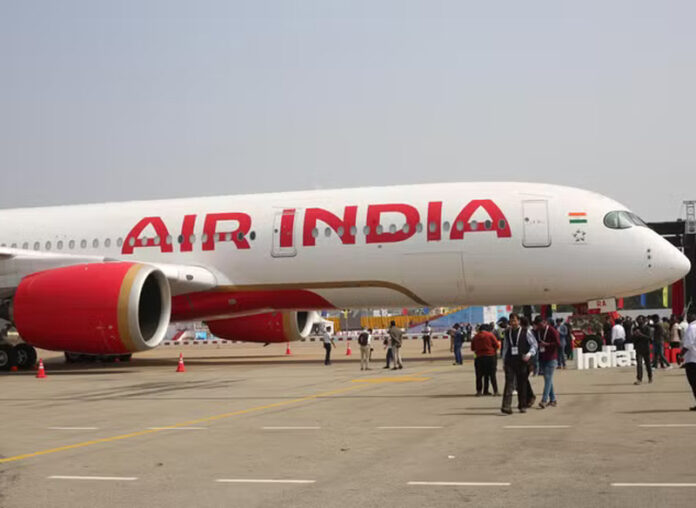
NEW DELHI, May 6: Loss-making Air India’s board is expected to discuss financials, cost-saving measures, selection of new CEO and other issues during their meeting scheduled for Thursday.
The meeting also assumes significance against the backdrop of the Tata Group-owned airline facing significant headwinds, including higher jet fuel costs, due to the West Asia conflict.
Sources said the airline’s board meeting is scheduled to be held in the city on Thursday.
Financials for 2025-26, cost-saving measures, CEO succession plans and other issues are expected to be discussed during the meeting, they said.
Specific details about the agenda for the meeting could not be ascertained.
The airline, which is in the midst of an ambitious transformation plan, is scouting for a new CEO as incumbent and Singapore Airlines Group veteran Campbell Wilson will be stepping down later this year.
Air India board is chaired by Tata Sons Chairman N Chandrasekaran. Wilson, Singapore Airlines CEO Goh Choon Phong, Sanjiv Mehta, Alice Vaidyan, P R Ramesh, and P B Balaji are members of the board.
Airspace restrictions in the wake of the West Asia conflict have forced the airline to take longer routes for many international destinations, which is also resulting in increased fuel burn.
Meanwhile, as part of measures to save costs amid spiralling jet fuel prices, Air India is mulling unbundling meals from tickets as well as lounge access for business class travellers.
With the unbundling plan, the airline will be able to offer a different fare category where passengers do not prefer to have meals. Similarly, business class passengers will have the option to choose lounge access, sources had said.
On May 1, Wilson told staff that the airspace and jet fuel price situations remain extremely challenging.
“… massive rise in jet fuel prices which, together with airspace closures and longer flying routes, has caused many of our international flights to become unprofitable to operate,” he had said in a message.
While cuts in international flights happened in April and is continuing in May, Wilson had also said the situation leaves the airline with no choice “but to further trim schedules for June and July”.
According to him, profitability of domestic flights has also been significantly affected, but to a lower degree due to the government’s limitation of the domestic fuel price rise to 25 per cent.
“To partially compensate for the huge spike in costs, we have increased airfares and imposed fuel surcharges but, understandably, these higher airfares impact customer demand, so we can only raise fares so far before people decide to stay home,” he had said. (PTI)
Rupee gains 69 paise to close at 94.49 against US dollar

MUMBAI, May 6: The rupee appreciated 69 paise to close at 94.49 against the US dollar on Wednesday, as Brent crude prices retreated from elevated levels towards USD 100 per barrel after US President Donald Trump hinted at a possible deal with Iran.
Forex traders said that with the Indian rupee facing severe pressure, the Reserve Bank of India (RBI) is also actively pursuing a “non-direct” strategy to support the currency.
Moreover, market sentiment was boosted after Trump paused “Project Freedom,” a US operation to escort ships through the Strait of Hormuz.
At the interbank foreign exchange market, the rupee opened at 95 against the US dollar, then lost ground and touched an intraday low of 95.18. The rupee also touched the day’s high of 94.38 before ending the session at 94.49 against the greenback, up 69 paise from its previous close.
On Tuesday, the rupee settled at 95.18 against the US dollar, after witnessing an all-time intraday low of 95.44, on possible RBI intervention after investors retreated from riskier assets amid renewed clashes in the Gulf and targeting of UAE infrastructure, which reignited supply chain fears.
Anuj Choudhary, Research Analyst at Mirae Asset ShareKhan, said the rupee rose sharply on a weak dollar and a surge in domestic markets amid possibilities of de-escalation in West Asia tensions. Surge in domestic markets and a sharp fall in crude oil prices too supported the rupee.
“We expect the rupee to trade with a positive bias on a rise in risk appetite in global markets amid de-escalation between the US and Iran and falling global crude oil prices. A weak dollar may also support the rupee. Dollar demand from importers may cap sharp gains. USD-INR spot price is expected to trade in a range of Rs 94.10 to Rs 95,” Choudhary said.
According to CR Forex Advisors MD Amit Pabari, the Reserve Bank of India is exploring ways to support the currency without directly using its forex reserves.
Pabari further noted that one of the ideas being discussed is to encourage state-run banks to raise funds through foreign currency bonds, which could help bring fresh dollar inflows into the system.
President Trump has suspended “Project Freedom” to escort ships through the Strait of Hormuz, claiming progress in negotiations with Iran toward an agreement to end the war.
In a post on Truth Social on Tuesday, Trump said, “Great progress has been made toward a complete and final agreement with representatives of Iran.”
Project Freedom was launched on Monday to escort ships, stranded due to the closure of the Strait of Hormuz, out to safety. Trump had announced the operation on Sunday, and the US Central Command began implementing it the next day.
“The global mood showed a slight pause, but not a complete sense of relief. US President Donald Trump announced that “Project Freedom” will be temporarily paused to allow room for a possible agreement, which has helped cool some of the extreme uncertainty in the markets,” Pabari said.
Meanwhile, the dollar index, which gauges the greenback’s strength against a basket of six currencies, was trading at 97.79, down 0.66 per cent.
Brent crude, the global oil benchmark, was trading lower by 8.25 per cent at USD 100.81 per barrel in futures trade.
On the domestic equity market front, Sensex jumped 940.73 points to settle at 77,958.52, while the Nifty surged 298.15 points to 24,330.95.
Foreign Institutional Investors sold equities worth Rs 5,834.90 crore on Wednesday, according to exchange data.
Meanwhile, India’s services sector growth climbed to a five-month high of 58.8 in April with new orders and output expanding at quicker rates, as firms indicated a shift from international to domestic suppliers amid the West Asia crisis, a monthly survey said on Wednesday.
The seasonally adjusted HSBC India Services PMI Business Activity Index rose from 57.5 in March to 58.8 in April, showing the strongest rate of expansion since last November. (PTI)
Antarctica’s tourism boom raises concerns about contamination and disease
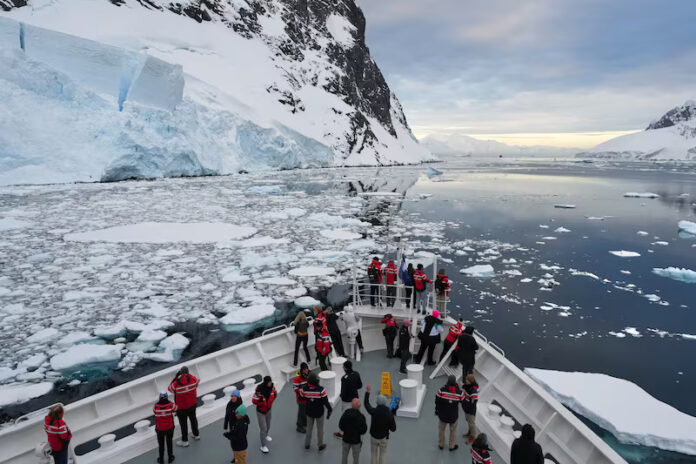
BRUSSELS, May 6 : Driven in part by fears that the frozen landscapes of Antarctica may be irreversibly melting away because of climate change, tourism to the bottom of the world is soaring. And experts warn that with more visitors comes an increased risk of contamination, illness and other damage to the continent.
While visitor numbers are still small – in part due to the high costs and time it can take – they are growing so fast that scientists and environmentalists are sounding alarms.
A deadly outbreak of the rare hantavirus aboard a Dutch ship on a weekslong polar cruise has brought attention to the growing tourism trend.
Most expeditions head to the Antarctic Peninsula, one of the fastest-warming places in the world. From 2002 to 2020, roughly 149 billion metric tons (164 billion tons) of Antarctic ice melted per year, according to the National Aeronautics and Space Administration.
A common route is to voyage south from Argentina toward Antarctica before heading north up the coast of Africa – the same route taken by the cruise ship MV Hondius.
“The sites you will see in Antarctica are extremely unique and not replicable anywhere else on the planet – the whales, the seals, the penguins, the icebergs – it’s all really stunning and it makes a huge impression on people,” said Claire Christian, executive director of the environmental group Antarctic and Southern Ocean Coalition.
Explosive growth of trips to the southern continent
——————————————————–
In 2024, more than 80,000 tourists touched down on the vast ice-cloaked continent and 36,000 viewed from the safety of ships, according to data collected by the International Association of Antarctica Tour Operators.
The International Union of Concerned Scientists estimates that tourism to Antarctica has grown tenfold in the past 30 years.
That number could rise further in the next decade as costs fall with more ice-capable hulls hitting the water and technological advances, said Hanne Nielsen, a senior lecturer of Antarctic law at the University of Tasmania. Her colleagues at the university estimate the annual figure could triple or quadruple to over 400,000 visits in that time.
Some tourists come to Antarctica for “last chance tourism,” knowing the melting landscape is rapidly changing, Nielsen said.
Risks of contamination
————————
Officials have not indicated any evidence of contamination from the MV Hondius.
However, flocks of migratory birds brought avian flu from South America to Antarctica in recent years, according to the U.S. Centers for Disease Control and Prevention.
That outbreak prompted the International Association of Antarctica Tour Operators and others to harden rules for tourists’ conduct and hygiene to protect visitors from being contaminated. To protect the fragile ecosystem from invasive species large and microscopic, visitors are told to stay away from animals and to avoid touching the ground with anything but their feet.
“There are rules that people are bound by when they’re heading south,” Nielsen said, describing her five voyages as a former guide. Crews and passengers use vacuums, disinfectants and brushes to scrub shoes and equipment clear of bugs, feathers, seeds and microbe-carrying dirt.
“Between the tongues and the laces of the boots you can find a lot of things,” she said.
Cruise ships have been struck by outbreaks of diseases like norovirus, which can spread quickly in a ship’s close quarters. In 2020, a COVID-19 outbreak on the Diamond Princess turned the cruise ship into an incubator for the then-mysterious virus.
Hantavirus usually spreads by inhaling contaminated rodent droppings.
The Hondius’ island hopping cruise
————————————-
The World Health Organization said Tuesday that MV Hondius left Ushuaia, Argentina, on April 1 and visited Antarctica and several isolated islands.
WHO is investigating possible human-to-human transmission on the cruise ship, said Dr. Maria Van Kerkhove, WHO’s director of epidemic and pandemic preparedness. Officials suspect the first infected person likely contracted the virus before boarding, she said, and officials have been told there are no rats on board.
Antarctica is governed by the Antarctic Treaty, which in 1959 enshrined the territory as a scientific preserve used only for peaceful purposes. A series of rules that followed “aim to ensure that all visits, regardless of location, do not adversely impact the Antarctic environment or its scientific and aesthetic values,” according to the treaty’s secretariat.
Companies and scientific ventures voluntarily comply with biosecurity guidelines and submit environmental impact assessments for Antarctic operations.
The treaty was written when tourism numbers were much lower, Christian said.
“Activity needs to be regulated appropriately, as you would with any of the world’s sensitive and precious ecological sites,” Christian said from Hiroshima, Japan, where she was preparing for an Antarctic Treaty Consultative Meeting. There she’ll join calls to strengthen protections for Antarctica’s penguins, whales, seabirds, seals and krill – tiny creatures at the base of the food chain.
For now, the lure of the frozen frontier continues to draw visitors.
“You can put a footprint in Antarctica and it’s still there 50 years later,” Christian said. (AP)
India, South Korea likely to hold FTA review talks on May 25
NEW DELHI, May 6 : India and South Korea are expected to hold negotiations on May 25 regarding the review of the comprehensive economic partnership agreement (CEPA), which was implemented in January 2010, an official said.
The deliberations are important as India has suggested Korea to consider negotiating a fresh bilateral trade agreement to make it more contemporary and address concerns of the trade deficit.
“The officials of the two countries are meeting on May 25 for the FTA review,” the official said.
Last month, in a bilateral meeting here, Commerce and Industry Minister Piyush Goyal made the suggestion to negotiate a fresh FTA to his Korean counterpart Yeo Han-koo.
The minister, on multiple occasions, flagged India’s concerns over the widening trade deficit between the two countries.
India’s exports to Korea declined 9.3 per cent to USD 5.81 billion in 2024-25 from USD 6.41 billion in 2023-24. Imports fell marginally by 0.34 per cent to USD 21 billion in 2024-25, leaving a trade deficit of USD 15.19 billion. It was USD 8 billion in 2020-21.
The two countries aim to double their two-way commerce to USD 54 billion by 2030 from the current USD 27 billion while ensuring a more balanced trade relationship. (PTI)
RBI issues revised norms for entities dealing in forex
MUMBAI, May 6 : The Reserve Bank has put in place revised norms for entities dealing in foreign exchange, whereby fresh licences will not be issued to money changers.
The Foreign Exchange Management (Authorised Persons) Regulations, 2026 is aimed at rationalising the authorisation and renewal framework for authorised persons and extend the principal-agent model for delivery of foreign exchange facility while maintaining appropriate checks and balances, the central bank said on Wednesday.
“The Reserve Bank has reviewed the existing framework for authorisation of any person as an Authorised Person under the Foreign Exchange Management Act, 1999, with the objective to rationalise the framework to improve delivery of foreign exchange services as well as easing compliance requirements,” it added.
The norms mandate that all entities must obtain the RBI authorisation to undertake forex transactions and set out revised rules for different categories of authorised dealers.
Under the regulations, applications for fresh authorisation will be considered under three categories.
Banks can apply under AD Category I.
NBFCs and a full-fledged money changer or a forex correspondent functioning for at least two years with an average annual forex turnover of Rs 50 crore in the previous two financial years can apply as AD Category II entities.
Certain entities, including those intending to offer innovative products and services that may involve dealing in foreign exchange, will fall under AD Category III.
“Application for fresh authorisation as an FFMC shall not be considered by the Reserve Bank, except those under process as on the date of coming into force of these regulations,” the norms, notified on April 30, said.
Entities seeking authorisation must be companies incorporated under the Companies Act, 2013, and meet minimum net worth requirements specified in the regulations. (PTI)
Fire at a shopping centre in Iran kills 8 people and injures 36
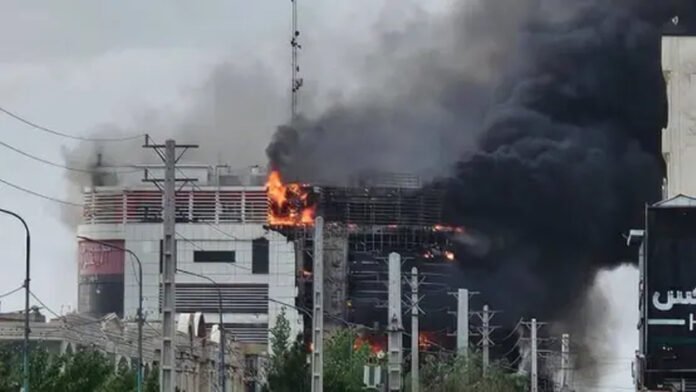
TEHRAN, May 6 : A fire in a shopping centre near Iran’s capital killed eight people and injured 36, state TV said Wednesday.
The fire started Tuesday in the Arghavan shopping centre in Andisheh town in Tehran province. It was not clear what caused the blaze, and state television IRIB said authorities were investigating.
Television footage showed firefighters battling the flames as large plumes of black smoke billowed from the multistory building.
There was no indication the blaze was linked to the war, where a shaky ceasefire with the United States has been holding for around three weeks. (AP)
Rusted mortar shell destroyed in Arnia Sector
Excelsior Correspondent
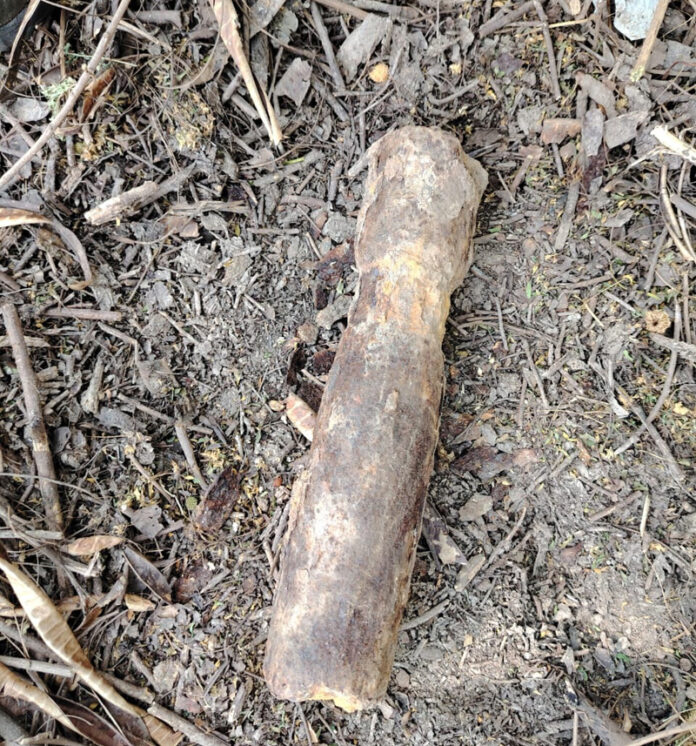
JAMMU, May 6: Authorities today recovered and safely destroyed an old rusted mortar shell in Arnia sector of the Jammu district.
Officials said the suspicious object was spotted in open fields near Border Out Post (BOP) Vikrant in Treva Village, following which information was passed to Police Station Arnia by the incharge Border Police Post Treva.
Acting promptly, they said a police team led by Inspector Chandan Singh, along with Bomb Disposal Squad (BDS) of the PCR Jammu, reached the spot and assessed the situation.
Accordingly, the unexploded ordnance was safely destroyed at the site in accordance with standard safely procedures, officials said.
The operation was carried out with all necessary precautions in the presence of BSF personnel and local police officials, ensuring that no harm was caused and a potential threat to public safety was averted.
IYC chief calls for aggressive push to restore J&K’s Statehood
Excelsior Correspondent
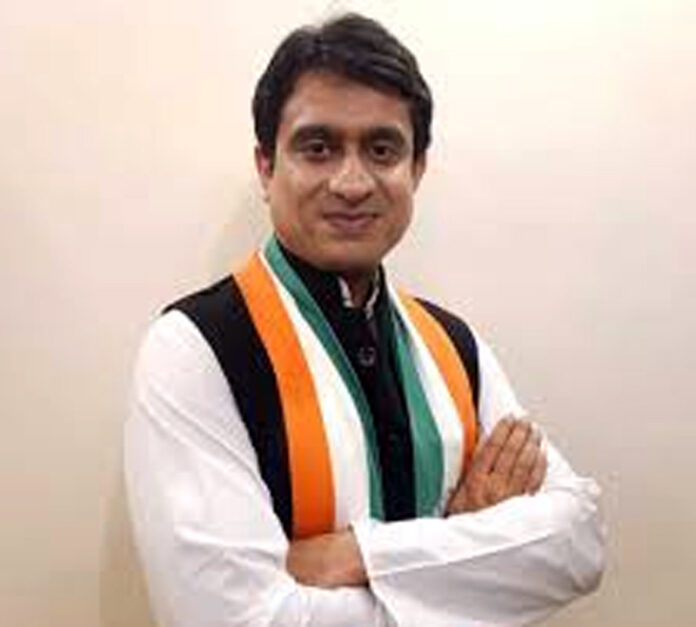
DODA, May 6: National president of the Indian Youth Congress, Uday Bhanu Chib today called for decisive shift in approach, asserting that the demand for Statehood must move beyond appeals and evolve into a sustained, assertive political movement capable of exerting real pressure on the Central Government led by the BJP.
Addressing Congress convention at Doda today, Chib, while linking the larger constitutional question with pressing grassroots concerns in district Doda, highlighted the key public demands, including jobs for locals in mega projects, the creation of a Doda Development Authority to boost tourism, construction of the Dessa–Kapran road, provision of an air ambulance for the erstwhile Doda district, establishment of a women’s college, and granting of Pahari status.
Framing the Statehood issue as one of constitutional dignity, democratic rights, and regional identity, Chib underscored that prolonged delays have only deepened public frustration, making it imperative for political actors, especially the youth, to adopt a more proactive and unapologetically forceful stance. He positioned this moment as a turning point in the political discourse of Jammu & Kashmir, where symbolic gestures and formal requests must give way to organized campaigns, mass mobilization, and a clear articulation of political will, adding that the restoration of statehood is not a concession to be granted but a right that must be firmly reclaimed through collective resolve.
Expanding on his remarks, Chib did not hold back in criticizing what he described as a “habit of political submission” among certain leaders, remarking that leaders of the National Conference remain excessively aligned with the BJP leadership, and such an approach will never secure statehood. In a tone that bordered on a direct rebuke, he said that constant deference and political compliance only weaken the larger cause, making it easier for the demand to be ignored at the national level. He stressed that history does not reward those who wait quietly, but those who organize, assert, and persist.
He further highlighted that key promises made to the people, including the removal of smart meters, have not yet been fulfilled, raising serious questions about accountability and intent.
Referring to the ongoing “Hamari Riyasat, Hamara Haq” campaign, Chib acknowledged the program as a timely and significant step towards channeling public sentiment into organized political action, and emphasized that it is not limited to symbolic outreach.