Tuesday, May 5, 2026
E-Paper
Home Blog Page 45

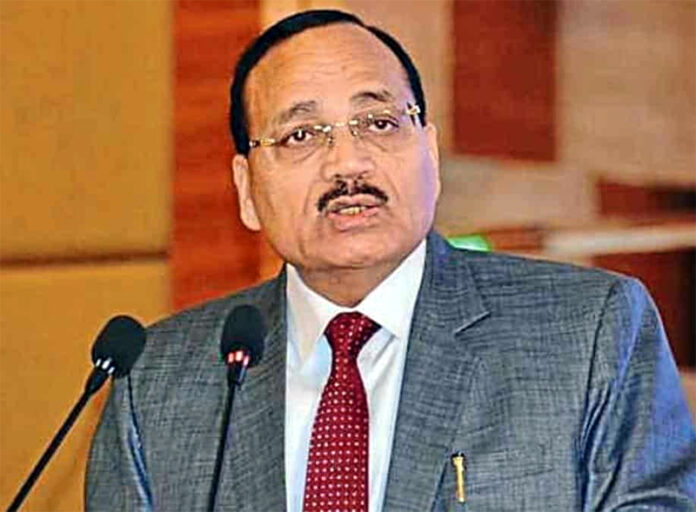
Tech integration into judicial processes dismantles geographical barriers, helps litigants: CJI

GANGTOK, May 1: Chief Justice of India Surya Kant on Friday said integrating technology into judicial processes dismantles geographical barriers to help litigants overcome problems of terrain, finance and distance.
Addressing the inaugural session of the two-day National Conclave on Technology and Judicial Education here, the CJI also said the Indian legal landscape has moved away from the era of the paper trail, where vital records languished in physical storage, to a vibrant digital ecosystem.
“When we speak of integrating technology into judicial processes across the country, we are, in effect, addressing the dismantling of geographical constraints, whether they arise from difficult terrain, financial barriers, or sheer distance,” he said.
The journey to a courtroom was often measured as a test of endurance, the Chief Justice of India said.
“The mighty Himalayas, magnificent as they are, make movement slow and uncertain. If we look at the scenario just a decade or so ago, for a Sikkimese litigant seeking justice, distance was not measured in kilometres but in days of travel across narrow paths and unpredictable weather,” he said.
The CJI said digital reform is not a matter of theory, but a practical necessity for sustaining the rule of law.
“We have moved away from the era of the paper trail, where vital records languished in physical storage, to a vibrant digital ecosystem. The e-Courts project has rewritten the relationship between the litigant and the law,” he said.
What once required physical presence and toilsome inquiry is now available through a simple digital interface, CJI Kant said, adding that in consonance with this advancement, the National Judicial Data Grid (NJDG) stands as the “beating heart” of this endeavour, offering a window into the pulse of our judicial performance.
“Beyond basic data collection, we have witnessed the advent of intelligent assistance within our chambers,” he said, mentioning translation tool SUVAS and SUPACE, an AI-driven tool designed to assist judges.
“These innovations act as force multipliers, aiding in the swift translation of judgments and providing rapid, comprehensive research to the bench. They relieve the judge of the mechanical burden of routine inquiry, allowing for a deeper immersion in the complexities of the law,” the CJI said.
He also discussed another aspect of technological advancements.
“When a litigant in the most distant corner of the country can track the progress of a case or view an order without intermediaries; if he can engage counsel from across the country and view proceedings in real time through video conferencing and live proceedings, the power dynamics of the courtroom undergo a healthy calibration,” he said.
Yet, it would be premature to assume that the task is complete, said the Chief Justice of India.
He suggested that the large-scale digitisation achieved in trial courts through the National Core Case Information Systems (NC CIS) must now find a clear and consistent reflection in the higher judiciary through stronger standardisation.
“It enables High Courts to align with a common national standard while still accommodating state-specific requirements, whether in terms of nomenclature, local language needs, or procedural workflows,” he said.
The CJI said this standardisation exercise must also be accompanied by an expansion of e-Seva Kendras, one-stop digital service centres established in high courts and district courts to help litigants and lawyers access electronic court services such as assistance with case status, e-filing, obtaining certified copies, e-payments, and video conference hearings.
“These centres must grow beyond being simple access points and develop into effective hubs of digital support. In a country marked by varying levels of literacy, they serve as the crucial link between the complexity of the law and the immediacy of a citizen’s need,” he said.
Noting that currently, there are 48 functioning e-Seva Kendras in high courts and 2,283 operational units across district courts, he said that strengthening their technical capacity is essential to ensure that the digital divide does not become a new line of exclusion.
CJI Kant also said there is a clear scope for the careful infusion and granular application of Artificial Intelligence at the trial court level.
In the context of recovery suits, for instance, predictive and analytical tools can be deployed at the very threshold of litigation, he said.
“Instead of allowing valuable judicial time to be spent at the execution stage, on tasks such as verification of assets or tracing encumbrances, these systems can undertake such foundational checks with a degree of speed and accuracy that manual processes often cannot match,” he said.
Similarly, Artificial Intelligence systems can be deployed to identify patterns in sentencing and bail practices, to promote greater consistency and predictability, the CJI said.
“This Conclave recognises that the adoption of technology is not only about implementation, but also about a necessary shift in legal education. It is no longer sufficient to be well versed in the statutes of the past. The modern judge must also engage with the logic that underpins emerging technologies,” the CJI said.
Judicial academies also must move beyond basic digital literacy, encouraging a deeper understanding of how algorithmic systems operate, and how they intersect with longstanding principles such as natural justice, he said.
“Only then can technology be integrated in a manner that strengthens, rather than unsettles, the core values of the legal system,” CJI Kant said.
The programme was attended by Chief Justice of Seychelles Supreme Court Rony James Govinden, Sri Lankan Supreme Court judge Mohammad Dhilip Nawaz and others. (PTI)
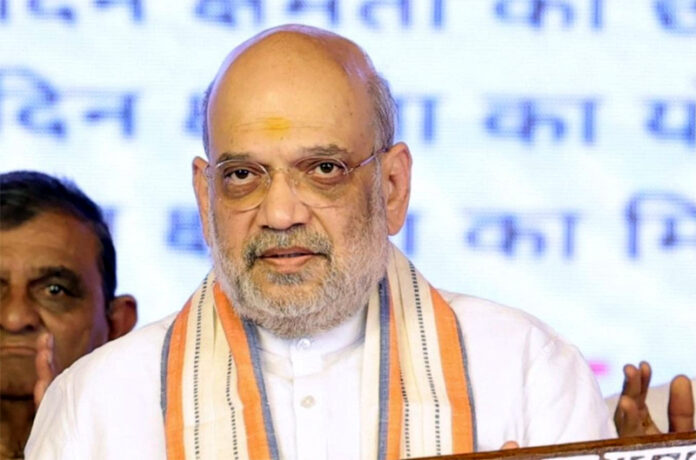
Dairy sector witnesses 70 pc growth in a decade under PM Modi: Shah

LEH, May 1 : Union Home Minister Amit Shah on Friday said India’s livestock and dairy sector has undergone a major transformation since Prime Minister Narendra Modi assumed office in 2014, with milk production rising sharply by 70 per cent in just one decade.
“There has been a major transformation in the livestock and dairy sector across the country after Narendra Modi became Prime Minister in 2014. With the creation of a dedicated Animal Husbandry Department, several revolutionary changes have taken place,” he said at an event to launch several projects in the dairy sector.
Shah said the country’s milk production has increased from 143 million tonnes in 2014-15 to around 248 million tonnes in 2024-25, marking nearly 70 per cent growth in just ten years.
“Nearly 50 per cent of this growth has come in the last five years,” Shah said.
He said per capita milk availability has increased from 307 grams per day in 2014 to around 485 grams at present, describing milk as an essential component of nutrition, especially for children.
“Pasteurised milk plays an important role in meeting children’s nutritional needs,” he said.
The home minister expressed hope that Ladakh would also achieve the national average of 485 grams of milk availability per person per day to ensure better nutrition for future generations.
Laying focus on achievements, he said milk powder production has also increased from 15,000 metric tonnes in 2014–15 to around 24,000 metric tonnes.
“Similarly, per capita availability (in another category) has increased from 148 grams to around 214 grams. I believe that the national average of 485 grams per day should also be achieved in Ladakh, ensuring adequate nutrition for future generations,” he added.
Highlighting the expansion of the cooperative network, Shah said India now has over 2.36 lakh dairy cooperative societies with around 20 million milk producers associated with them.
He added that the government has set a target of establishing 75,000 new dairy cooperative societies within five years, of which more than 21,000 have already been formed.
“Simultaneously, efforts are underway to modernise nearly 46,000 existing societies.”
The minister urged the Ladakh administration to tap the full potential of villages suitable for livestock rearing, keeping in view local climatic conditions.
He also called for promoting cooperative-based development in allied sectors, such as organic farming and honey production, in the region.
Shah said such initiatives would not only enhance farmers’ incomes but also strengthen the rural economy and contribute to sustainable development in Ladakh. (PTI)

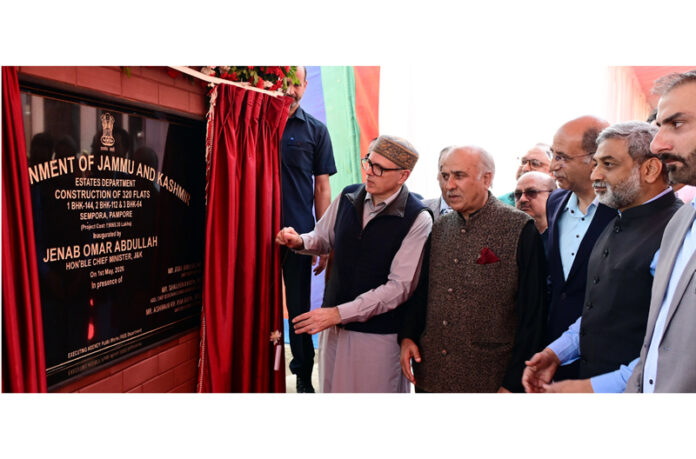
CM inaugurates 368 residential units for Govt employees

CM inaugurating residential units for Govt employees at Sempora, Pampore on Friday.

Excelsior Correspondent

PAMPORE, May 1: Chief Minister Omar Abdullah today inaugurated 368 newly constructed residential quarters for Government employees at Sempora in Pampore, developed across 23 blocks at an estimated cost of Rs 90.65 crore.
Constructed by the Estates Department, the project marks the completion of a major residential infrastructure initiative aimed at strengthening government housing facilities in the Kashmir Valley. It forms part of the government’s push to enhance employee welfare by providing modern, well-equipped residential spaces.
Advisor to the Chief Minister Nasir Aslam Wani, MLA Pampore Justice (Retd.) Hasnain Masoodi, Additional Chief Secretary Estates Shaleen Kabra, Deputy Commissioner Pulwama Dr Basharat Qayoom, Director Estates Ashwini Khajuria, along with senior officers, engineers and other concerned officials, were present on the occasion.
Click here to watch video
The Chief Minister inaugurated the Estates Quarters and inspected the newly constructed residential flats, including 2BHK and 3BHK units. He also visited the canteen and mess facilities and was briefed by senior officers of the Estates Department on upcoming and proposed housing projects.
With its completion, the quarters are expected to significantly enhance the availability of accommodation for Government employees and help ease long-standing shortage.
The project assumes added significance in view of the restoration of the annual Darbar Move by the present Government, which has revived the need for adequate residential facilities for employees relocating between Jammu and Srinagar.
The residential quarters will particularly benefit a large section of Darbar Move employees, many of whom have faced persistent challenges in securing suitable accommodation for their families over the years. The availability of these units is expected to reduce dependence on private housing and improve overall working conditions by ensuring stability and convenience.
Speaking on the occasion, the Chief Minister reiterated his Government’s commitment to providing suitable family accommodation to employees. He said that strengthening employee welfare remains a key governance priority, and that efforts are underway to further augment residential infrastructure in a phased manner across Jammu and Kashmir.
He emphasized that residential accommodation plays a crucial role in enhancing productivity and morale among government employees, adding that the government will continue to invest in infrastructure that directly impacts their well-being.
Highlighting the importance of efficient project management, the Chief Minister stressed the need for timely execution of public infrastructure works. He directed the concerned departments to ensure optimal utilization and proper maintenance of the newly created facilities so that they continue to serve employees effectively in years to come.

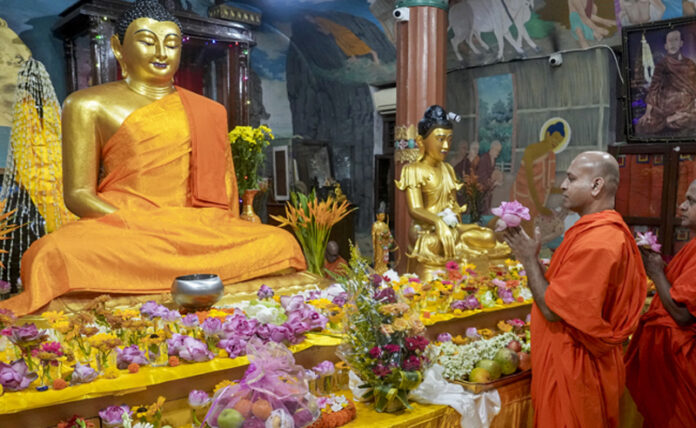
Nepal’s top leadership stresses unity, peace on Buddha Purnima

KATHMANDU, May 1 : National unity can be strengthened by following Lord Buddha’s guiding principles of tolerance and mutual goodwill, Nepal President Ramchandra Paudel said on Friday, on the occasion of Buddha Purnima.
The Himalayan nation is observing the 2570th Buddha Jayanti, or the birth anniversary of Lord Buddha, who was born in Lumbini, Nepal, around the 6th century BC.
Buddha Jayanti is celebrated on Baishakh Poornima or the full moon day in the month of Baishakh of the Lunar calendar every year.
The birth anniversary of the Buddha, regarded as the messenger of non-violence and peace, is being celebrated across the country with hopes for peace.
Traditional pujas are performed by Buddhists, with lamas and Buddhist gurus conducting ceremonies in Chaityas, monasteries, viharas, and other sacred sites.
Various programmes are being organised at important pilgrimage sites like Lumbini, Swayambhu, and Bouddha to commemorate the day.
In his message on the occasion, President Ramchandra Paudel said that national unity could be further strengthened by maintaining tolerance and mutual goodwill amid religious, social and cultural diversities, abiding by the messages and guiding principles of Lord Buddha, the proponent of non-violence and peace.
Extending his greetings to all through social media, Prime Minister Balendra Shah said that Nepal, blessed by the birth of Buddha, has always been in favour of non-violence and peace.
“The path shown by the Buddha is the path to end suffering by seeking knowledge,” he said.
“As a ray of light enters, darkness automatically disappears; likewise, our journey should be in search of the light of knowledge, should be on the path to solve problems,” said Shah.
Buddha’s birth, enlightenment, and Mahaparinirvana (death) all occurred on the full moon day of Baisakh. Thus, Buddhists worldwide, including those in Nepal, celebrate Buddha Jayanti with deep reverence and devotion.
Meanwhile, the Indian Embassy in Nepal on Thursday celebrated Buddha Jayanti in Lumbini in collaboration with the Lumbini Development Trust and Lumbini Buddhist University.
The celebration held on the eve of Buddha Jayanti featured a painting exhibition by school students, chanting of prayers by monks from Nepal and India and a vibrant cultural evening.
On the occasion, a Buddhism-themed Kathak dance was performed by a troupe from ICCR, India, headed by Deepti Gupta and a musical presentation by a Nepali band led by sarod maestro Suresh Raj Bajracharya.
Lumbini Province Governor Krishna Bahadur Ghartimagar was the chief guest on the occasion. (PTI)

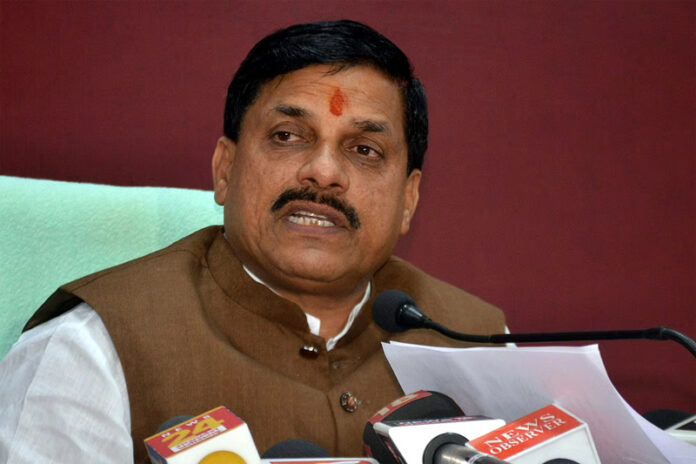
MP CM meets kin of cruise boat tragedy victims; says won’t spare guilty, announces high-level probe

BHOPAL, May 1 : Madhya Pradesh Chief Minister Mohan Yadav on Friday met family members of the victims of the cruise boat accident that claimed nine lives at Bargi Dam in Jabalpur, and said those found guilty will not be spared.
He also announced the formation of a high-level committee to investigate the circumstances and other aspects related to the incident that occurred on Thursday.
During his meeting with the kin of the victims in Jabalpur, the CM turned emotional. He tried to console the family members.
Nine people died and 28 were rescued after the cruise boat overturned in the Bargi Dam, built on the Narmada River in Jabalpur district, after it encountered a sudden storm on Thursday evening.
CM Yadav visited Jabalpur and met the victims’ families. He assured them that the state government stood firmly with them in this hour of crisis.
Deputy Chief Minister Jagdish Devda and Public Works Department Minister Rakesh Singh accompanied him.
Yadav travelled from Kotwali to Darhai Road. There, he visited the residence of Neetu Soni, who died in the accident, and expressed his condolences.
On seeing the CM at their home, a girl from the family could not hold back tears. Moved by it, Yadav placed his hand on her head and tried to console her and other family members. He also embraced two young children.
After that, Yadav met Riyaz Hussain, who narrowly escaped the cruise boat accident and was rescued nearly four hours later, at his home.
During the interaction, Riyaz told the CM that he felt he would not survive after the boat accident.
Talking to reporters later, CM Yadav said the tragedy occurred in the Narmada river, in which nine people died and 28 others were rescued.
The incident has shocked the entire state, he said.
As Jal Jeevan Mission work was underway near the site of the accident, a team involved in it extended help in the rescue operation. After being informed, the administration sent National Disaster Response Force (NDRF) and SDRF teams to the spot, the CM said.
Skilled Army divers also took part in the rescue and relief efforts, he added.
“Riyaz Hussain was trapped in the cruise ship for four to five hours after the accident. I met him and the families of other victims,” he said.
The CM said a cash reward of Rs 51,000 would be given to those who saved the lives of others in the accident.
“The MP government has announced Rs 4 lakh each for the families of the deceased, and Prime Minister Narendra Modi has announced Rs 2 lakh each as financial assistance,” Yadav said.
The government is forming a high-level committee to investigate this incident. It will comprise the Director General of Home Guards and Civil Defence, Secretary of the state government, and Commissioner of Jabalpur Division, he added.
This committee will focus on three aspects of the tragedy – firstly, its initial probe; secondly, the circumstances leading to the tragedy, and thirdly, whether protocols were followed at the time of the accident, he said.
“Our government will prepare Standard Operating Procedures (SOPs) for all activities, including boat tourism, cruise tourism, and adventure sports, to prevent such accidents in the future,” he said.
“Whoever is found guilty in the investigation report will not be spared. We must all take the weather department’s information seriously,” CM Yadav added.( PTI)

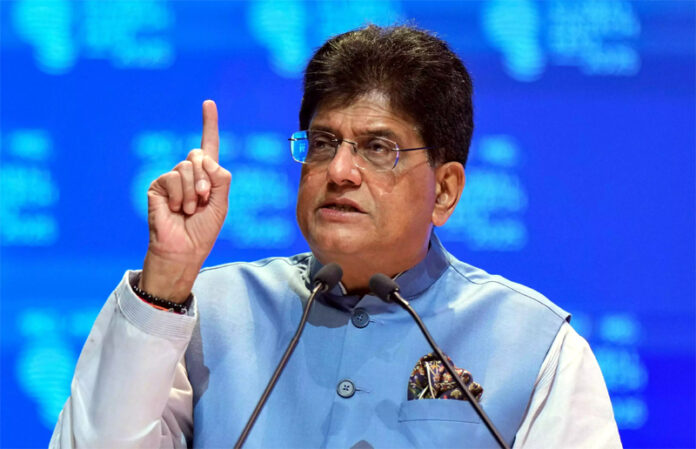
India, UAE trade pact helps boost bilateral trade to cross USD 100 bn: Goyal

NEW DELHI, May 1: The India-UAE free trade agreement, which came into force in May 2022, has helped the bilateral trade to cross USD 100 billion, Commerce and Industry Minister Piyush Goyal said on Friday.
The Comprehensive Economic Partnership Agreement (CEPA) with the UAE acts as a gateway to Africa, other GCC and Middle Eastern countries, CIS (Commonwealth of Independent States) countries and some European countries.
Bilateral merchandise trade has grown strongly, crossing USD 100 billion, with services trade also rising steadily and opening new markets and greater value, he said in a social media post.
The bilateral trade stood at USD 101.25 billion in 2025-26 compared to USD 100.03 billion in 2024-25.
The trade, he said, has expanded in key sectors like gems and jewellery, engineering goods, electronics, and agriculture.
During 2025-26, India’s exports to the UAE rose about 2 per cent to USD 37.36 billion, while imports were up 0.77 per cent to USD 63.89 billion, resulting in a trade deficit of USD 26.53 billion.
Foreign direct investment from the UAE into India stood at USD 2.45 billion during April-December 2025-26. It was USD 4.34 billion in 2024-25. *PTI_)

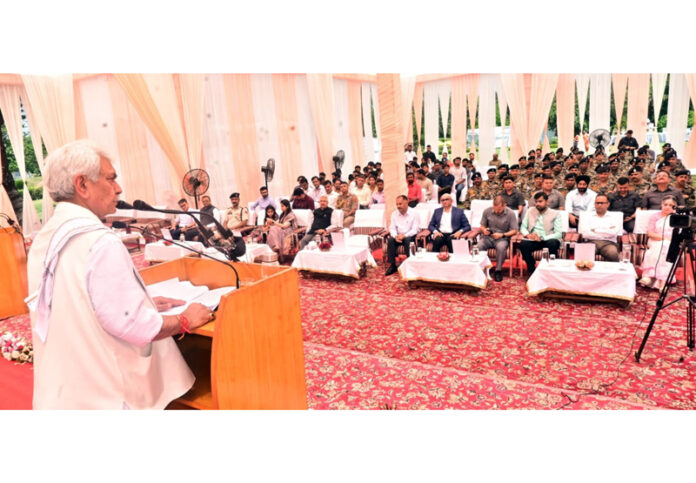
Lok Bhavan J&K celebrates Gujarat, Maharashtra’s Foundation Day

LG addressing a gathering at Lok Bhavan, Jammu on Friday.

Excelsior Correspondent

Jammu, May 1: The Foundation Day of Gujarat and Maharashtra was celebrated with great enthusiasm at J&K Lok Bhavan here in the presence of the Lieutenant Governor, Manoj Sinha.
Addressing a gathering, the Lieutenant Governor said that Gujarat and Maharashtra are growth engines of the nation and besides massive contribution to country’s GDP and exports, their social, cultural, and spiritual legacies stand unparalleled.
“Gujarat’s soil is renowned for nurturing entrepreneurial spirit, zeal, simplicity, and innate warmth, while Maharashtra commands global respect for its enterprise, valor, and spiritual genius. I view both states as engines propelling India’s development trajectory forward,” the Lieutenant Governor said.
The Lieutenant Governor observed that Gujarat’s history brims with countless sons of Bharat Mata, who elevated the nation’s honor. Revered Mahatma Gandhi, Sardar Vallabhbhai Patel, and Prime Minister Narendra Modi transformed India’s destiny through unyielding resolve, selfless dedication, and profound self-belief. He said Mahatma Gandhi gifted the nation the philosophy of truth, non-violence, selfless service, sacrifice, love, and tolerance, turning the freedom struggle into a mass movement. Lieutenant Governor also observed that Gandhiji’s life inspires us to stand firm by our principles amid any adversity.
The Lieutenant Governor stated that India’s pride as the world’s largest democracy is deeply rooted in the vision and ideals of Sardar Patel.
“His unwavering belief in unity amidst diversity stands as our greatest achievement, a testament to his resolute commitment to “Ek Bharat, Shreshth Bharat.” The strength we draw from weaving together our traditions, cultures, and heritage into the fabric of progress is a living reflection of Sardar Patel’s steadfast determination and enduring legacy,” the Lieutenant Governor said.
The Lieutenant Governor said Maharashtra is the land of industries, spirituality, selfless-service and sacrifice. He said icons like Chhatrapati Shivaji Maharaj, Peshwa Bajirao, Bal Gangadhar Tilak, and Vinayak Damodar Savarkar devoted themselves to Mother India and for the cause of national unity.
“At every sacred pilgrimage across India, the name of Ahilyabai Holkar resounds. Her vision and devotion breathed new life into the nation’s spiritual traditions and carried them forward with renewed strength,” the Lieutenant Governor said.
The Lieutenant Governor said under the leadership of Prime Minister Narendra Modi, India has discovered a renewed spirit of confidence, dignity, and progress. He said over the past 12 years, his guidance has inspired citizens to transform resolve into action, reshaping the nation’s landscape with development and determination and his tenure has marked a historic milestone, making him India’s longest-serving elected Head of Government.
“Today, Indian diaspora across the world is radiating with pride, as Prime Minister has restored the nation’s timeless prestige. A new sense of self-respect stirs within every citizen, uniting all sections of society in the shared vision of a developed India by 2047. By abrogating Article 370 on August 5, 2019, he also fulfilled the unfinished dream of Sardar Patel, strengthening the foundation of Ek Bharat, Shreshth Bharat,” the Lieutenant Governor said.

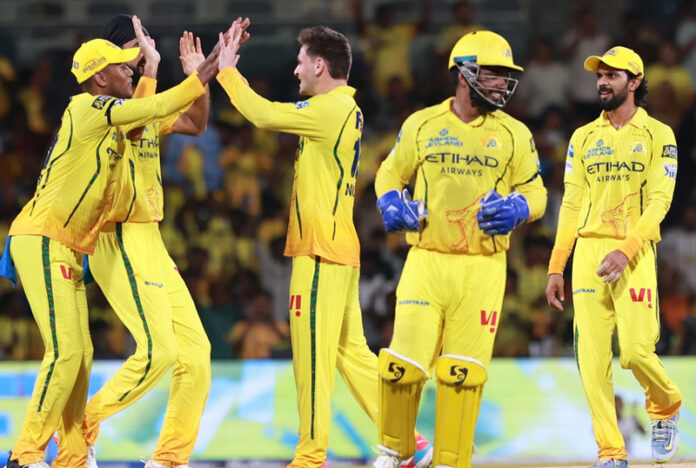
Inconsistent CSK, struggling MI face off in battle for survival

CHENNAI, May 1: Their IPL 2026 campaigns hanging by a thread, Chennai Super Kings and Mumbai Indians face a must-win showdown here on Saturday, with both sides desperate to reverse their inconsistent form and stay afloat in the playoff race.
The two most successful franchises in IPL history have endured a forgettable campaign so far, with neither side able to build sustained momentum.
While CSK have found conditions at the MA Chidambaram Stadium more familiar, their performances have lacked the clinical edge that has defined them over the years.
Their batting has been inconsistent, particularly in the middle overs, while the bowling unit, traditionally their strength at home, has struggled to close out games under pressure.
Mumbai Indians, too, have blown hot and cold this season. Despite flashes of brilliance from their top order, the five-time champions have been let down by a fragile middle order and an underwhelming bowling attack that has failed to defend totals or contain opposition batters at crucial junctures.
With the league entering a decisive phase, this contest assumes added significance as both teams look to turn their fortunes.
CSK will hope their spinners can exploit the slow Chepauk surface, while MI will bank on their power hitters to counter the spin threat.
Given their current form, neither side starts as a clear favourite, making this clash a battle of survival rather than dominance in what has traditionally been the IPL’s marquee rivalry.
Placed sixth in the points table with three wins from eight matches, the Ruturaj Gaikwad-led CSK are facing playoff uncertainty due to inconsistency, a negative net run rate, and the prolonged absence of MS Dhoni. Dhoni has been sidelined with a calf strain injury sustained during pre-season training, and despite initial hopes of a faster return, he has missed the first half of the tournament.
New recruit Sanju Samson has been CSK’s standout batter, scoring over 300 runs in eight innings including two swashbuckling hundreds, and he will once again shoulder the responsibility in batting.
With the ball, Jamie Overton and Anshul Kamboj have been impressive for CSK, with the former recording the best bowling figures of the season, taking 4/18 against Delhi Capitals.
MI’s campaign turned from bad to worse when they failed to defend 243 against Sunrises Hyderabad on Wednesday at their own den, exposing their inconsistency and inadequacy in bowling.
CSK are placed slightly better than MI’s ninth in the pecking order, and the latter must win all six of their remaining matches to reach 16 points and take a shot at qualification for playoff.
Even one more loss will leave MI heavily dependent on net run rates and other results going their way. (PTI)

Teams
Chennai Super Kings: Ruturaj Gaikwad (c), MS Dhoni (wk), Sanju Samson (wk), Kartik Sharma (wk), Dewald Brevis, Sarfaraz Khan, Urvil Patel (wk), Aman Khan, Shivam Dube, Zak Foulkes, Ramakrishna Ghosh, Anshul Kamboj, Jamie Overton, Matthew Short, Prashant Veer, Rahul Chahar, Shreyas Gopal, Gurjapneet Singh, Matt Henry, Akeal Hosein, Spencer Johnson, Mukesh Choudhary and Noor Ahmad.
Mumbai Indians: Hardik Pandya (c), Quinton de Kock (wk), Ryan Rickelton (wk), Robin Minz (wk), Danish Malewar, Sherfane Rutherford, Rohit Sharma, Suryakumar Yadav, Tilak Varma, Raj Bawa, Corbin Bosch, Will Jacks, Mayank Rawat, Naman Dhir, Shardul Thakur, Ashwani Kumar, Jasprit Bumrah, Trent Boult, Deepak Chahar, Krish Bhagat, AM Ghazanfar, Keshav Maharaj, Mayank Markande, Mohd Izhar and Raghu Sharma.

EC orders repoll in 15 booths of two Assembly constituencies in West Bengal on May 2

KOLKATA, May 1:  The Election Commission on Friday ordered repoll in 15 polling stations of two Assembly constituencies in West Bengal’s South 24 Parganas district, to be held on May 2, following reports of electoral malpractices.
The repolls were ordered in 11 polling stations of Magrahat Paschim Assembly constituency and four in Diamond Harbour.
Voting will be held between 7 am and 6 pm, the EC order said.
Polling in these two Assembly constituencies was held in the second phase of the state election on April 29.
The repoll order was based on reports received from returning officers and observers of the two constituencies and “material circumstances”.
The BJP had alleged rampant electoral malpractices in certain polling stations of both the Assembly seats under the Dimanod Harbour Lok Sabha constituency, which is represented by TMC National General Secretary Abhishek Banerjee.
The EC had deputed its special observer, Subrata Gupta, to fact-check the allegations from the ground.
“BJP knows it will be defeated by a big margin in Diamond Harbour and Margahat, and that is why they are demanding a repoll in these places. With the EC’s assistance, the BJP is forcing people of these areas to go through the rigours of the voting process yet again. The mandate is against the BJP, and it will remain the same,” TMC spokesperson Kunal Ghosh said.
On the other hand, senior BJP leader Suvendu Adhikari said, “There had been malpractices in several booths in these areas to favour the TMC. We are happy with the repoll decision of the EC.” (PTI)

India, Tanzania discuss settling trade transactions in local currencies

NEW DELHI, May 1 : India and the East African nation Tanzania discussed settling trade transactions in local currencies to boost bilateral economic ties, an official statement said on Friday.
The two have also discussed facilitating long-term business visas for Indian business persons, strengthening regulatory collaboration in pharmaceuticals and capacity building in areas of health, education and shipbuilding.
The issues came up for deliberations during the India-Tanzania Joint Trade Committee, held on April 29-30, 2026, in Dar es Salaam, Tanzania.
It was co-chaired by Commerce Secretary Rajesh Agrawal, and Tanzania’s Permanent Secretary, Ministry of Foreign Affairs Dr Samwel William Shelukindo.
“The discussions covered the promotion of trade settlement in local currencies,” the commerce ministry said, adding that collaboration in the mining sector, including geological exploration and mining, value addition in the gemstone sector, regulatory developments related to gemstone exports, and opportunities for capacity building and skill development were also discussed.
It added that opportunities for collaboration in real-time payments, Digilocker, and digital services were explored.
India offered its expertise in shipbuilding and highlighted shipyard development and port infrastructure alongside potential partnerships with Tanzanian institutions.
It added that India also extended support in the supply of locomotives and rolling stock, modernization of railway infrastructure, and capacity building through specialized institutions.
Bilateral trade reached USD 9.02 billion in 2025-26, rising from USD 8.64 billion in 2024-25. (PTI)