Thursday, May 7, 2026
E-Paper
Home Blog Page 44

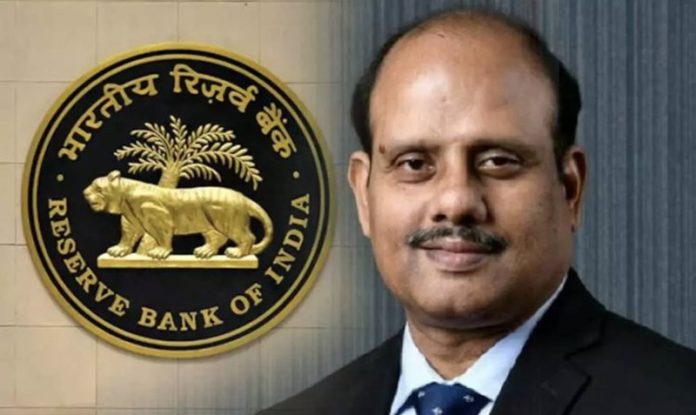
Supervision must look beyond formal compliance, says RBI Deputy Guv

NEW DELHI, May 4 : A lightly supervised system may appear efficient for some time, because of lower costs and faster growth, but if that growth rests on weak governance, poor credit standards or hidden risks, the eventual cost is also borne by depositors as well as the wider economy, according to RBI Deputy Governor Swaminathan J.

Emphasising the importance of supervision, he said that institutions and firms cannot be understood only through reported numbers.

“… supervision must look beyond formal compliance. Compliance asks whether the rule has been followed. Supervision asks whether the underlying risk has been understood and addressed,” he said in a recent lecture.

While noting that institutions and firms cannot be understood only through reported numbers, Swaminathan said that numbers tell a story, but one must learn to ask what lies behind them.

“The audited balance sheet and information memorandum are useful, but they are not the business. The business is in the factory, on the shop floor, in the market, in the supply chain, in the quality of management, and in the decisions taken. The banker’s job is therefore not to be cynical, but to be curious,” he said.

Swaminathan delivered the 12th G Ramachandran Memorial Lecture at the Madras School of Economics in Chennai on the topic ‘Learning, Judgement and Public Purpose – Lessons from Banking’ on April 30.

The lecture was uploaded on the RBI website on Monday.

“A lightly supervised system may appear efficient for some time, because the costs are lower and growth may be faster. But if that growth rests on weak governance, poor credit standards or hidden risks, the eventual cost is borne not only by shareholders or management, but by depositors, borrowers, taxpayers and the wider economy.

“The true value of supervision lies in reducing the probability and severity of such outcomes,” the RBI Deputy Governor said.

Addressing the students, he also mentioned that banking is becoming more digital, more data-driven and more interconnected.

Credit can now be originated through platforms. Payments move instantly. Algorithms may influence lending decisions. Non-bank entities play a growing role in financial intermediation, he said.

While these changes bring enormous possibilities as they can widen access, reduce costs and improve efficiency, Swaminathan said there are also new questions.

“Is the customer being treated fairly? Is the model understandable? Is accountability clear? Are risks being recognised early enough? These questions cannot be answered by technology alone. They require judgment. They require institutional discipline. They require humility about what we do not know. And above all, they require a sense of public purpose,” he said. (PTI)

NC not Cong lagged behind in struggle for statehood: Cong

Excelsior Correspondent
JAMMU, May 4: Congress has said that it is National Conference that lagged behind in the struggle for restoration of Statehood, whereas, Congress has always remained on the forefront and on the streets for this demand, right from day one.
Reacting to the statement of NC president, Dr Farooq Abdullah in this regard, Congress has said that he is diverting attention of the people in view of great resentment over non fulfillment of the demand by the Centre and failure to build strong movement on the ground.
Congress Party and its leadership has played a front role all these years over the issue and intensified its struggle, especially after the Assembly elections and remained on the streets to press for the most important demand of Statehood of people of J&K.
People ask NC to explain what it did to achieve the legitimate demand as committed by the Centre but failed to fulfill it.
Working president of JKPCC, Raman Bhalla said that Congress didn’t join even the cabinet, which is the right of every pre- poll alliance partner, after attaining majority in elections. It was only to expose the BJP Government, which had committed to restore Statehood immediately after Assembly elections, but has not honoured the same.
Since then, the Congress Party intensified its struggle under the slogan “Hamari Riyasat Hamara Haq” in many phases including chain hunger strike, Srinagar Chalo, Jammu Chalo and Delhi Chalo call , where our senior Central leadership, on the directions of top leadership joined our protest demonstration at Jantar Mantir and march to Parliament, giving nationwide attention to the most legitimate demand of people of J&K.
Even the top leadership of Congress Malikarjun Kharge and LOP Rahul Gandhi wrote open letter to the Prime Minister to honour his public commitments regarding grant of statehood.
Unfortunately, at that time too, our alliance partner NC raised questions over Congress struggle for Statehood, instead of extending support to our struggle.
Taking a dig on NC, he said Statehood can’t be achieved by showering praises on the Modi Government, which betrayed the people of J&K on restoration of Statehood.

Four youths from UP, MP undertake 9-month-long ‘Dandavat Yatra’ to Amarnath Shrine

Excelsior Correspondent
RAMBAN/JAMMU, May 4: Undeterred by high temperatures and difficult terrain, four youths from Uttar Pradesh and Madhya Pradesh have been on an extraordinary, over nine-month-long journey to the revered Amarnath Shrine, performing ‘Dandavat Pranam’– a rigorous religious practice involving full-body prostrations — to spread “a message of Sanatan Dharma” and “communal harmony”.
Traversing the winding stretches of the Jammu-Srinagar National Highway in Ramban district, the young pilgrims have been advancing entirely through full-body prostrations — a form of pilgrimage where devotees move forward by repeatedly lying flat on the ground — as they make their way towards the cave shrine housing the naturally formed ice lingam of Lord Shiva at an altitude of about 3,880 metres in the South Kashmir Himalayas.
The pilgrims, Jatinder Rajput, Rohit Ray and Nayain Jain from Madhya Pradesh, along with Amit Rajput from Uttar Pradesh, began their journey months ago.
While the trio from Madhya Pradesh started on September 3, 2025, Amit Rajput set out earlier on July 23, 2025.
“We are on a dandavat pranam yatra to seek the blessings of Baba Barfani. It was our long-cherished wish, and we have been on this journey for over nine months,” Amit Rajput said.
Unlike conventional pilgrimage, the group has been moving along step by step through repeated prostrations, while taking intermittent breaks.
“For nearly a year, our daily routine has revolved around lying flat on the ground, rising, and inching forward,” said Rohit Ray.
Carrying minimal belongings on a bicycle, including blankets, water and limited food supplies, the youths have braved extreme weather, from scorching plains to the cold and rugged Himalayan terrain.
Despite the physical strain, they remain resolute, chanting “Baba Barfani” for motivation.
The annual Amarnath Yatra is scheduled to commence on July 3 via the traditional 48-km Nunwan-Pahalgam route in Anantnag district, and the shorter but steeper 14-km Baltal route in Ganderbal district, concluding on August 28 on the occasion of Raksha Bandhan.
The youths said their journey is guided by a higher purpose, upholding the values of Sanatan Dharma and advocating for the recognition of the cow as India’s national animal.
Beyond spirituality, they emphasised a message of unity and harmony. “Religion teaches peace and coexistence. Those who spread Hindu-Muslim hatred do not truly understand their faith,” they said, highlighting lessons drawn from interactions with people across regions.
As they continue through Ramban, their weather-beaten appearance reflects the hardships endured, but their steadfast faith and message of unity have turned the yatra into a living testament of devotion and social harmony.

Net direct tax collection rises 5 pc to Rs 23.40 lakh cr in FY26 but falls short of revised estimates

NEW DELHI, May 4 : Government’s net direct tax collections grew 5.12 per cent to over Rs 23.40 lakh crore in 2025-26, but missed the revised budgeted target set for the fiscal year that ended March 2026.

In the revised estimates (RE) for the fiscal year (2025-26), the government projected its direct tax collection at Rs 24.21 lakh crore. This included a corporate tax of Rs 11.09 lakh crore and personal income tax (including STT) of Rs 13.12 lakh crore.

According to the data released by the Central Board of Direct Taxes (CBDT), net corporate tax mop-up was Rs 10.99 lakh crore, and personal income tax, including Securities Transaction Tax, was about Rs 12.41 lakh crore.

Net direct tax collection (including corporate and non-corporate tax) came in at Rs 23.40 lakh crore in FY26, registering a 5.12 per cent growth over Rs 22.26 lakh crore collected in FY25.

Refund issuance dipped 1.09 per cent year-on-year to Rs 4.71 lakh crore in 2025-26.

Gross direct tax collection during the recently concluded fiscal stood at about Rs 28.12 lakh crore, up 4.03 per cent from the 2024-25 fiscal. (PTI)

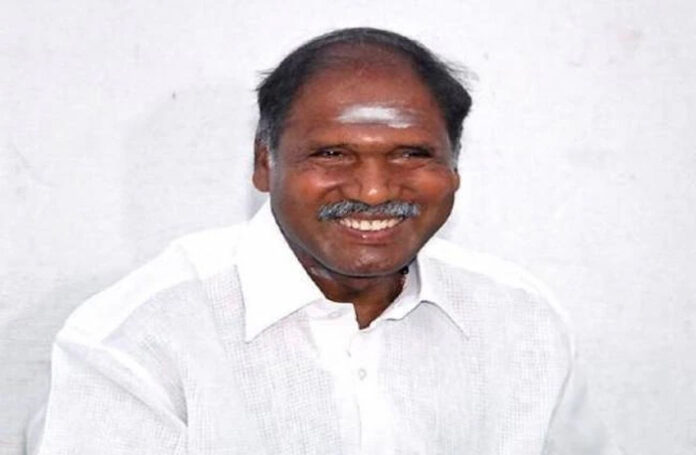
Puthucherry CM Rangasamy wins from Thattanchavady, Mangalam

PUDUCHEERY, May 4 : Chief Minister and AINRC leader N Rangasamy on Monday won from Thattanchavady and Mangalam, the two seats from where he contested the April 9 Assembly elections in this union territory.

While the CM trounced Neyam Makkal Kazhagam rival E Vinayagam by 4441 votes in Thattanchavady, his pocket borough seat, Rangasamy emerged victorious in Managalam too, defeating DMK’s SS Rangan by 7050 votes.

This is not the first time that Rangasamy has sought to contest from two seats.

He contested in Yanam and Thattanchavady in the 2021 Assembly polls. He however was trounced in Yanam and was successful in Thattanchavady.

He may have to now vacate one of the seats. (PTI)

UPI achieves 22.35 bn transactions in April: DFS

NEW DELHI, May 4 : About 22.35 billion transaction were carried out through the Unified Payments Interface (UPI) in April, Department of Financial Services said on Monday.

In volume terms, UPI transactions grew 25 per cent in April 2026 over the April 2025 when it was 17.89 billion.

The UPI transactions had touched a record high of 22.64 billion in volume terms in March, up from 20.39 billion recorded in February.

“UPI achieves 22.35 Bn transaction count in April’26!,” Department of Financial Services said in a post on X.

UPI combines the ease of use with strong security while following the RBI’s two-factor authentication rule. This first factor is the mobile number linked to the user’s bank and the second is the UPI PIN, making transactions quick and safe from unauthorised access.

Today, UPI accounts for about 85 per cent of all digital transactions in India. Its impact goes beyond national borders, powering nearly 50 per cent of global real-time digital payments.

UPI is already live in eight countries, including the UAE, Singapore, Bhutan, Nepal, Sri Lanka, France, Mauritius, and Qatar. This allows Indians travelling or living there to pay seamlessly without the usual hassles of foreign transactions.

NPCI, an initiative of the Reserve Bank of India (RBI) and the Indian Banks’ Association, is an umbrella organisation for operating retail payments and settlement systems in India (IBA).

It runs the UPI used for real-time payments between peers or at merchants’ end while making purchases. (PTI)

Namdhari cruise past 10-man Real Kashmir to boost survival hopes

HYDERABAD, May 4: Namdhari FC boosted their survival hopes by securing a 3-0 victory against 10-man Real Kashmir FC in the Indian Football League here on Monday.
Goals from Manvir Singh, Manish Chaudhary and Najib Fuseini Ibrahim sealed the win for Namdhari FC, with Real Kashmir reduced to 10 men in the second half after goalkeeper Furkan Ahmad Dar was sent off.
The result takes Namdhari to third in the relegation stage with 10 points, above Gokulam Kerala who have played a match less while Real Kashmir remain second on 11 points.
Real Kashmir began on the front foot, asserting control through sustained possession and a direct approach into the final third, with Marius Obekop and Ateeb Ahmed Dar looking to stretch play and supply Mohammad Inam and Shedrack Charles. With survival within reach if they secured a point, the urgency in their play was evident.
However, Namdhari struck first against the run of play in the 13th minute. Manvir rose to meet a cross and his header, aided by an awkward bounce in front of Furkan, slipped into the net to hand the visitors the lead.
Real Kashmir continued to dominate the ball but lacked incision, with Charles largely isolated and clear chances limited against a compact Namdhari block. The visitors remained dangerous in transition, creating openings through quick forward breaks and set-pieces.
After a series of warnings, most notably from Seilenthang Lotjem, Namdhari doubled their lead in first-half stoppage time.
Manish spotted Furkan Ahmad Dar off his line and produced a superb long-range strike that curled into the net, capping a clinical half from the visitors.
Despite holding 78 per cent possession, Real Kashmir went into the break 2–0 down, while Namdhari made their moments count with far greater efficiency.
Real Kashmir resumed with the same attacking intent but once again found it difficult to break down Namdhari’s well-organised defensive shape. Basit Ahmed Bhat attempted to create openings from wide areas, but the visitors remained alert to the danger.
The contest tilted decisively in the 58th minute when Real Kashmir were reduced to 10 men. Furkan was shown a straight red card after a reckless challenge on Lotjem outside the box, further compounding their deficit.
Even with a numerical disadvantage, Real Kashmir persisted with their approach, committing bodies forward in search of a breakthrough.
Inam forced Niraj Kumar into a sharp save with a low effort, while substitute goalkeeper Sayad Bin Abdul Kadir produced a fine stop to deny Rohit at the other end.
However, the pattern remained unchanged, Real Kashmir pushing, Namdhari absorbing and threatening on the counter. The hosts’ best chance fell to Christian Moses late on, but his close-range effort lacked conviction and was comfortably saved.
Namdhari put the result beyond doubt in stoppage time. With Real Kashmir stretched, Manvir released Ibrahim with a precise through ball, and the forward calmly slotted past Kadir to seal a comprehensive 3–0 victory. (PTI)

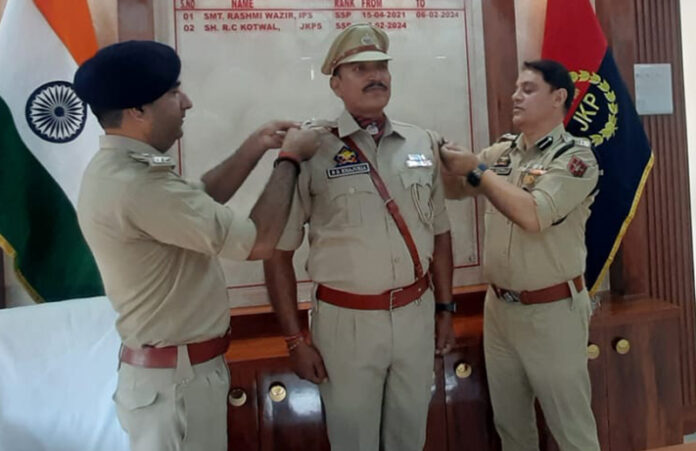
15 personnel promoted at Ist Women Battalion Jammu

Commandant 1st Women Battalion, RC Kotwal, pinning rank on newly promoted police personnel.

Excelsior Correspondent

JAMMU, May 4: A piping ceremony was held at the 1st Women Battalion, Channi Himmat, where 15 personnel were promoted to higher ranks.
As per a statement, 11 Assistant Sub-Inspectors were elevated to the rank of Sub-Inspectors, while 4 Head Constables were promoted as Assistant Sub-Inspectors.
The promotees were adorned with their new ranks by the Commandant (SSP) RC Kotwal in the presence of senior officers.
On the occasion, officers congratulated the promotees and wished them success in their new responsibilities.
Addressing the gathering, the Commandant stressed the need for dedication, integrity and professionalism in the discharge of duties and urged the personnel to uphold high standards of service.
The ceremony concluded on a note of pride and celebration.

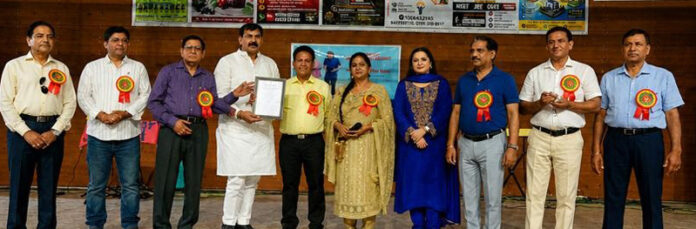
CRWWA organizes Parivar Milan and musical evening

MLA Arvind Gupta posing along with others during a function in Jammu.

Excelsior Correspondent

JAMMU, May 4: A vibrant family get-together of the members of CRWWA was held here today.
Welcoming the guests, president M Sadiq Nargal highlighted that such programmes are regularly organised to strengthen bonding and foster a sense of community among CRWWA members.
He also emphasized that along with senior citizens, the youth are equally encouraged to adopt healthy habits and actively participate in community bonding initiatives.
Two eminent Dogri artists, Padma Shri Romalo Ram and his daughter Saras Bharti, captivated the audience with their soulful singing and graceful dance performances.
The event also marked a significant milestone for CRWWA, as it was dedicated to its official registration.
The registration number was formally unveiled by MLA Arvind Gupta along with president M Sadiq Nargal.
Children of CRWWA members showcased their talent through delightful stage performances, which were highly appreciated by the audience.
They were later honoured with medals for their participation.
The programme was elegantly anchored by talented and versatile Bhoomi Thapar, who conducted the proceedings with remarkable poise and confidence.
A special highlight of the evening was the release of the CRWWA theme song by vice president Sandeep Gupta.
The song, centred on the theme of care and compassion for elders in society, received immense appreciation and resounding applause.
Vice president Sudershan Gupta graciously interacted with the women guests, ensuring their comfort and participation throughout the event.
Overall, the programme was a grand success and was received with an overwhelmingly positive response from all members.
Organising Secretary Rajinder Gupta presented the vote of thanks.

India, Canada begin next round of FTA talks

NEW DELHI, May 4 : India and Canada on Monday started second round of negotiations for a free trade agreement aimed at boosting two-way commerce and investments, an official said.

The pact is officially known as the Comprehensive Economic Partnership Agreement (CEPA) and negotiations will cover trade in goods, services, and other mutually agreed policy areas.

“The five-day talks started on May 4 here,” the official said. The first round was held in March.

This round is important as Commerce and Industry Minister Piyush Goyal will visit Canada by end of this month to give an impetus to the negotiations.

The negotiations mark the resumption of talks, as the two countries had earlier engaged in a similar exercise, but Canada paused it in 2023. Now, they decided to resume talks from the beginning as a lot has changed on the global trade front during these two years.

The negotiations are important as the two sides have fixed a target to increase the bilateral trade to USD 50 billion by 2030. It stood at USD 8.66 billion in 2024-25 (USD 4.22 billion exports and USD 4.44 billion imports).

Canada represents a market of 41.65 million people (2025) and a GDP of USD 2.34 trillion at purchasing power parity.

Key exports from India to Canada include pharmaceuticals, iron and steel, seafood, cotton garments, electronic goods and chemicals, among others. Key imports include pulses, pearls and semi-precious stones, coal, fertiliser, paper and petroleum crude.

India’s main services sector exports include telecommunications, computer and information services, and other business services.

Canada is also home to over 425,000 Indian students and a strong Indian community.

Joint Secretary in the Department of Commerce, Brij Mohan Mishra, is the chief negotiator from the Indian side. Bruce Christie is Canada’s chief negotiator. (PTI)