

Washington, Oct 30: Police in the nation’s capital on Thursday released body camera footage from a fatal vehicle accident during a police chase that has sparked two days of protests and clashes.
Karon Hylton, 20, died in a hospital after his moped crashed into a car Friday night while he was being pursued by police.
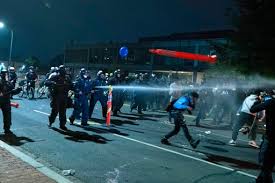
His death has led to the confrontations with protestors massing outside a police precinct and police deploying “stingball” munitions to disperse demonstrators.
Peter Newsham, chief of the Metropolitan Police Department, said eight people were arrested Wednesday night and 14 officers were injured, most from being struck by fireworks.
Activists claim police used pepper spray against protesters, including against Hylton’s mother.
Several windows at the 4th District police headquarters and at nearby storefronts were broken.
Mayor Muriel Bowser on Thursday expressed her sympathies to Hylton’s family, who are “obviously heartbroken and hurt.”
She added: “We understand that the community is upset, but you will agree that we can not channel that anger into violence.”
At issue is an interpretation of what constitutes a “chase” and whether police were justified in pursuing Hylton.
City police regulations forbid high-speed pursuits over minor traffic violations.
Police have said officers tried to stop Hylton because he was riding his moped on the sidewalk without a helmet.
Newsham said his officers are trained not to chase after a traffic violation suspect unless they believe a person is involved in serious criminal behaviour.
“If you make a determination that the person is fleeing, as a member of this department if you don’t have something very serious in nature, you need to discontinue the attempt to stop that vehicle,” he said. Otherwise, “it becomes an unauthorised pursuit.”
The footage released Thursday shows officers in a police cruiser chasing Hylton for several blocks with their lights flashing, at one point doing a U-turn when Hylton reverses course right in front of the cruiser.
The chase continues into an alley. When Hylton’s vehicle emerges from the alley, it slams into the passenger side door of a passing car.
“We have very clear policies about no chasing,” said Bowser, adding that investigators “will decide whether MPD procedures were broken.”
Four officers have been placed on administrative leave.
The protests tap into rising tensions between the department and the black community, with activists accusing police of heavy-handed tactics.
The protests also come less days before Tuesday’s election, with expectations of mass protests and potential street confrontations.
The department is under scrutiny at a time of national debate over police violence and systemic racism.
Over the summer, in the wake of the killing of George Floyd by Minneapolis police officers, the DC Council passed an emergency bill that mandated the release of body camera footage within five days of a death involving a police officer or the use of force.
“I think we can all appreciate that this is a time for positive change. But positive change doesn’t occur through violence,” Newsham said.
“We police in an unbiased way. We police in a lawful way. If we see a member of the police department that doesn’t do that, they can no longer be a member of this department.”(AGENCIES)
DC releases bodycam footage from fatal crash amid protests
US OKs extradition of 2 nabbed in ex-Nissan boss’ escape
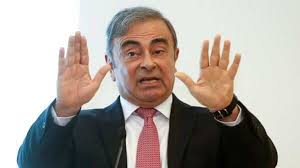
Boston, Oct 30:The US State Department has agreed to turn over to Japan two American men accused of smuggling former Nissan Motor Co Chairman Carlos Ghosn out of the country while he was awaiting trial, the men’s lawyers said in court documents Thursday.
A federal judge intervened to block the immediate removal of Michael Taylor, a US Army Special Forces veteran, and his son Peter Taylor, letting them stay in Massachusetts while she reviews an emergency petition filed by their lawyers.
Their attorneys said they are seeking reconsideration of the decision within the State Department and at the White House.
“This distinguished former member of the US Army Special Forces and his son did not commit any crime and are being pursued by Japan in an effort to save face after the departure of Carlos Ghosn from their country,” attorneys Ty Cobb, a former Trump White House lawyer, and Paul Kelly said in an emailed statement.
The lawyers said the State Department informed them on Wednesday that it would approve Japan’s extradition request.
The State Department does not comment on pending extradition requests, a spokesperson said.
A federal judge in Massachusetts last month ruled that the men could be extradited, although the State Department had the final say.
The Taylors are wanted by Japan so they can be tried on charges that they helped Ghosn flee the country last year with the former Nissan boss tucked away in a box on a private jet.
The flight went first to Turkey, then to Lebanon, where Ghosn has citizenship but which has no extradition treaty with Japan.
Ghosn said he fled because he could not expect a fair trial, was subjected to unfair conditions in detention and was barred from meeting his wife under his bail conditions.
Ghosn has denied allegations that he underreported his income and committed a breach of trust by diverting Nissan money for his personal gain.
The Taylors have been locked up in a Massachusetts jail since they were arrested in May.
Their attorneys never denied the allegations, but argued they can’t be extradited because they say their actions don’t fit under the law with which Japan is trying to convict them.
Bank records show Ghosn wired more than USD 860,000 to a company linked to Peter Taylor in October 2019, prosecutors said in court documents.
Ghosn’s son also made cryptocurrency payments totalling about USD 500,000 to Peter Taylor in the first five months of this year, prosecutors say.
Michael Taylor ran a private security business initially focused on private investigations.
The caseload grew through corporate work and unofficial referrals from the State Department and FBI, including parents whose children had been taken overseas by former spouses.
In 2012, federal prosecutors alleged Taylor had won a US military contract to train Afghan soldiers by using secret information passed along from an American officer.
When Taylor learned the contract was being investigated, he asked an FBI agent and friend to intervene, prosecutors charged.
The government seized USD 5 million from the bank account of Taylor’s company.
Facing 50 charges, he spent 14 months in jail before agreeing to plead guilty to two counts.
The government agreed to return USD 2 million to the company as well as confiscated vehicles. (Agencies)
JetBlue is the latest airline to retreat from blocking seats

Washington, Oct 30:The days of airlines blocking seats to make passengers feel safer about flying during the pandemic are coming closer to an end.
JetBlue is the latest to indicate it is rethinking the issue.
A spokesman for the carrier said Thursday that JetBlue will reduce the number of seats it blocks after December 1 to accommodate families travelling together over the holidays.
Southwest Airlines said last week that it will stop limiting the number of seats it fills after December 1.
Delta Air Lines and Alaska Airlines say they will lift caps on seating early next year.
The pandemic and resulting border restrictions caused US air travel to plunge 95 per cent in April.
Some airlines promised to block middle seats to create more distance between passengers.
Others, notably United Airlines and American Airlines, did not, arguing that ventilation systems and air filters made planes safe without social distancing.
It is unclear whether airlines that blocked seats took passengers from other airlines.
All the airlines have reported a slow rise in the number of passengers.
Yet so few people are flying — in October, several months into the pandemic, US air travel is still down 65 per cent from a year ago — that anyone willing to get on a plane might feel it’s safe anyway.
JetBlue spokesman Derek Dombrowski said the airline will keep flights under 70 per cent full through December 1, and will keep some limits through the holidays, “but what that capacity cap will be has yet to be determined.”
Dombrowski said there will be more families and groups travelling over the holidays, so the New York-based airline will offer “a small number of rows” where people traveling together can occupy all the seats.
Earlier this week, JetBlue President Joanna Geraghty said blocking seats “is not something that’s sustainable,” and that as passenger numbers rise and studies show airplane cabins are safe, the airline will raise capacity on flights.
Southwest CEO Gary Kelly made a similar reference to “scientific evidence” that cabins are safe, but he also cited a strong financial incentive to stop blocking middle seats.
Kelly said Southwest lost USD 20 million in revenue September because of the policy, with the loss seen rising to between USD 40 million and USD 60 million in November.
A recent study by the Defense Department’s transport command said the risk of spreading the virus that causes COVID-19 on planes is very low if everyone wears face masks.
However, the study was not peer-reviewed and did not account for things like people moving around the cabin.
A number of reports suggest that transmission on airlines is rare, although the lack of testing and contract tracing make it impossible to quantify the risk of flying. (AGENCIES)
India’s Indira

Prasoon Sharma
India’s Indira: Although I have been listening about Indira ji since my childhood, but it was only in class 11th that I became fully conscious about her posthumous presence, when I defended her gravely during an argument on operation blue star with one of my senior chemistry teachers. I seriously felt it to be my moral responsibility to do so, as if someone spoke against my own mother. What was the big deal about her? Why not Mahatma or Pandit ji? Why not anyone else? Why only her?
I started reading about her and I met a lady who was completely dedicated to a nation, that was not just a country, but a dream that her father and her ultimate inspiration Mahatma Gandhi had dreamt of. I encountered a lady who considered it to be her moral responsibility to fulfil all that her father and Mahatma had thought about India but could not do or left unfinished. In doing so, she often took some tough decisions which were largely opposed or criticized, but at the end, the intention behind that matters and it was purely for the good of the citizens of India.
My obsession grew more and more as I read about her and for the first time I felt gratified when I visited her memorial at 1, Safdarjung Road, New Delhi, during the celebration of her 100 years, under the tag line “I Am Courage”; And I felt just as a devotee feels when he enters the temple of his idolized god.
The first dilemma I encountered in my path of discovering Indira was: Was Emergency wrong? Or was it justified? The 25th day of June 1975, just a few minutes before the clock struck midnight, witnessed a great, rather infamous verdict by then President Fakhruddin Ali Ahmed, on the advice of Prime Minister, that was the proclamation of the state of emergency against the internal disturbances. People often ask me “Why didn’t she step down and resign? Why did she continue?” To which the only answer I give is, because of her moral responsibility towards this dream called India. She could not have handed over this dream to a bunch of aggressive and falsely motivated people who were blindly opposing her. Well, this was justified with her massive victory in 1980, as people back then also must have realized the same! No doubt, the emergency was undemocratic, but so was the attempt to bring down a democratically elected government.
Whatever may be the dilemmas, but all these dilemmas were overshadowed by her earlier participation and contribution to the freedom struggle and the massive progress she made during her prime ministership. May it be the farmers’ progress, the great victory of 1971 and the subsequent creation of Bangladesh, or the Sikkim capture or the Garibi Hatao program or nationalization of banks, or abolition of privy purses or any other thing, as the list goes on and on! I may be entirely wrong in many of my justifications to the dilemmas, but I know, that she was not. At least not in her intentions!
This is all about her political image, this was about the iron lady, as the world saw her, but I wanted to know about the real woman, the woman behind this image of a Goddess. And as I was researching, I came across a biography written by a renowned journalist Sagarika Ghose and she perfectly summed up Indira, the woman, in her words- “I discovered a young girl both protective of her constantly ailing mother and cowed by her accomplished, haughty aunt. I discovered a teenager struggling to keep up with the expectations of her illustrious and demanding father. A woman torn between an unhappy marriage in Lucknow and the thrill of being near the action and her father in New Delhi. A mother compensating her son for her bad marriage by overindulging him, creating a Frankenstein’s monster in the process. And finally a paranoid, battle-weary woman whose survival and political instinct were dulled by personal loss.” This was entirely contradictory to her political image that was of “all powerful-confident-courageous iron lady”, but was true and maybe this was the reason that made her so insecure and a tough dictator that she was.
Not many people know, but Indira ji was also a nature lover. In one of her speech, given on the inauguration of 10th general Assembly of International Union for Conservation of Nature and Natural Resources, she said “As only child whose childhood was invaded by the turbulence of a vast national upheaval, I found companionship and an inner peace in communion with nature. I grew up with love for stones, no less than trees and for animals of all kinds. I have always felt that closeness to nature helps to make one a more integrated personality.” Also, among all the Indian prime ministers who preceded her, she was perhaps the first one to raise the issue of environment to make it a part of national policy.
Summarizing entire Indira in such a short span is next to impossible, as, for a lady with such a giant persona, words can go on and on. But invariably, she’s the only stateswoman India has ever produced, whose legacy still resonates and never ceases to amaze in the world’s largest democracy!
Whether she was right or wrong, that I am still not sure about. One can hate her, one can love her, but one can’t simply ignore her. Perhaps, the most accurate reading was done by author Mary Carass- “She had a singular ability to evoke both hate and love, to alienate and to charm, to frustrate and simultaneously to delight!”
How I see my relationship with her is very complex to explain, but how people see it, that I understood during a conversation with two of my friends, in which we were discussing about my study-cum-bedroom, when one of them asked “Don’t you have anything else except books in your room?” To which the other one replied, “Yes, he does. And that is a big photo of Indira Gandhi!”
As, time and again I say “Indira never died. Indira never dies.”
(The author is a medical student based in Jaipur)
feedbackexcelsior@gmail.com
Sardar Patel ‘The Bismarck of India’

D.K.Pandita and Ayush Pandita
Sardar Vallabhbhai Patel, in full Vallabhbhai Jhaverbhai Patel, was born October 31, 1875 in Nadiad, Gujarat. Sardar Vallabhbhai Patel was born in the Leuva Patel Patidar community that lived in the town. Sardar Patel’s father, Zaverbhai Patel, was in the Queen of Jhansi’s army. His mother, Smt. Ladbai, inclined spirituality. Since he was a child, Sardar Vallabhbhai was a brave and courageous person. There is a story about how he treated a boil, a painful one. He managed it without a doubt and with a hot iron rod. Everyone who knew him thought that he would do an ordinary job. This was because he completed his matriculation at twenty-two. However, he proved everyone wrong when he continued his education, furthering his education, he studied to become a law graduate. Sardar Vallabhbhai Patel traveled to England to be a barrister. After a few years, he returned to his home country and continued his practice in Ahmedabad.
Sardar Vallabhbhai Patel met Mahatma Gandhi in October 1917 and thus started his journey for the Indian Independence movement and in the political sphere of India. He joined the Satyagraha movement in Gujarat after he joined the Indian National Congress (INC). Sardar Vallabhbhai Patel was becoming a prominent political figure in British India. The people of the country were to give him another name – Iron Man of India in the future. Sardar Vallabhbhai Patel went on to become one of the most dynamic and mighty statesmen of the country. The political figure contributed in numerous ways during the Indian Freedom Movement. He was one of the most prominent and intellectual leaders of the country. Iron Man of India truly suits him because of his dominant personality.
In 1917 Patel found the course of his life changed after having been influenced by Mohandas K. Gandhi. Sardar Patel adhered to Gandhi’s Satyagraha ‘policy of nonviolence’ in so far as it furthered the Indian struggle against the British. Patel first made his mark in 1918, when he planned mass campaigns of peasants, farmers, and landowners of Kaira, Gujarat, against the decision of the Bombay government to collect the full annual revenue taxes despite crop failures caused by heavy rains. He was seen as an independent and motivated man.
Sardar Patel was one of the people who contributed to bringing the people of the country together. He empowered people to fight against the British authorities. Sardar Patel participated in many agitations after his first successful Satyagraha which brought him closer to Gandhi. Sardar Patel contributed in many ways during the freedom struggle. For his active participation, he was jailed several times. Even if he was jailed many times, it didn’t dissuade him from his motive. Sardar Patel’s primary motivation was to expel the British out of the country. His patriotism for the country was strong and fierce.
From 1917 to 1924 Patel served as the first Indian municipal commissioner of Ahmadabad and was its elected municipal president from 1924 to 1928. In 1928 Patel successfully led the landowners of Bardoli in their resistance against increased taxes. His efficient leadership of the Bardoli campaign earned him the title “sardar” or “leader”, and henceforth he was acknowledged as a nationalist leader throughout India. He was considered practical, decisive, and even ruthless, and the British recognized him as a dangerous enemy. In the crucial debate over the objectives of the Indian National Congress during the years 1928 to 1931, Sardar Patel believed like Gandhi and Motilal Nehru, but unlike Jawaharlal Nehru and Subhas Chandra Bose, that the goal of the Indian National Congress should be dominion status within the British Commonwealth not independence. In contrast to Jawaharlal Nehru, who condoned violence in the struggle for independence, Patel ruled out armed revolution, not on moral but on practical grounds. Patel held that it would be abortive and would entail severe repression. Patel, like Gandhi, saw advantages in the future participation of a free India in a British Commonwealth, provided that India was admitted as an equal member. He emphasized the need to foster Indian self-reliance and self-confidence, but, unlike Gandhi, he did not regard Hindu-Muslim unity as a prerequisite for independence.
Patel disagreed with Jawaharlal Nehru on the need to bring about economic and social changes by coercion. A conservative rooted in traditional Hindu values, Patel belittled the usefulness of adapting socialist ideas to the Indian social and economic structure. He believed in free enterprise, thus gaining the trust of conservative elements, and thereby collected the funds that sustained the activities of the Indian National Congress.
Patel was the second candidate after Gandhi to the presidency of the 1929 Lahore session of the Indian National Congress. Gandhi shunned the presidency in an attempt to prevent the adoption of the resolution of independence and exerted pressure on Patel to withdraw, mainly owing to Patel’s uncompromising attitude toward the Muslims; Jawaharlal Nehru was elected. During the 1930 Salt Satyagraha prayer and fasting movement, Patel served three months imprisonment. In March 1931 Patel presided over the Karachi session of the Indian National Congress. He was imprisoned in January 1932. Released in July 1934, he marshaled the organization of the Congress Party in the 1937 elections and was the main contender for the 1937-38 Congress presidency. Again, because of Gandhi’s pressure, Patel withdrew and Jawaharlal Nehru was elected. Along with other Congress leaders, Patel was imprisoned in October 1940, released in August 1941, and imprisoned once more from August 1942 until June 1945.
During the war Patel rejected as ‘impractical’, Gandhi’s nonviolence in the face of the then-expected Japanese invasion of India. On the transfer of power, Patel differed with Gandhi in realizing that the partition of the subcontinent into Hindu India and Muslim Pakistan was inevitable, and he asserted that it was in India’s interests to part with Pakistan. Patel was the leading candidate for the 1945-46 presidency of the Indian National Congress, but Gandhi once again intervened for the election of Nehru. Nehru, as president of the Congress, was invited by the British viceroy to form an interim government. Thus, in the normal course of events, Patel would have been the first Prime Minister of India. During the first three years of independence, Patel was Deputy Prime Minister, Minister of Home Affairs, Minister of Information, and Minister of States; above all, his enduring fame rests on his achievement of the mostly peaceful integration of the princely Indian states into the Indian Union and the political unification of India.
His legacy today stands clear. As we approach the National Unity Day on October 31, we must be reminded of the man with an iron heart and iron will. We shall remember why he is nicknamed the ‘Iron Man Of India’. It is because he believed in Unity’s principle. His belief in Unity was so strong that he brought people together to fight. He had strong and compelling leadership qualities. Sardar Patel was one of the few leaders who could connect with the public. His contribution towards the Indian political dimension continued after the country got Independence. One of his most significant contributions was towards the bloodless integration of the country. He traveled all over the country, promoting the policy of (One India, One Nation Sardar Vallabhbhai Patel was the first Home Minister of India. Later, he went to become the First Deputy Prime Minister of the Country. The latest addition to his dream of ‘One Nation’ was made possible when Article 370 of the Indian Constitution was abrogated. The last impediment in fulfilling that dream would to be the abrogation of other legislations still present in the North-East within humanitarian grounds, with enduring peace. It is he, who in the truest sense is suited to be called “The Bismarck of India”. He breathed his last on December 15,1950, just three years into Indian independence at Mumbai. He was posthumously conferred with the Bharat Ratna award in 1991.
feedbackexcelsior@gmail.com
India and US discuss UNSC agenda, agree to work closely together

WASHINGTON, Oct 30: India and the US have held wide ranging discussions on issues on the UN Security Council agenda and agreed to work closely given their shared values of democracy, pluralism and rule-based international order, officials here said.
Earlier this year, India, along with Mexico and Ireland, was elected a non-permanent member for a two-year term starting January 1, 2021.
The consultations between India and the US are reflective of the efforts on the part of the two countries to coordinate on a host of global issues that would come up before the powerful organ of the United Nations next year.
“Both sides held wide ranging discussions on issues on the UN Security Council agenda and recent developments,” the Embassy of India here said in a statement on Thursday.
“They agreed to work closely together given their shared values of democracy, pluralism and rule-based international order, during India’s upcoming term as non-permanent member of the UNSC during 2021-22,” it said.
India has been pushing for reforms of the United Nations, including the Security Council, stating that its composition doesn’t reflect the current realities and is not representative enough.
The UNSC has 15 members, including five permanent members – the US, the UK, France, Russia and China. China is the only permanent member of the UNSC which is opposed to India’s inclusion into the powerful organ. Half of the 10 non-permanent members are elected every year for a two-year term.
Indian delegation for the two-day consultations on Wednesday and Thursday was led by Vinay Kumar, Additional Secretary (International Organisation and Summits) in the Ministry of External Affairs.
The delegation included senior officials from the Ministry of External Affairs, the Permanent Mission of India in New York and the Embassy of India in Washington, DC.
The US delegation was led by Pamela D Pryor, Acting Assistant Secretary for State Department’s Bureau of International Organisation Affairs, and included other senior State Department officials. (PTI)
Harris target of more misinformation than Pence, data shows
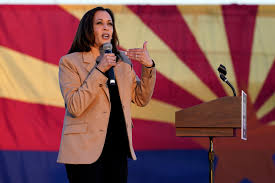
Chicago, Oct 30:Long before Democratic presidential nominee Joe Biden announced her as his running mate, Kamala Harris was the target of widespread online misinformation.
Social media posts included racist claims that she was ineligible to serve in the White House or that she was lying about her Black and Indian heritage.
Her mother is from India and her father from Jamaica.
Since being named to the presidential ticket, Harris has been at the center of online misinformation campaigns far more often — four times as much — than the white men who campaigned for the same job, according to a report from media intelligence firm Zignal Labs shared exclusively with The Associated Press.
“The narratives related to Kamala Harris zeroed in much more on her personal identity, especially as a woman of color,” said Jennifer Granston, head of insights at Zignal Labs.
The firm identified more than 1 million mentions since June on Twitter of Harris with hashtags or terms associated with misinformation about her.
The mentions include fact checks that rebuffed the falsehoods, but those made up only a small portion of that conversation.
Nearly 300,000 of those mentions were about Harris’ eligibility to serve as president, according to Zignal’s findings.
The AP identified that false claim circulating online in January 2019, when Harris announced she was running for president.
The untrue assertion got a huge boost again, however, in August when President Donald Trump elevated it from his presidential podium.
Harris’ birth certificate shows she was born on October 20, 1964, in Oakland, California, making her eligible to serve as either vice president or president.
Social media chatter around Harris’ eligibility declined after being “eclipsed” by fact checks from news organizations that debunked it, Granston added.
There’s been a huge uptick in social media conversation around the vice presidential candidates this year, compared to the 2016 campaign.
From July to October, Harris and Republican Vice President Mike Pence have been mentioned almost 48 million times combined on Twitter, compared to only 12 million total mentions of Pence or Virginia Senator Tim Kaine, who was the Democratic vice presidential nominee four years ago. Misinformation accounted for less than 1 per cent of Twitter talk when Pence and Kaine were running in 2016.
The same goes for Pence this year, with most of the misleading claims around him centered on the idea that he supports gay conversion therapy, which Pence has repeatedly denied.
But misinformation around Harris has been more prevalent, making up more than 4 per cent of the conversation on Twitter, Zignal Labs found.
That’s largely been driven by sexist or racist narratives that have swirled online around Harris, who is the first Black and Indian woman running for vice president, said Nina Jankowicz, a disinformation fellow at the nonpartisan Wilson Center.
Some of those social media posts push the idea that Harris, a California senator, used her romantic relationships to advance her career.
That narrative gained popularity with hashtags like #HeelsUpHarris, which is used regularly by conservative influencers who have millions of followers.
Zignal Labs found nearly 350,000 mentions on Twitter of hashtags or terms related to that narrative.
And Jankowicz has identified dozens of memes circulating on Facebook, Twitter and Instagram that superimpose photos of Harris onto images of sex workers or use sexist slurs to describe her.
Her preliminary research shows that during the October 7 vice presidential debate, hashtags using sexual or violent terms for Harris skyrocketed on fringe social media platforms like Parler by 631 per cent and 4chan by 1,078 per cent.
“Time and time again when we see these narratives being used against women in public life, it’s meant to take women who are powerful and respected and knock them down a few pegs,” Jankowicz said. (AGENCIES)
FBI warns ransomware assault threatens US health care system
Boston, Oct 30:Federal agencies warned that cybercriminals could unleash a wave of data-scrambling extortion attempts against the US health care system, an effort that, if successful, could paralyse hospital information systems just as nationwide cases of COVID-19 are spiking.
In a joint alert Wednesday, the FBI and two federal agencies said they had credible information of “an increased and imminent cybercrime threat” to US hospitals and health care providers.
The alert said malicious groups are targeting the sector with attacks aiming for “data theft and disruption of healthcare services.”
The impact of the expected attack wave, however, is difficult to assess.
It involves a particular strain of ransomware, which scrambles a target’s data into gibberish until they pay up. Previous such attacks on health care facilities have impeded care and, in one case in Germany, led to the death of a patient.
But such consequences are still rare.
The federal warning itself could help stave off the worst consequences, either by leading hospitals to take additional precautions or by expanding efforts to knock down the systems cybercriminals use to launch such attacks.
The offensive coincides with the US presidential election, although there is no immediate indication the cybercriminals involved are motivated by anything but profit.
The federal alert was co-authored by the Department of Homeland Security and the Department of Health and Human Services.
Independent security experts say the ransomware, called Ryuk, has already impacted at least five US hospitals this week and could potentially affect hundreds more.
Four health care institutions have been reported hit by ransomware so far this week, three belonging to the St. Lawrence Health System in upstate New York and the Sky Lakes Medical Center in Klamath Falls, Oregon.
Sky Lakes said in an online statement that it had no evidence patient information was compromised and that emergency and urgent care “remain available.”
The St Lawrence system said Thursday that no patient or employee data appeared to have been accessed or compromised.
Matthew Denner, the emergency services director for St. Lawrence County, told the Adirondack Daily Enterprise that the hospital owner instructed the county to divert ambulances from two of the affected hospitals for a few hours Tuesday, when the attack occurred.
Neither Denner nor the company replied to requests for comment on that report.
Alex Holden, CEO of Hold Security, which has been closely tracking Ryuk for more than a year, said the attack wave could be unprecedented in magnitude for the US.
In a statement, Charles Carmakal, chief technical officer of the security firm Mandiant, called the cyberthreat the “most significant” the country has ever seen.
The US has seen a plague of ransomware over the past 18 months or so, with major cities from Baltimore to Atlanta hit and local governments and schools walloped especially hard.
In September, a ransomware attack hobbled all 250 US facilities of the hospital chain Universal Health Services, forcing doctors and nurses to rely on paper and pencil for record-keeping and slowing lab work.
Employees described chaotic conditions impeding patient care, including mounting emergency room waits and the failure of wireless vital-signs monitoring equipment.
Also in September, the first known fatality related to ransomware occurred in Duesseldorf, Germany, when an IT system failure forced a critically ill patient to be routed to a hospital in another city.
Holden said the Russian-speaking group behind recent attacks was demanding ransoms well above USD 10 million per target and that criminals involved on the dark web were discussing plans to try to infect more than 400 hospitals, clinics and other medical facilities.
While no one has proven suspected ties between the Russian government and gangs that use the Trickbot platform that distributes Ryuk and other malware, Holden said he has “no doubt that the Russian government is aware of this operation.”
Microsoft has been engaged since early October in trying to knock Trickbot offline.
Dmitri Alperovitch, co-founder and former chief technical officer of the cybersecurity firm Crowdstrike, said there are “certainly lot of connections between Russian cyber criminals and the state,” with Kremlin-employed hackers sometimes moonlighting as cyber criminals.
Increasingly, ransomware criminals are stealing data from their targets before encrypting networks, using it for extortion.
They often sow the malware weeks before activating it, waiting for moments when they believe they can extract the highest payments, said Brett Callow, an analyst at the cybersecurity firm Emsisoft.
A total of 59 US health care providers or systems have been impacted by ransomware in 2020, disrupting patient care at up to 510 facilities, Callow said.
Hospitals and clinics have been rapidly expanding data collection and adding internet-enabled medical devices, many of which are poorly secured.
Hospital administrators, meanwhile, have been slow to update software, encrypt data, train staff in cyber hygiene and recruit security specialists, leaving them vulnerable to cyber-attacks.
And as hospitals respond to the coronavirus crisis, privacy and security protocols fall by the wayside, leaving patients open to identity theft, said Larry Ponemon, a data security expert.
“The bad guys smell the problem.” (Agencies)
India to pursue self reliance, support domestic entrepreneurs : Rajiv Kumar
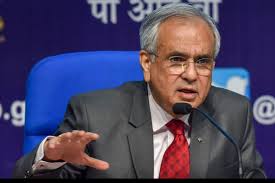
NEW DELHI, Oct 30: India will pursue self reliance and give domestic entrepreneurs the best possible environment to go forward, Niti Aayog Vice Chairman Rajiv Kumar said on Friday.
Kumar while addressing a virtual event organised by industry body FICCI further said India is committed to the global economy and opening trade order.
“We will pursue self reliance, we will give our domestic entrepreneurs the best possible environment to go forward. We will, while attracting FDI, also repose our faith and trust in those who have already invested in India,” he said.
Kumar also noted that the government will give more space to private entrepreneurs, because without them whether domestic or foreign, India will not be able to achieve the kind of sustainable growth that the country wants.
“Yes, we will do all of this, as all other nations have done. But it will be done in the global context. It will be done in India, remaining open.
“It will be done with India trying to regain its share in global and regional production chains, it will be done with the respect to multilateral trading orders, and rule bound orders” he emphasised. Kumar also pointed out that if any support to domestic industry will be given by the government through tariffs then it would have an in-built sunset clause.
“And it will not imply in any sense, any form of isolation or protectionism,” he said.
Kumar also pointed out that the government has introduced production linked incentive (PLI) schemes for 9-10 sectors and in case of 4 sectors, government decisions have already been taken. “The objective of PLI schemes is to incentivise investors in this country to put up globally comparable capacity in scale and in competitiveness,” he said.
Noting that the government has taken COVID-19 pandemic as an opportunity Kumar said,”we have rationalised the labour laws, we have liberated our farmers, we have liberalised the FDI scheme.”
He stressed on the need to increase the share of trade in India’s GDP.
“We need to increase spending on health, education,” Kumar said adding human resources, health and welfare will be the centre of India’s growth strategy.
He also said the government is pushing electric mobility in a strong way. (PTI)
Vodafone Idea shares jump over 7 pc after Q2 earnings
New Delhi, Oct 30: Shares of Vodafone Idea on Friday gained over 7 per cent after the company reported significant narrowing of losses to about Rs 7,218 crore for the September quarter, and said signs of recovery were visible with gradual improvement in economic activities.
The stock rose by 6.44 per cent to Rs 8.92 on the BSE.
On the NSE, it jumped 7.18 per cent to Rs 8.95.
The company’s losses in Q2 FY20 had been at a staggering Rs 50,921.9 crore after it provisioned for Supreme Court mandated statutory dues.
The gross revenue for the quarter ended September 30, 2020, came in at about Rs 10,791 crore, marginally lower than the same period of the previous year.
The revenue was, however, 1.2 per cent higher when compared sequentially, and the company noted that the impact of the nationwide COVID-19 lockdown has gradually started to ease.
Realisation measured in average revenue per user (ARPU) — a key metric for telecom firms — improved to Rs 119 in Q2 FY21 from Rs 114 in the June quarter.
Its Q2 loss at Rs 7,218.2 crore was lower even on a quarter-on-quarter basis.
The results came after market hours on Thursday. (PTI)