

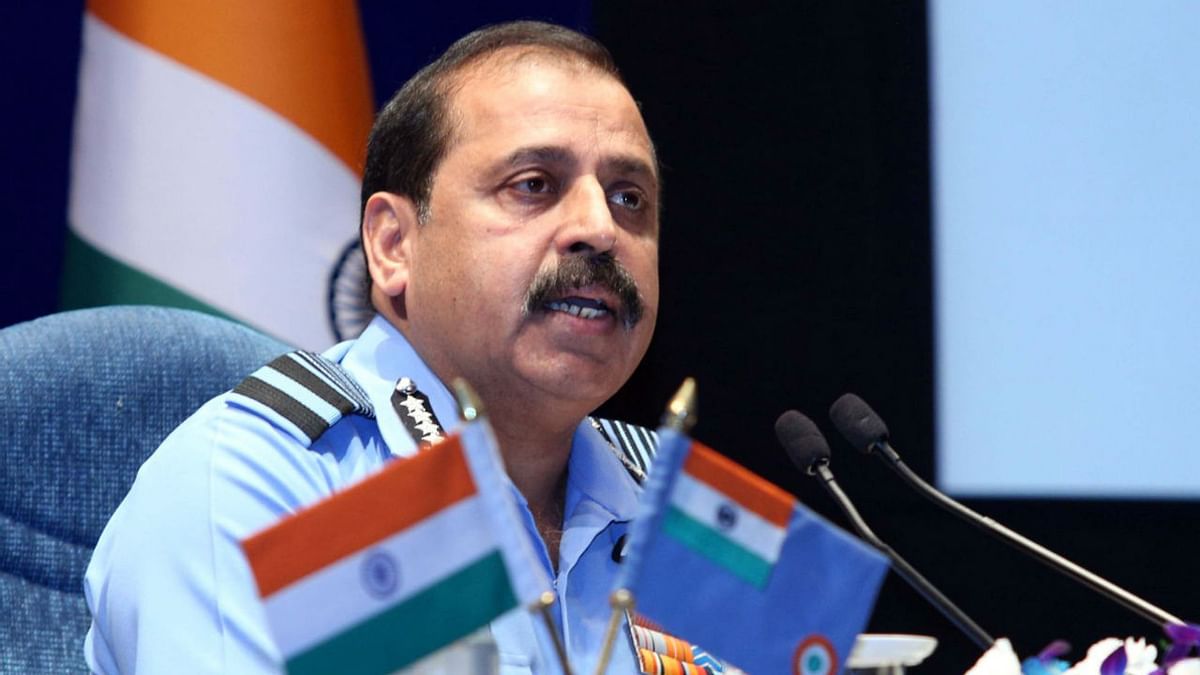
NEW DELHI: The proactive deployment of IAF’s “offensive” capabilities in response to the standoff with China in eastern Ladakh demonstrated its current operational readiness and the strong posturing was instrumental in dissuading the adversary to a large extent, Chief of Air Staff Air Chief Marshal RKS Bhadauria said on Friday.
The Indian Air Force (IAF) chief also said that the Balakot air strikes in Pakistan clearly demonstrated that air power could be put to sophisticated use and create a space for action below the conventional threshold.
Air Chief Marshal Bhadauria was speaking at an online seminar organised by the National Defence College.
“Over the past few months, the proactive deployment of our offensive capabilities in response to developments in eastern Ladakh, both in terms of deployment of air assets as well as rapid airlifting of Army combat elements, demonstrated the IAF’s operational readiness today,” he said without elaborating .
He said the deployment also reflected the capability and the nation’s resolve to use air power if the need arises.
“It is our belief that our pro-active action and strong posture was instrumental in dissuading the adversary from making further attempts…We remain hopeful that the peace and stability will be restored along the LAC through ongoing dialogue,” he said.
The IAF has deployed almost all its frontline fighter jets like Sukhoi 30 MKI, Jaguar and Mirage 2000 aircraft in the key frontier air bases in eastern Ladakh and elsewhere along the Line of Actual Control(LAC).
The newly inducted fleet of Rafale jets has also been carrying out sorties in eastern Ladakh.
On the Balakot strikes, he said terrorist organisations will have to think “hard” before making any further attempts to carry out attacks.
Indian warplanes pounded a Jaish-e-Mohammad(JeM) terrorist training camp on February 26 last year, nearly two weeks after the Pulwama terror attack in which 40 CRPF personnel were killed.
“The air strikes in February last year by Indian Air Force targeting terror infrastructure at Balakot clearly demonstrated that air power could be put to sophisticated use and create a space for action below the conventional threshold,” Bhadauria said.
Talking about the overall security scenario, he said there has been a transformation of the security paradigm in recent years.
“Our definitions of national boundaries have shifted beyond the classical definition of land border, shore lines etc. We cannot remain chained to the old concepts of fronts — two fronts, one front. The nature and scope of warfare itself has expanded,” he said.
In Indian defence parlance, the two front conflict refers to hostilities along the country’s western and northern borders.
The Chief of Air Staff said the induction of modern platforms and acquisition of nice capabilities has bolstered the IAF’s combat capabilities across the entire spectrum of warfare.
“The ongoing transformation is aimed at adding agility to our combat fleets. However, practitioners of air power are mindful of the fact that besides providing a host of kinetic and non-kinetic response options against an adversary, a strong and capable air force plays a much larger role in ensuring deterrence and avoiding conflict in the first place.”
Speaking on the occasion, Vice Chief of Army Staff S K Saini said India’s unsettled borders have been its biggest security challenge.
“The possibility of conflict over territorial disputes with China and Pakistan will continue to remain an important factor in our defence planning,” he added.
Chief of Naval Staff Admiral Karambir Singh said the Indian Navy remained poised for rapid response in any situation.
“For the Indian Navy, operating farther and outward from Indian shores, in step with our country’s national interests, is a strategic imperative and necessity,” he said.
He said the aim of Indian Navy is to be ‘first responder’ and ‘preferred security partner’ for the Indian Ocean littorals. (AGENCIES)
IAF’S strong posturing during Ladakh standoff helped India ward off any threat from China: Bhadauria
Need 100 pc security clearance from Punjab Govt to resume train services: Railway Board chief
NEW DELHI : The Punjab Government has been unable to remove all blockades on the railway network with as many as 22 sites still to be cleared of protesters, Railway Board Chairman V K Yadav said on Friday, adding that the railways needs 100 per cent security clearance from the state to resume operations.
Yadav, in a press briefing on Thursday, said the State Government had given assurance that the tracks would be cleared by Friday morning.
Rail services in the state have remained suspended since September 24 when farmer organisations organised protests on tracks and station premises against the recently passed farm laws.
The Railway Board chairman said the railways will not run selective trains, but will restore all services.
“There are 22 blockades remaining in the state as of now.The RPF and the state police have had meetings in Chandigarh yesterday and we have conveyed to them that they provide us security clearance for all trains so that we can restore them at one go. We will not start selective train services, whether freight or passenger. We have conveyed to them that we require 100 per cent security clearance from them to begin operations,” he said.
Sources said that during the meetings with state government officials, it was indicated that the state wanted freight trains to resume operations but not passenger trains. Also, there were proposals from the state, sources said, to begin transportation of select goods for a select number of days, which the railways declined to do.
Sources said that the railways has conveyed to the state government that this “on and off” system suggested by them was “not feasible”.
“We have bookings for our passenger trains and it is sad that during this festival season we are cancelling the trains everyday. I have full faith in the state government that in some time the blockades will be cleared and we won’t have to cancel the trains scheduled for tomorrow,” said Yadav at a press briefing on Friday.
RPF Director General Arun Kumar said that while in some places protesters have been cleared from the tracks, they have accumulated in the circulation area.
The concern, he says, is that these people might again block the tracks.
“We have requested the state police to provide additional force so that if they converge on the tracks again, they can be restricted,” he said.
Yadav reiterated the railways’ demand that train services could resume only under one condition that “all blockades are removed and we get the state government’s assurance of safety and security of the trains”.
The loss suffered by the railways due to the agitation in Punjab over the central farm reform laws has already crossed an estimated Rs 1,200 crore as protests on train tracks continued.
According to data from the national transporter, over 2,300 freight rakes carrying vital commodities could not be operated till date due to the blockades caused by the protestors. Around 1,350 trains have been forced to be cancelled or diverted, it said.
Train services in Punjab have been suspended since September 24 due farmers’ protests. While it had resumed for a few days in October, it was suspended again due to concerns over safety and security of train crew members.
The three farm laws — the Farmers’ Produce Trade and Commerce (Promotion and Facilitation) Act, the Farmers (Empowerment and Protection) Agreement of Price Assurance and Farm Services Act and the Essential Commodities (Amendment) Act, 2020 — were enacted recently.
Farmers’ bodies protesting against the laws have expressed apprehension that these would pave the way for the dismantling of the minimum support price system, leaving them at the “mercy” of big corporate entities. They demand that the laws be withdrawn.
The Centre has asserted that these new laws will be beneficial for farmers and will increase their income. (agencies)
Hanuman Chalisa at mosque: BJP leader, maulvi made to sign Rs 5-lakh bond each
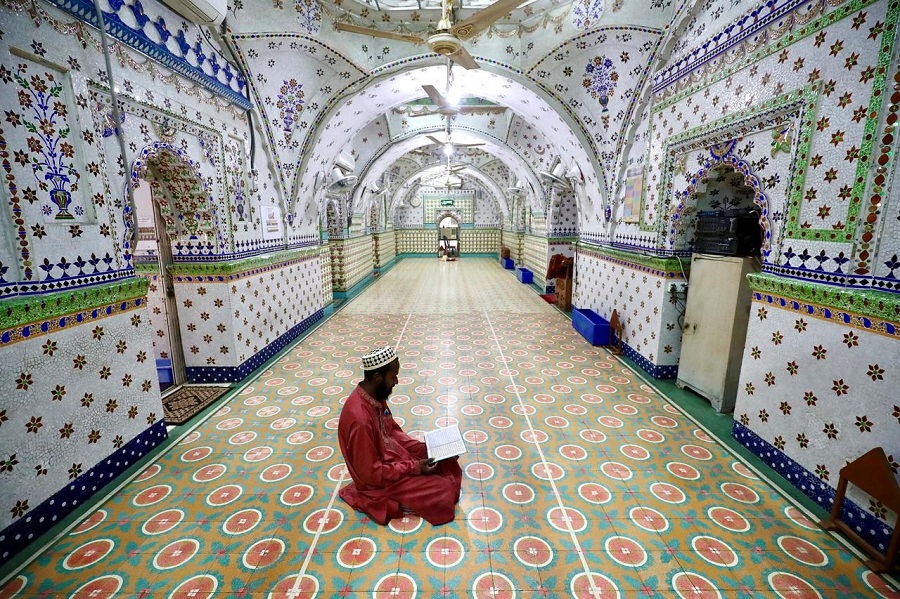
BAGHPAT (UP) : Police here have made a local BJP leader and a maulvi sign a bond to ensure there is no untoward incident following the recent recitation of the Hanuman Chalisa at a mosque.
According to police, they are liable to pay Rs 5 lakh each if any untoward incident takes place.
The maulvi has also been told by his community leaders to go home for a few days till the controversy dies down, according to police.
On Tuesday, BJP’s district executive member Manupal Bansal had recited the Hanuman Chalisa at a mosque in Baghpat’s Vinaypur village and telecast it on social media.
The incident followed a similar act at a Mathura temple, where two Muslim men offered namaz recently.
However, Khekhda police station Anil Kumar Singh here said the situation is normal at Vinaypur village after the incident.
He said maulvi Ali Hasan, who gave permission for the recitation of the Hanuman Chalisa, has been sent home for a few days and refuted reports of his “removal” from the mosque following a meeting by a Muslim community.
However, the SHO said they got BJP leader Manupal Bansal and the cleric sign a bond of Rs 5 lakh each.
Meanwhile, Manupal Bansal said reports of the Ali Hasan’s “removal” from the mosque were wrong.
He tried to give a message of brotherhood, Bansal said.
He said the BJP and the Jansakha Foundation, of which he is the national vice-president, had nothing to do with the incident.
“It was my personal decision,” Bansal said. (AGENCIES)
BJP MLA, 3 others detained over protest against Arnab arrest
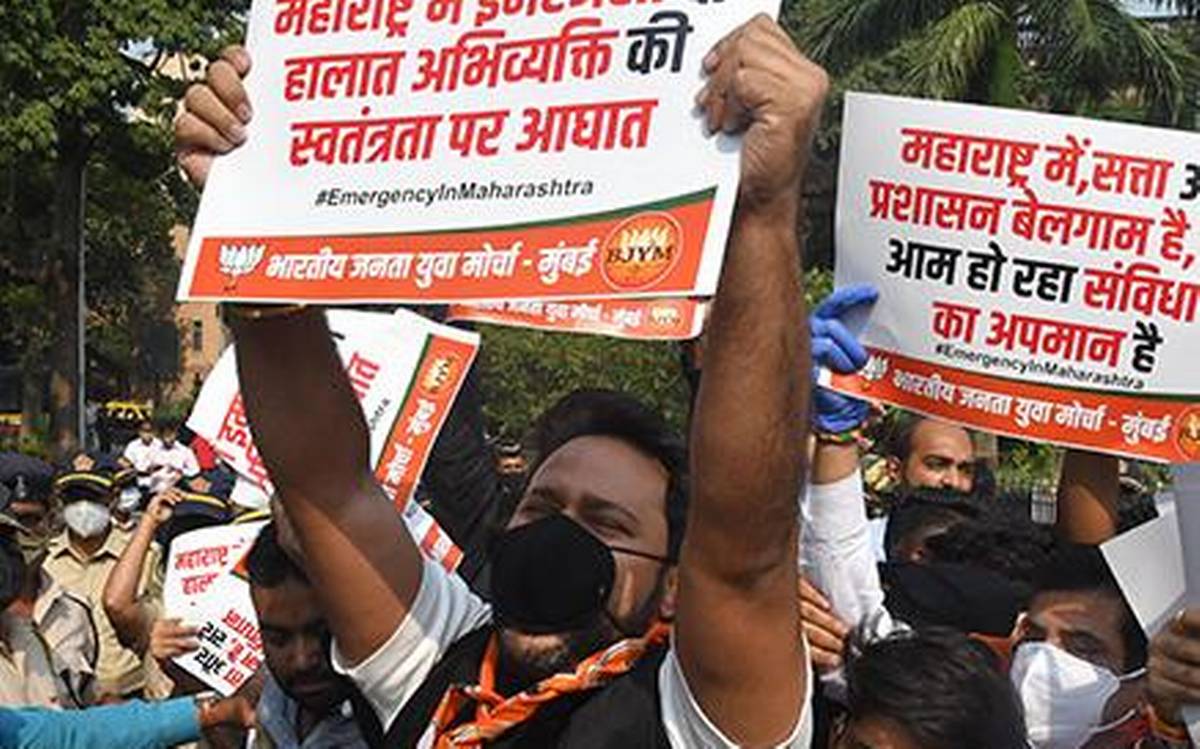
MUMBAI : Maharashtra BJP MLA Ram Kadam and Three others were detained on Friday for protesting against the arrest of Republic TV Editor-in-Chief Arnab Goswami outside Mantralaya without taking permission from authorities, a police official said.
They were later released by the Marine Drive police, he said.
The protest outside Mantralaya (state secretariat) in south Mumbai was held to denoncue the arrest of Goswami in a 2018 abetment to suicide case by the Raigad police.
The protesters were also demanding immediate release of the 47-year-old TV journalist, who is in judicial custody till November 18.
Deputy Commissioner of Police (Zone 1) Shashikumar Meena said, “BJP MLA Ram Kadam along with three others were detained as they were protesting without taking permission.
“They were brought to the Marine Drive police station and later released.” (AGENCIES)
No bail yet for Arnab, hearing in HC to continue tomorrow
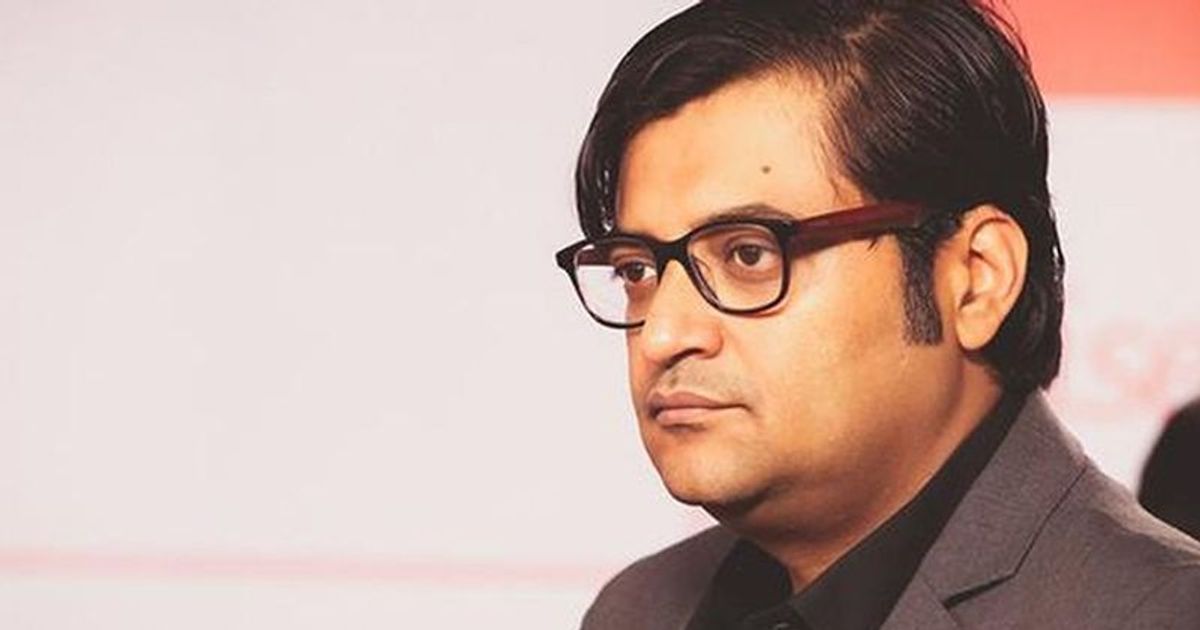
MUMBAI : There was no immediate relief for Republic TV Editor-in-Chief Arnab Goswami, arrested in a 2018 abetment of suicide case, on Friday as the hearing on his interim bail plea before the Bombay High Court remained incomplete.
A division bench of Justices S S Shinde and M S Karnik said they would continue the hearing on Saturday because of lack of time.
“We will assemble for this matter specially tomorrow noon,” the court said.
Goswami was arrested from his residence in Mumbai on Wednesday and taken to Alibaug, where a case has been registered against him for alleged abetment of suicide of architect Anvay Naik and his mother over non-payment of dues by Goswami’s firm.
The high-profile journalist has been remanded in judicial custody till November 18. Goswami is presently lodged in a school in Alibaug which is designated as a COVID-19 centre for the Alibaug jail. (AGENCIES)
Anganwadi centres, schools, panchayat buildings to be used as COVID-19 vaccination sites
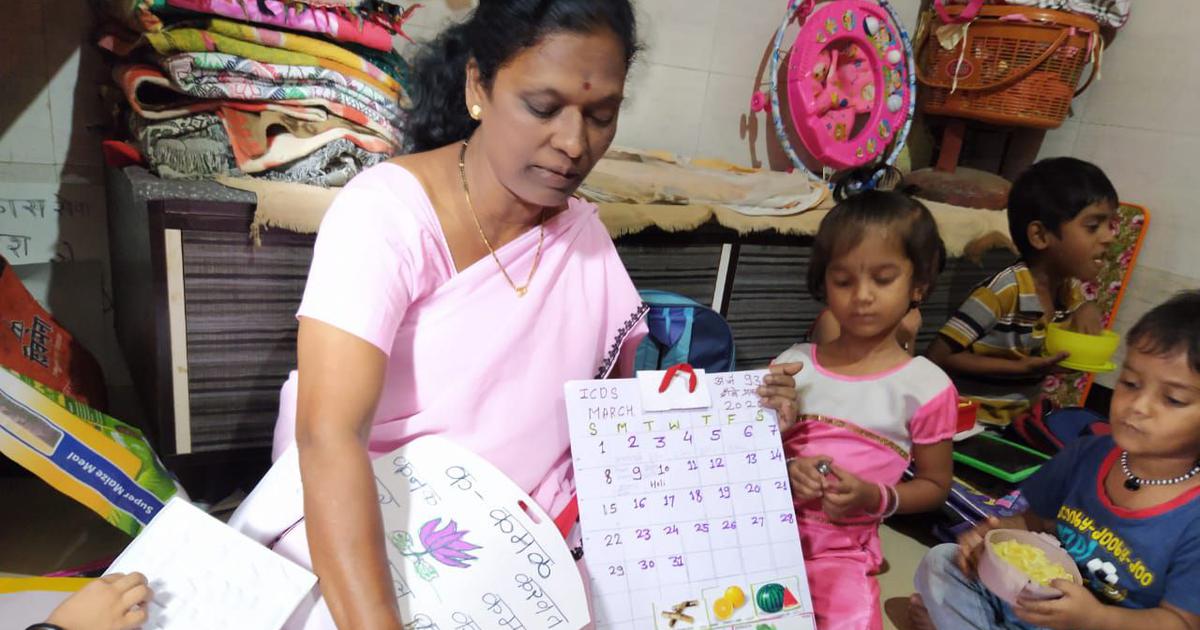
NEW DELHI : Anganwadi centres, schools, panchayat buildings and other such setups would be used extensively in addition to healthcare facilities as vaccination sites in the anti-coronavirus inoculation drive which would be monitored by the Union health ministry’s digital platform and would involve sending SMSes and generating a QR code after each jab to track the beneficiaries.
According to a blueprint deliberated upon by an expert group, state governments would identify buildings which can be used as vaccination booths under the special COVID-19 immunisation programme that would run parallel to the existing Universal Immunisation Programme (UIP).
“The vaccination sites will not be limited to just healthcare facilities. Such centres would also be set up in anganwadi centres, schools, panchayat buildings and other such setups as identified by state governments,” a source said.
The health ministry’s existing digital platform eVIN which is being used for the UIP is being enhanced for COVID-19 vaccine distribution and delivery, through which SMSes would be sent to recipients informing the time, date and venue to get the shots and digitally connect them and also track them, the source said.
Each person in the immunisation list would be linked with their Aadhaar cards to avoid duplication and to track beneficiaries. However, in case a person doesn’t have an aadhaar card, a government photo identity can be used, sources said.
The Electronic Vaccine Intelligence Network (eVIN) system provides real-time information on vaccine stocks and storage temperatures across all cold chain points in the country under the UIP.
The prime minister, during a review meeting last month, had suggested making use of the experience of the successful conduct of elections and disaster management, for developing the vaccine delivery and distribution system, involving the participation of states/UTs/district-level functionaries, civil society organisations, volunteers, citizens, and experts from all necessary domains.
The coronavirus vaccine, once available, would be distributed under a special COVID-19 inoculation programme, using the processes, technology and network of the existing UIP, official sources had said earlier.
According to them, the Centre will procure the vaccine directly to make it available to the priority groups through the existing network of states and districts.
The vaccine is being planned to be administered to the priority groups free-of-cost.
States have been asked not to chart separate pathways of procurement, they said.
The Centre, with the help of state and UT governments, has started the process of identifying around 30 crore priority beneficiaries who would be given vaccine dose in the initial phase.
The government has demarcated four categories which includes around 1 crore healthcare professionals including doctors, MBBS students, nurses and ASHA workers etc, around two crore frontline workers, including municipal corporation workers, personnel of the police and armed forces, about 26 crore people aged above 50 and a special category of those below 50 with co-morbidities and requiring specialised care.
States have been asked to enlist by mid-November the priority population groups to receive the vaccine.
The National Expert Committee on Vaccine Administration for COVID-19 has already mapped the existing cold chain presently being utilised under the government’s immunisation programme and has also made a projection of the additionality that will be required.
Presently facilities of cold chain in over 28,000 locations are being used under the UIP. Presently the group is engaged with mapping the private sector facilities for augmenting the capacity.
Union Health Minister Harsh Vardhan had said in October that the Centre estimates to receive and utilise 40-50 crore doses of COVID-19 vaccine covering 20-25 crore people by July next year.
Stating COVID-19 vaccine introduction will span over an year with multiple groups being included “sequentially starting from health care workers”, the health ministry has sought constitution of committees at state and district level which will review preparatory activities in terms of cold chain preparedness, operational planning, strategies for state specific challenges in terms of geographical terrain and hard to reach areas etc.
The ministry has suggested setting up of a state steering committee (SSC) chaired by the chief secretary, a state task force (STF) led by additional Chief Secretary or principal secretary (health), and a district task force (DTF) to be headed by the district magistrate. (AGENCIES)
Steps being taken to combat Delhi, north pollution: Javadekar
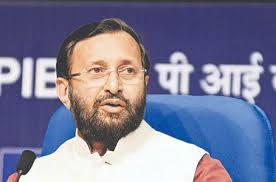
PUNE : Union Minister Prakash Javadekar on Friday said the Centre was taking all steps to combat air pollution in Delhi and other parts of north India ahead of the winter season.
The Union minister for Environment, Forest and Climate Change was speaking online at the launch of the country’s first demonstration plant of Praj Industries, a private a firm that produces compressed biogas from biomass.
“The government is taking all steps to combat air pollution in Delhi and north India. We will be using all the possible technological interventions towards it,” he said.
The minister said stubble burning is an inexpensive way to get rid of agricultural waste but it severely affects air quality in Delhi and other northern states.
“The Indian Agricultural Research Institute has created a ‘pusa decomposer’, an affordable way to get rid of stubble. We have used it in five states and results are awaited. By spraying it, the stubble dissolves so it will be a very big success,” Javadekar said.
He said the use of technology by way of decomposers, gas and other machinery will save the national capital and its surrounding regions from air pollution due to stubble burning.
The minister also said polluting industries were being monitored 24/7, adding 6000 tons of debris and waste material generated at construction sites were being used to make tiles and paver blocks.
Some thermal power projects have been closed as part of this fight against pollution, he added.
The minister complimented the firm for its innovations for a “cleaner and greener world” and said “CBG (compressed biogas) technology was one of the most sustainable solutions to combat air pollution”.
Conversion of agricultural residue and biomass into biofuel is also in keeping with the Centre’s move towards Atmanirbhar Bharat, he added. (AGENCIES)
Two militants, civilian killed in Pulwama encounter
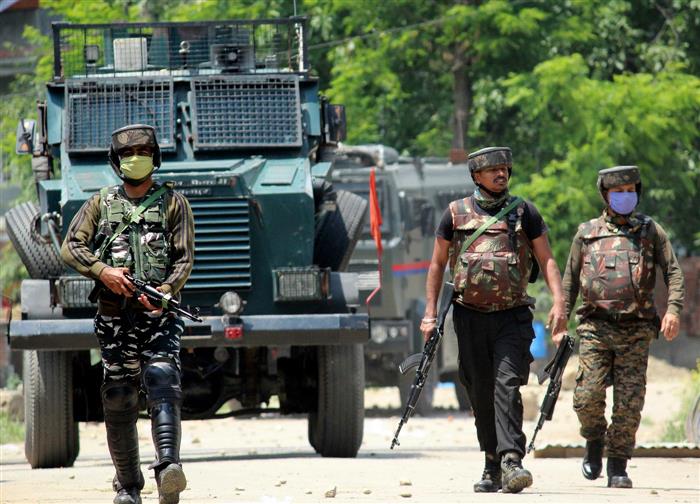
SRINAGAR : Two militants were killed while another surrendered before security forces during an overnight encounter in Pulwama district of Jammu and Kashmir in which a civilian also lost his life, police said on Friday.
Security forces launched a cordon and search operation in the Lalpora area of Pampore in the south Kashmir district on Thursday following information about the presence of militants there, a police official said.
He said as the search operation was going on, militants fired indiscriminately, resulting in injuries to two persons.
They were rushed to a hospital here where one of them succumbed to the injuries Friday morning, he added.
The official said the security forces maintained a tight cordon of the area throughout the night and in the exchange of firing on Friday, two militants were killed.
The identity and group affiliation of the slain militants is being ascertained, he added.
Another militant, a local, surrendered before the forces during the operation, the official said.
He said incriminating material, including arms and ammunition, was recovered from the site of the encounter.
The official said the search operation is on. (agencies)
Rupee settles 28 paise higher at 74.08 against US dollar

Mumbai : The rupee pared some of its initial gains and settled 28 paise higher at 74.08 (provisional) against the US dollar on Friday, supported by foreign portfolio flows even as investors continued to wait for the outcome of the US elections.
Traders said positive domestic equities, weak American currency and expectation of Joe Biden’s victory in the US presidential election supported the local unit.
At the interbank forex market, the domestic unit opened at 73.99 against the US dollar and touched an intra-day high of 73.87 and a low of 74.28. It finally closed at 74.08 against the greenback, registering a rise of 28 paise over its previous close.
On Thursday, the rupee gained 40 paise to end at 74.36 against the US dollar.
Meanwhile, the dollar index, which gauges the greenback’s strength against a basket of six currencies, was trading 0.02 per cent down at 92.50.
On the domestic equity market front, the 30-share BSE benchmark Sensex was trading 508.52 points higher at 41,848.68 and broader NSE Nifty surged 139 points to 12,259.30.
Foreign institutional investors were net buyers in the capital market as they purchased shares worth Rs 5,368.31 crore on Thursday, according to provisional exchange data.
Brent crude futures, the global oil benchmark, fell 1 per cent to USD 40.52 per barrel. (AGENCIES)
Gold jumps Rs 791; silver zooms Rs 2,147

New Delhi : Gold prices jumped Rs 791 to Rs 51,717 per 10 grams on Friday, rallying for the third consecutive day, supported by rally in global precious metal prices, according to HDFC Securities.
In the previous trade, it had closed at Rs 50,926 per 10 grams.
In tandem with a rise in gold, silver also zoomed Rs 2,147 to Rs 64,578 per kg from Rs 62,431 per kilogram in the previous day.
In the international market, gold was quoting in the green at USD 1,950 per ounce and silver was flat at USD 25.44 per ounce.
HDFC Securities Senior Analyst (Commodities) Tapan Patel said gold prices traded higher on expectations of more stimulus packages. (AGENCIES)