

Chennai, Jan 3: Noted realtor Jain Housing has raised funds of Rs 175 crore from Nippon Life Asset Management Ltd and Apollo Global Management for about Rs 175 crore in two tranches, a top official said.
The funds would be utilised to reduce the city-based company’s existing debts, joint managing director Sreyansh Mehta said.
According to him, the company has about 19-20 ongoing housing projects across various cities in the country.
“The funds will be utilised to reduce the existing debts. It’s about Rs 462 crore…We are having ongoing projects at various cities like Chennai, Hyderabad, Tiruppur, Coimbatore..”, he said.
He said the company in the past managed to receive Rs 5,150 crore from various financial institutions including GIC sovereign wealth fund – Singapore, Xander Finance.
To a query, he said the COVID-19 pandemic was a setback and in the last couple of months there have been improvements in buyer sentiments.
“The government has also helped (the construction industry) by reducing stamp duty, reduction in registration rates. We feel the demand will pick-up from 2021…”, he said.
As the real estate industry was returning back to normalcy post COVID-19 pandemic, southern markets like Chennai, Coimbatore, Bengaluru and Hyderabad were expected to lead the recovery.
Citing a Knight Frank report, Chennai witnessed a six per cent rise in year-on-year residential sales in 2019 and the State capital has carved an identity of a stable market with strong fundamentals.
The affordable housing market in the range between Rs 40-Rs 60 lakh was expected to benefit due to the slashing of Goods and Service Tax, he said.
To a query, he said the buying trend seen among consumers was that those individuals who were staying in a 2BHK house and buying two BHK houses were shifting to purchase three BHK houses in the wake of the work-from-home concept coming in.
“Earlier they may be living in small two BHK houses. Now they are looking for much bigger house so that the third bedroom may be used to take up office related work (in the wake of work from home),” he said. (PTI)
Jain Housing raises Rs 175 crore from Nippon Life and Apollo Global

Ill-fated bus after accident near Ganpat bridge in Doda. —Excelsior/Rafi Choudhary

Ill-fated bus after accident near Ganpat bridge in Doda. —Excelsior/Rafi Choudhary
Ground seems ready for new options to resolve stressed assets: IBBI chief
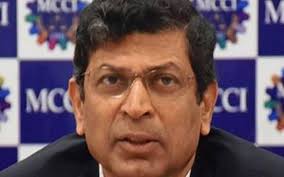
NEW DELHI, Jan 3: The ground seems to be ready to experiment new options for resolution of stress and the market is anticipating a hybrid framework between a court-supervised insolvency framework and an out-of-court restructuring schemes, IBBI Chairperson M S Sahoo has said.
In place for more than four years, the Insolvency and Bankruptcy Code (IBC) is helping in resolution of stressed assets in a market-linked and time-bound manner, and the proposal for “pre-pack” framework is also in the works.
“Since some tasks of an insolvency proceeding are completed before the formal process begins, and some elements of formal process are avoided, pre-pack saves both on costs and time,” Sahoo told PTI.
The Insolvency and Bankruptcy Board of India (IBBI), a key institution in implementing the IBC, has also taken various steps to address difficulties of stakeholders concerned.
According to him, insolvency regimes in most jurisdictions are not designed to address delinquencies arising from the COVID-19-like crisis when several viable businesses simultaneously fail to stand on their feet for force majeure conditions. Also, the availability of resolution applicants to rescue them remains a concern.
“This has highlighted the need for pre-pack which is considered fast, cost efficient and effective in resolution of stress, with the least business disruptions.
In an e-mail interview, Sahoo also pointed out that with considerable learning and maturity of the ecosystem, and a reasonably fair debtor-creditor relationship in place, the ground seems ready to experiment new options for resolution of stress.
“The market has been advocating and anticipating a resolution framework which is a hybrid between the court-supervised insolvency framework and out-of-court restructuring schemes that incorporates the virtues of both the worlds sans their demerits. The most popular form of such dispensation is pre-pack,” he noted.
Generally, under a pre-pack (pre-packaged) process, main stakeholders like creditors, shareholders and the existing management/ promoter can come together to identify a prospective buyer. Then, they can negotiate a resolution plan before submitting the same to the National Company Law Tribunal (NCLT) for formal approval.
From December 1, 2016 till the end of September last year, total 4,008 CIRPs (Corporate Insolvency Resolution Processes) have commenced under the IBC.
Out of the total, 473 CIRPs have been closed on appeal or review or settled, 291 have been withdrawn, 1,025 have ended in orders for liquidation and 277 have ended in approval of resolution plans, as per data compiled by the IBBI.
The provisions relating to CIRP came into effect from December 1, 2016.
In the wake of the COVID-19 pandemic, the government has suspended fresh proceedings under the IBC since March 25 last year. Last month, the suspension period was extended till March, which means that fresh cases cannot be filed under the IBC for almost the whole of the current fiscal — April 2020 to March 2021 period.
On whether there is a possibility of a flurry of insolvency cases coming up once the suspension is done away with, Sahoo said the number of applications for initiating insolvency is likely to increase but the increase may not be significant.
He noted that stakeholders are continuing to resolve stress through various modes such as scheme of compromise or arrangement under the Companies Act, 2013, and the RBI’s prudential framework. Entities are also going for corporate insolvency resolution process in respect of stress other than related to COVID-19.
According to him, stakeholders are exploring innovative options for resolution of stress while taking several cost cutting measures to avoid stress.
Also, Sahoo said viable companies would have normal business operations after the pandemic subsides, higher threshold of default for initiation insolvency proceedings keeps most MSMEs out of insolvency proceedings and COVID-19 period defaults remain outside insolvency proceedings forever. (PTI)
‘One-size-fits-all approach’ does not work for digital markets, says CCI Chairperson
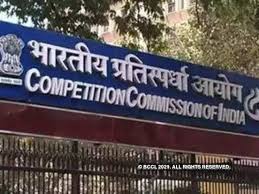
New Delhi, Jan 3: Amid concerns about possible unfair business ways in the growing digital space, Competition Commission Chairperson Ashok Kumar Gupta has said that a “one-size-fits-all” approach does not work for digital markets and a nuanced assessment of cases based on facts is the need of the hour.
Competition Commission of India (CCI) has been closely watching digital markets and also came out with a detailed study on e-commerce space, among other initiatives.
Owing to their innate features such as network effects and data-driven complementarities, digital markets typically yield high concentration and are often “winner-take-all markets”, Gupta opined and acknowledged that concerns and implications of anti-competitive conduct get amplified in this context.
“The strength of network effects and consequent lock-ins for consumers differ from one market and one product to another. A one-size-fits-all approach does not work.
“A nuanced assessment, based on the facts of the case and the market and technology in question is the need of the hour. The Indian anti-trust law allows for the much-needed flexibility within a broad framework as the statutory framework is robust enough,” Gupta told PTI in a recent e-mail interview.
Like any other competition authority, he said the challenge for the CCI is to ensure that these concentrated digital markets remain open to new entrants and that competition on and between the digital platforms is on the merits.
This has become all the more important during the pandemic as the integration of businesses with the digital mode is extremely important, he emphasised.
Among the studies being done or proposed by the fair trade watchdog is an ongoing one on mergers and acquisitions in the digital market to understand the emerging trends.
According to Gupta, the study will also look at those mergers and acquisitions in the digital space that might have escaped the CCI’s scrutiny owing to their asset/ turnover falling below the stipulated thresholds.
Under the Competition Act, deals beyond certain thresholds require the approval of the CCI.
When asked about his thoughts on digital companies gathering huge data and at times, emerging as a kind of monopolies that affect other competitors, Gupta said the regulator is cognizant of the fast-evolving digital markets and role of Big Data in the gig economy.
Elaborating, he noted that from a competition law perspective, data as a resource is a key element in the digital economy and is a significant metric in assessing market power of the firms.
“Data and, more specifically, the knowledge extracted from data are a source of a significant competitive advantage, which may work in favour of large incumbent platforms. The concern arises when large digital firms reinforce and exploit this data advantage through anti-competitive means,” he noted.
He said that in case such firms leverage the data controlled in some markets to achieve enhanced power in other markets, or discriminate in giving access to data to attempt to exclude a viable competitor, that may be a cause of concern requiring examination under the Competition Act, 2002.
“Further, if consumers value privacy, then, large collection of data may be analogue to a reduction in the quality of the service provided and/ or imposition of unfair condition which can be seen in competition law terms as an exploitative conduct,” he added. (PTI)
FPIs invest record Rs 62,016 cr in equities in Dec; turn net buyers for 3rd straight month

NEW DELHI, Jan 3: Foreign portfolio investors (FPIs) remained net buyers for the third month in a row by investing Rs 68,558 crore in Indian markets as global investors continued betting on emerging markets.
For the equity segment, this is the highest quantum of money invested ever since the FPI data has been made available by the National Securities Depository Ltd.
The second highest amount into equities was invested by FPIs in November, when they had pumped in Rs 60,358 crore.
As per depositories data, overseas investors put in a net Rs 62,016 crore into equities and Rs 6,542 crore into the debt in December 2020.
The total net investment during the month stood at Rs 68,558 crore.
Prior to this, FPIs were net buyers in October and November as well and invested Rs 22,033 crore and Rs 62,951 crore, respectively.
“Foreign investors could be seen getting out of some bluechip stocks and entering the small and midcap space as bluechips have so far attracted a bulk of the investments and have therefore reached high valuations,” Harsh Jain, co-founder and COO at Groww, said.
He further said that an incredible inflow of investors’ money into India is being witnessed which is leading to the markets’ rally — “something not seen in over five years.”
Jain added that the vaccine success may bring more confidence in economic activity and the investment rally may continue in 2021. (PTI)
Former District President NHM Employees Association Faizan A Tramboo interacting with media persons at Doda. —Excelsior/Rafi Choudhary
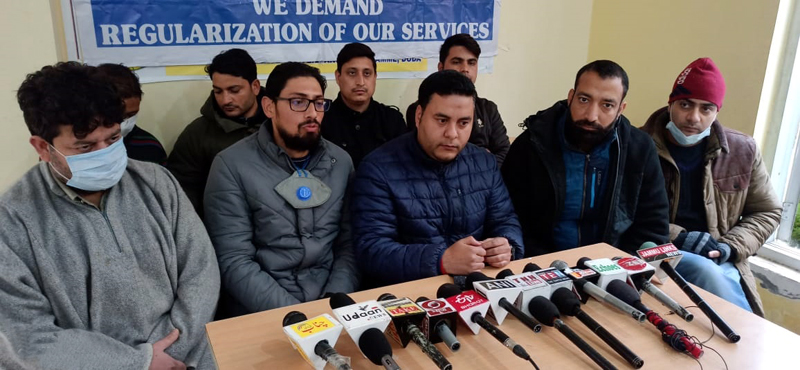
Former District President NHM Employees Association Faizan A Tramboo interacting with media persons at Doda. —Excelsior/Rafi Choudhary
Shahab Hosseini to star in biopic of Iranian physicist Ali Javan

Los Angeles, Jan 3: Actor Shahab Hosseini, best known for collaborations with Oscar-winning director Asghar Farhadi in “About Elly”, “A Separation”, and “The Salesman”, is set to play Iranian-American physicist and inventor Ali Javan in an upcoming biopic.
According to The Hollywood Reporter, Kourosh Ahari, who most recently directed horror-thriller “The Night”, is attached to write and direct the film.
Javan first proposed the concept of the gas laser in 1959 at the Bell Telephone Laboratories. A successful prototype, constructed by him in collaboration with WR Bennett, Jr and DR Herriott, was demonstrated in 1960.
Javan also contributed to the fields of quantum physics and spectroscopy. His original 1960 helium neon-laser device is currently on display at the Smithsonian Institute’s National Museum of American History.
Ahari, Hosseini and producer Alex Bretow’s production banner Pol Media has acquired exclusive worldwide rights to the life of Javan.
The physicist is survived by two daughters, Maia and Lila Javan, who will executive produce and consult on the project.
Hosseini has starred in Farhadi’s Oscar-winning foreign-language films “A Separation” and “The Salesman”, for which he won the best actor award at Cannes Film Festival in 2016.
“The Night”, directed by Ahari, is the first American production to receive a license to release theatrically in Iran since the country’s revolution. The film is slated to be released on January 29 in theatres and at home throughout North America from IFC Midnight. It set for a global release later in the year.
Bretow previously produced “The Night”, also starring Hosseini, and “Generations”.
Pol Media is currently scouting writers to pen the script alongside Ahari and taking the project to studios and distributors. (PTI)
Devotees during Nagar Kirtan in Kathua. —Excelsior/Pardeep

Devotees during Nagar Kirtan in Kathua. —Excelsior/Pardeep
Discoms’ outstanding dues to power gencos rise 35 pc to Rs 1.41 lakh cr in Nov
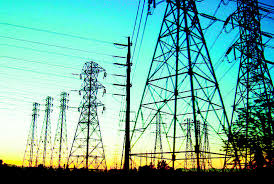
NEW DELHI, Jan 3: Power producers’ total dues owed by the distribution firms rose over 35 per cent to Rs 1,41,621 crore in November 2020, reflecting stress in the sector.
The distribution companies (discoms) owed a total of Rs 1,04,426 crore to power generation firms in November 2019, according to portal PRAAPTI (Payment Ratification And Analysis in Power procurement for bringing Transparency in Invoicing of generators).
The portal was launched in May 2018 to bring in transparency in power purchase transactions between the generators and discoms.
In November 2020, the total overdue amount, which was not cleared even after 45 days of grace period offered by generators, stood at Rs 1,29,868 crore as against Rs 93,215 crore in the year-ago period.
According to the latest data on the portal, total outstanding dues in November increased on a month-on-month basis as well. In October 2020, the total outstanding dues of discoms stood at Rs 1,39,057 crore.
The overdue amount in November 2020 has increased from Rs 1,26,444 crore in October 2020.
Power producers give 45 days to discoms to pay bills for electricity supply. After that, outstanding dues become overdue and generators charge penal interest on that in most cases.
In order to give relief to power generation companies (gencos), the Centre enforced a payment security mechanism from August 1, 2019. Under this mechanism, discoms are required to open letters of credit for getting power supply.
The central government had also given some breathers to discoms for paying dues to power generating companies in view of the COVID-19-induced lockdown. The government had also waived penal charges for late payment of dues in the directive.
In May, the government announced Rs 90,000 crore liquidity infusion for discoms under which these utilities would get loans at economical rates from Power Finance Corporation (PFC) and REC Ltd. This was a government initiative to help gencos to remain afloat. Later, the liquidity infusion package was increased to Rs 1.2 lakh crore.
Discoms in Rajasthan, Maharashtra, Uttar Pradesh, Jammu & Kashmir, Telangana, Andhra Pradesh, Karnataka, Jharkhand, Haryana and Tamil Nadu account for the major portion of dues to power gencos, the data showed.
Overdue of independent power producers amount to 34.01 per cent of the total overdue of Rs 1,29,868 crore of discoms in November. The proportion of central PSU gencos in the overdue was 34.27 per cent.
Among the central public sector power generators, NTPC alone has an overdue amount of Rs 19,215.97 crore on discoms, followed by NLC India at Rs 6,932.06 crore, Damodar Valley Corporation at Rs 6,238.03 crore, NHPC at Rs 3,223.88 crore and THDC India at Rs 2,085.06 crore.
Among private generators, discoms owe the highest overdue of Rs 20,242.74 crore to Adani Power followed by Bajaj Group-owned Lalitpur Power Generation Company Ltd at Rs 4,373.23 crore, GMR at Rs 2,195.12 crore and SEMB (Sembcorp) at Rs 2,168.45 crore.
The overdue of non-conventional energy producers like solar and wind stood at Rs 11,862.07 crore in November. (PTI)
Artists performing during valedictory function of Gandola Festival at Jammu on Sunday. —Excelsior/Rakesh

Artists performing during valedictory function of Gandola Festival at Jammu on Sunday. —Excelsior/Rakesh