

Dr Raja Muzaffar Bhat
After the Central RTI Act 2005 was extended to J&K post Article 370 abrogation people were expecting public authorities in J&K to be more responsive. This seems to be the opposite as Government Departments and other institutions are either non responsive or information is totally denied under RTI Act. In my previous piece I had highlighted how public authorities like the office of Deputy Commissioner Budgam , Rural Development Department Civil Secretariat Jammu, Services Selection Recruitment Board (SSRB) and several other public authorities were denying information under RTI. All these public authorities didn’t even respond back to RTI applicants within stipulated time. The DC office Budgam even failed to adjudicate the first appeal filed by the appellant namely Mushtaq Ahmad Lone. The aggrieved has now filed 2nd appeal before Central Information Commission (CIC).
PSC denies info
In a recent case J&K Public Service Commission (PSC) has once again denied to provide certified copies of evaluated answer scripts to an information seeker namely Mohammad Ramzan Khan. Mr Khan’s son Irfan had failed to qualify the J&K Civil Services Exam (CSE). The candidate had qualified the mains exam and appeared for the interview but his claim is that he has been given less marks in the Anthropology paper. Deputy Secretary who is also the designated Public Information Officer (PIO) informed the RTI applicant that PSC does not provide evaluated answer scripts of the candidates however he can inspect the same as per record retention schedule. This goes against several judgments of the J & K State Information Commission (JKSIC) and Central Information Commission (CIC). The order also goes against Supreme Court judgement titled CBSE Versus Aditya Bandopadhyay and Others.
JKSIC Judgement 2019
In April 2019 the erstwhile State Information Commission (SIC) has held that no Public Authority can deny information sought under the provisions of Right to Information Act (RTI) by formulating any subjective opinion as the same amounts to over-riding the statutory law. The judgment pronounced by the then Information Commissioner Mohammad Ashraf Mir in a 2nd Appeal filed against the First Appellate Authority (FAA) and Public Information Officer (PIO) of the Jammu and Kashmir Public Service Commission (JKPSC) for denying evaluated answer sheets of all the papers of Jammu and Kashmir Civil Services Judicial Competitive Examination, 2017 to the appellant.
In response to the RTI application, the PIO had conveyed to the applicant that details of marks secured by each candidate in the Jammu and Kashmir Civil Services Judicial Competitive Examination, 2017 were available on the website of the Public Service Commission. Regarding demand of evaluated answer scripts, the PIO contended that PSC has decided to provide copies of answer scripts only where the examination is of objective type/QMR format and in case of descriptive type examination, the PSC had decided to allow inspection of evaluated answer scripts.
Since the Judicial Services exam was a descriptive type examination, the PIO accordingly offered inspection of all answer scripts of the applicant instead of taking copies of the same. The appellant had submitted before the Information Commission that he was not interested in inspection of answer scripts and wanted hard copies of all his answer sheets. He even cited the celebrated judgment of Supreme Court titled “CBSE Versus Aditya Bandopadhyay and Others” and the judgment of Central Information Commission in case titled “Swati Babbar Versus GGSIP University”.
After hearing both the sides in length, the Information Commissioner Mohammad Ashraf Mir, while referring to the appropriate provisions of the Jammu and Kashmir Right to Information Act, 2009, observed, “there is no dispute regarding the fact that an evaluated answer script is an information within the meaning of Section 2(d) of the J&K RTI Act, which corresponds to Section 2(f) of the Central Right to Information Act, 2005”. Referring the judgment of Supreme Court in “CBSE Versus Aditya Bandopadhyay and Others” case, the Information Commission further observed, “there is also no dispute that right to information includes inspection of documents/records as well as taking extracts or certified copies of documents or records in terms of Section 2(i) of the Act
Swati Babbar case
Vide her RTI application dated 26.12.2016, Swati Babbar an architecture student had sought copies of answer sheets (external exam) of some subjects in B.Arch course from Guru Gobind Singh Indraprastha University Delhi. The information was denied by the PIO. The First Appellate Authority (FAA) also upheld the PIOs order. The case finally landed in the Central Information Commission (CIC) New Delhi when the aggrieved filed 2nd appeal. The then Information Commissioner Yashovardhan Azad while disposing off the case directed for disclosure of the information and issued penalty notice to the PIO of University for withholding information. The CIC order No: CIC/GGSIU/A/2017/109634 reads as :
“PIO failed to reply to RTI application dated 10.08.2016, a prima facie instance of causing deliberate obstruction in flow of information is made out against the then PIO. The Designated Officer of this bench is directed to issue show cause for maximum penalty to the then PIO. Notice be served through the present PIO as well as First Appellate Authority (FAA). Written explanation by notice must reach the Commission by 27.10.2017. Hearing, if found necessary, shall be notified in due course”
Conclusion
There are several other judgments issued by former State Chief Information Commissioners G R Sufi and Khurshid Ahmad Ganai wherein PSC has been directed to reveal copies of answer scripts to RTI applicants. There are several judgments of CIC plus Apex court order on the subject as well. If PSC continues to follow its own rules and strictures, this is nothing but lack of legal acumen among the officers of JKPSC. I hope they will go through the judgements I mentioned above. This will enable PIO of JKPSC to get some clarity on providing certified copies of answer scripts under RTI Act 2005 to information seekers. There are several cases wherein information seekers after having access to answer scripts were able to get justice. I am aware of a case titled Dr Riyaz Ahmad Daga V/s SKIMS Srinagar wherein 40 marks in one single paper of MD Medicine exam had not been counted and the RTI applicant had failed in the exam. All this was revealed when Dr Riyaz had been given access to answer scripts by the then State Chief Information Commissioner G R Sufi in 2012.
(The author is Founder and Chairman J&K RTI Movement)
feedbackexcelsior@gmail.com
PSC violating SC, CIC, SIC Judgements
Carlos Ghosn asks why Japanese don”t question him in Lebanon
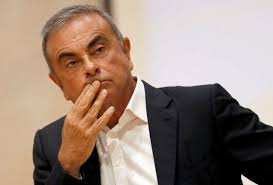
Beirut, Jan 5:Former Renault-Nissan boss Carlos Ghosn said in an interview aired Monday that French investigators are coming to question him in Lebanon over some legal challenges in France, asking why don’t the Japanese do the same thing.
Ghosns comments came two weeks after a Lebanese justice ministry official said a team of French investigators will come to Beirut in January to participate in interrogating the former auto executives.
Ghosn, who is a Lebanese, Brazilian and French national, fled Japan in a dramatic escape that drew headlines in late 2019, arriving in Lebanon on Dec. 30 of that year.
In addition to his trial in Japan, the 66-year-old businessman is facing a number of legal challenges in France, including tax evasion and alleged money laundering, fraud and misuse of company assets while at the helm of the Renault-Nissan alliance.
Ghosn said there is neutrality in Lebanon where he has been living since fleeing Japan adding that Lebanese authorities have asked Japanese officials to send the charges against him but Tokyo did not. “What does that mean?” asked Ghosn insisting that he is innocent and was the victim of Japans judicial system.
“Now the French have charges,” Ghosn said. “They (French) are coming and they will question me. The Japanese are not doing this.” “I consider all the charges to be false,” Ghosn said.
After leading the Japanese automaker Nissan for two decades, Ghosn was arrested in Japan in November 2018 on charges of breach of trust, misusing company assets for personal gains and violating securities laws by not fully disclosing his compensation.
He denied wrongdoing and fled Japan while out on bail awaiting trial. He is unlikely to be extradited from Lebanon, where he has been since last year.
Ghosn said in the interview with the local LBC TV that Lebanon, which is passing through its worst economic and financial crisis in its modern history, “proved that it protects it citizens.” He added: “I am a French citizen and the French state did not defend me.”
At least two Ghosn-related investigations were opened in France. One focused on suspicious transactions between Renault and a distributor in Oman, as well as suspected payments for private trips and events paid by Renault-Nissans Netherlands-based holding company RNBV.
Another investigation focused on suspected misuse of company funds for a party for Ghosn at Versailles.
The French inquiry aims to determine who is at fault for a string of alleged financial violations between 2009 and 2020. (AGENCIES)
Videocon Industries lenders, 12 other group companies to meet on Tuesday under IRP
NEW DELHI, Jan 5: The lenders of debt-ridden Videocon Industries and 12 other group companies will meet on Tuesday under the insolvency resolution process (IRP).
“The 20th meeting of the consolidated committee of creditors (CoC) of Videocon Industries Ltd and other 12 Videocon group companies, having a consolidated corporate insolvency resolution process, is scheduled to be held on Tuesday, January 5,” the firm said in a regulatory filing.
This is in accordance with the provisions of Regulation 19 of the Insolvency and Bankruptcy Board of India (Insolvency Resolution Process for Corporate Persons) Regulations, 2016, it added.
Last month, the lenders of Videocon Industries had approved the bid by Twin Star Technologies, promoted by billionaire Anil Agarwal’s family, under the insolvency resolution process of the debt-ridden firm.
The company, however, did not elaborate on the agenda of the meeting of the consolidated CoC.
On December 16, Videocon Industries in a regulatory informed that the CoC of the company had voted in favour of the resolution plan of Twin Star Technologies, for 13 group companies with 95 per cent votes.
However, the filing did not mention the amount which Twin Star Technologies had offered.
The said resolution plan, as approved by the CoC, has been filed with the National Company Law Tribunal, Mumbai in accordance with the Section 30(6) of the Code for its approval on December 15, 2020, it added.
Videocon Industries owes around Rs 31,000 crore to the banks, which also includes interests.
Earlier, the Dhoot family had offered to pay Rs 30,000 crore to lenders to settle their outstanding loans and pull out 13 Videocon group companies from the insolvency proceedings.
A proposal for paying the amount was forwarded to the CoC of the Videocon Industries, under section 12 A of the Insolvency & Bankruptcy Code (IBC).
However, the creditors have chosen Vedanta Group’s offer, which has placed its resolution plan through one of its subsidiary companies.
Vedanta’s interest in Videocon is principally driven by the latter’s 25 per cent stake in the Ravva oil field.
Vedanta, through Cairn, holds 22.5 per cent stake in Ravva and any successful bid by Vedanta will take its stake to 47.5 per cent, and it will be the biggest stakeholder ahead of ONGC’s 40 per cent.
The average output from the Ravva block in 2019-20 was 14,232 barrels of oil equivalent per day (boepd), and it increased to 22,037 boepd in the first quarter of 2020-21.
Dhoot’s settlement offer was made for 13 out of the 15 Videocon group companies, which are jointly going through the Corporate Insolvency Resolution Process (CIRP).
Two group companies — KAIL and TREND — were not covered under the offer. (PTI)
India will be voice against enemies of humanity like terrorism: Tirumurti

UNITED NATIONS, Jan 5: India will be a voice for the developing world and against the common enemies of humanity like terrorism, India’s Ambassador to the UN has said, asserting that the country will use its tenure on the UN Security Council to bring human-centric and inclusive solutions to matters of global peace and security.
India’s Permanent Representative to the UN, T S Tirumurti, made the remarks while speaking at a special flag installation ceremony organised at the Security Council stakeout here on Monday. Flags of the five new incoming non-permanent members of the Security Council – India, Norway, Kenya, Ireland and Mexico – were installed at the stakeout during the special ceremony.
On January 1, India began its tenure as non-permanent member of the powerful 15-nation UN organ for the 2021-22 term.
Tirumurti installed the Indian tricolour and said that as India assumes the membership of the Security Council for the eighth time: “it is an honour for me as the Permanent Representative of India to take part in today’s flag installation ceremony.”
“India comes into the Security Council as the largest democracy representing 1/6th of humanity and with a strong commitment to reformed multilateralism, rule of law, a fair and equitable international system and to peace, security and development. From Kashmir to Kanyakumari, we stand united as one, bound by our ethos of democracy, pluralism and commitment to fundamental rights,” Tirumurti said.
He said India will “use our tenure to bring human-centric and inclusive solutions to matters of international peace and security. India will be a voice for the developing world.”
“We will not shy away from raising our voice against the common enemies of humanity like terrorism,” he said, adding that India looks forward to “our collective pursuit for an ideal where the World is One Family – ‘Vasudhaiva Kutumbakam’.”
The Indian envoy said peace-keeping, peace-building, maritime security, women and youth, especially in conflict situations, and technology with a human face, will receive India’s attention while on the 15-nation Council.
Noting that even as the world comes together in solidarity to face the COVID-19 pandemic, Tirumurti quoted Indian philosopher Swami Vivekananda to say, “Each nation must give, in order to live. When you give life, you will have life; when you receive, you must pay for it by giving to all others.”
Tirumurti also expressed gratitude to all the Member States of the United Nations who “have given us an overwhelming mandate” to represent them in the Security Council.
The ceremony was organised in a restricted format keeping in mind the strict COVID-19 protocols. Ambassadors of the other four countries also installed their national flags at the stakeout.
Permanent Representative of Kazakhstan to the UN Magzhan Ilyassov welcomed the newly elected non-permanent members of the Security Council and expressed confidence that they “will make a sterling contribution” to the Council’s work in the “two crucial years of modern history.”
“We acknowledge that these five incoming members, because of their prior long-standing experience with the Council, will bring much depth and focus to the issues of peace and security,” he said.
He paid special tribute to the scientists who have dedicated their efforts to combat the pandemic and develop the COVID-19 vaccines.
“This new year is the year of hope for all of us no doubt and for our world organisation, global peace, security and further sustainable development in 2021 will largely depend on the decisions of the United Nations and the Security Council with its permanent and non-permanent members,” he said.
Ambassador Tarek Ladeb, Permanent Representative of Tunisia to the UN and President of the Security Council for the month of January, extended a warm welcome to the incoming members.
“I hope together with the new elected members, we will manage to create positive dynamics in the Council and make concrete steps towards the resolution” of conflicts.
In his address to the virtual high-level UN General Assembly session in September last year, Prime Minister Narendra Modi had said that as the world’s largest democracy, India will bring its years of rich developmental experience for the benefit of the whole world when the country sits on the horseshoe table of the Council.
“India will always speak in support of peace, security and prosperity. India will not hesitate in raising its voice against the enemies of humanity, human race and human values – these include terrorism, smuggling of illegal weapons, drugs and money-laundering,” Modi had said.
India, Norway, Kenya, Ireland and Mexico join non-permanent members Estonia, Niger, Saint Vincent and the Grenadines, Tunisia and Vietnam and the five permanent members China, France, Russia, UK and the US in the Council for 2021.
India will be UNSC President in August 2021 and will preside over the Council again for a month in 2022. The presidency of the Council is held by each of the members in turn for one month, following the English alphabetical order of the Member States’ names.
The tradition of the flag installation ceremony was introduced by Kazakhstan in 2018. The ceremony was unanimously confirmed by all 15 UNSC members to become an annual tradition of the Security Council. (PTI)
UltraTech Cement raises Rs 1,000 cr via NCDs
NEW DELHI, Jan 5: UltraTech Cement on Tuesday said it has raised Rs 1,000 crore through allotment of non-convertible debentures (NCDs) on private placement basis.
On December 26, the company said it is considering a proposal to raise funds by issuance of 10,000 rated, listed, non-convertible, redeemable, unsecured NCDs of Rs 10,00,000 each aggregating to Rs 1,000 crore on private placement basis on or after December 30, 2020.
“The company has approved the allotment of unsecured redeemable non-convertible debentures amounting to Rs 1,000 crore on private placement basis,” UltraTech said in a regulatory filing.
These NCDs have a coupon rate of 4.57 per cent per annum and will be listed on National Stock Exchange of India. Tenure of the NCDs is two years 358 days, the company added.
(PTI)
Emma Stone expecting first child

Los Angeles, Jan 5: Oscar winner Emma Stone is expecting her first child with husband and “Saturday Night Live” scribe Dave McCary.
A source confirmed the news of Stone’s pregnancy to E! News.
Stone, 32, was photographed last week here sporting athleisure and revealing her baby bump.
“Emma is pregnant and just loves married life,” the insider told the outlet.
The actor and the 35-year-old writer tied the knot last year, People magazine confirmed in September 2020.
The couple became engaged in December 2019 after dating for two years. They met when Stone hosted the NBC variety sketch series near the end of 2016.
Stone’s representative could not be reached for comment on her pregnancy news. (PTI)
PM’s energy roadmap: More than double natural gas share, diversify energy sources

NEW DELHI, Jan 5: Prime Minister Narendra Modi on Tuesday set out his Government’s energy roadmap, envisaging more than double the share of cleaner natural gas in the consumption basket, diversifying sources of energy, connecting the nation with one gas pipeline grid and bringing affordable fuel to people and industry.
Inaugurating a 450-km natural gas pipeline between Kochi in Kerala to Mangaluru in Karnataka, he said India under his Government is seeing unprecedented work on highways, railway, metro, air, water, digital and gas connectivity which will aid economic development.
The government has an “integrated approach to energy planning. Our energy agenda is all-inclusive,” he said.
While on the one hand, natural gas pipeline network is being doubled to about 32,000 km in 5-6 years, on the other, work on the world’s biggest hybrid renewable plant combining wind and solar power has started in Gujarat.
Also, the emphasis is being laid on manufacturing biofuels as well as electric mobility.
In 10 years’ time, petrol will be doped with as much as 20 per cent of ethanol extracted from sugarcane and other agro products, he said.
This would help cut reliance on imports for meeting oil needs as well as reduce carbon emissions.
Alongside, the share of natural gas in the energy basket is being targeted to be raised to 15 per cent from the current 6.2 per cent, he said.
The pipeline grid will help improve clean energy access as well as also aid in the development of city gas projects, he said.
Modi said 900 CNG stations were set up till 2014 after the advent of compressed natural gas as fuel for automobiles in the country around 1992. In the last six years, the number of CNG stations has gone up to 1,500 and the target is to take them to 10,000, he said.
Also, 25 lakh households had piped natural gas connections for using the fuel for cooking purposes till 2014 which has risen to 72 lakh now, he said.
“We are working to provide clean, affordable and sustainable energy,” he said. (PTI)
HCL Technologies completes acquisition of Australian IT solutions firm DWS
New Delhi, Jan 5: HCL Technologies on Tuesday said it has completed acquisition of Australian IT solutions firm DWS.
In September last year, HCL Technologies had announced it will acquire DWS, a move that will help the Indian company strengthen its position in the Australia and New Zealand market.
The company has completed acquisition of DWS effective January 5, 2021, HCL Technologies said in a regulatory filing.
HCL Technologies in September had said the total equity value pay-out will be 158.2 million Australian dollars (about Rs 850.33 crore) after considering a total number of shares at 131.83 million on a fully diluted basis.
The shareholders of DWS will also get a dividend of 0.03 Australian dollars per share which was declared by the company in its recent announcement of annual corporate earnings for FY20 (June-end), it had added.
DWS has over 700 employees and offices in Melbourne, Sydney, Adelaide, Brisbane, and Canberra. With FY20 revenue at 167.9 million Australian dollars, the company provides a wide range of IT services including digital transformation, application development and support, program and project management and consulting.
HCL Technologies currently employs 1,600 people in major cities, including Canberra, Sydney, Melbourne, Brisbane and Perth.
Shares of HCL Technologies were trading 0.25 per cent lower at Rs 977.10 apiece on BSE. (PTI)
US State Department appoints first-ever Chief Data Officer
Washington, Jan 5:The US Department of State said in a press release that Dr Matthew Graviss has been selected as its first Chief Data Officer.
“The Department of State has selected Dr. Matthew Graviss as its first-ever Chief Data Officer (CDO), responsible for leading the Office of Management Strategy and Solution’s Center for Analytics (CfA), the Department’s enterprise data capability,” the release said on Monday.
Graviss has been tasked with data management and analysis pertinent to the US diplomatic objectives, the release also said. SPUTNIK ACL0708
Graviss served in the same capacity at the Department of Homeland Security’s Citizenship and Immigration Services, the release added.
The appointment is in accordance with the US government’s objective of implementing new technologies across all federal agencies and departments, according to the release.
(AGENCIES)
Google Cloud appoints Karan Bajwa as APAC leader
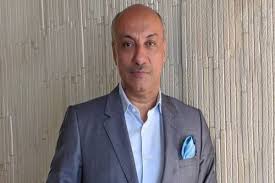
NEW DELHI, Jan 5: Google Cloud on Tuesday announced the elevation of Karan Bajwa as its new leader for Asia Pacific.
He currently leads Google Cloud in India.
Bajwa will lead all regional revenue and go-to-market operations for Google Cloud, including on Google Cloud Platform (GCP) and Google Workspace from January 5, 2021, a statement said.
He succeeds Rick Harshman who leaves the organization for a new opportunity, it added.
Bajwa is currently based in Gurgaon, but will relocate to Singapore in 2021.
He will continue to lead Google Cloud in India until a new senior leader for the business is appointed. He will report to Rob Enslin, President of Sales, Google Cloud.
“Since Karan joined us in March 2020, Google Cloud in India has grown from strength to strength. He’s advanced the digital transformation journeys of many large Indian organisations across industries and successfully expanded our partner community,” Enslin said.
Bajwa brings management and sales experience with him to this regional role, and the organisation is thrilled to have him at the helm of the APAC business, Enslin added.
“With the disruptions of 2020 behind us, a true test of 2021 will be how companies replatform and build on the cloud not only for resilience but agility and innovation, and I’m excited for the opportunity to lead Google Cloud’s business in APAC to maximise this next phase of growth,” Bajwa said.
Google Cloud is on a strong growth trajectory within Asia Pacific and counts ANZ Bank, Lendlease, Optus, Sharechat, Tech Mahindra, L&T Finance, Wipro, Samsung Electronics, Foxconn, Kia Motors, Go-JEK, Tokopedia, and XL Axiata among its customers.
The company also continues to invest in technical infrastructure in the region having launched its GCP regions in Jakarta and Seoul last year, with planned expansion to Delhi and Melbourne in 2021. (PTI)