

Los Angeles, Jan 5: Actor-director Olivia Wilde and singer-actor Harry Styles have reportedly been dating for “a few weeks”.
The duo were photographed holding hands at a friend’s wedding, sparking dating rumours.
A source told People magazine, Wilde, 36 and Styles were in Montecito, California, this weekend for a wedding.
“They were affectionate around their friends, held hands, and looked very happy. They have dated for a few weeks,” the insider added.
Post the wedding, Wilde and Styles, 26, were spotted at the former One Direction member’s LA home with luggage in tow.
They recently worked together on the film “Don’t Worry Darling”, which Styles starred in and Wilde directed.
Styles, who made his feature film acting debut with Christopher Nolan’s 2017 war drama “Dunkirk”, replaced Shia LaBeouf in the psychological thriller last September.
“Don’t Worry Darling” is set in an isolated, utopian community in the 1950s California desert. The film also stars Florence Pugh, Chris Pine, Gemma Chan, with Wilde in a supporting role.
Wilde split from her longtime partner, “Ted Lasso” star Jason Sudeikis in early 2020. They are parents to son Otis, six, and daughter Daisy, four.
Styles was last linked to model Camille Rowe. They broke up in 2018. (PTI)
Olivia Wilde, Harry Styles spark dating rumours

Biden blasts Trump for ‘whining and complaining’ about election result
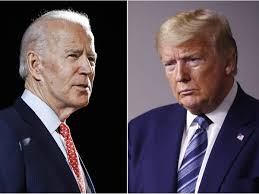
Washington, Jan 5: US President-elect Joe Biden has blasted Donald Trump for seeking to overturn the November 3 election result, saying the outgoing president spends most of his time “whining and complaining” rather than doing “the work” of his office.
Trump, a Republican, is yet to concede the elections and has filed several lawsuits challenging the presidential poll result that gave Biden, a Democrat the required Electoral College votes to be the 46th US President.
Trump alleges that there was a massive voter fraud. Election officials and the media have said that there is no evidence to back his claims. He has also lost dozens of lawsuits.
“The president spends more time whining and complaining than doing something about the problem. I don’t know why he still wants the job. He doesn’t want to do the work,” Biden said on Monday at a drive-in election rally in Georgia where he sought support for two Democratic candidates.
Runoff elections in Georgia will determine which party controls the Senate.
“Do it for all of those who have given up so much. Think of all of those who have given up so much to secure that right. Do it for the country you love because I know you love this country and the future you want to build for everyone in this country. Do it for all of those around the world who aspire like us to be free and the democratic people who look to us,” he said.
Biden, 78, was confirmed the winner of the presidential election by the Electoral College on December 14 after all 50 states officially certified the voting results.
According to official results, Biden collected 306 electoral votes as opposed to 232 votes cast for Trump. To win the presidential election, the winner must get at least 270 out of the 538 Electoral College votes.
The US Congress will meet on January 6 to formally certify the Electoral College and Biden’s victory. Biden’s inauguration is set for January 20.
In the presidential election, Biden won Georgia by about 11,000 votes, becoming the first Democrat to carry the state since 1992. (PTI)
Covid-19 new strain Impact on India
Meghna Jaswal
In the past year, COVID-19 has proved to be detrimental to the entire world especially to a country like India with a huge population where administering and ensuring the prevention protocol becomes a whole new challenge. With the year coming to an end, there have been some advances made in order to contain the virus, some of which has been successful to some extent. The hope of successful prevention if not elimination of the virus with the discovery of vaccines has led to some merry in the hearts of people, however, with the new strain which has recently started transmitting quite quickly, again the reservations regarding the new vaccines are arising and becoming stronger.
It is first imperative to understand what exactly the new strain is and how severe it is. Medical experts claim that there are a lot of rumours surrounding the new strain of Corona Virus and as claimed by the Prime Minister of UK, Boris Johnson, that the new strain is 70% more effective and infectious. Scientists claim that there is no such relevant research which may indicate towards the new strain being more severe. Claims have also been made in reference to past viruses stating how mutations are a common occurrence and no solid conclusions can be made as of now and it would take more time and research by observing the patients as the cases come up.
Viruses as stated before occur through mutations and the new strain called VUI-202012/01 is a result of genetic mutation in the spike protein which the SARS- CoV 2 uses in order to spread the infection to human cells. The distinguishing factor of this new strain is in its frequency and transmissibility. While cases have been increasingly seen of the new strain in UK, experts claim that it was first observed nearly a year ago in China. In case of the corona virus being an RNA virus, mutations being a common occurrence are expected.
What does it mean for India?
The Civil Aviation Ministry of India on the 23rd of December suspended all flights between the European countries and India. The flights suspension from UK would remain till January 7th as per the ministry’s directive. Till now 25 cases has been discovered of the new strain in India and the government has been strictly regulating all the passengers who travelled from UK in the previous week.
All the infected people are being kept under quarantine in isolated rooms under various health care facilities and their close contacts have also been kept under quarantine. The health ministry has also ensured that contact tracing has been initiated for family members, co passengers and other people. Thereby, a strict vigilance policy is being followed. Understanding the mistakes of the past as well as learning from the examples set by certain districts like Bhilwara in Rajasthan among others can ensure successful containing of the new strain.
The Government of India previously on the onset of the virus had enforced a strict lockdown which was probably the most stringent lockdown imposed among all the other nations of the world. Despite this fact, India wasn’t able to successfully contain the virus as it had hoped to achieve. The lockdown happened abruptly and even the state governments and administration was not truly ready for it. It led to 1.3 billion Indians being forced to stay indoors. India suffered a huge economic crisis due to this lockdown.
As per official data released by the Ministry of Statistics and Programme Implementation, “the Indian economy contracted by 23.9% in the April-June quarter of this fiscal year.”
Economists termed it as the worst decline recorded since 1996. India’s GDP has also been the worst hit amongst other nations as the decline was steep and it also shouldn’t be forgotten that the informal sector is not completely captured in these GDP calculations which actually accounts for more than 50% of gross value added. Therefore, in terms of the economic status, India has already suffered a major blow back. In terms of the new strain of corona virus, the government has to again ensure that the illusion of the pandemic getting over is distorted and people need to keep taking the necessary precautions which include wearing a mask, sanitizing and social distancing. Closed spaces, crowded spaces and close contact must be avoided. The lockdowns imposed earlier pushed a lot of Indians into unemployment and put the economic growth of India at a dead end. Therefore, in order to avoid this not much can be done except the usual practice which needs to be followed in a more stringent manner with the new strain that has come up.
There are not necessarily any new precautions which can be added to the ones which already exist. However, the mistakes of the past in terms of keeping a vigilant check on travelers and personal responsibility as well are some of the factors that might contain the spread of the virus. There have been a few cases of people fleeing hospitals or not informing the authorities. That again needs to be kept under check. While the COVID numbers seem to be getting better it is also imperative to note that the pandemic is far from over as PM Modi advises people to stay cautious till the vaccination drive is not completed which will take place in the following year.
How does the new strain affect the vaccines?
Experts are pointing out that there is no cause to worry as of now since the vaccines elicit a broad range of responses and thereby the main question to address would be whether the virus will become sensitive to the vaccines in the longer run. Infact, experts in the European Union are also claiming that the vaccines will be effective against the new strain of the virus.
The Government of India has lined up 3 vaccine candidates and has started preparing for a huge vaccination drive. So in terms of the vaccination drive, India is well prepared especially considering that the vaccine manufacturers are claiming that with a few tweaks the vaccine would be suitable for the new strain as well while some claim that the vaccine already is suitable for it.
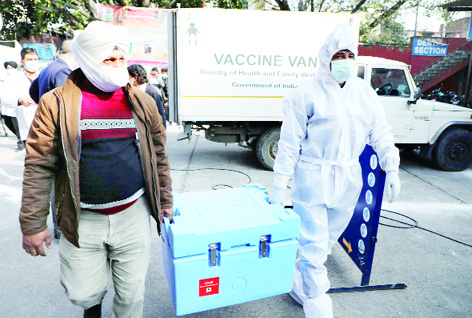
As of now, Dr VK Paul, Niti Aayog member and head of National Expert Group on Covid-19 vaccination has claimed that the government has already made preparations in terms of cold storage being made available for the vaccines. And other provisions are also being made to ensure the smooth delivery of vaccines. Till the time more research is not made on the effect of the new strain on the vaccine, a new analysis won’t be certain. However, Indian authorities are taking all possible measures at the moment to make sure that the new strain which is extremely transmissible does not spread and is successfully contained. Now it all boils down to individual responsibility and constraint.
feedbackexcelsior@gmail.com
A police official rescuing Bakerwal family stuck in snow at higher reaches of Devsar in Kulgam.
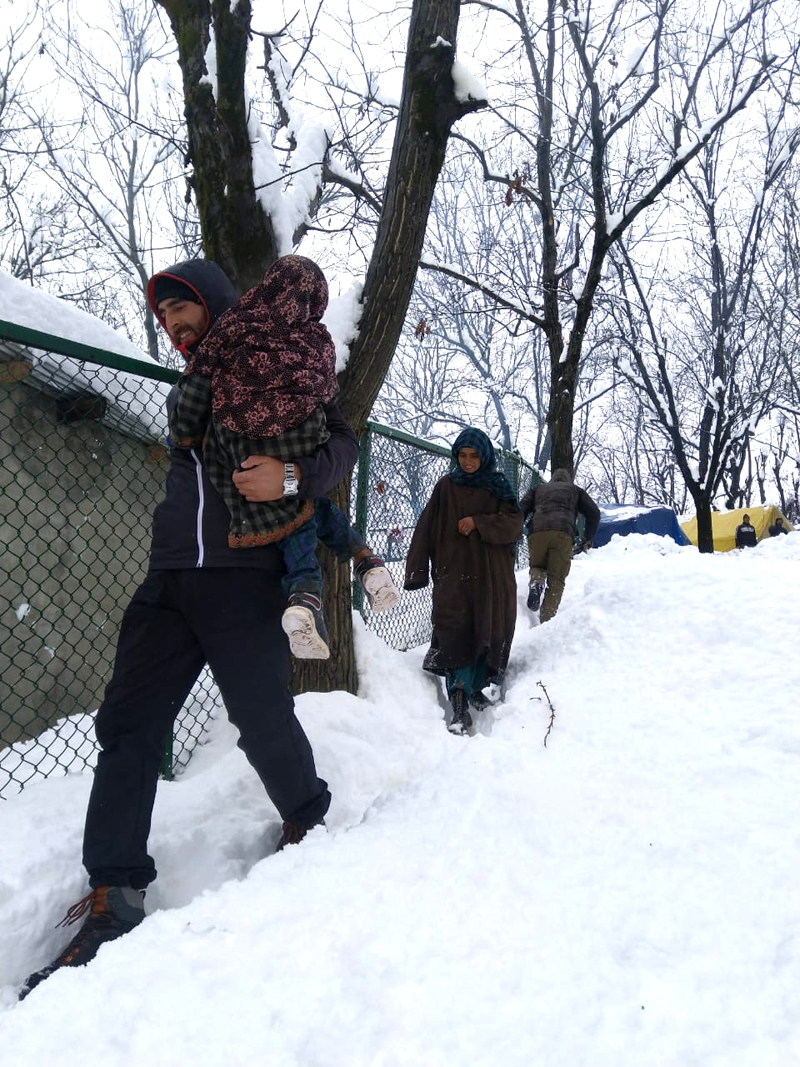
A police official rescuing Bakerwal family stuck in snow at higher reaches of Devsar in Kulgam.
Chairman Social Justice Standing Committee of JMC, Jeet Kumar Angral chairing a meeting of the Committee at Jammu on Tuesday.

Chairman Social Justice Standing Committee of JMC, Jeet Kumar Angral chairing a meeting of the Committee at Jammu on Tuesday.
Dignitaries during Kargil Losar Festival.
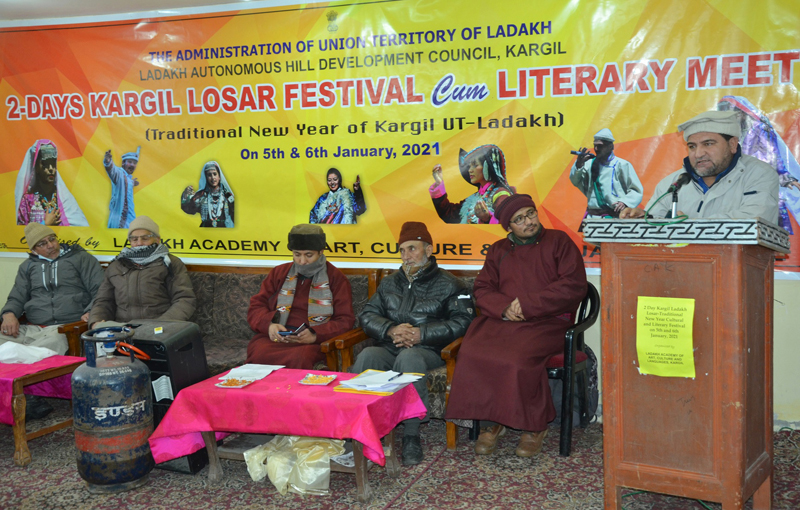
Dignitaries during Kargil Losar Festival.
Indian-American sworn-in as Ohio senator
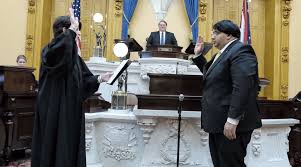
WASHINGTON, Jan 5: Niraj Antani has been sworn-in as Ohio’s senator, making him the first Indian-American to serve in the state’s Senate.
Antani, 29, who was elected to the Ohio state Senate from the 6th District, was sworn-in on Monday.
“I am so grateful to be able to represent the community in which I was born and raised as a State Senator,” Antani said soon after being sworn-in.
Antani will serve a full four-year term.
“I will continue to work hard every day for each Ohioan so that they can have the opportunity to achieve their American dream. In this uncertain economic and health time, we must diligently strive to enact policies for the benefit of all Ohioans,” Antani said.
Antani formerly served as State Representative for the 42nd Ohio House District since 2014. He was the youngest serving member of the Ohio State House of Representatives. (PTI)
UN member States, leaders welcome India, Ireland, Kenya, Mexico and Norway to UNSC
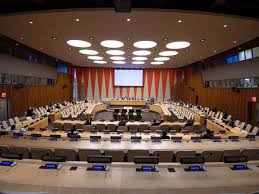
UNITED NATIONS, Jan 5: UN leaders and member States welcomed India, Ireland, Kenya, Mexico and Norway to the UN Security Council and said they look forward to working with the five new non-permanent members to help advance peace and security globally during their 2021-22 term in the powerful world body.
Flags of the five new UNSC members were installed at the Security Council stakeout on Monday during a solemn ceremony organised by the Kazakhstan Mission to the UN.
India’s Permanent Representative to the UN Ambassador T S Tirumurti installed the Indian tricolor at the ceremony and said that as India assumes the membership of the Security Council for the eighth time, “it is an honour for me as the Permanent Representative of India to take part in today’s flag installation ceremony.”
UN member States and top leaders posted congratulatory messages for the five incoming members, welcoming them to the Council for the 2021-22 term.
“Welcome to the Security Council,” the UN tweeted.
President of the 75th session of the UN General Assembly Volkan Bozkir tweeted, “I congratulate the new members of the @UN Security Council… I wish them success in their important work during the 2 years term, in support of global peace and prosperity”.
United Nations Under-Secretary-General for Political and Peacebuilding Affairs Rosemary DiCarlo said she was looking forward to working with the new Security Council members “to help advance peace and security globally.”
US Ambassador to the UN Kelly Craft tweeted, “A warm welcome to the new members of the @UN Security Council, @IndiaUNNewYork, @irishmissionun, @UnKenya, @MexOnu and @NorwayUN. I look forward to working with you in support of global peace and prosperity!”
The US State Department’s Bureau of South and Central Asian Affairs tweeted, “A new year brings new opportunities to strengthen relationships with old friends and partners. We welcome India to the @UN Security Council and look forward to working with @IndiaUNNewYork to advance our shared interests in a more peaceful, secure Indo-Pacific and world”.
The Permanent Mission of United Kingdom said in a tweet, “Welcome India, Ireland, Kenya, Mexico, Norway to UNSC for the 2021-2022 term. We can’t wait to see half your faces”.
“As of January 1st, 2021, the @UN Security Council welcomes 5 new members! Welcome to India, Ireland, Kenya, Mexico, Norway,” the French Mission to the United Nations tweeted.
The Chinese Mission to the UN expressed “a warm welcome” to the incoming UNSC members in a tweet and said, “New year brings new hope. Multilateralism matters even more. China is ready to work with you and other members for a peaceful and prosperous world.
Senior Bureau Official for International Organization Affairs at the State Department Pamela Pryor tweeted, “It’s a new year filled with opportunities to build international peace and security. We look forward to working closely with newly-elected @UN Security Council members India, Ireland, Kenya, Mexico, and Norway for the 2021-2022 term!”
Ambassador Tirumurti will participate in the Security Council virtual meeting on Syria on Tuesday which will be the first open UNSC meeting of India’s tenure that began on January 1. (PTI)
UNSC to appoint Libya’s envoy immediately after Guterres nomination
United Nations, Jan 5: The UN Security Council will appoint a new Special Envoy for Libya as soon as possible after UN Secretary-General Antonio Guterres’ nomination, Tunisian Permanent Representative to the United Nations Tarek Ladeb said in a press briefing on Monday.
“The Secretariat is thinking of suggesting the new name, instead of Mr. [Nickolay] Mladenov, who couldn’t take this position due to personal and family reasons,” Ladeb, whose country presides over the Security Council in January, said on Monday. “We think that he [Guterres] will suggest a new Special Envoy and I think the council will adopt it as soon as possible.”
Ladeb added that nominating a new Special Envoy for Libya is crucial at the moment to give the push to a political process and the settlement of the crisis.
Former UN Special Coordinator for the Middle East peace process Nickolay Mladenov, who long been considered to become a new UN envoy for Libya, in a letter to Guterres informed that he would not take up the role and resigned from the United Nations.
Since March, Stephanie Williams has been serving as Acting Special Envoy following the resignation of Ghassan Salame, who cited stress as the reason to step down. (AGENCIES)
Xi Jinping and the Future of CCP
Brig Anil Gupta
In an unprecedented move effective from the New Year’s Day, China has removed the military from the Government control and expanded the powers of its Central Military Commission (CMC), headed by Xi Jinping, to mobilise military and civilian resources in defence of the national interest, both at home and abroad. The new Defence Law has removed policy and decision making from the State Council (the Cabinet), thus further consolidating power in the hands of the Chinese Communist Party (CCP) and the Paramount leader all powerful Xi Jinping. It is aimed at strengthening the military leadership under Xi, providing it with the legal grounds to respond to the challenges of accelerating confrontations in which China is embroiled with its neighbours and the US. It empowers Xi to deal firmly with situations that could harm the communist regime at home and abroad. CMC will now be responsible for the formulation of the National Defence Policy removing it from the purview of the State Council.
Has Xi realised that his move to take on India, the most powerful among the 18 nations with China has a dispute, aimed at sending a strategic message has backfired? Coupled with this many other decisions taken by Xi Jinping in 2020 are haunting him with increased dissension and threat to the regime spurring a debate to discuss the fallout of these follies on the future of Xi Jinping and the CCP. It being a single-party state CCP and China is synonymous.
Empirically speaking no totalitarian party so far has ruled for more than 74 years. The CCP has already entered the 72nd year. CCP relies on three Ps to maintain its iron grip on China. Personnel control, Propaganda and Peoples’ Liberation Army. In his effort to consolidate the rule of CCP and its ideology, Xi Jinping has assumed firm control of the three Ps side lining the “collective leadership” propounded by his predecessors thus becoming a virtual dictator. In the process is CCP losing control over him and is being undermined? The questions his dissenters often ask “Is CCP supreme or the Supreme Leader?”
In absence of collective leadership Xi is surrounded by a coterie which rather than giving a rational advice generally accedes to the Paramount Leader’s thinking? In his urge to become the most powerful Chinese leader and be equated with Chairman Mao Dezong, he has taken few decisions which are proving counter- productive leading to dissension within the party and against the party. The latter is fuelled more by external forces determined to overthrow the communist regime taking advantage of growing economic disparity and growth of two distinct classes in China. The expansionist ideology of the CCP followed aggressively by Xi is the major bone of contention at international level.
When the Communists under Mao seized control of mainland China in 1949, it aggressively distanced itself from its feudal past. However, under Xi Jinping there has been a concerted attempt to merge the past with the present. In order to combat the dissent against the CCP, he has projected the party as the inheritor of the great Chinese empire of the past.
Despite being born with a Red Spoon Xi was not parachuted to the top and had to struggle his way through at every stage. His initial background and subsequent struggle for rise to power has made him ambitious, adamant and a committed communist.
Xi took over the reins of the party in 2012 when it was in a disarray. In the process of consolidating his position and hold over the party he brought an end to the “collective leadership” system and became all powerful by grabbing all the three powerful posts in China including a resolution passed for abolishing president’s term limit, enabling him to rule indefinitely. This act of his has not gone down well with the young and aspiring leaders within CCP who see a dark future for them with bleak chances of rising to the top. Like all authoritarian leaders Xi also has a fair number of dissidents and domestic opponents.
During his consolidation of power amongst other things he has relied a lot upon emphasis on ideology and nationalism. To fulfil his ambition and imbibe nationalism he announced a roadmap in what is referred to as “China Dream.” The underlying idea behind China Dream is to restore the ex- Middle Kingdom’s glory and regain the Chinese supremacy through expansionism. It is also aimed at minimising internal dissension through national unity. Xi’s ambition is to make China not only stronger but assertive as well, world’s number one power by 2050.
China, under Xi Jinping, has witnessed substantial growth thus seeking a greater leadership role in world affairs. At the same time his repressive policies in Tibet, Xinjiang and Hong Kong as well as excessive curbs on academic freedom, issues like ecological degradation and widening wealth disparities at home, trade war with USA and aggressive behaviour with its neighbours have posed serious challenges for the party and Xi domestically and globally.
The policy of forced population transfers is also proving counterproductive due to fewer livelihood opportunities in the relocated habitats causing dissatisfaction. Income disparity between the rural and urban population also poses a serious threat. His attempts to introduce legal framework in China has drawn flak from the hardliners within the party who consider CCP to be above any law.
Post the outbreak of Covid, for which many nations blame China, Xi Jinping has been mired in controversies due to his various decisions that have led to weakening of China globally and CCP domestically. To combat the global anger against China, Xi embarked on an aggressive policy to silent his critics and dissenters at home. In the process, he committed the Himalayan Blunder of employing PLA to teach India, its potential competitor, a lesson. By doing so he wanted to convey a strategic message but the resolute response of India put a lid on all his hopes and drove him on the back foot severely denting his image at home and abroad. His simultaneous aggressive moves in South China Sea, East China Sea, Hong Kong and Taiwan also drew stiff resistance. There was a global outcry to halt the expansionist designs of the CCP turning it into a battle of ideologies; Communism versus Democracy, Authoritarian versus Free World. The Wolf Warrior diplomacy and 3W strategy of Xi Jinping not only proved counterproductive but have led to complete Chinese isolation and increased abhorrence for the CCP.
His adventurism at seas and on borders with India resulted in a unified alliance by the West and by nations in China’s neighbourhood against China. QUAD, is fast turning into a military alliance from just a formal grouping. Japan is strengthening its armed forces. Australia has become more belligerent viz a viz China. India has signed pacts to augment defence and economic engagement with Vietnam and Japan; both victims of Chinese aggressiveness. Taiwan is determined to face the mainland hegemony and not to succumb to its threats, its determination is buoyed by increased support from USA. US, UK and France have begun aggressive patrolling of South China Sea. All eyes are now set at Joe Biden and his China policy which is expected to be tougher and more damaging than his predecessor. But for a handful of friends in Turkey and Pakistan, China under Xi Jinping faces total global isolation.
Even at home things do not appear to be better due to growing unemployment, loss of business, relocation of global companies, fall out of control over Hong Kong, disruption and realignment of global supply chains, food shortage, growing income disparities, cruelties of PLA, and suppression of dissent with iron hand; all adding to the woes of Xi Jinping. The implementation of the recently introduced Civil Code, an effort to introduce Rule of Law, which is to begin in 2021 would be another litmus test for Xi’s hold over the CCP as there is bound to be conflict of interest in its successful implementation and maintenance of the supremacy of CCP. Growing demands for reforms and resistance by the ethnic communities of the autonomous regions to forced “Sinicization” is a tinderbox that may lead to demise of CPC and China’s balkanisation as and when it explodes.
China is at a unique point in history. The CCP has presided over the country for more than seven decades and is close to the shelf life of contemporary totalitarian parties.
Will all powerful and over ambitious Xi Jinping be able to sail China through its present crisis or would lead towards the demise of the CCP will to a large extent depend on how he reacts to China’s global isolation and growing dissension within the party? Ex-professor Cai Xia, who has been recently expelled from the elite Central Party School, has criticised Xi Jinping and said under his regime the Chinese Communist Party is not a force for progress for China. She said there was widespread opposition within the party but few dared to speak out, afraid of political retaliation in the form of internal party discipline and corruption charges. China watchers are keeping their fingers crossed.
(The author is a Jammu based political commentator, columnist, security and strategic analyst.)
feedbackexcelsior@gmail.com