

Excelsior Sports Correspondent
NEW DELHI, Apr 27: The 75th Anniversary of the National Rifle Association of India (NRAI) was celebrated at New Delhi, with the presence of Olympians, international shooters and officials.
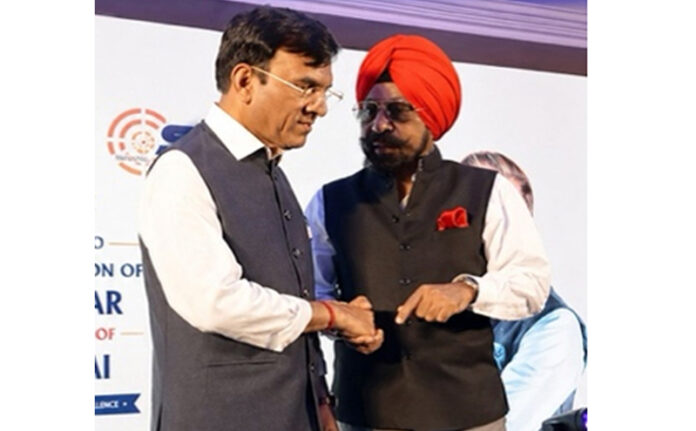
Union Minister for Youth Affairs and Sports Dr Mansukh Mandaviya lauded NRAI on its 75-year journey and praised its role in enhancing India’s global standing in shooting sports. He also highlighted the upcoming Shooting League in India and launched the NRAI App along with the anniversary logo to improve accessibility and transparency in the sport.
On the occasion, the contributions of SS Sodhi, Governing Body Member of NRAI and President of the J&K Rifle Association, along with his team in Jammu and Kashmir, were appreciated for promoting shooting sports in the region. Dr Mandaviya also acknowledged the progress of sports development in Jammu and Kashmir and Ladakh.
During the interaction, SS Sodhi urged the development of international-level sports infrastructure in Jammu and Kashmir to nurture young talent. He also thanked the Minister for his recent visit to Srinagar. The Minister assured continued Government support for sports infrastructure, talent identification, and athlete development across Jammu and Kashmir and Ladakh.
Sodhi meets Mandaviya, discusses J&K Sports Development
ESIC Health Assurance
There is a quiet, invisible suffering that has long plagued Kashmir’s private-sector workforce – one that rarely makes headlines, yet strikes at the very heart of human dignity. It is the crisis of a working man or woman who falls ill and finds themselves trapped between two impossible choices: the overcrowded corridors of a Government hospital or the financially ruinous halls of a private one. The inauguration of Kashmir’s first Employees’ State Insurance Corporation (ESIC) hospital at Ompora, Budgam, is not merely an addition to the region’s healthcare infrastructure. It is a statement of intent – that the private sector worker, so long left to fend for themselves in moments of greatest vulnerability, finally has a place they can call their own.
To understand why this hospital matters, one must first appreciate the peculiar trap in which the private-sector employee – particularly those on contractual terms – has been caught for decades. Government hospitals, noble in purpose but strained by sheer numbers, function on waiting lists that stretch from days into weeks. A basic diagnostic test, an X-ray, a consultation – these require appointments that a daily wage earner simply cannot afford to wait for. Every working day missed is a day’s pay lost, and for a contract worker, there is no safety net of paid sick leave. The act of seeking healthcare itself becomes an economic punishment. Private hospitals, on the other hand, are financially out of reach for most. A single consultation with a specialist can cost more than a week’s wages for a worker earning on the margins. Surgery, critical care, and hospitalisation- these are not medical events for the low-income worker; they are financial catastrophes. Families drain savings, borrow from relatives, sell assets, or simply – and most tragically – delay treatment until it is too late.
This is not a healthcare problem alone. It is a structural injustice baked into the working lives of thousands across Jammu & Kashmir.
The ESIC hospital at Ompora is no token gesture – no modest dispensary dressed up in an announcement. It is a comprehensively equipped, ultra-modern medical facility built across five acres at a cost of Rs 165 crore. With three modular operation theatres, a dedicated emergency OT, four patient lifts, and a modern HVAC system, it is designed to function as a full-service hospital – not a waiting room for referrals elsewhere. It begins operations with 30 beds and is designed to scale to 160 beds in phases. Over 50,000 workers and their families are expected to benefit. Crucially, Ayushman Bharat services will also be available here, extending the net of cashless healthcare even further. This means a private sector worker enrolled under ESIC need not choose between their paycheque and their health. They can seek timely medical care – including surgery – without the dread of a bill that will haunt them for years.
The hospital must be understood within the broader framework of ESIC’s mission. It is not merely a health scheme – it is a social security architecture built specifically for those whom the formal economy has historically underserved. ESIC mandates that private employers provide coverage for their workforce, ensuring that workers are not entirely at the mercy of an employer’s goodwill. Consider what this coverage provides: maternity benefits, accident compensation, unemployment support, and in the tragic event of a worker’s untimely death while in service, a monthly pension of approximately Rs 18,000 for the surviving family. For the family of a daily wage earner, the pension is not a small consolation – it is the difference between survival and destitution. It is the hand extended at the moment when the world seems to have looked away.
Kashmir has long been spoken of in terms of political milestones and infrastructure achievements. But true progress is measured in the quality of ordinary lives – in whether a mason, a factory worker, or a shop floor employee can afford to fall ill without fear. With this hospital, the Government has acknowledged something important: that life is equally precious at the bottom of the wage ladder and that social security is not charity – it is a right. The private sector worker has waited long enough. This hospital is a long-overdue answer.
Four killed in clashes between two groups over illegal gold mining activities in Pak’s KPK
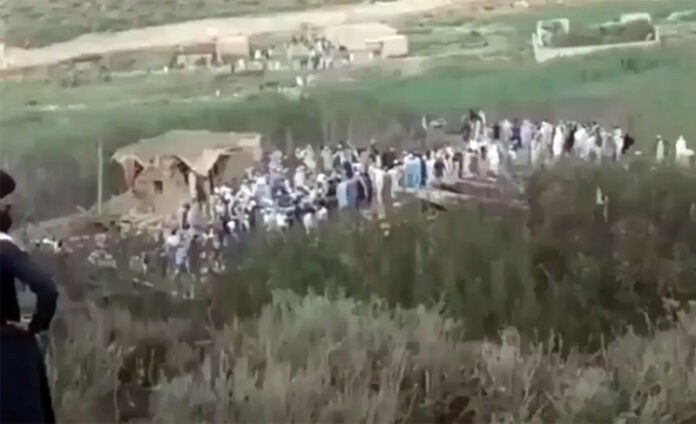
PESHAWAR, Apr 27 : At least four persons were killed and several others injured in an exchange of fire between two rival groups on Monday over alleged illegal gold mining activities in Pakistan’s northwestern Khyber Pakhtunkhwa province, local police said.
The incident occurred in the Nizam Pur area of Nowshera district of Khyber Pakhtunkhwa Province.
The clash erupted between the two local groups, triggering intense gunfire that spread fear and panic across the area, a police official said.
Authorities confirmed that a 17-year-old boy, identified as Mehran, belonging to one group, was among those killed, according to police officials.
Police further stated that three members of the second group were also killed, while at least three others sustained injuries in the violence.
The incident occurred during illegal gold mining activities in the area, which escalated into a deadly confrontation between the two sides, police said.
Mosque announcements were made urging residents to remain indoors for their safety, while children in nearby schools were kept inside as a precautionary measure.
Heavy contingents of police was dispatched to the area. (PTI)
India, New Zealand ink free trade agreement
NEW DELHI, Apr 27 : India and New Zealand on Monday inked a free trade agreement, aimed at boosting two-way commerce and investments.
The pact was signed by Commerce and Industry Minister Piyush Goyal and visiting New Zealand’s Trade and Investment Minister Todd McClay.
The FTA provides duty-free access for 100 per cent of India’s exports to New Zealand, covering all tariff lines or produce categories, and is expected to significantly boost MSMEs and employment by enhancing competitiveness in labour-intensive sectors such as textiles, apparel, leather, footwear, gems and jewellery, engineering goods, and processed foods.
Earlier, New Zealand maintained peak tariffs of up to 10 per cent on key Indian exports, including ceramics, carpets, automobiles, and auto components.
With zero-duty market access from entry into force as New Zealand’s other trade partners, Indian products will be fully competitive in that country, enjoying a level playing field.
Significantly, India also secured duty-free inputs for its manufacturing sector, including wooden logs, coking coal, and waste and scraps of metals, lowering production costs and enhancing the global competitiveness of the Indian industry.
On the other hand, India has offered tariff liberalisation on 70.03 per cent of tariff lines covering 95 per cent of bilateral trade value, while keeping 29.97 per cent of tariff lines excluded to protect India’s sensitive sectors.
The products that are kept in exclusion are mainly — dairy (milk, cream, whey, yoghurt, cheese etc.), animal products (other than sheep meat), agricultural products (onions, chana, peas, corn, almonds), sugar, artificial honey, animal, vegetable or microbial fats and oils, arms and ammunition, gems and jewellery, copper and articles thereof (cathodes, cartridges, rods, bars, coils), aluminium and articles thereof (ingots, billets, wire bars) among others.
On 30 per cent of tariff lines of New Zealand, India will provide duty elimination on goods such as wood, wool, sheep meat, and leather-raw hides.
Similarly, 35.60 per cent of tariff lines are subject to phased elimination over 3, 5, 7, and 10 years, including petroleum oil, malt extract, vegetable oils, selected electrical and mechanical machinery, and peptones.
New Zealand products which enjoy tariff reductions include wine, pharmaceutical drugs, polymers, aluminum, iron and steel articles, and goods that only 0.06 per cent fall under tariff rate quotas, including Manuka honey, apples, kiwi fruit, and albumins, including milk albumin.
The FTA also includes a commitment to facilitate USD 20 billion in investment into India.
A rebalancing clause is incorporated into the Agreement to provide a framework for addressing any shortfall in investment delivery, thereby ensuring robust and tangible economic outcomes.
Total bilateral trade in goods and services reached USD 2.4 billion in 2024. (PTI)
Shah says Central forces will stay in Bengal for 60 more days after polls; asks people to vote without fear of ‘Didi’s goons’
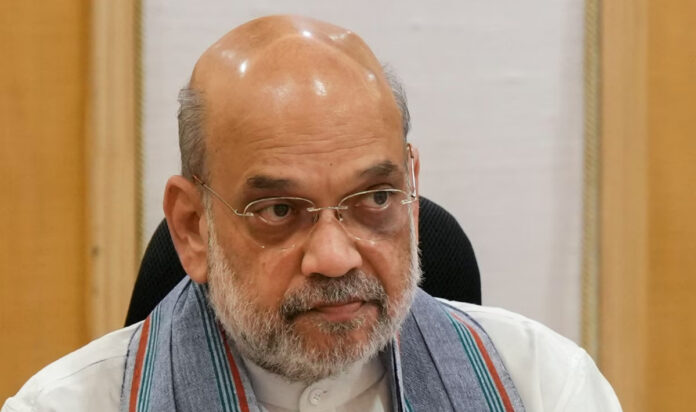
KOLKATA, Apr 27: Central forces will remain in West Bengal for 60 more days after the assembly polls, Union Home Minister Amit Shah said on Monday and asked voters to cast their votes without fear of “Didi’s goons” in the final phase, a remark signalling the Centre’s commitment to prevent possible post-poll violence.
Shah made the remarks while addressing a gathering on the last day of the election campaign after leading a massive roadshow in Behala, where voting will take place on Wednesday during the second and final phase of the West Bengal assembly polls.
Voting was held in 152 constituencies on April 23 during the first phase of elections for the 294-member assembly. A record 93 per cent voter turnout was registered in the first phase. Votes will be counted on May 4.
“Brothers and sisters, go and vote on the 29th, do not worry about Didi’s (Mamata Banerjee’s) goons. The Election Commission has deployed CAPF at every nook and corner, and I am telling you that even though the BJP will come to power after the elections, central forces will remain here for 60 more days,” he said.
The road show, organised in support of BJP candidates for Behala Purba and Behala Paschim, turned the south Kolkata neighbourhood into a sea of saffron on the final day of campaigning.
Standing atop an open-hood vehicle, Shah waved at supporters and showered flower petals on crowds lining both sides of the road.
Asserting that there was a strong wave in favour of the BJP, Shah said that once voted to power, the party would take strict action against infiltrators and those involved in political violence.
“I want to warn Didi’s goons in Chandannagar – do not step out to intimidate voters on April 29. After May 4, the BJP will punish the culprits and hang them upside down,” he asserted.
Earlier this month, Election Commission officials said that as many as 500 CAPF companies will remain deployed across West Bengal for post-poll law and order duties even after the declaration of results. They will stay “till further orders of the EC,” they said.
Each CAPF company comprises around 100 personnel. A record 2,450 central paramilitary companies, comprising nearly 2.5 lakh personnel, have been deployed across the state for the assembly polls. Of these, 2,321 CAPF companies have been deployed for the second phase of polling.
Amit Shah’s statement that CAPFs would remain in West Bengal for “60 more days” even after polling is widely viewed through the prism of the 2021 post-poll violence in the state. After the results of the 2021 Assembly elections were declared on May 2, widespread violence was reported across several districts, with allegations of murders, arson, looting, assaults, sexual violence and forced displacement of opposition workers, particularly involving clashes between BJP and TMC supporters.
Political observers say Shah’s remark serves multiple strategic purposes. First, it is aimed at reassuring anti-TMC voters-particularly BJP supporters in politically sensitive and violence-prone constituencies-that they can vote without fear of post-poll reprisals. In Bengal politics, allegations of post-election violence and intimidation remain a major psychological factor, and the BJP is seeking to neutralise that fear. Second, it helps reinforce the BJP’s long-standing political narrative that the TMC regime survives through coercion, intimidation and electoral violence, while the saffron party positions itself as the guarantor of democratic rights and free voting.
Third, it seeks to influence undecided voters and fence-sitters, especially in rural and semi-urban Bengal, where administrative pressure and local muscle power often shape voting behaviour. The underlying message is that the Centre will ensure protection, making it “safe” for voters to back the opposition.
During the roadshow, thousands of BJP workers and supporters, carrying party flags and orange-green balloons, thronged the route, raising slogans of “Jai Shri Ram” and “Bharat Mata ki Jai”.
Later in the day, Shah took part in another road show at Chandannagar in Hooghly district, which also drew huge crowds and enthusiastic participation from party supporters.
Shah, who addressed more than 50 rallies and roadshows across West Bengal during the two-phase assembly elections, remained stationed in Kolkata since the night of April 20. He closely monitored the party’s electoral strategy and organisational mobilisation on the ground, underscoring the BJP’s high-stakes campaign push in the state.
He also reiterated his allegations against Chief Minister Mamata Banerjee, saying she was opposing the removal of infiltrators from electoral rolls, and that the ruling Trinamool Congress was protecting illegal immigrants for vote-bank politics.
“Didi feels pain when we say infiltrators must be removed. She is opposing SIR. Right now, names have been removed from electoral rolls, and after May 4, all infiltrators will be identified and removed from Bengal,” he said.
After concluding the road show, Shah said the BJP was poised to form the next government in the state, and reiterated the party’s commitment to implementing the Uniform Civil Code (UCC).
“A BJP government is going to be formed. We will implement the UCC,” the home minister said, adding that after May 4, no one will be allowed to practice polygamy.
“So far, there has been no major incident of violence. Not a single death has taken place. The elections are being conducted peacefully,” he said.
In one of his sharpest attacks against the TMC during the ongoing campaign, Shah invoked the Ram temple-Babri Masjid dispute and referred to suspended TMC MLA and AJUP founder Humayun Kabir.
He alleged that Banerjee, through Humayun Kabir, wanted to build a “Babri Masjid” in Bengal.
“Mamata Didi wants her associate Humayun Kabir to build a Babri Masjid in Bengal. Didi, listen carefully. Bengal is in India. We will never allow a Babri Masjid to be built in Bengal,” Shah said.
He also alleged large-scale corruption in social welfare schemes under the TMC government, and asserted that those responsible would not be spared if the BJP came to power.
Shah said bringing the BJP to power in West Bengal was essential to transform the state into a “Sonar Bangla” and restore law and order, development and good governance.
Shah also visited Gangasagar, located at the sacred confluence of the Hooghly River and the Bay of Bengal, and offered prayers for the bravehearts of the Indian Army.
“I paid my respects to our brave soldiers who made the supreme sacrifice for the nation. Every Indian is proud of the courage of our security forces who lay down their lives for the country despite unimaginable challenges,” he said at Gangasagar in South 24 Parganas.
At the heritage Kapil Muni temple, Shah performed a puja and sought blessings for the nation’s well-being.
“I prayed to Maharishi Kapil, a symbol of knowledge, sacrifice and penance, for the welfare of the people of the country. His life and philosophy are an inspiration for every Indian,” he said.
Shah also offered prayers at the confluence, described as a sacred spot where the river meets the sea.
“I had the fortune of offering prayers at this holy place where the Ganga meets the sea. The sacred Ganga fills the mind with immense peace and spiritual bliss. May Maa Ganga continue to bless the people of the country,” he said in X posts in Hindi and Bengali. The Hooghly River is the westernmost distributary of the Ganga. (PTI)
Issue is under discussion with both Iran, US: MEA on Chabahar port
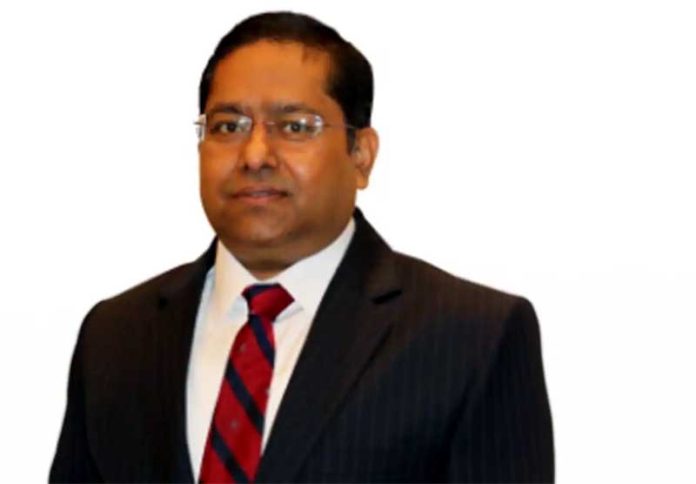
NEW DELHI, Apr 27: With the US sanctions waiver for Iran’s Chabahar port ending on April 26, India on Monday said the issue is “under discussion” with both Iran and the US, while adding that the “current conflict is also a complicating factor”.
MEA spokesperson Randhir Jaiswal said this in response to a query related to the crucial Chabahar port, at an inter-ministerial briefing here on the West Asia situation.
He was asked about the status of the project, given that the sanction waiver granted to India by the US on it expired on Sunday.
“Your question regarding Chabahar and update as to where we are, this issue is under discussion with both Iran and the United States. Obviously, the current conflict is also a complicating factor. We will keep you posted as the situation evolves,” Jaiswal said.
The Chabahar Port project was conceptualised to provide much-needed connectivity to Afghanistan for its reconstruction and economic development and for boosting trade and economic linkages with Central Asia.
On September 16, 2025, the US State Department revoked the sanctions exception issued in 2018 under the Iran Freedom and Counter Proliferation Act 2012 for Afghanistan’s reconstruction and economic development, effective September 29, 2025, the government had told Parliament in February 2026.
“Pursuant to discussions with the US side, the latter issued guidance extending the conditional sanctions waiver until April 26, 2026. The Government of India remains engaged with all concerned in order to address the implications of these developments,” the government had said in a written response to a query in Lok Sabha. (PTI)
Putin meets Iranian Foreign Minister Araghchi
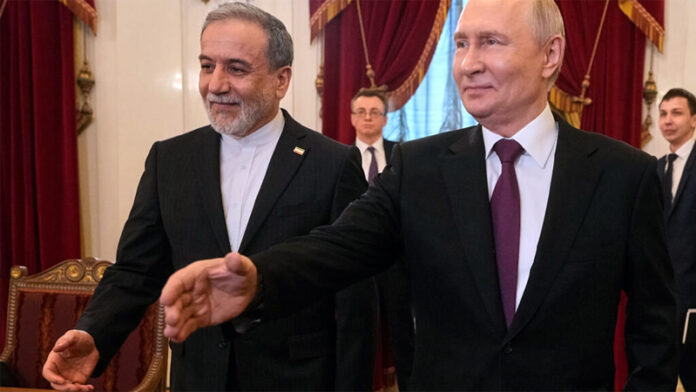
MOSCOW, Apr 27 : Russian President Vladimir Putin met with Iranian Foreign Minister Abbas Araghchi in Saint Petersburg on Monday, Russian state news agency Tass said.
Putin praised the Iranian people as bravely fighting for their sovereignty and said Russia would do everything possible in the interest of Iran and other countries in the region to bring peace to the Middle East, Tass reported. (AP)
New Zealand PM Luxon terms FTA with India ‘once-in-a-generation’ pact
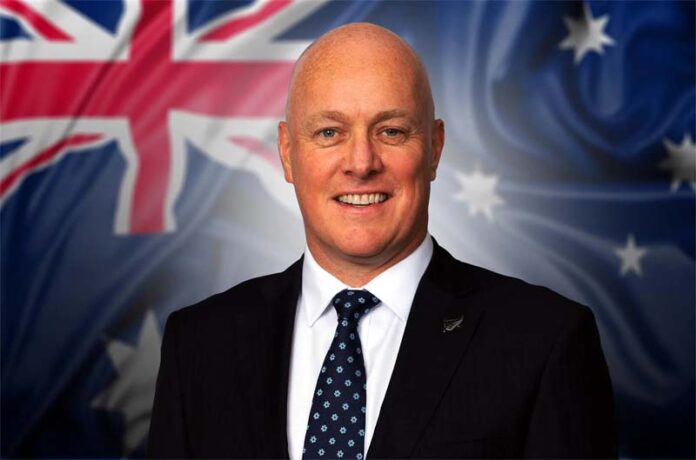
NEW DELHI, Apr 27: New Zealand Prime Minister Christopher Luxon has termed the free trade agreement with India a “once-in-a-generation” pact, saying at a time of global uncertainty, this deal is a clear commitment by both sides to a stable, predictable, and rules-based trade.
The pact was signed here on Monday by Commerce and Industry Minister Piyush Goyal and visiting New Zealand’s Trade and Investment Minister Todd McClay.
“This is a once-in-a-generation agreement that gives NZ (New Zealand) exporters unprecedented access to 1.4 billion people and an economy set to become the third-largest in the world,” Luxon said in a social media post.
For New Zealand, he said, this pact would open the door to one of the world’s most dynamic markets and creates unprecedented opportunities to trade, invest, innovate and connect.
This deal will help diversify New Zealand’s export markets, support the goal of doubling the value of New Zealand’s exports over 10 years, and put exporters on a more level playing field with competitors already enjoying preferential access in India, he added.
“It gives Indian exporters tariff-free access to the New Zealand market from day one, and it gives Indian consumers improved access to our high-quality exports. It creates new ways for India to partner with New Zealand on agricultural productivity and benefit from New Zealand’s world-leading agri-tech and food-production expertise,” the prime minister said.
This agreement matters not just because of what it does economically, but because of what it says strategically, he said adding at a time of global uncertainty, this agreement is a clear commitment by both sides to stable, predictable, and rules-based trade. (PTI)
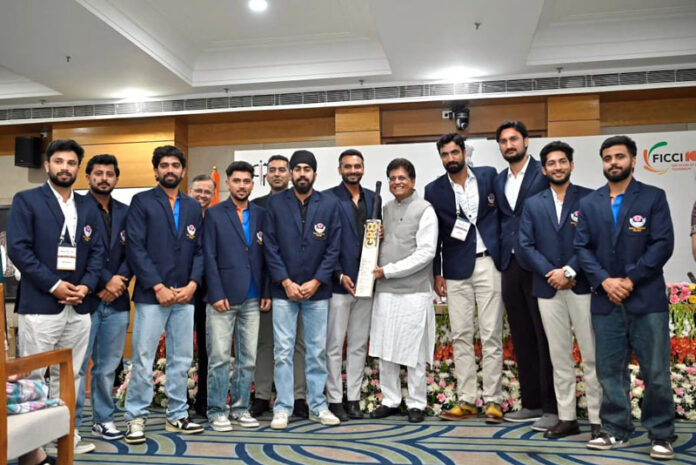
Goyal felicitates J&K Ranji Trophy team for rare feat
*Govt waives sports IP registration fees for 3 years
Excelsior Sports Correspondent
NEW DELHI, Apr 28: Union Commerce and Industry Minister Piyush Goyal today felicitated the J&K Ranji Trophy team for its historic performance, describing the achievement as a “moment of pride” and a reflection of the region’s growing sporting potential.
The team was honoured at a World Intellectual Property Day event here, where Goyal highlighted their landmark victory, including a win over eight-time champions Karnataka cricket team.
He said the breakthrough after decades signals renewed confidence and emerging opportunities for youth in J&K.
“The achievement reflects the changing landscape of sports in J&K and is expected to inspire greater participation among young athletes at both national and international levels,” the minister said.
Goyal noted that the performance comes amid sustained efforts to improve infrastructure and expand avenues for youth engagement in the Union Territory.
He said investments in sectors such as sports, tourism and industry are contributing to a more enabling environment for talent to flourish.
Highlighting the broader significance of the achievement, the minister said the success of the J&K team demonstrates the potential of the region to produce high-level athletes.
He added that such milestones not only bring recognition but also help build confidence among aspiring sportspersons.
The minister also underscored the importance of supporting emerging talent through policy initiatives and institutional backing, stating that continued focus on grassroot development would be key to sustaining momentum in the sports sector.
On the sidelines of the event, Goyal announced a three-year waiver on fees for all sports-related intellectual property (IP) registrations, aimed at promoting innovation in the sports ecosystem.
The waiver will cover trademarks, copyrights, patents, designs and geographical indications, and is expected to benefit innovators, students and stakeholders across the country.
He said the Government would also extend facilitation support under existing schemes to assist applicants in securing IP rights, thereby easing their entry into the innovation ecosystem.
The minister further highlighted the GI-tagged Kashmir willow cricket bat as a symbol of India’s craftsmanship and intellectual property strength, calling for its wider promotion in global markets and increased manufacturing within J&K.
He also stressed the need to develop sports manufacturing clusters in regions such as J&K to boost domestic production and strengthen local value chains.
The event also featured interactive sessions and discussions on the future of intellectual property in sports, with participation from stakeholders across sectors.
Gadkari reviews progress of National Highway projects in Karnataka and Kerala
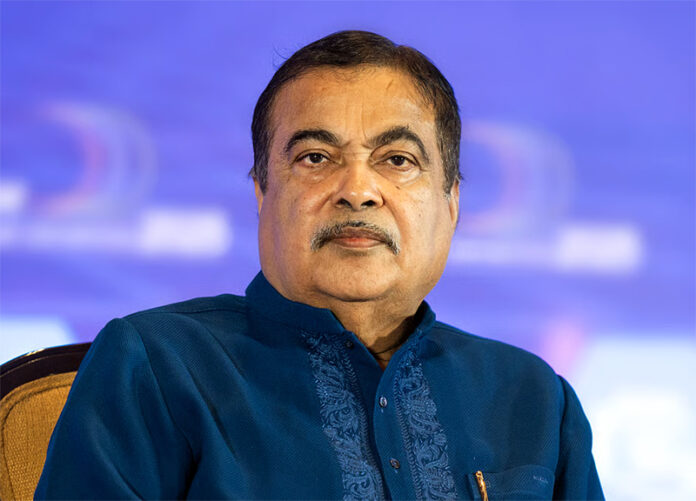
NEW DELHI, Apr 27: Union Road Transport and Highways minister Nitin Gadkari on Monday reviewed the quality and maintenance progress of National Highway projects in Karnataka and Kerala, acting on feedback received through media and social media.
According to an official statement, the review meeting was held in New Delhi.
During the meeting, the statement said Gadkari reviewed the quality and maintenance progress of 7,926 km of National Highways in Karnataka and 1,513 km across 61 National Highway projects in Kerala.
He emphasised the importance of timely execution of works, adherence to strict quality standards, and adoption of advanced technologies to ensure sustainable and efficient highway infrastructure.
The minister also stressed the need to accelerate on-ground works, strengthen quality monitoring systems, and adopt modern construction practices to enhance asset longevity, improve riding quality, and ensure seamless connectivity across key highway corridors.
He issued strict directions to officials to ensure full preparedness ahead of the monsoon season.
Gadkari highlighted the importance of preventive measures and robust response systems to maintain road safety, structural durability, and uninterrupted traffic movement across the highway network.
The minister also instructed officials to undertake advance planning for the monsoon season, including comprehensive drainage management, slope protection measures, and establishment of quick-response mechanisms to minimise disruptions and ensure commuter safety. (PTI)