

Excelsior Correspondent
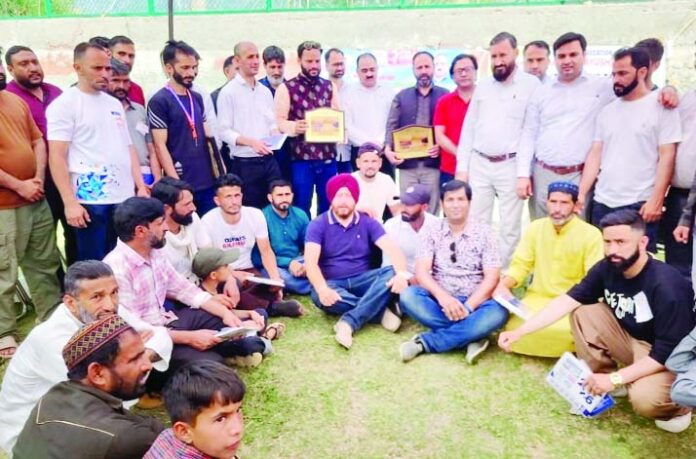
RAJOURI, Apr 27: In a significant effort to bridge the healthcare gap in rural areas, Team SIBA and SFSAB, in association with Amandeep Hospital successfully organized a comprehensive multi-speciality Medical camp today at Boys High School, Ujhan, in Darhal Tehsil of Rajouri district.
The initiative, driven by the core belief that “quality healthcare is a right, not a privilege,” provided free Medical services to over 3,500 beneficiaries from the under-privileged sections of the Darhal area of Rajouri in Pir Panjal region.
Located far from Rajouri City, the residents of Ujhan and surrounding villages often face logistical challenges in accessing specialized medical care. Today’s camp, which ran from 9:30 AM to 3:00 PM, brought together top-tier Medical professionals and diagnostic facilities directly to their doorstep.
The success of the camp was made possible through the noble contributions of several renowned healthcare institutions and specialized clinics, including, Amandeep Group of Hospitals Vijay Thapa (Facility Director), Vivek Salgotra (Regional head), Dr Nirbhay Orthopaedic Surgeon, Dr Syed Mushfiq Gastroenterologist, Dr Suraj Kumar (General Physician) and Dr Mahandar Pall Neuro & Spine Surgeon (From Ujala Cygnus JK Medicity Hospital); Goel Eye Clinic & Retina Centre, Varun Kumar ( Sr Optometrist), Anil Kumar(Marketing Manager) and others.
Patients received consultations across various disciplines, ranging from General Medicine, Orthopedics, Neuro Spine. Gastro, Physiotherapy to specialized eye care, Dermatology, Dental hygiene, Ayurveda etc. The Directorate of AYUSH also provided holistic health consultations and traditional wellness guidance medicines.
The event remained successful with the unwavering support of SFSAB (Tarik Mirza), JKDCF, MTS SERVICES (MD Amit Mangotra) and Relationship Manager Sumali.
“Our mission was simple to reach those who are often left behind by the urban-centric healthcare system,” said by Team SIBA officials Sidharth Verma & Baljeet Singh.
Team SIBA are dedicated organizations committed to community development, health equity, and humanitarian aid across Jammu and Kashmir.
Team SIBA organizes multi-speciality medical camp
DDC Poonch reviews KKG functioning, emphasises AI, CSC Integration
Excelsior Correspondent
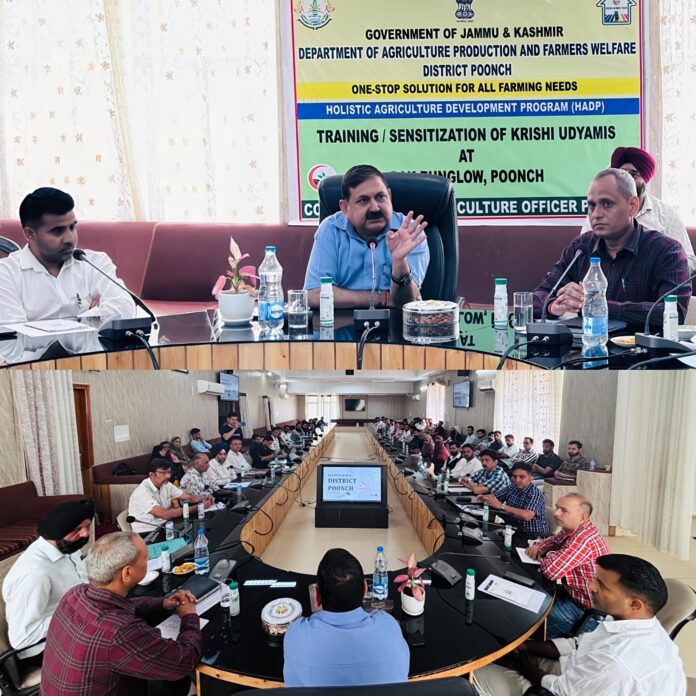
POONCH, APRIL 27: The Department of Agriculture Poonch, under the guidance of the District Development Commissioner Ashok Kumar Sharma today organized a one-day training programme for Krishi Udyamis engaged under the HADP project “Innovative Extension Approaches in Agriculture.”
The programme, held under the chairmanship of DDC, also aimed to review the functioning of Krishi Khidmat Ghars (KKGs) established across the district.
The primary objective of the training was to strengthen the operational capacity and outreach of KKGs, which have been envisioned as “One Service Points” for farmers and the general public. These centers play a crucial role in delivering digital services and bridging the gap between rural communities and government schemes.
Addressing the participants, the DDC underscored the importance of expanding digital outreach in remote and border areas through KKGs, aligning with the core objectives of the HADP and JKCIP initiative. He highlighted that the government has made significant investments in selecting and supporting Krishi Udyamis through a rigorous screening process. These Udyamis are now entrusted with delivering a range of services, including Government-to-Citizen (G2C), Government-to-Business (G2B) and Business-to-Citizen (B2C) services through CSC platforms. On spot grievance redressal was also done to redress the grievances of the KUs. Appreciation certificates were handed over to the top performing KUs for their remarkable work.
The DDC further emphasized the role of tele-consultation services in enabling farmers to access expert advice from Krishi Vigyan Kendras (KVKs), thereby enhancing informed decision-making, improving agricultural productivity and Weather forecast.
Chief Agriculture Officer Jograj Singh Slathia highlighted the growing significance of digital platforms and modern technologies in ensuring transparency, efficiency and accessibility in service delivery within the agriculture sector. He informed that the performance of Krishi Udyamis was reviewed based on key parameters, including farmer registration (L1 and L2), eKYC completion (L3), income generation, daily reporting compliance and data accuracy. A comprehensive presentation showcasing parameter-wise progress of KKGs, highlighting the top performing Krishi Udyamis, success stories of the KUs was also delivered.
The training sessions covered a wide spectrum of contemporary and relevant topics, including AI-based solutions for youth empowerment and improved service delivery. Participants were sensitized on adopting innovative practices in agriculture and allied sectors, along with awareness regarding digital legal assistance services to facilitate access to justice for rural communities.
Krishi Udyamis appreciated the initiative and expressed gratitude to the district administration and Agriculture department. They acknowledged that such capacity-building programmes significantly enhance their skills and enable them to serve farmers more effectively.
The programme concluded with a collective commitment from all stakeholders to continue working in close coordination for the holistic development of agriculture and allied sectors in Poonch district.
The event was attended by the Head KVK, Assistant Soil Chemist, District Agriculture Officer (INPUTS), Sub-Divisional Agriculture Officers of Poonch, Surankote, Mendhar, Manager CSC and other officers and officials of the Agriculture Department.
DC Ramban reviews status of Telecom Services
Excelsior Correspondent
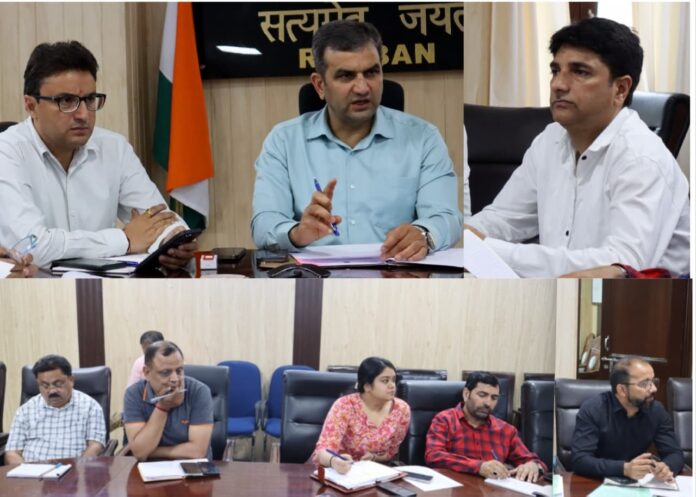
RAMBAN, APRIL 27: Deputy Commissioner Ramban Mohammad Alyas Khan today chaired a meeting of the District Level Telecom Committee to review the overall telecom services and network coverage in the district. The review focused on seamless and reliable connectivity across Ramban, with special emphasis on remote areas and the National Highway.
The meeting was attended by Additional Deputy Commissioner Varunjeet Singh Charak; ACR Shokat Hayat Mattoo; ACD Sheraz Ahmed; Divisional Engineer; Bharat Sanchar Nigam Limited (BSNL); Luxmi Narayan Saini; Tehsildar Headquarters Reejuta Mahajan. Sub-Divisional Magistrates, other concerned officers and representatives of private telecom companies joined the meeting virtually.
Reviewing the ongoing works, the Deputy Commissioner directed BSNL and representatives of private telecom service providers, including Reliance Jio and Bharti Airtel, to expedite the process of covering all identified shadow areas in the district. He emphasized improving connectivity in tunnels and along the National Highway from Nashri to Banihal, as well as at other vulnerable and strategically important locations, particularly in view of the upcoming Shri Amarnath Ji Yatra. He further instructed that the coverage areas of already installed towers be revisited to maximize outreach.
Emphasizing public convenience and safety, the Deputy Commissioner said “All existing telecom towers must remain functional round the clock.” He stressed the need for adequate power backup and fuel arrangements at tower sites to ensure uninterrupted services, particularly during adverse weather conditions and natural calamities, so as to avoid communication lapses during emergencies.
The Deputy Commissioner also reviewed the status of land acquisition cases as per indents submitted by BSNL for the installation of new telecom towers and directed concerned officers to expedite the process to prevent delays in project execution.
DC Kulgam visits Nandimarg, reviews progress of Road Projects
Excelsior Correspondent
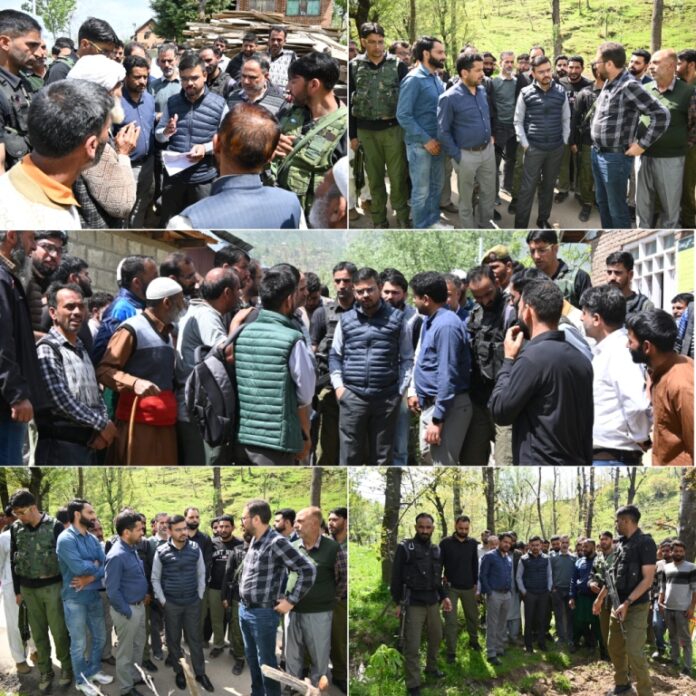
KULGAM, APRIL 27: Deputy Commissioner (DC) Kulgam, Shahzad Alam, today visited the Nandimarg area to take stock of ongoing works and assess bottlenecks hindering the timely completion of key road projects.
During the visit, the DC reviewed the progress of Galman Road, Kanimarg Road, and other ongoing developmental works. He conducted on-site inspections and evaluated the pace of execution.
The DC was apprised by the concerned officials about the current status of the projects and the challenges affecting their timely completion.
He stressed the importance of inter-departmental coordination to address issues related to land, utilities, and clearances without delay.
The DC also interacted with local residents and listened to their issues and grievances.
Emphasizing the significance of these roads in improving connectivity and facilitating public convenience, he instructed officials to expedite the work and strictly adhere to set timelines.
He added that timely completion of these roads will boost connectivity and tourism in the area.
He further urged the general public to extend full cooperation to the administration and executing agencies to ensure smooth and timely completion of the projects.
Among others, SDM Noorabad, Bashir-ul-Hassan; Executive Engineer, D.H. Pora,Tehsildar D.H.Pora, DMO and other officers accompanied the DC during the visit.
Governor, CM accord warm welcome to Prez Murmu
Excelsior Correspondent
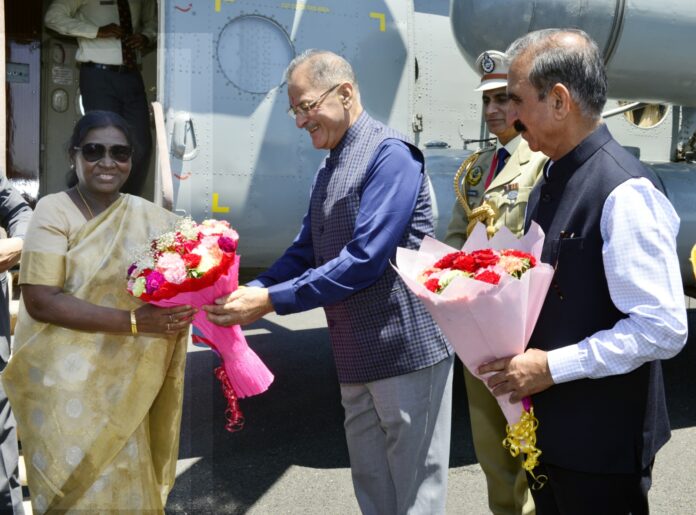
Shimla, April 27: The ble President of India, Droupadi Murmu, who arrived on a five-day visit to Himachal Pradesh, was accorded a warm welcome on her arrival at the Kalyani Helipad at Chharabra near Shimla today at around 11:30 A.M.
Governor Kavinder Gupta accompanied with Chief Minister Sukhvinder Singh Sukhu and others senior officers of the Civil Administration and the Indian Army received the President and extended a warm welcome on behalf of the people of the State.
Speaker of the Himachal Pradesh Legislative Assembly, Kuldeep Singh Pathania, Rural Development and Panchayati Raj Minister Anirudh Singh, who has also been designated as the Minister-in-Waiting for the President’s visit, Member of Parliament Suresh Kumar Kashyap, Mayor of the Municipal Corporation Shimla, Surinder Chauhan, Chief Secretary Sanjay Gupta, Director General of Police Ashok Tiwari, Chief of Staff Lt. General S. S. Dhayia, along with senior officers of the State Government and the Army were also present on the occasion.
Why does fiction seem to become reality so fast today?

Biju Dharmapalan
bijudharmapalan@gmail.com
There is something distinctly unsettling about the times we live in. It is not merely that science fiction is becoming reality-that has always been the quiet promise of human progress-but that the transition now feels alarmingly fast. A novel is written, a film is released, the idea captures public imagination, and almost before the credits stop rolling, echoes of that very idea begin to appear in real life. To many observers, this sequence no longer feels like coincidence. It feels like a pattern.
Consider Jurassic park, scientists are trying to bring back long-extinct animals by genetic engineering. It was an exciting fantasy then. Today, the discussion of de-extinction, gene editing, and synthetic biology is not just a day’s topic, but it is progressing at an incredible pace. Or take the recent worldwide outrage, the COVID-19 pandemic, which resembled so many fictional stories that it appeared that the world was taking directly out of cinematic works. Even the scientifically-based story of Project Hail Mary of interstellar survival is echoing all the current debates of beings venturing into space and the future of mankind out of our home world.
Of interest in these instances is not their resemblance to fiction, but the condensed time frame between fantasy and actualisation. In the past, speculative ideas became reality after a long period of time. Nowadays, it seems like it occurs in years, indeed even months. It is this narrowing that forms a great fiction: that fiction is not at all simply prophesying the future, but it in some way initiates it.
However, to assume this is a sign of some kind of covert arrangement or a pre-calculated plan would be to misguidedly interpret the greater forces involved. The reality is less complex and more complete. Science fiction does not spring out of thin air; it is very much connected with the scientific knowledge and preoccupations of the day. Authors make projections based on the existing. By the time Jurassic Park came into being, molecular biology was in the swift transition. When pandemic thrillers gained popularity, scientists had long been warning about zoonotic diseases and global vulnerability. When Andy Weir wrote his scientifically rigorous narratives, he was building upon decades of astrophysical research.
In other words, fiction is not leaping ahead of science-it is running alongside it.
What has changed, however, is the speed at which science itself progresses. A faster cycle of innovation is functioning in the modern-day world. Innovations in space exploration, biotechnology, and artificial intelligence have ceased to be a century-long process and have become ones spanning years. NASA and other institutions, along with an expanding ecosystem of commercial ventures, are translating the dramatic fantasies into practical applications at a rate never seen before. International coordination, cyber-communication, and enormous investments have shortened timeframes so much that only a few decades ago it was something unimaginable.
Such haste gives an illusion of what is in the present moment. We see a story, and after a short time reality seems to be coming out after it–but in the real sense what both are getting is a portion of the same underlying stream of knowledge and possibility. The trajectory can only be oriented to the public by the story.
It has a psychological aspect to it, as well. It is inborn in human beings to find patterns. Understanding It We are configured to identify relationships among the dots, to see meaning in chance and to create stories that enable us to believe that the world is coherent. A fictional situation that comes into line with a scenario in the real world is dramatic. Yet we simply do not count the number of fictional concepts which do not even come into existence, alien invasion, paradoxes of time, or intelligent robots replacing humans take over. These misses are pushed to the back as the hits strengthen the belief of a trend.
On top of this is the clouting strength of the contemporary media. Today a book is no longer on the printed page; it is a movie, a streaming effect, a worldwide chat. Once fiction reflects reality, it is instantly propagated across social networks to give one a feeling of a first-time planetary-scale deja vu. The idea, narrative, event sequence seems to be closely connected, it feels almost scripted.
Yet, perhaps the biggest thing about it is the following: fiction is not merely a reflection of reality; it constructs it. They tend to inspire the stories which scientists, engineers and innovators read. A child who watches a science fiction film today may become the researcher who develops that technology tomorrow. The difference is that, in today’s world, that “tomorrow” arrives much sooner. With powerful tools, collaborative networks, and rapid prototyping capabilities, ideas can move from imagination to implementation within a decade-or less.
In this sense, what we are witnessing is not a conspiracy but a feedback loop. Fiction inspires science; science enables reality; reality, in turn, fuels new fiction. The cycle continues, each iteration moving faster than the last.
A good illustration is provided by the COVID-19 pandemic. Although its similarity to the fictional outbreak was impressive, the speed at which vaccines were developed was not accidental. Such technologies as mRNA platforms were years old. The crisis just hastened their implementation. What appeared to be an overnight leap was, in fact, the culmination of sustained scientific effort.
The real question, then, is not whether someone is “doing the business” behind the scenes, but whether humanity has reached a point where imagination itself is becoming the primary driver of reality. When the tools of innovation are this powerful, the distance between “what we can imagine” and “what we can build” becomes dangerously small. That is both exhilarating and unsettling.
We are entering an era where fiction is no longer a distant speculation but a near-term possibility. The responsibility, therefore, does not lie in uncovering hidden patterns or conspiracies, but in guiding the direction of this accelerating cycle. What we choose to imagine-and more importantly, what we choose to pursue-will shape the world we inhabit. Reality is not imitating fiction because it is being secretly directed. It is doing so because we now possess the unprecedented ability to turn ideas into existence at extraordinary speed.And that may be the most powerful-and sobering-truth of all.
(The author is the Dean -Academic Affairs, Garden City University, Bengaluru and an adjunct faculty at the National Institute of Advanced Studies, Bangalore)
GGM Science College Geology students begin field trip to Bhaderwah
Excelsior Correspondent
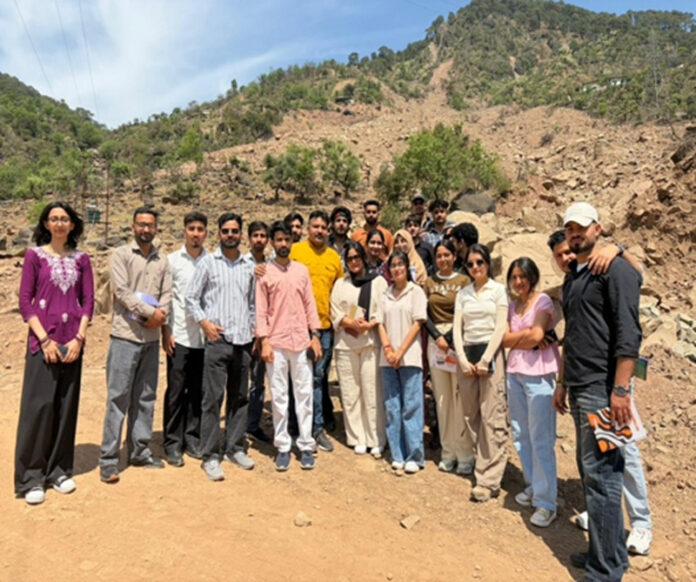
JAMMU, Apr 27: The Postgraduate Department of Geology, GGM Science College, has commenced a four-day geological field excursion for M.Sc. Semester 2 and B.Sc. Honours Semester 8 students to Bhaderwah. The programme has been organised with the approval and encouragement of Principal Prof. (Dr.) Romesh Kumar Gupta.
Follow the Daily Excelsior channel on WhatsApp
Interacting with students, Prof. Gupta stressed the importance of field-based learning, stating that such exposure strengthens conceptual understanding, practical skills, and scientific temperament.
The field tour is being led by Prof. Anil Thappa, who is guiding students in hands-on activities including identification of lithological formations, study of slope processes, structural observations, and geological mapping. The programme is being coordinated by Dr Mateen Hafiz, Head of the Department, with support from faculty members Dr Huny Sharma and Dr Atif Hussain Malla.
On the first day, students conducted field studies along the National Highway and examined a recent landslide near Udhampur. The second and third days will cover Bhalla, Padri and Jai Garh areas. The tour will conclude on April 30, 2026, with gratitude expressed to the college administration for support.
LG inaugurates Indoor Stadiums in Marh, Jourian
Excelsior Sports Correspondent
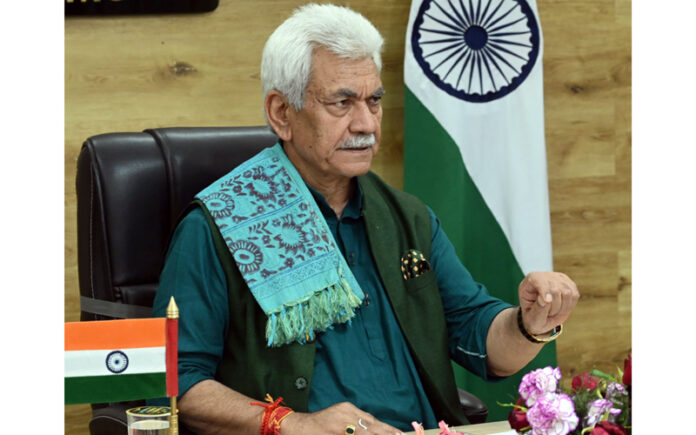
JAMMU, Apr 27: Lieutenant Governor Manoj Sinha today inaugurated the state-of-the-art Baba Jitto Indoor Stadium at Marh and Indoor Sports Stadium at Jourian, Akhnoor.
Dedicating the sports facilities to the youth, the Lieutenant Governor said that new indoor Sports Stadiums, equipped with modern shooting ranges and versatile indoor courts, are designed to inspire excellence and cultivate the champions of tomorrow.
Sinha highlighted that under the leadership of Prime Minister Narendra Modi, Jammu & Kashmir is emerging as a sports powerhouse where world-class facilities are no longer restricted to major cities but are reaching the grassroot.
He also interacted with the youth of Marh and Akhnoor through virtual medium and reiterated his commitment to ensure inclusivity in sports development and encourage greater participation among young aspirants.
Sinha also called upon all sections of society, particularly women and the youth to lead the movement for a ‘Nasha Mukt Jammu Kashmir’. The Lieutenant Governor urged citizens to report substance abuse and actively support the rehabilitation of victims. He said the police and civil administration are working tirelessly to dismantle the drug smuggling network.
The indoor sports stadiums, developed by District Administration Jammu in collaboration with HDFC Bank under its CSR initiative, are equipped with world-class amenities. These includes a modern rifle shooting range, top-quality badminton and table tennis courts, dedicated rooms for indoor games such as carrom and chess, and a well-furnished reading room for the youth and locals.
Dr Mandeep K. Bhandari, Principal Secretary to Lieutenant Governor; Ramesh Kumar, Divisional Commissioner, Jammu; Dr Rakesh Minhas, Deputy Commissioner Jammu; Vidhu Shekar, Additional Deputy Commissioner Jammu and representatives of HDFC Bank attended the inaugural ceremony at Lok Bhavan.
Surinder Bhagat, Member of Legislative Assembly Marh; Mohan Lal Bhagat, Member of Legislative Assembly Akhnoor, senior officials, prominent citizens and locals from Marh and Jourian also joined through virtual mode.
Sodhi meets Mandaviya, discusses J&K Sports Development
Excelsior Sports Correspondent
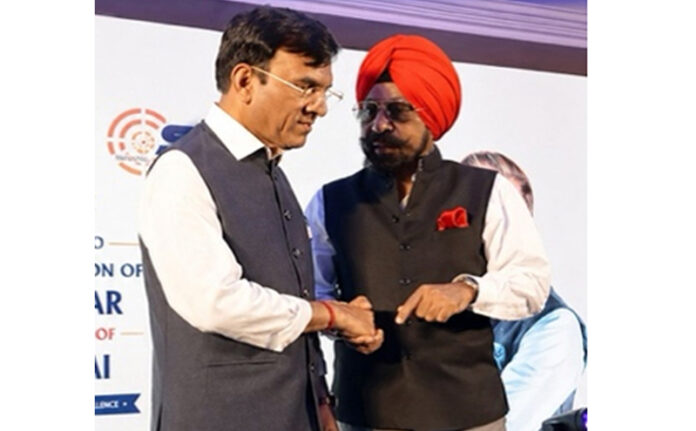
NEW DELHI, Apr 27: The 75th Anniversary of the National Rifle Association of India (NRAI) was celebrated at New Delhi, with the presence of Olympians, international shooters and officials.
Union Minister for Youth Affairs and Sports Dr Mansukh Mandaviya lauded NRAI on its 75-year journey and praised its role in enhancing India’s global standing in shooting sports. He also highlighted the upcoming Shooting League in India and launched the NRAI App along with the anniversary logo to improve accessibility and transparency in the sport.
On the occasion, the contributions of SS Sodhi, Governing Body Member of NRAI and President of the J&K Rifle Association, along with his team in Jammu and Kashmir, were appreciated for promoting shooting sports in the region. Dr Mandaviya also acknowledged the progress of sports development in Jammu and Kashmir and Ladakh.
During the interaction, SS Sodhi urged the development of international-level sports infrastructure in Jammu and Kashmir to nurture young talent. He also thanked the Minister for his recent visit to Srinagar. The Minister assured continued Government support for sports infrastructure, talent identification, and athlete development across Jammu and Kashmir and Ladakh.
ESIC Health Assurance
There is a quiet, invisible suffering that has long plagued Kashmir’s private-sector workforce – one that rarely makes headlines, yet strikes at the very heart of human dignity. It is the crisis of a working man or woman who falls ill and finds themselves trapped between two impossible choices: the overcrowded corridors of a Government hospital or the financially ruinous halls of a private one. The inauguration of Kashmir’s first Employees’ State Insurance Corporation (ESIC) hospital at Ompora, Budgam, is not merely an addition to the region’s healthcare infrastructure. It is a statement of intent – that the private sector worker, so long left to fend for themselves in moments of greatest vulnerability, finally has a place they can call their own.
To understand why this hospital matters, one must first appreciate the peculiar trap in which the private-sector employee – particularly those on contractual terms – has been caught for decades. Government hospitals, noble in purpose but strained by sheer numbers, function on waiting lists that stretch from days into weeks. A basic diagnostic test, an X-ray, a consultation – these require appointments that a daily wage earner simply cannot afford to wait for. Every working day missed is a day’s pay lost, and for a contract worker, there is no safety net of paid sick leave. The act of seeking healthcare itself becomes an economic punishment. Private hospitals, on the other hand, are financially out of reach for most. A single consultation with a specialist can cost more than a week’s wages for a worker earning on the margins. Surgery, critical care, and hospitalisation- these are not medical events for the low-income worker; they are financial catastrophes. Families drain savings, borrow from relatives, sell assets, or simply – and most tragically – delay treatment until it is too late.
This is not a healthcare problem alone. It is a structural injustice baked into the working lives of thousands across Jammu & Kashmir.
The ESIC hospital at Ompora is no token gesture – no modest dispensary dressed up in an announcement. It is a comprehensively equipped, ultra-modern medical facility built across five acres at a cost of Rs 165 crore. With three modular operation theatres, a dedicated emergency OT, four patient lifts, and a modern HVAC system, it is designed to function as a full-service hospital – not a waiting room for referrals elsewhere. It begins operations with 30 beds and is designed to scale to 160 beds in phases. Over 50,000 workers and their families are expected to benefit. Crucially, Ayushman Bharat services will also be available here, extending the net of cashless healthcare even further. This means a private sector worker enrolled under ESIC need not choose between their paycheque and their health. They can seek timely medical care – including surgery – without the dread of a bill that will haunt them for years.
The hospital must be understood within the broader framework of ESIC’s mission. It is not merely a health scheme – it is a social security architecture built specifically for those whom the formal economy has historically underserved. ESIC mandates that private employers provide coverage for their workforce, ensuring that workers are not entirely at the mercy of an employer’s goodwill. Consider what this coverage provides: maternity benefits, accident compensation, unemployment support, and in the tragic event of a worker’s untimely death while in service, a monthly pension of approximately Rs 18,000 for the surviving family. For the family of a daily wage earner, the pension is not a small consolation – it is the difference between survival and destitution. It is the hand extended at the moment when the world seems to have looked away.
Kashmir has long been spoken of in terms of political milestones and infrastructure achievements. But true progress is measured in the quality of ordinary lives – in whether a mason, a factory worker, or a shop floor employee can afford to fall ill without fear. With this hospital, the Government has acknowledged something important: that life is equally precious at the bottom of the wage ladder and that social security is not charity – it is a right. The private sector worker has waited long enough. This hospital is a long-overdue answer.