Wednesday, April 29, 2026
E-Paper
Home Blog Page 22

Ukraine says it shot down 33,000  Russian drones in March, monthly record

KYIV, Apr 28:  Ukraine used interceptor systems to shoot down more than 33,000 Russian drones of various types in March, a record monthly figure since Moscow launched its all-out invasion more than four years ago, Ukraine’s defence minister claimed.
Meanwhile, Ukraine’s domestically developed long-range attack drones struck a Russian oil refinery and terminal on the Black Sea for the third time in less than two weeks, prompting the evacuation of local people as a precautionary measure.
Ukraine has developed cutting-edge and battle-tested drone technology that has proved essential in holding back Russia’s bigger army and has drawn military interest from around the world.
Interceptor drones as part of a comprehensive air defence system are now being sought by Middle East and Gulf countries amid the Iran war, according to Ukrainian officials.
Ukraine is scaling up supplies of interceptor drones to thwart Russian aerial attacks, and its military has introduced a new command within the air force to boost the country’s capabilities, Defence Minister Mykhailo Fedorov said in a post on Telegram late Monday.
Ukraine’s offensive capabilities have also improved, with the Defence Ministry saying Tuesday that the country’s forces have more than doubled the range of their deep-strike capabilities since Russia’s February 2022 invasion.
At that time, Ukrainian forces were able to hit military targets about 630 kilometres (400 miles) away, it said. They are now striking targets as far as roughly 1,750 kilometres (1,100 miles) behind enemy lines, the ministry said in a statement.
That improvement has allowed Ukraine to hit Russian oil installations that provide crucial revenue for Moscow’s war effort. It has also targeted manufacturing plants that supply Russia’s armed forces.
Ukraine struck a Russian oil refinery at the Black Sea port of Tuapse for the third time this month in a coordinated operation involving multiple branches of the country’s defence and security services, Ukraine’s Unmanned Systems Forces said Tuesday
The two strikes earlier this month destroyed 24 oil storage tanks and damaged four others, it said.
Independent verification of the claims was not possible.
People who live near the Tuapse refinery were being evacuated Tuesday, Krasnodar Gov. Veniamin Kondratyev said. He didn’t provide any details about how many people were being evacuated or for how long.
The Russian Defence Ministry said Tuesday its air defences overnight intercepted 186 Ukrainian drones over Russian regions, the annexed Crimea and the Black and the Azov seas.
In the Belgorod region on the border with Ukraine, three people were killed, and three more were wounded in a drone attack, Gov. Vyacheslav Gladkov said.
Russian drone attacks on Ukraine, meanwhile, killed three civilians and wounded five others, Ukrainian authorities said.
Two people were killed in the city of Chuhuiv in the northeastern Kharkiv region, according to the head of the regional military administration, Oleh Syniehubov.
A 40-year-old man died, and five other men sustained injuries in Kryvyi Rih, the home town of Ukrainian President Volodymyr Zelenskyy.
Another Russian attack on Konotop, in Ukraine’s northern Sumy region, knocked out the city’s power and water supply. (AP)  SKS

South Korean court convicts of wife of ousted  President Yoon on further corruption charges

SEOUL, Apr 28: An appeals court has raised to four years the sentence for the wife of South Korea’s ousted President Yoon Suk Yeol for corruption, about two months after her husband was sentenced to life in prison for rebellion.
In January, ex-first lady Kim Keon Hee was sentenced to 20 months in prison in a district court for receiving gifts including a Graff diamond necklace and a Chanel bag from the Unification Church in return for promises of political favours. However, she was acquitted of involvement in a stock price manipulation scheme before she became first lady.
Both parties appealed, and on Tuesday, the Seoul High Court raised her jail term to four years by convicting her of receiving another Chanel bag from the church and the price rigging charge.
The presidential couple suffered a dramatic fall from grace after Yoon’s martial law imposition in December 2024 led to his impeachment and eventually removal from office. Yoon faces a slew of criminal trials related to his martial law debacle and other scandals. Investigators say Kim was not involved in Yoon’s martial law enforcement.
The Seoul High Court said that a first lady, being closest to a president, represents the country together with her husband and has a big influence on him. It said Kim failed to meet public expectations for her integrity and rather exploited her high-profile status to get the gifts from the Unification Church.
Both Kim and an independent counsel have one week to appeal to the Supreme Court, the country’s top court. Independent counsel Min Joong-ki’s team earlier requested a 15-year term; Kim’s defense team has argued Min’s investigation was politically driven.
Kim has been in jail since last August when the Seoul district court approved a warrant to arrest her, citing the chance she might destroy evidence. When Yoon was in office, Kim was embroiled in a series of scandals that hurt her husband’s approval rating and provided relentless political ammunition to his rivals.
On Dec. 3, 2024, Yoon, a conservative, abruptly declared martial law and sent troops and police officers to the National Assembly, saying he aimed to eliminate “anti-state forces” and “shameless North Korea sympathizers.” He has defended his action, calling it a desperate attempt to draw public support for his fight against the liberal opposition Democratic Party which obstructed his agenda.
In February, the Seoul Central District Court found Yoon guilty of rebellion for mobilizing military and police forces in an illegal attempt to seize the Assembly, arrest political opponents and establish unchecked power for an indefinite period. (AP)

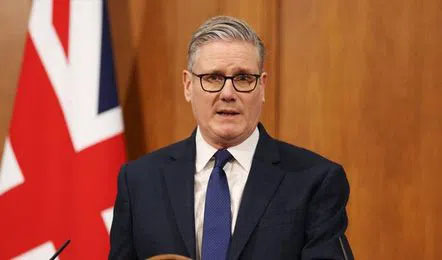
UK leader Starmer faces more pressure  over Mandelson ambassador appointment

LONDON, Apr 28:  British Prime Minister Keir Starmer faces more heat Tuesday over his appointment of Peter Mandelson as ambassador to Washington, with lawmakers set to vote on whether he should be investigated by a parliamentary standards watchdog over the ill-fated decision.
Starmer’s former chief of staff Morgan McSweeney also is due to be testify to a group of legislators probing how Mandelson, a scandal-tainted friend of Jeffrey Epstein, was given the key diplomatic job despite failing security checks.
The House of Commons Foreign Affairs Committee will quiz McSweeney on Tuesday morning, before the whole house debates a demand by the opposition Conservative Party for Parliament’s Privileges Committee to investigate Starmer’s explanations of how Mandelson came to be appointed.
Both are potentially dangerous moments for Starmer, who has spent weeks fending off calls to resign over the Mandelson saga. Starmer fired Mandelson in September after new details emerged about the ambassador’s friendship with Epstein, a convicted sex offender who died in prison in 2019.
Police opened an investigation into Mandelson in February over allegations he passed on sensitive government information to Epstein when he was a member of the British government in 2009.
McSweeney, a protege of Mandelson who served as Starmer’s top aide, resigned in February, saying he took responsibility for appointing him as ambassador. He is certain to be asked about allegations by Olly Robbins, the former top civil servant at the Foreign Office, that Starmer’s staff pressured officials to rush through the confirmation so Mandelson could be in the post at the start of US President Donald Trump ‘s second term.
Starmer has denied that anyone in his office put pressure on the civil service.
The prime minister fired Robbins earlier this month after the revelation that Mandelson was approved for the job against the recommendation of the government’s security vetting agency. Starmer has called it “staggering” that Foreign Office officials failed to tell him about the security concerns.
Critics say Starmer’s decision to appoint Mandelson in the first place is evidence of bad judgment by a prime minister who has made repeated missteps since he led the center-left Labour Party to a landslide election victory in July 2024.
Starmer already defused one potential crisis in February, when some Labour lawmakers urged him to quit over the Mandelson appointment. He could face a new challenge if, as expected, Labour takes a hammering in local and regional elections on May 7, which give voters a chance to pass a midterm verdict on the government.
It’s unclear whether enough Labour lawmakers will vote with the opposition on Tuesday to refer Starmer to the Privileges Committee, which has the power to suspend lawmakers, including the prime minister, from Parliament, for breaches of the rules.
Conservative leader Kemi Badenoch said Starmer had “misled the House of Commons repeatedly” when he said “full due process” was followed over Mandelson’s appointment.
The prime minister’s office called Tuesday’s vote “a desperate political stunt by the Conservative Party the week before the May elections.”
Censure by the committee also exerts considerable moral pressure to resign. Its investigation into lockdown-breaking gatherings in government offices during the COVID-19 pandemic helped end the political career of former Prime Minister Boris Johnson.
Johnson quit as a lawmaker in 2023 after the committee found that he had repeatedly misled Parliament over the “Partygate” scandal. (AP)

Bill to create 100-feet buffer zones around  places of worship introduced in US Congress

WASHINGTON, Apr 28:  A bipartisan bill has been introduced in the US Congress to create a 100-feet buffer zone around places of worship, including temples and gurdwaras, and treat any harassment or intimidation within such areas a federal crime.
Congressman Tom Suozzi, a Democrat from New York, and Congressman Max Miller, a Republican from Ohio, have introduced the Safeguarding Access to Congregations and Religious Establishments from Disruption (SACRED) Act.
The bill seeks to make it a federal crime to intentionally intimidate, obstruct, or harass people exercising their right to religious worship within 100 feet of a place of worship, whether by threatening them, blocking their path, or approaching them within eight feet for the purpose of harassment or intimidation.
The SACRED Act is endorsed by the Anti-Defamation League (ADL), the American Jewish Committee (AJC), the Union of Orthodox Jewish Congregations of America (OU), Hadassah, Islamic Society of North America (ISNA).
Hindu American Foundation (HAF), Jewish Federations of North America (JFNA), UJA-Federation of New York, Holocaust Memorial and Tolerance Centre of Nassau County (HMTC), Agudath Israel of America and United Sikhs.
“No one deserves to be harassed or intimidated, especially on their way to their place of worship,” said Congressman Suozzi.
“We’re living in increasingly volatile times, fuelled in part by social media fanning the flames of division and our foreign adversaries trying to divide us from within. I’ve heard real fear from my constituents over the last few years about the hate they see and feel, especially while going to pray or being visibly religious,” Suozzi said in a statement.
“We have a responsibility to address that fear in a thoughtful, targeted way that protects our constituents while balancing the First Amendment right to peacefully protest,” Suozzi said.
“Every American deserves to practice their faith free from fear, intimidation, or harassment,”  said Congressman Miller.
“The SACRED Act ensures that people can access their place of worship safely and without obstruction, while still preserving First Amendment protections for peaceful expression. This commonsense legislation draws a clear line: intimidation and threats have no place in our communities,” Miller said.
“The Hindu American community welcomes the introduction of the SACRED Act as a critical step in safeguarding our places of worship. In recent years, we have seen a disturbing rise in the targeting and desecration of Hindu mandirs across America, which has deeply shaken the sense of safety for our families and devotees,” said Samir Kalra, Managing Director of Policy and Programs at the Hindu American Foundation.
Kalra said that by establishing federal penalties for those who intentionally disrupt or harass individuals within 100 feet of a religious establishment, this legislation ensures that our mandirs remain the sacred spaces of peace and community they are meant to be.
“At a time when incidents of religiously motivated hostility continue to affect diverse groups, this measure reinforces a shared commitment to religious freedom, mutual respect, and public safety,” said Bhupinder Kaur of United Sikhs. (PTI)

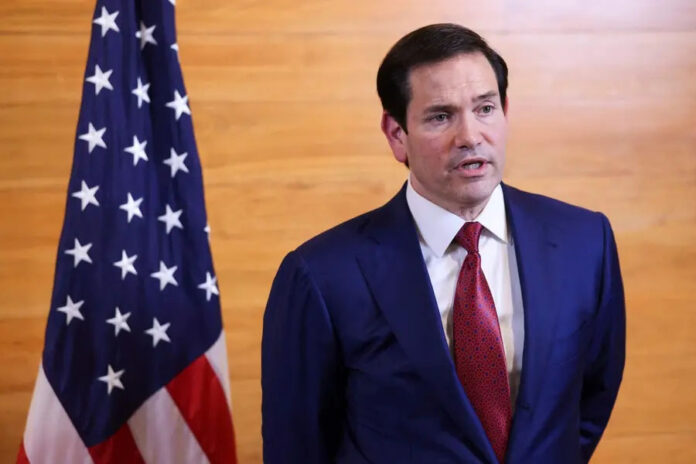
Rubio says preventing Iranian  nuclear weapon remains ‘core issue’

WASHINGTON, Apr 28:  US Secretary of State Marco Rubio was asked in a Fox News interview about Iran’s latest proposal, which would postpone discussions on its nuclear programme but end its chokehold on the Strait of Hormuz if the US lifts its blockade and ends the war.
“There’s no doubt in my mind that at some point in the future, if this radical clerical regime remains in charge in Iran, they will decide they want a nuclear weapon,” Rubio said.
“That fundamental issue still has to be confronted,” he said. “That still remains the core issue here.”
Asked if he thinks the Iranians are serious about a deal, Rubio said they are skilled negotiators looking to buy time.
“We can’t let them get away with it,” Rubio said. “We have to ensure that any deal that is made, any agreement that is made, is one that definitively prevents them from sprinting towards a nuclear weapon at any point.” (AP)

Maruti Suzuki Q4 net profit  falls 6.45 pc to Rs 3,659 cr

NEW DELHI, Apr 28:  The country’s largest carmaker Maruti Suzuki India (MSI) on Tuesday reported a 6.45 per cent decline in its consolidated net profit to Rs 3,659 crore for the fourth quarter ended March 31, 2026, due to mark-to-market impact despite record vehicle sales.
The auto major had posted a net profit of Rs 3,911.1 crore in the same quarter of the preceding fiscal, Maruti Suzuki India said in a regulatory filing.
The net profit declined primarily due to mark-to-market impact, the company said, adding that there was lower non-operating income, a notional loss due to a change in bond yields, which can be recovered at a later stage.
Its total revenue from operations inched up 28.2 per cent to Rs 52,462.5 crore in the fourth quarter against Rs 40,920.1 crore in the same period of 2024-25, it added.
Net sales crossed the Rs 50,000 crore milestone for the first time in the fourth quarter, the company said.
Total expenses in the quarter under review were higher at Rs 48,125.3 crore compared to Rs 37,585.5 crore in the year-ago period, the company said.
During the fourth quarter, the company said it recorded its highest-ever total quarterly sales of 6,76,209 units, up 11.8 per cent from the year-ago period.
Domestic sales stood at 5,38,994 units and exports at an all-time high of 1,37,215 units, Maruti Suzuki India said.
The board of directors has recommended a record dividend of Rs 140 per share for the year, compared to Rs 135 per share in 2024-25, it added.
For the fiscal year ended March 31, 2026, its consolidated net profit grew slightly by 1.24 per cent to Rs 14,679.5 crore against Rs 14,500.2 crore in the previous fiscal.
Total revenue from operations in FY26 was Rs 1,83,316 crore compared to Rs 1,52,913 crore in FY25, it added.
Total vehicle sales in FY26 were at a record 24,22,713 units against 22,34,266 units in FY25, the company said.
Domestic sales in FY26 stood at 19,74,939 units compared to 19,01,681 units in FY25, while exports were at 4,47,774 units against 3,32,585 units a year ago, it added.
This performance was due to a steep growth in the domestic market in the second half of the year, owing to the GST reduction, Maruti Suzuki said.
The company, however, said its sales were restricted by a limitation in the production capacity as evidenced by about 1.9 lakh pending customer orders at year’s end, including nearly 1.3 lakh orders for small cars in the 18 per cent GST bracket.
In addition, the dealer inventory was at a low of about 12 days’ stock, it added. (PTI)

The Executive Centre to open 3 co-working  centres in Mumbai, Pune with over 1k workstations

NEW DELHI, Apr 28:  The Executive Centre (TEC), which provides managed office spaces to corporates, has taken on lease 90,000 sq ft area in Mumbai and Pune to establish three co-working centres as part of its expansion plans.
In a statement on Tuesday, Hong Kong-based company said it has expanded across Mumbai and Pune, adding about 90,000 sq ft of premium workspace to its portfolio.
In Mumbai, TEC will launch two new centres covering 620 desks. The centre in Pune, covering 32,000 sq ft area, will have 390 workstations.
Paul Salnikoff, Managing Director and Chief Executive Officer, The Executive Centre said, “Mumbai and Pune continue to present strong growth opportunities for us, supported by steady demand fundamentals, with both cities collectively accounting for a significant share of India’s office leasing activity.”
He noted that flexible workspaces are seeing increased adoption, already contributing around 18 per cent of overall Grade A demand.
“We remain focused on delivering high-quality flexible workspaces that align with evolving occupier needs and support businesses as they scale and adapt,” said Salnikoff.
At present, TEC Group operates across 38 cities in 15 markets.
According to real estate consultant Colliers India, the leasing of office spaces by co-working operators rose 77 per cent in January-March to 3.9 million sq ft from 2.2 million sq ft in the year-ago period.
Executive Centre India has secured markets regulator Sebi’s approval to launch its Initial Public Offering (IPO) to raise up to Rs 2,600 crore. (PTI)

MSM Unify to invest USD 12 million  to scale India campus business

NEW DELHI, Apr 28:  MSM Unify, a global technology-driven education platform, on Tuesday announced a USD 12 million investment to significantly expand its India Campus Business.
As part of a structured growth strategy, the company has set targets of 50,000 student enrollments and partnerships with 1,000 colleges across India, having already initiated outreach to more than 1,500 institutions nationwide.
MSM Unify projects Rs 200 crore in revenue over the next two years, reflecting its sustained commitment to the Indian higher education ecosystem.
This investment marks a pivotal milestone in MSM Unify’s India expansion, reinforcing its position in one of the world’s fastest-growing education markets. The initiative will prioritise scalable, technology-enabled campus engagement models, deeper institutional collaborations, and connecting Indian students with domestic academic opportunities suited to their aspirations and budgets.
“India presents a significant and largely untapped opportunity within the education ecosystem. This investment reinforces our commitment to building a scalable, future-ready platform for Indian students. Our vision is to develop a robust institutional ecosystem that seamlessly connects students to domestic academic pathways, while enabling colleges and universities to expand their reach and impact.
“With clearly defined growth targets and a focused execution strategy, we are building MSM Unify into a leading force in the Indian education landscape,” Sanjay Laul, Founder, MSM Unify, said.
Rohit Kumar, Founding Member & President – India Campus Business, MSM Unify, said, “Our approach will be deeply execution-driven, with strong emphasis on structured institutional partnerships and high-impact campus engagement models. We will focus on building scalable processes, leveraging technology, and aligning closely with on-ground realities across Indian campuses. The priority is to deliver measurable outcomes — in student enrollments and institutional value — while simultaneously building a sustainable and efficient growth engine.”
MSM Unify has appointed Rohit Kumar as Founding Member & President – India Campus Business. Bringing over 24 years of leadership experience across telecom, IT, and EdTech, Kumar will oversee the India business vertical with end-to-end responsibility for institutional partnerships, campus engagement, and domestic growth.
Most recently, as Co-Founder and COO of CollegeDekho.com, Kumar played an instrumental role in scaling the company into a Rs 300 crore enterprise, achieving a 67 per cent CAGR over five years and establishing partnerships with more than 2,000 institutions.
His proven track record in large-scale growth and ecosystem development positions him well to lead MSM Unify’s next phase of expansion. (PTI)

Infosys, Accenture lead LinkedIn’s 2026 list of  top companies for career growth in India

NEW DELHI, Apr 28:  IT major Infosys has emerged as the top company for career growth in India, followed by Accenture and Amazon, according to LinkedIn’s ‘2026 Top Companies’ list released on Tuesday.
The 10th edition of the annual list, which features 25 large companies, is dominated by technology powerhouses, global consulting firms, and financial giants. JPMorgan Chase and SAP secured the fourth and fifth positions, respectively.
The 2026 list witnessed ten new entrants. Notable new additions include tech firms such as SAP, NVIDIA, HP, Microsoft, Sandisk, Marvell Technology, and Thomson Reuters.
Geographically, Bengaluru continues to lead as the prominent talent hub for these top companies.
Hyderabad follows closely, while Delhi, Mumbai, and Chennai remain key hiring centres for large corporations.
The report highlighted a shifting focus in hiring trends, noting that companies are increasingly looking for professionals who can blend technical fluency with human skills-such as communication and problem-solving-that artificial intelligence (AI) cannot replace.
“This year’s top companies list clearly signals that hirers are looking at proof of skills as much as they are looking at their presence. Companies across technology, finance, and software are looking for professionals who can pair irreplaceable human strengths with the ability to work alongside AI to maximise efficiency and value,” Nirajita Banerjee, LinkedIn Career Expert and India Senior Managing Editor, said. (PTI)

China supplies over 30pc of India’s industrial goods;  overdependence on single nation critical: GTRI

NEW DELHI, Apr 28: China accounts for around 16 per cent of India’s total imports, but its dominance is significantly higher in industrial goods, supplying as much as 30.8 per cent of the country’s requirements, think tank GTRI said on Tuesday.
The country’s imports increased to USD 774.98 billion in 2025-26. Out of this, USD 131.63 billion was from China.
Dependence on a single supplier for critical inputs leaves sectors like pharmaceuticals, electronics and clean energy exposed to disruptions, whether geopolitical or commercial, it said.
The GTRI analysis said that about 66 per cent of India’s imports from China, valued at USD 82.6 billion, are clustered in electronics, machinery, computers, and organic chemicals.
China accounts for 43 per cent of India’s electronics imports, 40 per cent of machinery and computer imports, and 44 per cent of organic chemicals.
“These are not discretionary purchases but core inputs that feed directly into India’s manufacturing ecosystem,” Global Trade Research Initiative (GTRI) Founder Ajay Srivastava said.
He said that the Indian industry relies heavily on Chinese inputs such as electronics parts, EV batteries, solar modules, APIs and specialty chemicals.
“As a result, even as India tries to grow exports, its supply chains remain tied to China. This creates clear risks,” he added.
The GTRI suggested that India needs to build domestic capacity in key sectors and diversify supply chains.
“A practical starting point would be to limit dependence on any single country to below 30 per cent of imports in critical sectors,” Srivastava said.
India’s trade with China is no longer just a deficit story; it is a production-dependence story.
Exports to China remain stuck below FY2021 levels at USD 19.5 billion, while imports have more than doubled to USD 131.6 billion, pushing the deficit to USD 112.1 billion in 2025-26. (PTI)