SC Suspends Look Out Circular Against Man Facing Prosecution In CBI, ED Cases
Dreams reflect interplay between personal traits, external events: Study
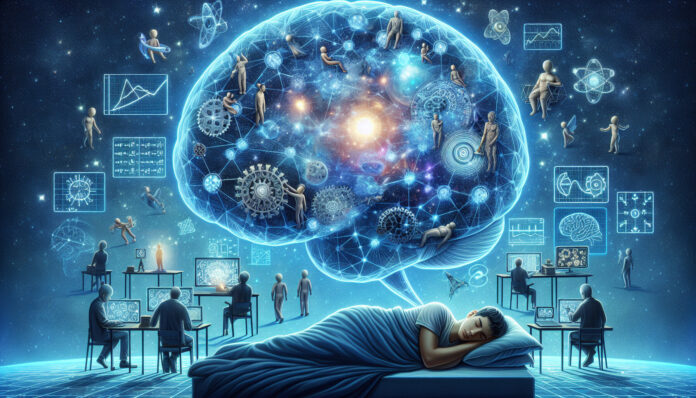
NEW DELHI, Apr 28: The contents of a dream may not be random or chaotic, but could instead reflect a complex interplay between personal traits, such as one’s tendency to mind-wander, interest in dreams, and sleep quality, and external events, including large-scale societal experiences like the COVID-19 pandemic, according to a new study.
Researchers at Italy’s IMT School for Advanced Studies Lucca analysed over 3,700 reports of dream and waking experiences collected from 287 participants aged 18 to 70.
Over two weeks, the participants recorded daily experiences, while the researchers gathered information about sleep patterns, cognitive abilities, personality traits, and psychological characteristics.
The researchers analysed the words the participants used to describe both their daily lives and their dreams.
Rather than simply replaying waking experiences, dreams appear to reinterpret them, they said.
Elements from daily routines, such as work environments, healthcare settings, or education, do not reappear as they are — they are instead reorganised into vivid, immersive scenarios, often blending different contexts and shifting perspectives into unfamiliar landscapes, the team said.
The results suggest that dreams do not just reflect reality, but actively reshape it, integrating fragments of past experiences with imagined or anticipated ones to create novel, sometimes surreal, scenarios, they added.
“Relative to waking reports, dreams shifted from self-referential, thoughtcentred narratives to perceptual experiences dominated by visuo-spatial details, multiple characters, and bizarre events,” the authors wrote in the study published in the journal Communications Psychology.
“Stable traits, including attitude toward dreaming, mind-wandering propensity, and subjective sleep quality, selectively influenced dream content,” they said. Lead author Valentina Elce, a researcher at the IMT School for Advanced Studies Lucca, said, “Our findings show that dreams are not just a reflection of past experiences, but a dynamic process shaped by who we are and what we live through.” “By combining large-scale data with computational methods, we were able to uncover patterns in dream content that were previously difficult to detect,” Elce said.
The transformations in dreams were also found to vary across individuals — for example, individuals more prone to mind-wandering tended to report more fragmented and rapidly changing dream scenarios.
However, those with a strong belief in the value, meaning, and significance of dreaming in general, and with regard to their own dreams in particular, experienced perceptually richer and more immersive dream content, the researchers said.
A second independent dataset collected during the first 2020 COVID-19 lockdown and involving 80 participants allowed the researchers to examine the impact of a major external stressor on dreams.
During lockdown, dreams showed an increased reference to limitations and heightened emotional intensity, reflecting the broader social context, the team found.
The effects were seen to gradually diminish over time, suggesting that dream content evolves in parallel with psychological adaptation to major life events, they said.
The findings show that stable individual traits and incidental experiences jointly shape dream semantics, the researchers said. (Agencies)
Neurons in brain’s memory region mature from dense, random links to structured, refined ones: Study
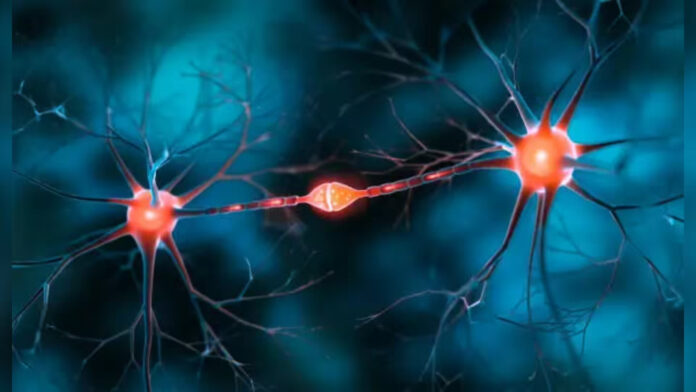
NEW DELHI, Apr 28: Neuron networks in the brain’s hippocampus, the memory centre, are dense with connections that appear random, but as animals mature, the networks become sparser but more structured and refined, a study has found.
“Intuitively, one might expect that a network grows and becomes denser over time. Here, we see the opposite. It follows what we call a pruning model: it starts out full, and then it becomes streamlined and optimised,” lead researcher Peter Jonas, from the Institute of Science and Technology Austria (ISTA), said.
Hippocampus is a key brain region involved in forming memories and guiding spatial navigation. It converts short-term memories into long-term ones, helping one retain and build upon experiences
The study, published in the journal Nature Communications, looked at how the central neural network in the hippocampus develops after birth. At the heart of the philosophical concept, whether new information is written on a “blank slate” or a “full slate”, lies a fundamental question of “Is everything pre-set from the very beginning or do experiences shape who we become?” the researchers said.
They added that biology too reflects the controversy — between genes that provide the basic blueprint and environmental factors that sculpt the final organism.
The central network in the hippocampus is made up of interconnected ‘CA3’ pyramidal neurons, which store and recall memories through a process known as plasticity — it refers to the ability of neurons to constantly change, by strengthening or weakening connections or by reshaping structure.
Brains of mice at three developmental stages were examined — early after birth (day 7-8), adolescence (day 18-25), and adulthood (day 45-50).
The researchers analysed the central neural network in the hippocampus by applying the ‘patch-clamp technique’ to measure tiny electrical signals in specific parts of neurons, such as at the signal-sending ends (presynaptic terminals) or branching sites that receive signals (dendrites). Advanced microscopy and laser-based methods were also used to observe processes inside the neurons and activate individual connections with high precision.
The authors showed that “the hippocampal CA3 network undergoes a developmental transformation from local, dense, and random connectivity to a distributed, sparse, and structured configuration.” “Thus, sparse and structured connectivity may emerge via experience-dependent mechanisms,” they said. (PTI)
IOS Sagar sends strong message of collective commitment from our partners, says Indian envoy to Singapore
Ladakh Appoints 5 DCs For New Districts, Reshuffles 4 Senior Officers
LEH, Apr 28: Following the creation of five new districts, the Union Territory administration in Ladakh has appointed five IAS and JKAS officers as Deputy Commissioners to lead these new administrative units.
Meanwhile, to support this restructuring, the administration has also reshuffled four other senior officers.
Read this order for additional information…..
Ladakh Transfers 5 Police Officers After Creation Of New Districts
LEH, Apr 28: The Union Territory Administration of Ladakh has ordered the transfer and posting of 5 police officers with immediate effect following the creation of 5 new districts in the region.
As per an order, Stanzin Losal has been posted as Superintendent of Police (SP), Nubra, while retaining additional charge of SSP CID.
Aijaz Malik has been posted as SP, Sham, and will continue to hold additional charge of Staff Officer to the DGP and SP SDRF/CD/HG.
Rigzin Sangdup has been posted as SP, Zanskar, Ishtiyaq A Kacho as SP, Drass, and Syed Zaheer Abbass Jafari as SP, Changthang, besides retaining additional charge of Senior Superintendent of Prison, PHQ Ladakh.
The officers have been deemed relieved from their present postings and directed to join their new assignments forthwith.
‘Will Continue To Fight For People’: J&K AAP MLA Detained Under PSA Released After 8 Months

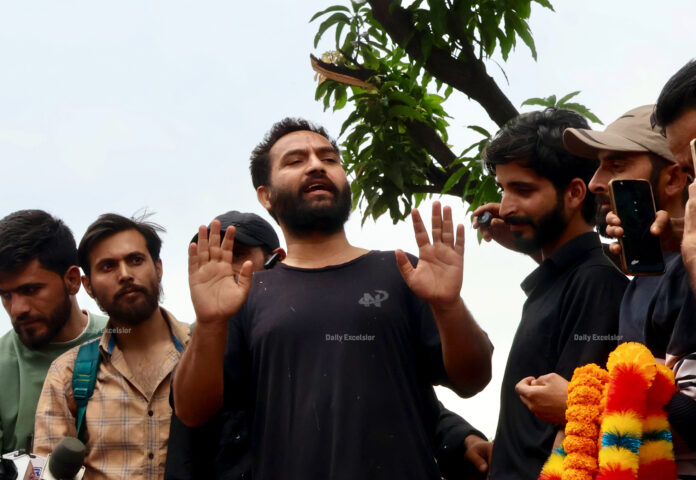
JAMMU, Apr 28: After spending eight months in prison, AAP MLA Mehraj Malik was released from Kathua jail on Tuesday following the quashing of his detention under the Public Safety Act (PSA) by the Jammu & Kashmir and Ladakh High Court.
Malik arrived at his residence in Jammu to a rousing reception with a floral welcome and beats of dholaks and bursting of crackers. Scores of party workers distributed sweets amid slogannering in favour of Malik, as he vowed to continue to fight for the people.
Setting aside the detention order issued by the Doda district magistrate, Justice Mohd Yousuf Wani on Monday directed authorities to release Malik and held that the order was legally unsustainable and based on “non-application of mind.”
Malik was detained last September under the PSA for allegedly disturbing public order and was subsequently lodged in Kathua jail.
On September 24, 2025, he filed a habeas corpus petition in the high court, challenging his detention and seeking Rs 5 crore as compensation. On February 23, the high court had reserved its order in the case, and then on Monday, it quashed the detention issued under the PSA.
“Malik was released by jail authorities this morning after completion of all formalities,” his lawyer and AAP spokesperson Appu Singh Slathia told reporters here.
As the gates of Kathua jail opened this morning to release the AAP leader, numerous people garlanded him with flowers and rallied behind him. “Our struggle will continue. It will not change. It is not a struggle based on politics but on the thoughts and drive of people’s welfare. I urge youth to join politics,” Malik told reporters in Kathua.
When Mehraj arrived at his residence in Jammu to a rousing reception, he was received by his mother and father, who hugged him amid a tearful welcome. “It is the victory of people,” Malik, who is the AAP’s Jammu and Kashmir unit president, told party workers at his residence.
“When I came out of jail, people understood who was right and who was wrong. Framing anyone won’t help”, he said in his address. “It is not that they had jailed me, they had jailed the voice of the people, their aspirations and their strength,” Malik said with tearful eyes, calling his release a victory of truth over falsehood.
Malik said that India is the best country in the world and urged people to stay away from divisive politics, saying the Constitution and democratic values are the nation’s greatest strengths.
“I truly say this from the core of my heart. You cannot find such a country anywhere else. You are fortunate to live here,” he said while drawing comparisons with neighbouring countries.
Urging everyone to uphold the Constitution, he warned that forgetting constitutional rights and values could push society backwards. “India is the largest democracy in the world, and I am proud of it. If such toxic tendencies exist within the country, we must make efforts to stop them,” Malik added.
Family members terming it a “victory of truth” and reaffirming their commitment to public welfare in Jammu and Kashmir. Malik’s father Shammas Din expressed satisfaction over the development, saying his son has always worked for the people.
“He is my son, and he is here for the people and their happiness,” he said, asserting that ultimately truth prevails.
Delhi AAP MLA Imran Hussain thanked the judiciary for quashing the case against Malik. “I sincerely thank the court for bringing out the truth and dismissing the baseless case that had been imposed unjustly,” he said. (Agencies)
Rescuers recover last victims from Indonesia train wreck that killed 14 and injured dozens
Iran elected vice-president at NPT review conference; UN chief warns of rising nuclear threat
NEW YORK, Apr 28: Iran has been elected vice-president of the ongoing Review Conference of the Treaty on the Non-Proliferation of Nuclear Weapons (NPT) in New York, a development Tehran described as recognition of its longstanding position in favour of a nuclear-weapon-free world.
Iran has been elected as a vice president of the ongoing NPT Review Conference in New York, the country’s mission to the UN said, even though the country is in violation of the Nuclear Non-Proliferation Treaty, according to the UN nuclear watchdog.
In a statement, Iran’s mission to the UN in Vienna said the election reflects the country’s “role and advocacy” for global nuclear disarmament. It noted that Iran was among the earliest signatories to the NPT and recalled its 1974 proposal calling for a nuclear-weapon-free zone in the Middle East. Reaffirming its official stance, Tehran reiterated its position: “nuclear energy for all, nuclear weapons for none.”
The statement also highlighted Iran’s claim of a religious prohibition on nuclear weapons, referring to a decree issued by its late Supreme Leader banning their use.
Last year, the 35-member board of the International Atomic Energy Agency (IAEA) adopted a resolution declaring that Iran is in breach of its non-proliferation obligations for the first time since 2005.
The IAEA said at the time Iran had consistently failed to provide information about undeclared nuclear material and activities at multiple locations.
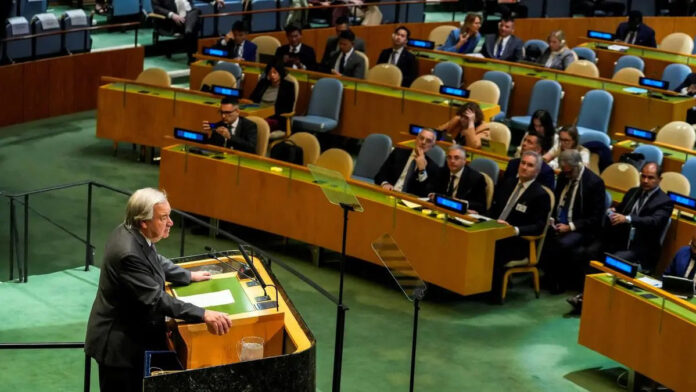
Meanwhile, addressing the conference, United Nations Secretary-General Ant nio Guterres issued a warning over the growing risks posed by nuclear weapons, cautioning that the world is slipping into a “dangerous state of amnesia” about their catastrophic consequences.
He recalled that the global push for nuclear disarmament dates back to the very first resolution of the UN General Assembly in 1946, but warned that decades of progress are now under strain. “Nuclear sabers are rattling once more. Mistrust is rising. Arms control is eroding,” he said.
Guterres pointed to a surge in global military spending, which reached $2.7 trillion last year, alongside a worrying increase in nuclear warheads-the first such rise in decades. He also flagged renewed discussions around nuclear testing and the possibility of more states seeking to acquire nuclear weapons.
“The only reason the world avoided catastrophe in the past was because leaders chose restraint,” he said, reiterating that “a nuclear war cannot be won and must never be fought.”
Calling the NPT the “bedrock” of global non-proliferation efforts, Guterres urged member states to honour their commitments without delay or conditions. He stressed the need to strengthen verification mechanisms under the International Atomic Energy Agency and reinforce norms against nuclear testing.
He further warned that emerging technologies such as artificial intelligence and quantum computing are adding new dimensions to nuclear risk, underscoring the need for the treaty to evolve in response to modern challenges.
The conference comes at a time of heightened geopolitical tensions and weakening arms control frameworks, placing renewed focus on the credibility and future of the global non-proliferation regime.
(UNI)