

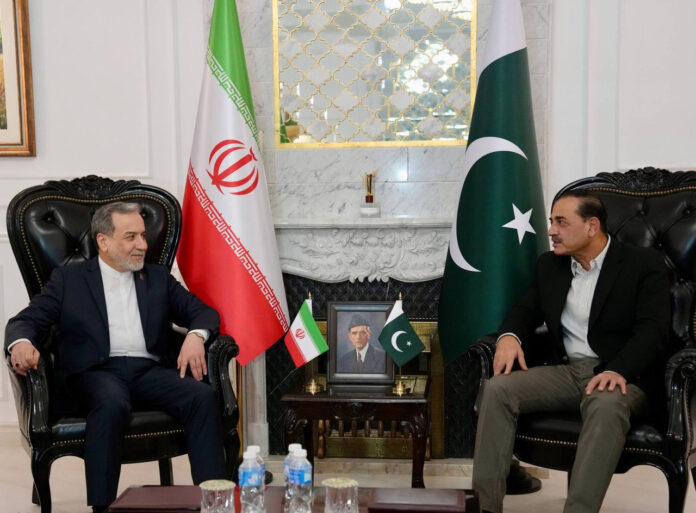
Islamabad, Apr 25: Iranian Foreign Minister Abbas Araghchi on Saturday met Pakistan Army chief Field Marshal Asim Munir here, as Islamabad continued its efforts to facilitate engagement between the US and Iran.
The meeting, according to a short video posted by the Iranian embassy on social media, was also attended by Iranian Deputy Foreign Minister Kazem Gharibabadi, foreign ministry spokesperson Esmaeil Baghaei, and ambassador Reza Amiri Moghadam.
The Pakistani side included Interior Minister Mohsin Naqvi and other officials.
Araghchi calls on Munir, the embassy said in the video caption.
It did not provide further details about the discussions.
Araghchi arrived here late Friday for engagements with the Pakistani leadership. He was received by senior officials, including Munir, foreign minister Ishaq Dar and interior minister Mohsin Naqvi.
However, there is no clarity on whether direct talks between Washington and Tehran will take place during the visit.
“No meeting is planned to take place between Iran and the US. Iran’s observations would be conveyed to Pakistan,” Baqaei said in a social media post on Saturday.
Araghchi, before leaving for Islamabad, said that he was embarking on a timely tour of Islamabad, Muscat, and Moscow, and the purpose of his visits is to “closely coordinate with our partners on bilateral matters and consult on regional developments”.
“Our neighbours are our priority,” he said.
Araghchi is also scheduled to meet Prime Minister Shehbaz Sharif.
As the Iranian team landed in Islamabad, White House Press Secretary Karoline Leavitt said that US Special Envoy on the Middle East Steve Witkoff and President Donald Trump’s adviser Jared Kushner would be leaving for Pakistan on Saturday “to engage in direct talks” with representatives of the Iranian delegation.
However, the US team has not yet arrived.
Meanwhile, Pakistan’s Deputy Prime Minister and Foreign Minister Dar, in a social media post, expressed hope for “meaningful engagements” between the two warring parties to promote regional peace and stability.
According to the Foreign Office, Dar spoke late Friday night with Egypt’s Foreign Minister Badr Abdelatty and discussed efforts being facilitated by Pakistan to launch a new round of negotiations between the US and Iran.
“The two leaders discussed the ongoing diplomatic efforts being facilitated by Pakistan, and underscored the importance of dialogue and diplomacy. They emphasised the importance of sustained engagement to advance peace and stability in the region and beyond,” the Foreign Office said in a social media post on Saturday.
The first round of US-Iran talks held on April 11 and 12 failed to produce a breakthrough, prompting a flurry of diplomatic efforts by host Pakistan to cool tensions and revive hopes for another round of dialogue.
On Tuesday, Trump extended the two-week ceasefire with Iran indefinitely to give Tehran more time to prepare a unified proposal to end the war, just hours before the truce was set to expire.
The Iran war began on February 28 with US-Israeli strikes. (PTI)
Iran’s Foreign Minister Araghchi Meets Pakistan Army Chief Munir
IMD Issues Heatwave Advisories As Temperatures Soar
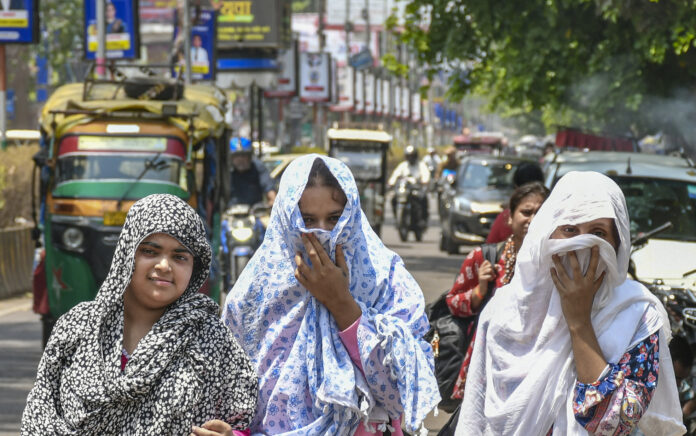
NEW DELHI, Apr 25: With temperatures rising across several regions, the India Meteorological Department (IMD) released detailed heatwave guidelines and advisories, officials said on Saturday.
These include avoiding prolonged exposure to direct sunlight, especially during peak afternoon hours, staying adequately hydrated, wearing light and breathable clothing, and avoiding strenuous outdoor activities during high-temperature periods.
The IMD advised special care for vulnerable groups such as children, the elderly, and individuals with pre-existing health conditions. “The department emphasised that early awareness and preventive action are critical in reducing heat-related illnesses such as heat exhaustion and heat stroke,” an official said.
In its latest assessment, the IMD said that maximum temperatures in many parts of northwest, central, and peninsular India currently range between 40 degrees Celsius and 44 degrees Celsius, with the highest temperature of 44.5 degrees Celsius recorded at Sri Ganganagar in Rajasthan.
In several regions, temperatures have been markedly above normal by five degrees Celsius or more, indicating a developing heat stress scenario across parts of the country.
“The IMD indicated that heatwave conditions are very likely to develop in isolated pockets of Jammu and Kashmir, Himachal Pradesh, Punjab, Haryana, Chandigarh and Delhi, Uttar Pradesh, Rajasthan, and central India over the coming days,” the official said.
Hot and humid conditions are expected over coastal and eastern regions, while warm night conditions are likely in parts of north India.
“The department further projected no significant change in maximum temperatures over northwest India till April 27, followed by a gradual fall, while central and other regions may witness a gradual rise and subsequent decline in temperatures during the forecast period,” the official said. (Agencies)
LG Saxena Ends ‘Qualification Bar’ For Lower-Tier Graduate Staff Eyeing Higher Posts
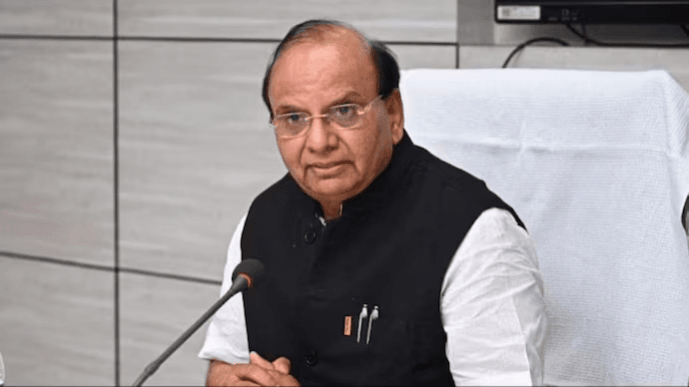
Leh, Apr 25: In a landmark decision that will go a long way in securing the future of youth in Ladakh, Lieutenant Governor, Vinai Kumar Saxena, has ordered the removal of a strict bar on government employees holding graduation and above degrees but appointed on lower-qualification posts (10th or 12th), from appearing for graduate-level posts in future. The Lieutenant Governor has ordered the removal of this restriction with immediate effect.
Earlier, qualified graduate candidates who had secured lower-qualification government jobs were bound to submit an undertaking/affidavit, declaring that he/she did not possess a higher qualification and were only 10th or 12th pass. Consequently, the candidates, on the basis of such a declaration (non-graduate status), were rendered ineligible for future recruitment to many graduate-level posts.
Terming this embargo as “unjustified” and “restrictive”, Saxena said imposing restrictions on maximum qualifications that effectively barred candidates from future employment was “contrary to the fundamental right to seek appropriate employment”.
This decision will benefit thousands of Ladakhi youth, who are already working on lower-qualification posts such as Orderly/ Multi-tasking staff (MTS), but are prohibited from appearing for graduate-level posts. This restrictive provision also discouraged several youth from appearing for such lower-qualification posts, fearing no career progression in future.
Also, representations were received from several affected candidates, who, on the basis of such affidavits, were deemed ineligible for appearing for graduate-level posts.
Having examined the matter at length, the LG noted that such discrimination would severely affect the career progression of candidates, particularly in the challenging territory of Ladakh, where job opportunities are limited, and a majority of youth aspire for government jobs.
“Accordingly, the provision contained in Para 3 of OM dated 25.03.2026, is hereby set aside on the grounds of being unjustified and restrictive. It is ordered that all candidates already in Government service, including those appointed based on such declarations/undertakings, shall be allowed to appear in future graduate-level examinations and apply for higher posts, subject to fulfilment of other prescribed eligibility conditions….This relaxation shall apply uniformly to all existing employees seeking to apply for future graduate-level government posts and shall not be denied based on earlier affidavits regarding non-possession of higher qualifications. This order shall come into effect immediately,” Lieutenant Governor Saxena ordered.
The Lieutenant Governor said this decision will have wider ramifications and would go a long way in protecting the interests of the youth in Ladakh. “It is the responsibility of the Administration to ensure equal opportunities for all sections of society, irrespective of their educational qualifications. UT Administration is committed to responsive and inclusive governance, and proactive steps will be taken to address genuine public concerns and ensure that no eligible candidate suffers because of such unjustified and restrictive regulations,” Saxena said.
Every Indian has stake in Bengal polls as infiltrators spilling over to other states: Himanta
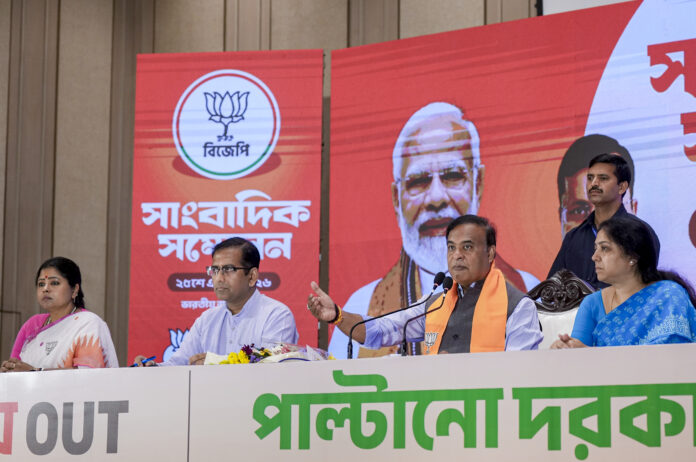
KOLKATA, Apr 25: Assam Chief Minister Himanta Biswa Sarma on Saturday said that every Indian has a stake in the ongoing West Bengal assembly elections as Bangladeshi infiltrators were not only causing demographic change in the state but also spilling over to adjoining states.
Sarma said the BJP will win over 100 of the 126 seats in Assam, and will bag 110 of the 152 seats that went to polls in the first phase of polls in West Bengal.
“It would not be surprising if the BJP won over 200 seats in West Bengal. The around 93 per cent voter turnout in phase 1 showed that there is no atmosphere of fear which had earlier prevented people from openly backing the BJP,” he said, while addressing a press conference in Kolkata.
Sarma said the West Bengal assembly election was not a routine state poll but a contest with civilisational implications for the entire nation, particularly its eastern and northeastern states.
“Every Indian has a stake in this election. The impact of infiltration is not limited to West Bengal and Assam. It is spilling over to Jharkhand, Bihar and other states,” he said, responding to the TMC’s narrative of branding BJP leaders as outsiders.
He said that if the BJP was not voted to power in West Bengal, the state risked becoming an “extension of Bangladesh” due to unchecked infiltration.
“A demography once changed cannot be reversed,” he said.
Sarma pointed to West Bengal’s geography as the central factor, noting that the state shared 54 per cent of India’s total border with Bangladesh, compared to Tripura’s 21 per cent, Meghalaya’s 11 per cent, Mizoram’s 8 per cent and Assam’s 6 per cent.
“You cannot see the West Bengal election in isolation from Assam, Tripura, Meghalaya and Mizoram. If even one border remains open, its impact will be felt across all other states,” he said, adding that infiltrators entering through Malda and Murshidabad districts were not staying confined to West Bengal but were using the state as a corridor to reach Assam and other parts of India.
On fencing of the international border, Sarma accused the Trinamool Congress government of deliberate obstruction.
“Assam had achieved 100 per cent fencing and work is in progress in Tripura, while West Bengal remained the only state where fencing was not happening,” he claimed.
Sarma alleged that the TMC’s failure to cooperate was driven by vote bank interests as well as economic stakes through syndicates involved in cow smuggling and drug trafficking.
“West Bengal has become a safe passage (for infiltrators). TMC has political and economic interests in not allowing fencing,” he alleged.
Sarma claimed that registered voters have increased by leaps and bounds in Uttar Dinajpur, Malda, Murshidabad, South and North 24 Parganas, Jalpaiguri, Cooch Behar, and Nadia.
“These are all border districts. Anyone who visits Murshidabad, Dinajpur or Malda today will feel these are extensions of Bangladesh,” he said.
Sarma said things are faster than the statistical projections on demographic change.
He claimed the Muslim population in Assam had already touched approximately 40 per cent. He warned both states would lose their Hindu majority status within the next two decades if infiltration went unchecked.
Sarma said if BJP comes to power in West Bengal, he would request Union Home Minister Amit Shah to form a task force comprising chief ministers of West Bengal, Assam, Tripura, Meghalaya and Mizoram to jointly tackle infiltration.
He called for extending the Legal Immigrant Expulsion Act of 1948, which allows a district collector to expel an infiltrator within 48 hours, to all five border states, noting the Supreme Court had already upheld the law for Assam.
Sarma claimed there are no Bengali Hindus in detention camps in Assam.
He said that Odisha has already overtaken West Bengal in key indicators of the economy, and Assam’s economy, which is growing at 12 per cent annually against West Bengal’s nine per cent, will surpass West Bengal’s per capita income within two years.
“We want West Bengal to compete with Gujarat and Maharashtra. The biggest agenda of BJP is rapid industrialisation alongside demographic protection,” he added. (Agencies)
PDD Recruitment Fraud Exposed: EOW Chargesheets Accused Over Fake Documents Scam
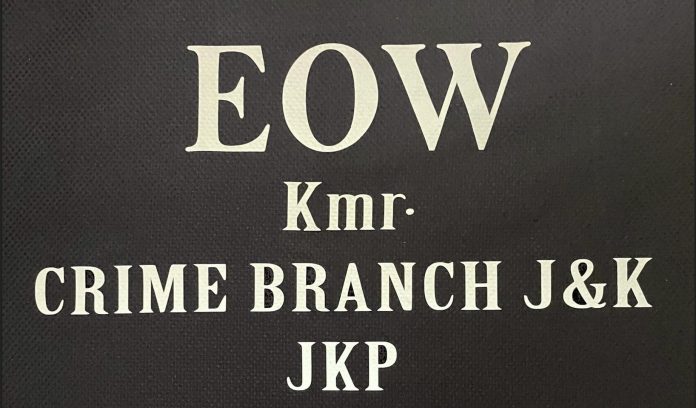
SRINAGAR, Apr 25: Uncovering a major fraud in the Power Development Department, the Economic Offences Wing (EOW) of Crime Branch Kashmir has filed a chargesheet before the Anti-Corruption Court Baramulla against multiple accused for allegedly securing government employment through forged appointment orders and fabricated service records.
Spokesperson in a statement, The Economic Offences Wing (EOW), Srinagar, of the Crime Branch J&K has filed a chargesheet in FIR No. 46/2023 before the Hon’ble Anti-Corruption Court, Baramulla, against Nasir Ahmad Mir of Kunan Babagund, Bandipora; Mushtaq Ahmad Malik of Aragam, Bandipora (a government employee in KPDCL); and a deceased former Executive Engineer of KPDCL/ED Sumbal, a resident of Jammu.
Statement reads, The case originated from a written complaint alleging fraudulent appointments in the Power Development Department (PDD). During the investigation, it was found that Nasir Ahmad Mir had secured employment using a fabricated appointment order purportedly issued under SRO-43 of 1994. The said order was found to be missing from official records, raising serious doubts about its authenticity.
The investigation further revealed that Mushtaq Ahmad Malik, then serving as a Senior Assistant, prepared a forged service book for Nasir Ahmad Mir, falsely reflecting his appointment under SRO-43. Forensic analysis confirmed that the entries in the service book were authored and signed by Mushtaq Ahmad Malik. Furthermore, no official dispatch or receipt records supported the issuance of the alleged appointment order, it reads.
Verification by the then Tehsildar, Bandipora, confirmed that Nasir Ahmad Mir was not eligible for appointment under SRO-43, as no qualifying family circumstances existed. Despite this, the deceased Executive Engineer facilitated salary disbursement in 2009 without proper verification, more than three years after the purported date of appointment, it reads.
Statement reads, The investigation established a criminal conspiracy among the accused, involving forgery, cheating, and misuse of official position. Accordingly, offences under Sections 420, 468, 471, and 120-B RPC have been established, along with relevant provisions of the Prevention of Corruption Act against the involved public servants.
The chargesheet has been submitted for judicial adjudication, it reads. (KNC)
CS Atal Dulloo Reviews Progress And Implementation Of HADP
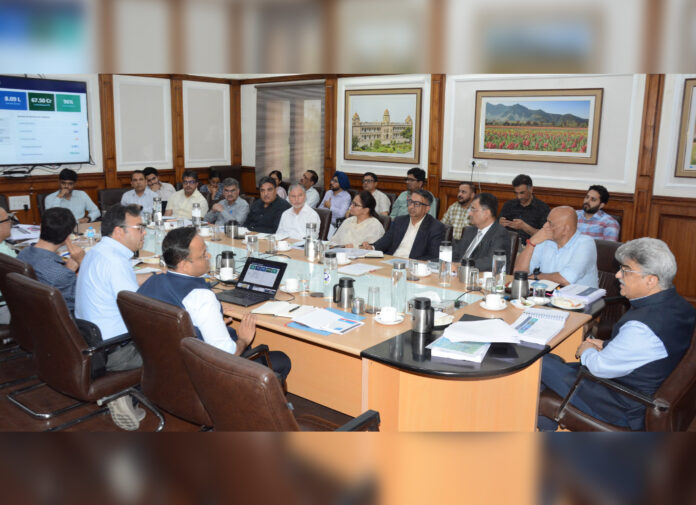
JAMMU, Apr 25: Chief Secretary, Atal Dulloo chaired a review meeting to assess the progress and performance of the Holistic Agriculture Development Programme (HADP) in Jammu and Kashmir in the presence of senior officers of the Agriculture Production Department and other concerned stakeholders.
The meeting besides ACS, Agriculture Production Department and MD, J&K Bank was attended by the MD, HADP; HoDs of the Department along with Representatives from Agricultural Universities here.
The meeting had an in depth review of the programme covering establishment status, key performance indicators, financial returns, employment generation and district-wise outcomes.
The Chief Secretary noted that the programme reflects strong financial viability, with a government subsidy of around ₹450 crore expected to be recovered within approximately 2.6 years through enhanced farm incomes. He directed the department to intensify outreach efforts and ensure greater inclusion of eligible farmers, particularly in districts with lower coverage.
The Chief Secretary laid strong emphasis on the importance of adopting a data-driven, district-specific approach to improve conversion from approvals to unit establishment, which currently stands at around 25 percent. The Chief Secretary emphasized the need to further improve training coverage and capacity building to enhance productivity and sustainability.
He reiterated that HADP has the potential to transform the agricultural landscape of J&K by enhancing farmer incomes, generating employment and promoting sustainable agriculture here. He called for ensuring sustained momentum, effective convergence and focused interventions to maximize its impact across the length and breadth of the UT.
Moreover he issued directions for faster conversion of approved applications into established units. He enjoined upon the concerned to lay focus on improvement in farmer registration and eKYC completion, strengthening of district-level monitoring and accountability, time-bound grievance redressal and scaling up of high-value agricultural activities to make this programme a success.
Regarding the functioning of Kisan Khidmat Ghars (KKGs), he directed for strengthening them further by improving licensing and expanding service delivery, including onboarding of banking and digital services at these centres.
On this occasion the ACS, Agriculture Production Department, Dr Ashish Chandra Verma gave the overall preview of the performance of this programme here. He apprised the meeting that HADP has so far facilitated the establishment of more than 1.11 lakh units across all 20 districts, benefiting 74,589 unique farming families.
He further observed that while the programme has achieved full geographic coverage, the overall coverage remains around 8.1 percent of the PM-Kisan beneficiary base, thereby leaving a substantial scope for the department to work for its expansion and optimal utilization to meet our targets on time.
The Managing Director, J&K Bank, Amitava Chatterjee also presented a detailed roadmap aimed at maximizing benefits for farmers under HADP. He highlighted key suggestions pertaining to digital interventions, including integration and onboarding of various stakeholder platforms onto the HADP portal to enhance efficiency and outreach.
He further assured full support and closer institutional synergy with the Agriculture Production Department to ensure seamless implementation of the programme and achievement of its envisaged objectives across all districts of J&K.
The MD HADP, Dr. Sagar Doifode Dattatray elucidated that the programme has generated an estimated annual revenue of ₹368 Cr and annual profit of ₹173 Cr at the beneficiary level, translating into an average income enhancement of about ₹25,000 per family per year, besides creating over 2.45 crore man-days of employment across 287 blocks and more than 5,100 villages and wards.
Revealing about the implementation quality, the MD gave out that about 92.9 percent of the units are functional and nearly 99 percent units are verified as existing, while 68.3 percent beneficiaries have undergone training under various components.
The meeting also reviewed district-wise performance, wherein districts such as Kulgam, Ganderbal and Shopian have recorded higher coverage, while districts like Poonch, Kishtwar and Reasi were identified as needing focused intervention.
It was further observed that large-scale projects such as Integrated Farming Systems, farm mechanization and fodder development are driving scale under HADP, while high-value sectors like dairy and agri-marketing offer higher returns and require scaling up through improved approval mechanisms.
The progress of the Kisan Khidmat Ghar (KKG) network was also reviewed. It was informed that 1,807 KKGs are functional across the Union Territory, serving over 8 lakh farmers with 96 percent fund utilization, and generating a combined monthly revenue of about ₹43.52 lakh.
It is pertinent to mention that HADP encompasses a comprehensive portfolio of 29 integrated projects spanning the sectors of horticulture, agriculture and livestock husbandry, each strategically designed to unlock the full potential of these domains and steer the sector towards enhanced sustainability, profitability and resilience.
With access to over 171 schemes and activities, the programme seeks to empower farmers, agri-entrepreneurs and rural youth through a structured framework of financial incentives, skill development, infrastructure creation and strengthened market linkages.
CM Omar Abdullah Approves ₹9.60 Cr Multi-Level Car Parking Project For Ganderbal
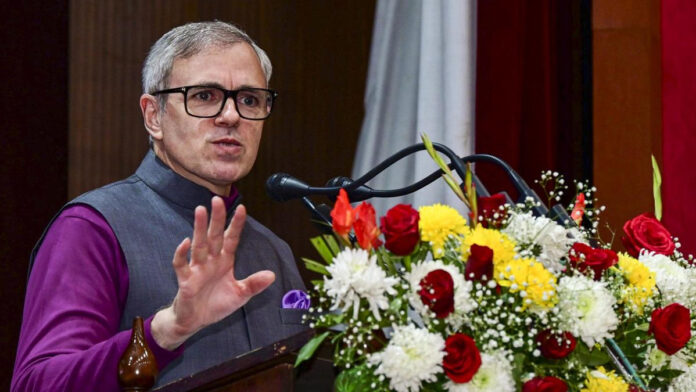
JAMMU, Apr 25: Chief Minister Omar Abdullah has accorded administrative approval for the construction of a Multi-Level Car Parking facility at Ganderbal at an estimated cost of ₹9.60 crore. The project is aimed at addressing increasing traffic congestion and enhancing urban infrastructure in the fast-growing town.
The approval has been granted under the Capex Budget 2026–27 in favour of the Director, Urban Local Bodies, Kashmir. The project will be executed in accordance with approved technical specifications and codal procedures to ensure quality, efficiency and timely completion.
The proposed facility is expected to significantly decongest the busy market areas of Ganderbal, providing organized parking space and improving overall traffic management. It will also contribute to better urban planning and public convenience in the area.
The Chief Minister emphasized adherence to strict quality standards, transparent tendering processes and timely execution of the project. He directed the concerned departments to ensure that all necessary approvals and regulatory clearances are obtained prior to the commencement of work.
Mann slams defected AAP leaders in cryptic analogy, says individually they matter little
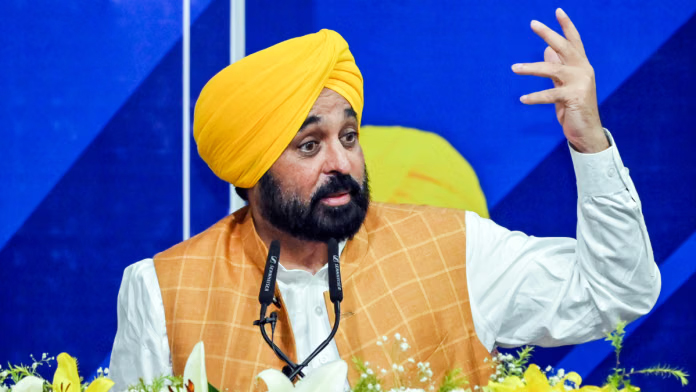
Chandigarh, Apr 25: Punjab Chief Minister Bhagwant Mann on Saturday attacked the seven Rajya Sabha members who quit the AAP through a culinary analogy to say that on their own, each defected leader amounts to little.
In a sarcastic post on X, Mann wrote in Punjabi, “Ginger, garlic, cumin, fenugreek powder, red chilli, black pepper, and coriander — these seven things together make a dish taste great, but on their own, cannot become a dish.”
His comment came a day after he called the seven defectors traitors.
In a surprise move on Friday, AAP Rajya Sabha members Raghav Chadha and Sandeep Pathak announced that they were quitting the party and joining the BJP along with five other MPs.
Ashok Mittal, Harbhajan Singh, Rajinder Gupta, Swati Maliwal, and Vikramjit Sahney were the other AAP MPs they named.
Chadha alleged that the Arvind Kejriwal-led party had strayed from its principles, values and core morals, which is why he was joining the BJP. He said the seven had merged with the BJP as a faction.
In the immediate wake of the exodus, Mann accused the BJP of trying to break the Aam Aadmi Party and the leaders of betraying the people of Punjab.
Mann claimed that ever since a strict law against ‘beadbi’ (sacrilege) was enacted, the BJP’s unease had become evident.
Mann also said none of the seven RS members was a mass leader.
“Even a ‘sarpanch’ has a vote bank. Do they have any vote bank?” he asked.
Mann said that the BJP, which has repeatedly faced rejection in Punjab, has responded with hostility towards both the state and the Aam Aadmi Party, attempting to weaken a corruption-free government through intimidation, inducements, and engineering defections.
He asserted that the BJP’s lack of political ground in the state has pushed it towards such tactics, and that the party was unsettled by visible improvements in schools, hospitals, roads, and the employment scene. (PTI)
Kejriwal used to lavish living, spent private money on ‘Sheesh Mahal 2’: Parvesh Verma
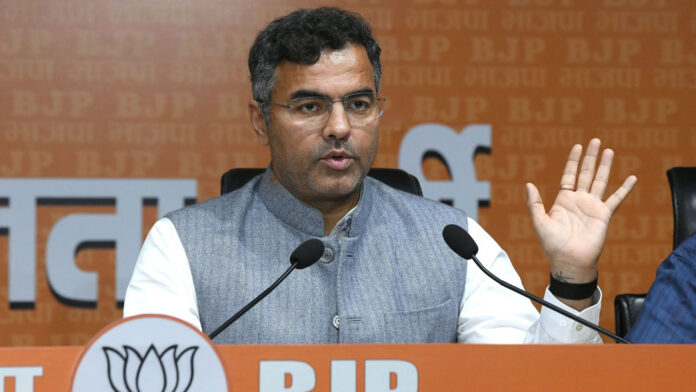
New Delhi, Apr 25: The Bharatiya Janata Party on Saturday cornered Aam Aadmi Party national convener Arvind Kejriwal over the new bungalow allotted to him at Lodhi Estate here, dubbing it as “Sheesh Mahal 2” and alleging expenditure of private money to build amenities in it.
No immediate reaction was available from the AAP over the allegation.
Addressing a press conference at the BJP headquarters here, Delhi Public Works Department Minister Parvesh Sahib Singh Verma said Kejriwal has become habituated to living lavishly.
“After he was forced out of Sheesh Mahal by Dhurandhar voters of Delhi, he shifted to Punjab, where he grabbed a bungalow, and now he has prepared Sheesh Mahal 2 at Lodhi Estate,” Verma said.
Showing pictures of the Type VII bungalow allotted by the Centre to Kejriwal as chief of AAP, which is a national party, the minister said the Central Public Works Department does not spend so much money on bungalows and alleged that “private money” was spent to create superior quality amenities there.
He sought to know from the AAP and Kejriwal how much money was spent on the bungalow and what the source of it was.
The BJP had dubbed the 6, Flagstaff Road bungalow in Civil Lines, where Kejriwal lived as Delhi Chief Minister till September 2024, as “Sheesh Mahal” over alleged financial irregularities involved in its reconstruction and acquisition of lavish interiors and household goods.
Verma said that Kejriwal’s new residence at 95, Lodhi Estate, where he has shifted now, has five bedrooms and four drawing rooms. It has amenities superior to any other bungalow in Lutyens’ Delhi, including those of the leaders of other parties, such as the Congress and the DMK.
Verma, who defeated Kejriwal on the New Delhi seat in the assembly elections last year, alleged that AAP’s corruption was the reason behind seven of its Rajya Sabha MPs quitting the party on Friday. (PTI)
SC Asks States, UTs To Prepare Action Plan To Implement Guidelines For Intensive Care Services

New Delhi, Apr 25: The Supreme Court has asked all the states and Union Territories to prepare a “realistic and practical” action plan to implement the guidelines necessary as a minimum standard for intensive care units.
The apex court was informed that “Guidelines for Organisation and Delivery of Intensive Care Services”, on which there is consensus and which is practical, implementable and necessary as a minimum standard for an ICU, has been prepared.
A bench of Justices Ahsanuddin Amanullah and R Mahadevan said copies of the guidelines should be shared with all the states and UTs.
“Moving further, as an immediate measure, let all the additional chief secretaries/secretaries … heading the department of health and medical education in the states and the UTs, convene a meeting of all experts involved in this exercise to prepare an action plan for implementation of the guidelines. Such a plan shall be realistic and practical,” the bench said in its April 20 order.
The top court was hearing a matter relating to healthcare services, including guidelines for the treatment of patients in the ICU or critical care unit.
The bench said five basic issues shall be identified and prioritised in the first instance.
“The challenge … lies in determining what ought to be treated as absolutely essential and mandatory; accordingly, an initial list of five basic requirements, in terms of priority, relating to both manpower and equipment/logistics, shall be prepared,” it said.
It said a methodology should also be formulated for implementation on the ground, and more importantly, a mechanism to ensure compliance and monitoring of the implementation.
“We expect the exercise to commence immediately and the first meeting to be held within one week from today. We direct that the meeting shall be attended personally by the concerned additional chief secretary/secretary … heading the department of health and medical education in the states and the UTs,” the bench said.
It said the report prepared pursuant to the deliberations should be forwarded by the respective states and UTs to the Secretary of the Department of Health, Government of India, who in turn would circulate it to all the states and UTs.
The bench said thereafter, a meeting of all concerned should be convened where a final common agreed draft shall be prepared and circulated.
“A final report/blueprint/recommendation shall be prepared, which shall be placed before this court on the next date,” it said, adding that the entire exercise should be completed within three weeks.
“Let the Ministry of Health, Government of India, formally issue the guidelines placed before us today, to the states and UTs concerned by way of an advisory. A copy of it shall also be uploaded on the website of the Ministry of Health, Government of India,” the bench said, while posting the matter for further hearing on May 18.
During the hearing, it was suggested that for future requirements, the nursing staff should be trained to handle such situations since they remain with the patient round the clock, unlike doctors who may visit periodically.
“We fully endorse the suggestion, which is not only pragmatic but also imperative. Accordingly, the Indian Nursing Council and the Para Medical Council of India are impleaded as party respondents,” the bench said.
It said on the next date, the newly added respondents shall come up with a plan indicating how they propose to augment the courses or curriculum and training imparted by them so that persons emerging from institutions recognised by them are capable of managing and handling situations in the ICUs. (AGENCIES)