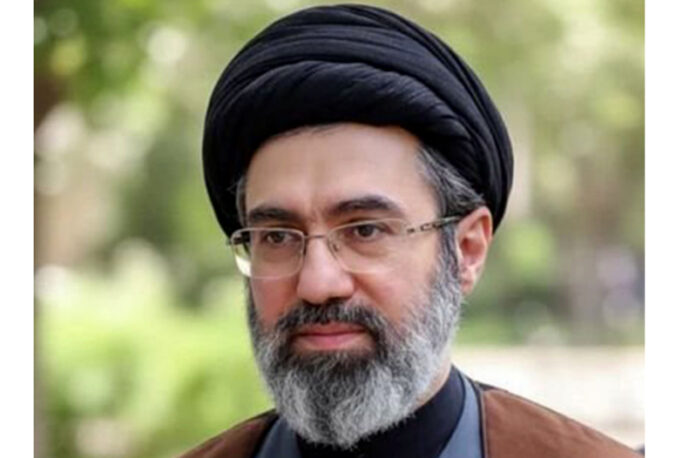
TEHRAN, April 24: The Leader of the Islamic Revolution, Ayatollah Seyyed Mojtaba Khamenei, has praised the deep impact of what he described as the Iranian nation’s exceptional unity, saying it has created a “fracture” within the ranks of the enemy. He also called for practical expressions of gratitude to further strengthen national cohesion.
“Due to the remarkable unity created among compatriots, a fracture has occurred in the enemy,” the Leader said in a message posted on X on Thursday, stressing that unprecedented solidarity has disrupted efforts aimed at undermining the Islamic Republic.
Mojtaba Khamenei underlined the importance of translating gratitude for this “divine blessing” into action, stating that such efforts would make national unity “stronger and more resilient,” while leaving adversaries “weakened and humiliated.”
He also warned of ongoing psychological warfare by hostile forces, saying, “The enemy’s media operations, by targeting the minds and psyches of the people, intend to undermine national unity and security; we must not allow negligence to enable this sinister objective.”
The message comes at a sensitive time, as Iran continues to face sanctions, threats, and coordinated propaganda campaigns, which it attributes to the United States, Israel, and their Western allies.
According to Iranian leadership, this unity, rooted in faith and revolutionary ideals, has repeatedly acted as a stabilizing force, turning external pressure into an opportunity for national resilience and advancement.
Earlier, the heads of Iran’s executive, legislative, and judicial branches issued a joint response to remarks by US President Donald Trump, rejecting his claims of “divisions within Iran” as “provocative and unfounded”.
President Masoud Pezeshkian, Parliament Speaker Mohammad Baqer Qalibaf, and Judiciary Chief Gholam-Hossein Mohseni Ejei emphasised national unity and a shared stance of defiance in their coordinated message.
Iranian officials also referenced past hostilities, stating that the country had responded to aggression with retaliatory missile and drone operations against US and Israeli targets, causing significant damage over an extended period.
(UNI)
Mojtaba Khamenei praises national unity, says it has ‘fractured the enemy’
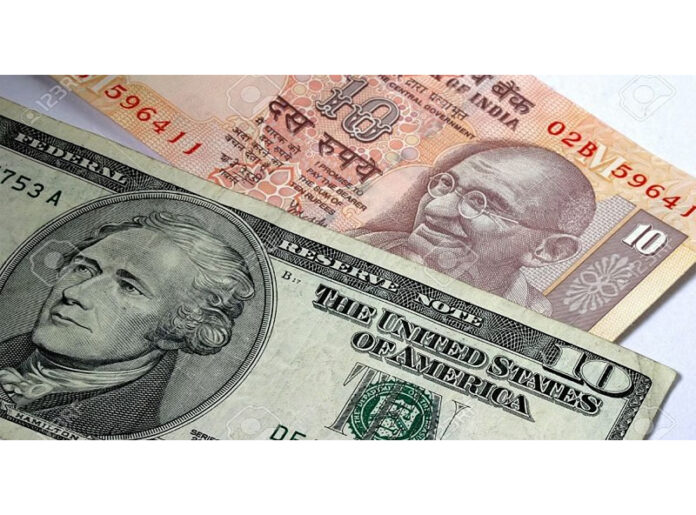
Rupee ends 15 paise weaker at 94.16 against US dollar
Deepti’s form is a concern

Tracks of Transformation
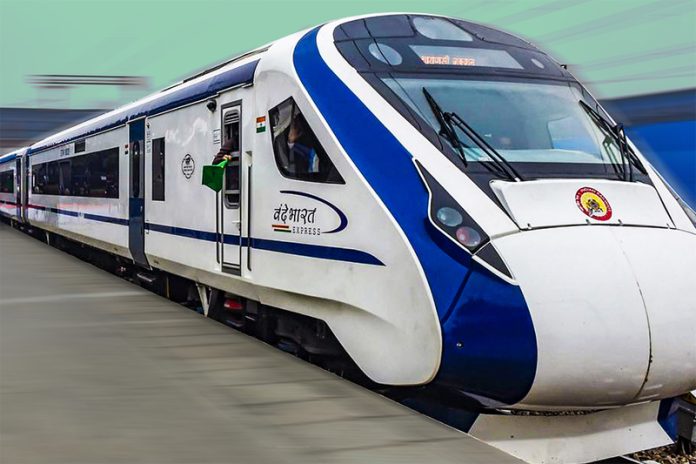
There are moments in a nation’s history when steel and stone do more than connect two points on a map – they connect people to opportunity, to dignity, and to one another. The inauguration of direct Vande Bharat Express services between Jammu and Srinagar on 30th April is precisely such a moment. What generations once dismissed as an impossible dream, given the forbidding terrain of the mountain ranges, is now a beautiful, breathing reality – a testament to the power of political resolve, engineering ambition, and the quiet belief that no part of India needs to remain isolated.
For the daily commuter, the transformation has already been profound. The Jammu-Srinagar National Highway, for all its scenic splendour, has long been a source of anxiety rather than comfort. Unpredictable weather, frequent landslides, militant threats, and a string of toll plazas that steadily drain the traveller’s pockets have made road travel between the two capital cities a test of patience and endurance. The train changes all of that. Fast, comfortable, and economical, it offers something the highway never could: reliability. In a region where all-weather connectivity is not a luxury but a lifeline, this single rail corridor has fundamentally altered the dynamics of inter-divisional travel.
Consider who stands to gain most. The student travelling from Srinagar to Jammu for examinations, the patient seeking specialist medical care unavailable in the Valley, the Government employee shuttling between the two secretariats as the Civil Secretariat completes its seasonal shift – for each of them, the train is not merely a convenience but a quiet revolution. The Army, too, benefits enormously. Troop movement and logistics along one of India’s most sensitive corridors become significantly more dependable when rail is an option. Rail connectivity here carries a strategic dimension that policymakers would do well to nurture.
The decision to extend the existing Katra-Srinagar Vande Bharat service all the way to Jammu Tawi, accompanied by an upgraded 20-car rake, is a masterstroke in both operational planning and public symbolism. The ongoing renovation of Jammu Railway Station – long overdue and now nearing a pivotal stage – ensures that the region’s gateway city is finally equipped to serve as the true nucleus of railway operations in Jammu and Kashmir. With the revamped station set to host multiple platforms and world-class passenger facilities, the extension of Vande Bharat to Jammu signals that both capital cities are being treated as equals in the nation’s infrastructure story. For tourists, the journey itself is now a destination. The Delhi-Jammu-Katra-Srinagar rail route, winding through mountains, crossing river valleys, and piercing the earth through engineering marvels, is genuinely comparable to celebrated European scenic rail tours. This is soft power of the highest order-an experience that will draw visitors from across India and beyond, filling hotels, boosting local artisans, and breathing fresh life into Kashmir’s fabled tourism economy. In this sense, the rail corridor is also a cultural corridor.
Perhaps no opportunity is more significant – or more emotionally resonant – than the potential role of the train during the Shri Amarnath Ji Yatra, which commences on 3rd July. Pilgrims travelling from across the country can now arrive in Jammu by Vande Bharat train and, if permissions are extended, continue onward to Srinagar. Allowing pilgrims to board directly for Srinagar would be a transformative gesture, easing pressure on the highway, reducing travel time, and offering lakhs of devotees a safer, more dignified path to one of Hinduism’s most sacred shrines. The authorities would be wise to prioritise this clearance without delay.
Commercially, the arithmetic is equally compelling. With numerous toll plazas dotting the Jammu-Srinagar highway, the train is not merely faster – it is genuinely more affordable. For freight, particularly during Kashmir’s horticultural season, dedicated goods trains could dramatically reduce post-harvest losses and connect apple and dry fruit growers to wider markets.
The Indian Railways and the Government deserve full credit for seeing this project through.
Crew-13 Mission with Russian Cosmonaut to head for ISS no later than in September: NASA
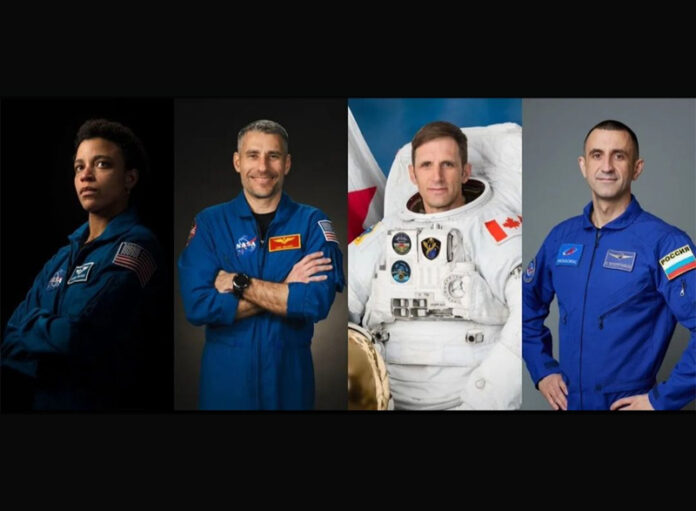
WASHINGTON, April 24: NASA’s Crew-13 mission with Russian cosmonaut Sergey Teteryatnikov on board will be launched to the International Space Station (ISS) no later than in November, NASA said in a statement.
“As part of NASA’s SpaceX Crew-13 mission, four crew members from three space agencies will launch no earlier than mid-September to the International Space Station for a long-duration science expedition,” the statement reads.
NASA astronauts Jessica Watkins and Luke Delaney will perform the roles of spacecraft commander and pilot, respectively, while Canadian astronaut Joshua Kutryk and Russian cosmonaut Teteryatnikov will serve as mission specialists.
In 2022, Roscosmos and NASA signed an agreement on cross-country flights (or integrated crew missions).
The deal ensures that, amid emergencies or schedule changes, at least one Russian cosmonaut and one US astronaut always remain aboard to manage both the Russian and US segments of the station.
(UNI)
Jio Platforms profit rises 13 pc to Rs 7,935 cr in Q4
Russia delivers 1st batch of Humanitarian Aid to Afghanistan: Foreign Ministry
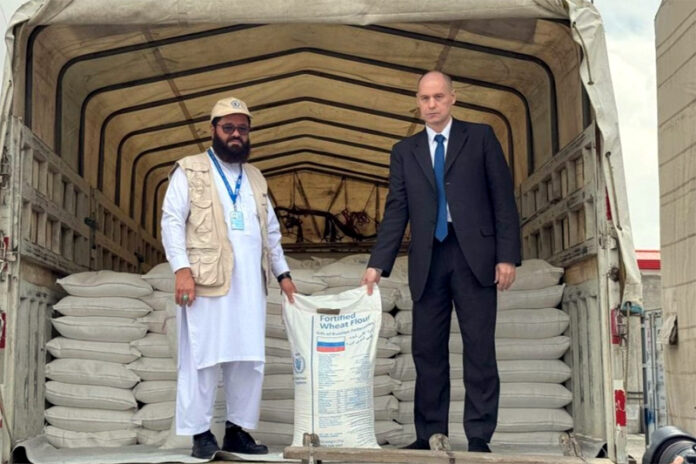
MOSCOW, April 24: Russia delivered the first batch of humanitarian aid to Afghanistan as part of its main contribution to the UN World Food Programme, the Russian Foreign Ministry said.
“On April 23, a ceremony was held in Mazar-i-Sharif on the deliverance of the first batch of Russian humanitarian aid to Afghanistan – fortified wheat flour,” the ministry said on Thursday.
The ministry noted that Russia provided the aid as part of its main contribution to the WFP, and the total volume of humanitarian aid will amount to about 3,977 tonnes.
(UNI)
PM could enjoy boat ride on Hooghly as its water is clean unlike Yamuna: Mamata
Air India hesitant to shift part of operations to new greenfield facility at Navi Mumbai
RR look to make home advantage count against SRH