

Dr Jitendra Singh, as the Minister of State for Science and Space, has overseen the opening up of the space sector. In these five years, the sector has grown in size and revenue.
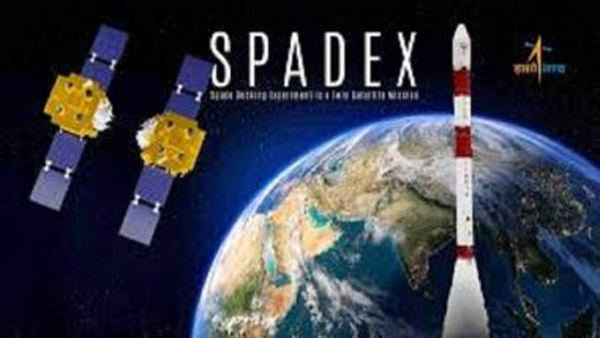
Recently, we did the Space Docking Experiment (SpaDeX), a historic achievement for ISRO. What kind of scientific mission will we see in the next few years?
SpaDeX is a reflection of the advancements in the last few years and the kind of missions in the pipeline. We are planning Ganganyaan and Chandrayaan-4 and an international space station called the Bharatiya Antariksh Station in the coming years. We are now also generating revenue from launching foreign spaceships, even though that facility was available earlier. Till now, we have launched about 433 foreign satellites. Out of them, as much as 396 have happened only in the last 10 years. That’s generated a huge amount of revenue – almost to the tune of $157 million and € 260 million (2014-23). Our first-generation startups have turned into lucrative entrepreneurs. India was never taken seriously as far as our space capabilities were concerned. The same ISRO has landed on the southern pole of the moon before others. So, the entire world is now looking up to us.
The Union Cabinet approved the Third Launch Pad project. There is a vision 2040 for ISRO – setting up our own space station, sending a crew to the moon. What were the discussions to approve these missions?
We have navigation satellites, and communication satellites are being used by the media as well. We have exploratory satellites and the earth observatory that will take care of the disaster preparedness, etc. In 1969, ISRO was established and Sriharikota became the primary spaceport. In 1979, we managed our first launch. Many years went by before we had the first launching pad. Then by 2005, we had the second launching pad. In addition to Sriharikota, we will now have the second spaceport in Thoothukudi district, Tamil Nadu.
Astronauts Shubhanshu Shukla and Prashant Nair underwent training to travel to the International Space Station (ISS) for the Axiom-4 mission (Shukla as pilot and Nair as backup). What will be the benefit for India when we are receiving training from NASA, the European Space Agency (ESA) and Japan Aerospace Exploration Agency (JAXA) for this mission and how will that inform our Gaganyaan mission?
When Prime Minister Modi visited Washington, DC, during his talks with (former) president Joe Biden, the suggestion came from their side that they wanted to have one Indian astronaut, going with them. This is also an indication of Indian talent being universally acknowledged. The same set of four astronauts are also now waiting for the Gaganyaan mission. One among them will be travelling in the first-ever indigenous human mission, scheduled for 2026.
Axiom-4 mission is supposed to carry out some Indian experiments. Can you tell us more
Some experiments are joint, some of them will be exclusive. But India has already made a headway, in the sense that SpaDeX is now experimenting on plant research. We are growing seedlings in space, so that if people have to live for long there, they can have organic food there. The Department of Biotechnology and ISRO have signed a MoU for cooperation in space biotechnology research. In the days to come, space biology is going to be a new sector. We require space physicians and space doctors. How does human physiology behave there and how do you ensure fitness and survival, and what kind of food will a person need? Now it’s no longer what we will be learning from the others. The clock has turned 360 degrees. Now the traffic is both ways.
Could you tell us about Samudrayaan, the deep sea mission, and plans for that?
These are the areas which have remained either under-explored or unexplored. Space is one, deep sea is another. We have a 7,500-km-long coastline but we never looked into it. It is a huge treasure of wealth, minerals, metals, fishery and biodiversity. We are the only country which has an ocean named after itself – the Indian Ocean. We have an ocean which is very rich. Once that (deep sea exploration) happens, we’ll have a huge quantum value addition, and it’s going to happen very soon. The second is space and the third is the Himalayas. We have five-six states lying in the lap of the Himalayas. Last year, the Council of Scientific & Industrial Research’s Republic Day Tableau depicted the purple revolution – lavender. It started in J&K and now is being replicated all over the Northeast, Uttarakhand and Himachal Pradesh. It is not only a huge startup opportunity but also a source of revenue. If all these sectors are put to optimum use, I think we will not have to wait till 2047 for Viksit Bharat.
On space research | Space biology holds potential. We require space physicians and space doctors. Now it’s no longer what we will be learning from other countries. The clock has turned 360 degrees; the traffic is now both ways
Anusandhan National Research Foundation (ANRF) has been working for some time. What are the changes that you have seen happen since ANRF took over?
I’m glad that we are among the few who have a national research foundation. Many other countries don’t have one. The US does, so does Germany. We have studied their models and introduced an ethnic Indian model. For instance, in our governing body, our advisory doesn’t have representatives only from the science team, we also have representatives from the social streams, from humanities and social sciences. Plus 60-70 per cent of resources will be non-government, as is the case with NASA. But it will take some time to become fully functional.
In biotech, there have been several missions, including big ones like the Genome India Project. What are the next big things planned in this sector?
One of the major things that happened in the last few months is that we have an exclusive biotechnology policy dedicated to bioeconomy called BioE3 – Biotechnology for Economy, Environment and Employment. It is related to our deep sea and Himalayan resources. The next industrial revolution will be bioeconomy driven. The paradigm of the economy will shift from manufacturing to recycling processes. You will have lab-made milk and lab-made mud. A startup in Bangalore has developed animal-free milk, which is being exported. So, the more we are into it, the more we will be ahead of the others.
Similarly, bioeconomy and biotechnology are not only confined to viruses, it is also related to human health. The health sector is also largely going to see a shift from curative medicine to preventive medicine, which was not happening in India before. The last time you had fever, you didn’t see a doctor, did you? This is how it is. We are not taken seriously for curative healthcare and today we are leaders in preventive healthcare. We are the first to have come out with a DNA vaccine for Covid. We have a HPV vaccine for cervical cancer. Before 2014, our bioeconomy was only $10 billion. We had only 50 startups, today we have nearly 9,000. Our bioeconomy has gone up from $10 billion to almost $140 billion. We hope to be at $250 billion in the next few years.
(Courtesy: Indian Express)
 Follow our WhatsApp channel
