

‘Increase in age limit for JKCCE under examination’
*J&K’s debt at Rs 1.37 lakh cr, GDP expands to Rs 2.88 lakh cr
Sanjeev Pargal
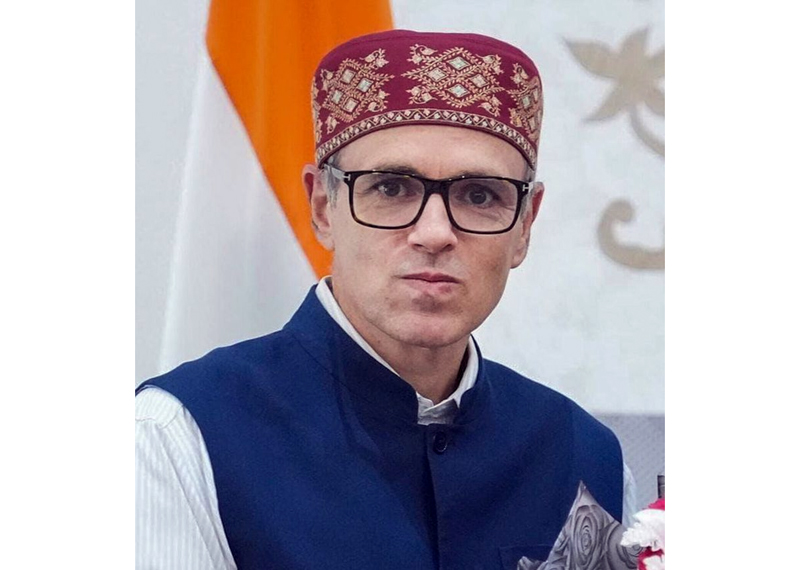
JAMMU, Feb 18: Chief Minister Omar Abdullah today ruled out any proposal to revive the Old Pension Scheme (OPS) for the UT Government employees as has been done by certain Congress-ruled States including neighbouring Himachal Pradesh.
He announced that the issue to enhance the upper age limit for candidates appearing in the Jammu & Kashmir Combined Competitive Examination (JKCCE) is under examination.
Omar gave these replies as the Minister Incharge Finance and General Administration Department (GAD) in response to cut motions of People’s Conference MLA Sajad Gani Lone. Debate on the grants of the CM’s departments began in the Legislative Assembly today. He will reply to the debate tomorrow afternoon.
Follow the Daily Excelsior channel on WhatsApp
“There is no proposal to revive the Old Pension Scheme. The shift to NPS was a conscious decision aimed at balancing fiscal sustainability with social security for Government employees,’’ the Chief Minister said.
He added that the UT Government has consistently followed a policy of adopting employees welfare measures introduced by Government of India with a view to maintain parity and uniformity of service benefit to employees.
Asserting that the transition to NPS was implemented for all Government employees appointed after January 1, 2010, Omar said the Jammu and Kashmir being an expenditure-led UT with limited avenues for investment, modest revenues receipts and growing pension liability posed a serious challenge.
“Pension liabilities of Jammu and Kashmir had expanded disproportionately with pension doubling from Rs 731 crore in 2004-05 to Rs 1495 crore. The OPS be fiscally unsustainable in the longer run and could pose significant risk to J&K’s financial stability,” Omar said.
In response to another cut motion, the Chief Minister said the issue to enhance the upper age limit for candidates appearing in the Jammu & Kashmir Combined Competitive Examination (JKCCE) is under examination.
“The issue is under examination to assess its feasibility in light of the existing provisions of the Jammu & Kashmir Combined Competitive Examination 2018 Rules, overall service requirements, cadre management considerations, and comparative recruitment standards followed in other jurisdictions,’’ Omar said.
Prior to the issuance of SRO 103 of 2018, the upper age limit for appearing in the Combined Competitive Examination was 30 years for Open Merit candidates and 32 years for candidates belonging to Scheduled Castes, Scheduled Tribes, Other Backward Classes and those holding a civil post in the state in a substantive capacity or having served in a temporary post continuously for at least three years.
Omar said that Rules unveiled in 2018 prescribed 32 years upper age limit for Open Merit category candidates, 34 years for reserved categories and in -service candidates and 35 years for physically handicapped candidates
Meanwhile, in response to a written question in the Assembly today, the Chief Minister said Jammu and Kashmir’s total debt in the financial year 2024-25 is estimated at Rs 1,37,067 crore, 48 per cent of the Union Territory’s GDP, which has expanded significantly to Rs 2,88,422 crore.
“The increase in the Gross State Domestic Product (GSDP) has helped in reducing the debt-to-GSDP ratio to 48 per cent in the current fiscal from 51 per cent a year ago. In 2019-20, liabilities stood at Rs 89,037 crore, which was 54 per cent of that year’s GSDP of Rs 1,64,103 crore,’’ Omar, who holds charge of the Finance Department, said.
Liabilities increased to Rs 98,244 crore in 2020-21, with the debt-to-GSDP ratio rising to 59 per cent, largely due to economic contraction during Covid pandemic.
In 2021-22, liabilities rose to Rs 1,06,753 crore, but the debt-to-GSDP ratio declined to 53 per cent as economic recovery gained momentum, he said. A year later in 2022-23, liabilities stood at Rs 1,09,825 crore, and the ratio further declined to 48 per cent, the chief minister said, adding, “In 2023-24, liabilities increased to Rs 1,25,205 crore, with the ratio at 51 per cent.
In the current fiscal year, liabilities are projected at Rs 1,37,067 crore, while GSDP has expanded significantly to Rs 2,88,422 crore, again bringing the debt-to-GSDP ratio down to 48 per cent.
The Chief Minister highlighted that fiscal sustainability has improved over the years, with economic growth helping to moderate the impact of rising debt on the Union Territory.
He further said that his Government has ensured that borrowings are not directed towards unproductive expenditure.
“A substantial portion of funds has been channelled into capital expenditure, infrastructure development, power sector reforms and asset creation, strengthening long-term growth potential,” he said.
Capital outlays during the period under review, the chief minister said, consistently supported roads, power infrastructure, health facilities and other productive sectors.
He also asserted that borrowings were kept within the prescribed limits of the Fiscal Responsibility and Budget Management (FRBM) framework, with an emphasis on calibrated market borrowings, improved cash management and prioritisation of development-linked spending.
“The concern that rising internal debt has occurred without commensurate creation of productive assets is not established by the data,” Abdullah said, adding, “The improving debt-to-GSDP ratio and sustained capital investment clearly indicate responsible fiscal management,” Omar said.
 Follow our WhatsApp channel
