

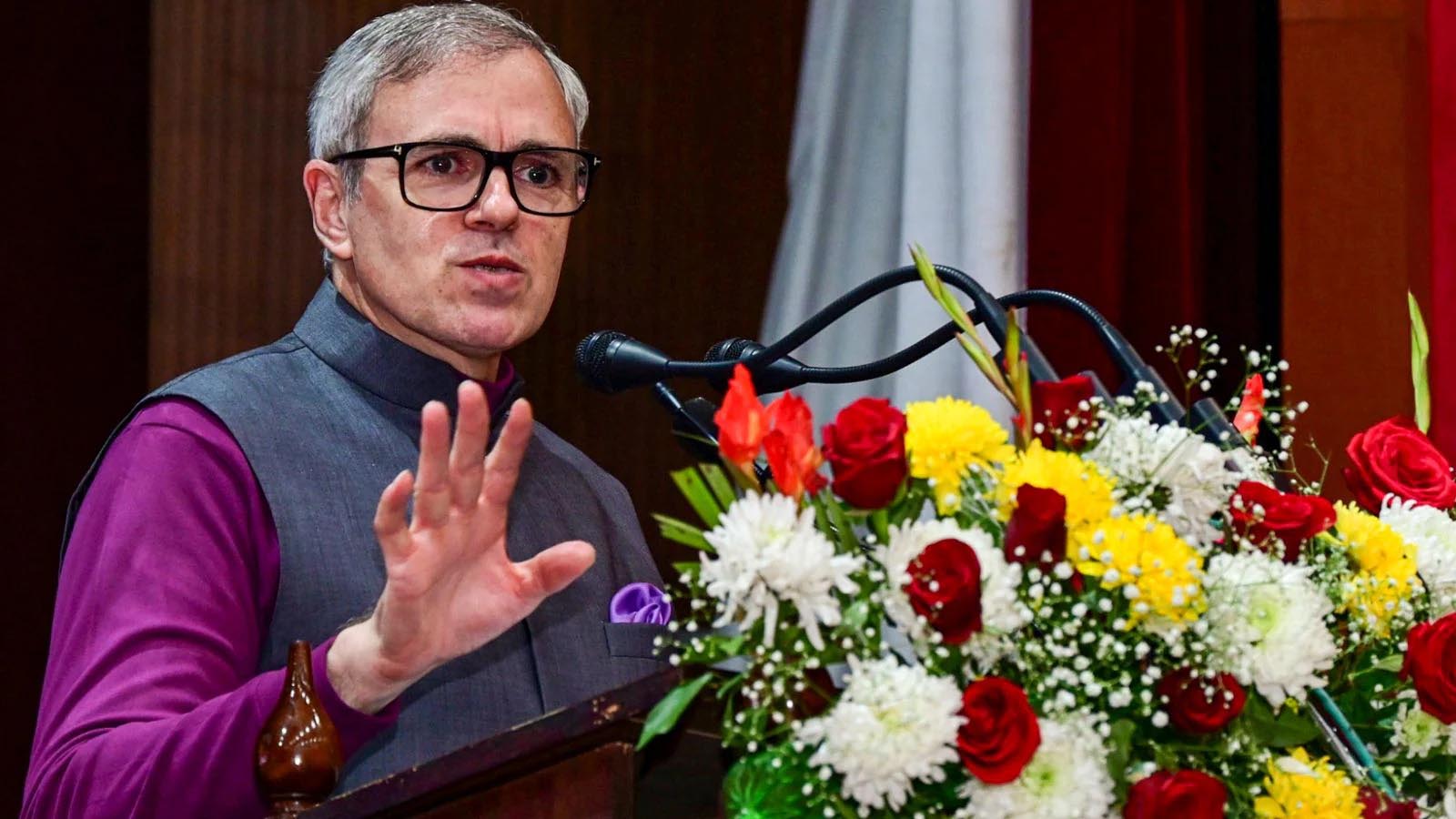
CM pushes UT as attractive filmmaking spot
Excelsior Correspondent/ Agencies
SRINAGAR/MUMBAI, Jan 15: Chief Minister Omar Abdullah today said he spoke to External Affairs Minister S Jaishankar about the evolving situation in Iran and was assured that all necessary steps are being taken to safeguard the interests of students from the Union Territory caught in the turmoil there.
India on Wednesday asked all its nationals residing in Iran to leave by available means and avoid any travel to the country as tensions mounted over possible military intervention by the US over Tehran’s crackdown on nationwide protests that killed over 2,500 people.
Abdullah, in a post on his personal X handle, said he spoke to Jaishankar.
“Just spoke to EAM @DrSJaishankar ji about the evolving situation in Iran. He shared his assessment of the ground situation & the plans that the External Affairs Ministry is working on,” he said.
Follow the Daily Excelsior channel on WhatsApp
“I’m grateful for his assurance that all steps will be taken to safeguard the interests & lives of students & other people from J&K who are in Iran now,” Abdullah added.
Meanwhile, Omar said the J&K Government is striving hard to make the scenic Union Territory an attractive destination for filmmaking.
To make J&K an attractive destination for filmmaking, there is a need to establish adequate infrastructure for which a relationship with an institution like Mumbai-based Indian Institute of Creative Technologies (IICT) is very important, he said.
“We are trying to make films in Jammu and Kashmir again. We are trying to restore the film industry in J&K. And if we want Jammu and Kashmir to become an attractive destination for filmmaking, then human talent and post-production capability must be created locally, and that is where a relationship with an institution like IICT becomes important for us,” Abdullah said in Mumbai.
The CM was talking to reporters during a visit to IICT.
Abdullah visited the IICT campus at the National Film Development Corporation (NFDC), Mumbai, to explore avenues for institutional collaboration and student exchange between the institute and the J&K government.
“IICT and NFDC are establishing a formal relationship so that our students come here and learn new ways of post-production, editing, sound, light, among others,” he stated.
The CM hoped that in the future, the hub-and-spoke model that IICT had adopted, with the main campus in Mumbai and satellite centres in other places, would also be established in J&K too.
Notably, the hub-and-spoke model is an organization structure with a central hub and interconnected centres.
“It will be possible that one day IICT’s satellite campus will be established in Jammu and Kashmir. Today, what we have seen that IICT has established a magnificent infrastructure here in a very short time. We would like to see human talent being made available there (in UT) that will help bring down the cost and also create jobs in J&K,” Abdullah maintained.
As per IICT’s website, the institute is India’s lighthouse for AVGC-XR (Animation, VFX, Gaming, Comics and Extended Reality). It has been established with the support of the Union Information & Broadcasting Ministry, the Maharashtra government and top industry bodies FICCI and CII.
As the national nodal organisation for AVGC-XR, IICT brings together academia, industry, technology and policy to nurture talent, drive innovation, and strengthen India’s global competitiveness in creative technologies, said the institute.
Omar said public participation is key to driving change and it begins with citizens stepping out to vote.
“Change can only be brought by those who are ready to take part. And taking part does not mean that I stand as a candidate. Taking part also means that I at least come out and use my vote,” Abdullah said.
He was responding to RSS chief Mohan Bhagwat’s remarks that voting is essential for a healthy democracy.
Whether in Jammu and Kashmir, Maharashtra or Mumbai, people have their own problems, Abdullah said. Votes will decide the fate when the results come out, he added.
“This time, the political environment in Maharashtra was also a bit strange. There were no friends, no enemies. Friends became enemies and enemies became friends. And strange relations were formed,” Abdullah said.
“Somewhere Congress and BJP shook hands. Somewhere BJP and AIMM shook hands. Somewhere two parts of one party came together again. What will be the impact of all this on the results? I am also waiting impatiently,” he added.
Meanwhile, Omar said Maharashtra has entered an era of “strange relations” where friends become enemies and enemies become friends.
Referring to the two rival factions of the Nationalist Congress Party coming together in Pune and Pimpri-Chinchwad and post-election tie-ups of BJP, Congress and AIMIM councillors in Ambernath and Akot, he commented that the political environment had become “strange”.
“There were no friends, no enemies. Friends became enemies and enemies became friends. And strange relations were formed,” he said.
“Somewhere Congress and BJP shook hands. Somewhere BJP and AIMIM shook hands. Somewhere two parts of one party came together again. What will be the impact of all this on the results? I am also waiting impatiently,” he added.
 Follow our WhatsApp channel
