

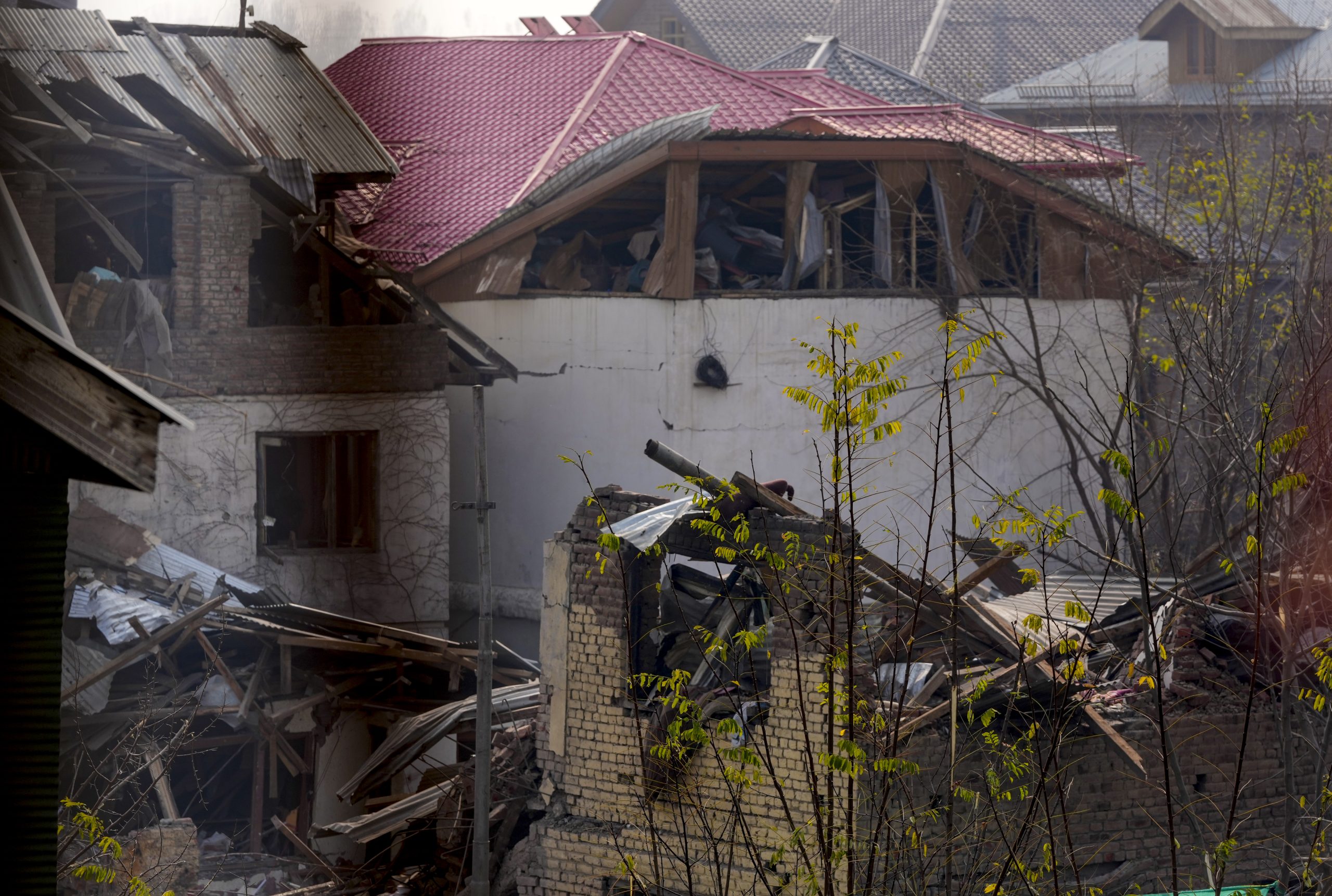
The accidental blast at Nowgam Police Station in Srinagar, which killed nine people and left thirty-two injured, stands out as one of the most devastating internal tragedies the Jammu and Kashmir Police has faced in recent years. What makes this incident particularly painful is not only the magnitude of the destruction-lives lost, families shattered, homes damaged, and a police station reduced to rubble-but also the fact that it occurred during an otherwise exemplary counter-terrorism investigation. From a seemingly routine inquiry into threatening posters appearing on walls in Bunpora, Nowgam, the police unearthed a full-fledged ‘white-collar’ terror module operating across state lines, involving doctors, radicalisers, and operatives linked to explosive-laden vehicles. A major terror plot was undoubtedly averted through the dedication and doggedness of local officers.
Yet, this hard-earned success has been overshadowed by the catastrophic mishandling of volatile explosive substances seized from Faridabad during the investigation. DGP ruled out any possibility of a terror attack, and his statement has dispelled rumours and misinformation, but it does not hide the hard questions that the incident poses. The scale of the explosion itself reveals the gravity of procedural lapses. The blast was powerful enough to damage the Nowgam Police Station and destroy adjacent structures severely. Civilians living in the vicinity suffered shrapnel injuries, burns, fractures, and the significant destruction of their homes-lifetime investments now reduced to debris.
That such a huge quantity of explosives and chemical reagents was stored within the premises of a busy police station, in the middle of a populated locality, raises justified alarm. Why was forensic sampling done in the same area as the explosives? Why were repeated smaller explosions allowed to hamper rescue operations, indicating the presence of multiple unstable substances in unsafe proximity? The magnitude of the damage itself suggests that the Standard Operating Procedures for storage, segregation, handling, and testing of explosives were either insufficient or inadequately followed.
These are not speculative questions; they are questions that naturally arise from the sequence of events. The DGP has made it clear that there was no foul play, but an absence of foul play does not translate into an absence of systemic failure. This is precisely why the decision of the Lieutenant Governor to order a detailed probe into the incident is both necessary and prudent. Only a transparent and technical inquiry can determine whether the chain of decisions taken-from transporting the explosives to storing them to conducting sample extraction-aligns with established safety protocols or whether errors in judgment or procedural shortcuts led to this preventable tragedy.
The loss of nine precious lives is irreparable. Their families now face a future marked by emotional devastation and economic uncertainty. Civilians who suffered injuries and property loss will carry the physical and psychological scars for a long time. The Govt has an unquestionable responsibility to fully compensate these families, rebuild what they have lost, and support their rehabilitation. Homes, belongings, and livelihoods are built through decades of effort; the Government must ensure that no affected family is left behind in grief or ruin. Equally important is specialised medical treatment-both for uniformed personnel and civilians. Burn injuries, trauma, and chemical exposure require expert care, and the administration must ensure it is provided.
The JKP has proven its professional excellence time and again. Its ability to unravel a sophisticated, multi-layered terror module beginning from a small clue is commendable. But explosive handling is a domain where specialised expertise-such as that of the Army’s Explosive Ordnance Disposal unit-is not just helpful but often essential. The Nowgam blast is a bitter lesson, but one that must translate into systemic change. The way forward lies in ensuring accountability, revisiting SOPs, institutionalising inter-agency collaboration, and prioritising the safety of personnel and civilians alike. As the investigation into the mishap unfolds, one truth must remain front and centre: the sacrifices made-both by those who died preventing a major terror attack and those who died in this tragic accident-must not be in vain.
 Follow our WhatsApp channel
