

Funds diverted to HM, LeT outfits for terror activities
*Literature, receipts, property documents, devices seized
Sanjeev Pargal
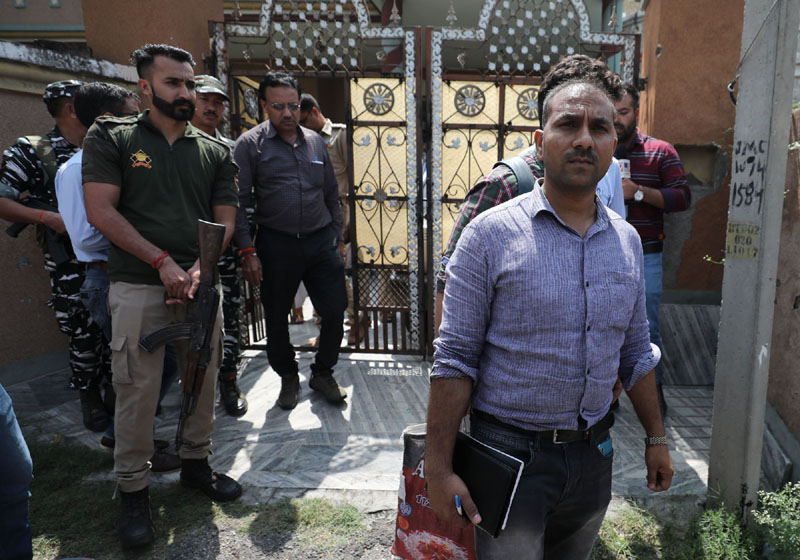
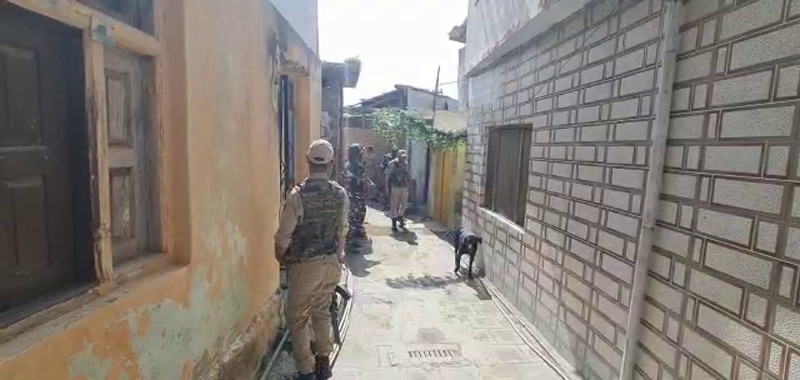
JAMMU, Aug 8: The National Investigation Agency (NIA) today conducted raids in the houses of seven suspects including a retired DFO in Jammu and Doda districts in connection with terror financing by the Jamaat-e-Islami Jammu and Kashmir and recovered large quantity of incriminating literature, receipts of funds, property related documents and electronic devices.
Click here to watch video
Raids were conducted following reports that Jamaat-e-Islami despite being declared as banned organization continued to raise funds for terror financing and other illegal activities in Jammu and Kashmir.
“Name of seven persons whose houses were searched today in Jammu and Doda districts had surfaced during ongoing investigations in terror funding case registered against Jamaat-e-Islami by the NIA earlier,” sources told the Excelsior.
Seven persons whose houses were searched today simultaneously by the NIA sleuths include Hafizullah Wani son of late Mohammad Abdullah Wani, a resident of Roat Marmat, presently putting up at Firdousabad in Sunjuwan area of Jammu district, Rustam Qazi son of Mohammad Anwar Wazir R/o village Dhara Gundana, Noor Din Bhoru son of Rustum Bhoru R/o Dashnan presently putting up at Munshi Mohalla, Abdul Latief son of Mohammad Anwar Naik R/o village Dhaar at present residing at Nagri Nai Basti, Mohammad Shaffi Malik son of Nasrullah Malik of Kharoti Bhagwah, Syed Mehboob Alam Shah son of Sayed Issa Shah, a resident of Thalela, Thathri and Mohammad Yuusuf Butt son of Ghulam Mohammad Butt R/o Malothi Bhalla, Bhaderwah, all in Doda district.
The NIA teams were reported to have recovered a number of documents from the houses of suspects including incriminating literature, receipts of funds raised by Jamaat-e-Islami J&K, bank and property related documents and electronic devices.
The documents will be scrutinized to unearth funding for terror financing, sources said, adding that no arrests have been made so far. However, the suspects will be called for questioning during ongoing investigations in the case against Jamaat-e-Islami.
Sources said the case against Jamaat-e-Islami was registered by the NIA suo moto on February 5, 2021. A charge sheet had earlier been filed against four persons in the case.
An official statement issued by the NIA said the Jamaat-e-Islami despite being declared as an Unlawful Association in 2019, continues to raise funds in various forms for charitable purposes. However, these funds are being diverted to terror outfits like Hizbul Mujahideen, Lashkar-e-Toiba etc for promoting terror activities in the Kashmir valley as well as rest of the country.
The case pertains to the activities of the JeI members, who have been collecting funds domestically and abroad through donations, particularly in the form of ‘Zakat, Mowda and Bait-ul-Mal’ purportedly to further charity and other welfare activities, but are using the money for “violent and secessionist” activities.
“JeI has also been motivating impressionable youth of Kashmir and recruiting new members (Rukuns) in the Union Territory to participate in disruptive secessionist activities,” the NIA had said.
In February 2019, the Centre had banned JeI for five years under anti-terror laws on grounds that it was “in close touch” with militant outfits and was expected to “escalate secessionist movement” in the erstwhile State of Jammu and Kashmir.
A notification banning the group under the Unlawful Activities (Prevention) Act was issued by the Ministry of Home Affairs after a high-level meeting on security chaired by Prime Minister Narendra Modi.
Hundreds of JeI activists were arrested in a major crackdown across Jammu and Kashmir following the ban, which came just months ahead of the abrogation of the special status of the erstwhile State and its bifurcation into two Union Territories in August 2019.
 Follow our WhatsApp channel
