

Tourism boom, urbanization affecting fragile ecology
*3 Union Ministries among 8 bodies issued notices
Mohinder Verma
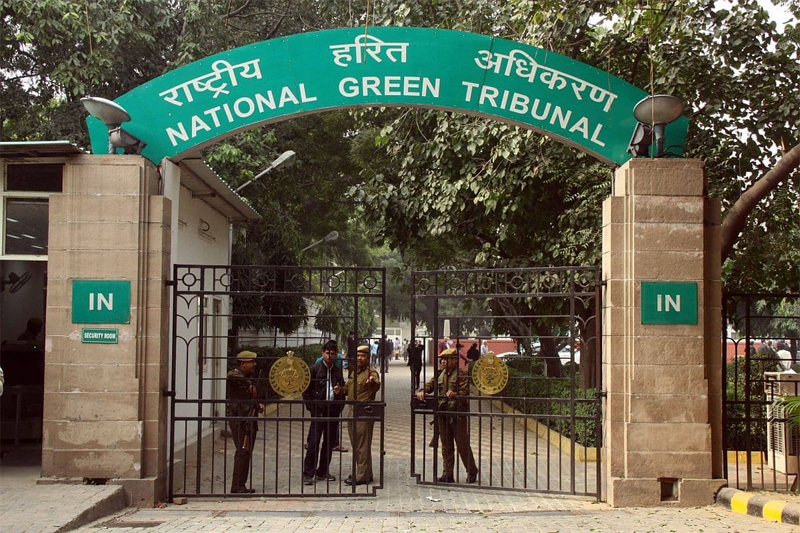
JAMMU, Dec 4: In a significant move aimed at safeguarding one of the India’s most fragile ecosystems, the National Green Tribunal (NGT) has initiated suo motu proceedings on alarming environmental concerns in Ladakh and issued notices to three Union Ministries and five other bodies for filing their response/reply on a range of environmental violations and growing ecological threats to the high-altitude desert region.
Follow the Daily Excelsior channel on WhatsApp
The case, registered as Original Application No. 618/2025, stems from a research paper titled “Transforming Food, Land and Water Systems to combat climate crisis in Ladakh” published in a journal recently. The paper paints a grim picture of Ladakh’s deteriorating environmental health and warns of irreversible damage unless immediate interventions are made.
The Tribunal noted that Ladakh—a cold desert situated in a highly sensitive Himalayan ecosystem, is battling worsening water scarcity, rapid glacier retreat, shrinking agricultural land, sudden frost events, flash floods and fast-paced urbanization fueled by tourism growth. These impacts, the NGT observed, raise extremely important issues for sustainable development and ecological balance.
In the research paper, emphasis has been laid on maintaining soil health, water sustainability, strengthening ground water management, monitoring and evolution of water effectiveness including sustainable development in Ladakh. “These issues are extremely important for maintaining the sustainable development and ecological balance in Himalayan highly fragile ecosystem region of the country”, the NGT said.
“All this indicates violation of the Environment Protection Act, 1986, the Indian Forest Act, 1927, Biodiversity Act, 2002, Air (Prevention and Control of Pollution) Act, 1981 and Water (Prevention and Control of Pollution) Act, 1974”, the Green Tribunal observed, adding “the paper raises substantial issues relating to compliance with the environmental norms and implementation of the provisions of scheduled enactment”.
Exercising powers to take up the matter suo-motu as already recognized by the Supreme Court in the matter of “Municipal Corporation of Greater Mumbai Versus Ankita Sinha & Others” reported in 2021, the NGT has impleaded Union Ministry of Environment, Forest and Climate Change through its Secretary, Union Ministry of Jal Shakti, Union Ministry of Agriculture, Member Secretary, Central Pollution Control Board, National Disaster Management Authority, Zoological Survey of India (ZSI), Botanical Survey of India (BSI) and Secretary, Environment Ladakh as respondents.
The notices have been issued to these respondents with the direction for filing their response/reply by way of affidavit before the Tribunal at least one week before the next date of hearing—February 26, 2026.
Referring to the scientific paper, the Tribunal listed several climate-resilience solutions that must be urgently explored for Ladakh’s survival. Key recommendations include crop diversification and the use of climate-resilient varieties; conservation of local species such as apple, apricot, peas, barley, wheat etc; cultivation in location-specific areas; revival of traditional farming practices and climate-suited crops; increasing cropping intensity in the middle belt of Ladakh and promoting millets; multi-tier agroforestry to enhance productivity and resilience; use of organic manures and compost to maintain soil health; harnessing digital technologies, remote sensing to monitor glacier dynamics, water resources, and land-use patterns; climate smart infrastructure including irrigation and developing supporting policy for climate-resilient practices.
The Tribunal said these recommendations are vital for protecting Ladakh’s fragile environment from accelerating climate threats. However, specific directions will be passed by the National Green Tribunal only after examining the replies from all the eight respondents.
According to the experts, while multiple central schemes target climate adaptation, the absence of coordinated action has left Ladakh vulnerable. The NGT’s step could compel ministries to streamline their efforts and adopt a unified approach to climate resilience in the region.
 Follow our WhatsApp channel
