

Preventable cancers drive rising toll
Govind Sharma
JAMMU, Nov 16: A new five-year cancer registry compiled at the Government Medical College (GMC) Jammu has revealed that Jammu’s cancer burden is being driven largely by cancers that are preventable or detectable early, even as most patients continue reaching hospitals only when the disease has already advanced.
Follow the Daily Excelsior channel on WhatsApp
The Hospital Based Cancer Registry (HBCR) report, covering 9,427 cases from 2020 to 2024, shows that lung, head and neck, breast and cervical cancers together account for a major share of all cases recorded in the region, yet nearly 72 per cent of patients were diagnosed in Stage III or Stage IV, pointing to what health experts describe as a deep and persistent “screening gap” in Jammu and its adjoining districts.
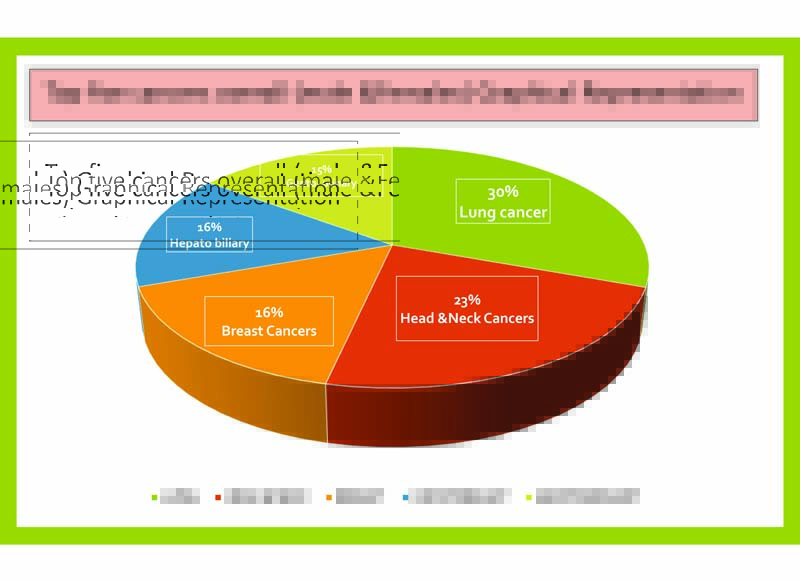
According to the data, lung cancer remains the most common site with 1,338 cases, followed by 1,005 cases of head and neck cancers, 704 of breast cancer, 681 hepatobiliary cancers and 654 cancers of the genito-urinary system. These top categories alone make up almost half of all cancers registered in the five-year period.
Significantly, many of these cancers fall in the category of those linked to modifiable risk factors-particularly tobacco in the case of lung, oral and head and neck cancers-and of those for which effective screening tools already exist, such as breast and cervical cancers among women.
The report notes that men accounted for 5,351 cases (56.8 per cent) and women for 4,076 (43.2 per cent), with Jammu district contributing the highest share at 3,671 cases, followed by Udhampur, Kathua, Doda and Rajouri. Age-wise, the data reflects a heavy burden on older adults, with 45 per cent of patients between 60 and 80 years and another 39 per cent between 40 and 60 years, underscoring the need for geriatric-aligned cancer services across the region.
The most alarming finding, however, remains the stage at which patients are seeking care. Only 7 per cent were diagnosed at Stage I and 21 per cent at Stage II, while 29 per cent were detected at Stage III and an overwhelming 43 per cent at Stage IV. Experts believe this pattern is typical of health systems where awareness is low, screening is inconsistent, and delays in diagnosis are common because of distance, stigma or limited access to early detection facilities in peripheral districts.
Although Jammu district remains the referral centre for most patients, the sizeable numbers from Udhampur, Kathua, Doda and Rajouri indicate that many in remote belts continue to depend solely on GMC Jammu for diagnosis and treatment, often arriving late after months of symptoms.
The HBCR findings call for urgent policy interventions including stronger tobacco-control enforcement, district-level breast and cervical cancer screening drives, wider HPV vaccination coverage, decentralised diagnostic clinics to reduce referral delays, and intensified community awareness programmes to promote early symptom recognition.
Health specialists also stress the need to expand geriatric oncology and palliative care services, given that a majority of patients are elderly and nearly three-fourths present with advanced disease. As the only comprehensive dataset of its kind for the region, the HBCR report serves as a wake-up call for policymakers, highlighting that Jammu’s rising cancer burden is not only a matter of increasing numbers but of missed opportunities in prevention and early detection.
Without stronger community-based screening and quicker access to diagnosis, the cancers that could be prevented or caught early will continue to dominate the region’s health landscape in the years ahead.
 Follow our WhatsApp channel
