

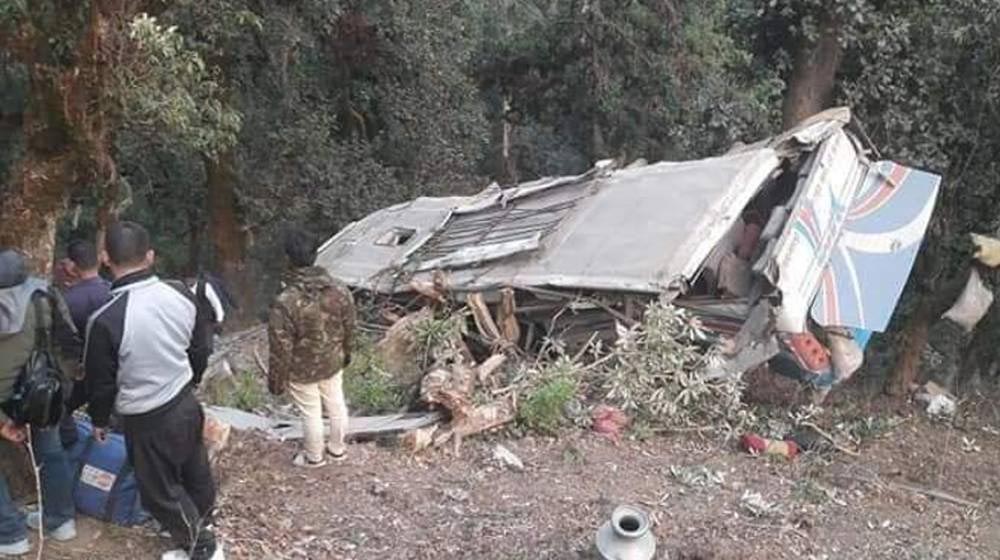
The tragic accident in the Doda district, where an overloaded Tempo Traveller carrying 24 passengers-against a capacity of 14-plunged into a gorge, killing seven and injuring 17 others, is yet another devastating reminder of a systemic failure. While condolences and promises pour in from top political and administrative echelons, the people of Doda and Kishtwar districts are once again left mourning and angry, as the cycle of neglect and misgovernance continues unabated. This is not an isolated incident. The mountainous districts of Doda and Kishtwar have repeatedly witnessed such horrific accidents. The primary culprits are all too familiar: overloading, absence of roadside parapets, dangerously narrow and poorly constructed roads, and critically inadequate trauma care infrastructure.
The most recent accident on the Doda-Bharth road has once again exposed the deeply entrenched flaws in the system. Overloading the Tempo Traveller to nearly double its passenger capacity is a glaring violation. Where were the so-called checkpoints and transport enforcement mechanisms supposed to prevent such breaches? The administration claims to have monitoring systems in place, but this incident-like many others before it-proves that these checks are either nonfunctional or grossly ineffective. Even if one sets aside the issue of overloading, the road infrastructure in this region is in dire condition. In earlier reports, the High Court-appointed expert committee had categorically identified the lack of parapets and side railings as a critical factor in the high number of fatalities in road accidents across hilly terrains. Yet, years have passed with little to no improvement. Roads remain unguarded, and vehicles continue to fall into deep gorges with tragic frequency.
The administration must answer why the same old reasons-slippery roads due to rain, poor visibility, driver negligence-are allowed to be the constant explanations for such accidents. Why are these factors not being systematically addressed? Is it not the responsibility of road-building agencies to ensure that roads in such terrains are built with adequate safety mechanisms?
Additionally, the healthcare system’s response in such emergencies is another glaring loophole. As seen in this case, critically injured passengers were first taken to GMC Doda and then referred to GMC Jammu. The transfer of severely injured patients over such distances not only delays treatment but also often results in preventable deaths en route. Trauma care is a time-sensitive emergency. Every second counts, and the lack of adequately equipped trauma centres in hilly regions like Doda and Kishtwar is literally costing lives. There is little value in establishing a medical college in a district if it cannot handle emergency trauma cases. The Government must either empower these hospitals with the necessary infrastructure and specialists or rethink the very purpose of these institutions. Having a building labelled “GMC” does not save lives-having the resources and trained personnel inside does.
The cycle of reactive governance must end. What is needed is a proactive, preventive approach, starting with fixing accountability. From the traffic police/transport department to road-building agencies, health services, and the administration, responsibilities must be clearly defined, and failures penalised. Unless officers and departments are held accountable, no real change will occur. There is a need for consistent and focused enforcement of transport norms in hilly areas. Strict penalties for overloading, better surveillance mechanisms, and technological interventions for public vehicles must be adopted. The idea of occasional “crackdowns” must be replaced with everyday diligence. Human lives cannot continue to be reduced to statistics in the aftermath of preventable tragedies. Grief and compensation are not substitutes for safety and accountability. It is time the Government goes beyond condolences and compensation. What is required is immediate action, backed by strong political and administrative will. The cycle of death on these roads can and must be broken. But for that, the authorities must finally start treating these tragedies not as accidents, but as the avoidable consequences of neglect.
 Follow our WhatsApp channel
