

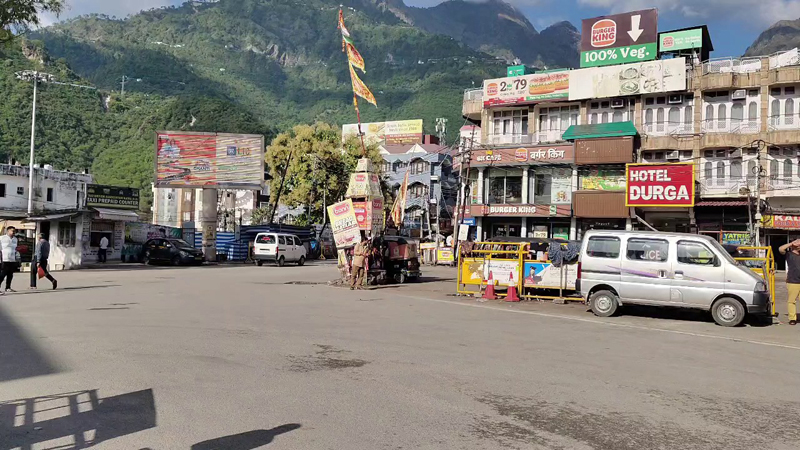
Nearly forty years after its constitution in 1986, the Katra Development Authority continues to function without its full sanctioned manpower. What was envisioned as a regulatory body to ensure the planned growth of Katra town has instead become a symbol of administrative apathy. The result is visible on the ground: unregulated expansion, mounting infrastructure stress, and a Master Plan that struggles for effective implementation. Katra is not an ordinary urban settlement. It is the base camp of the revered shrine of Shri Mata Vaishno Devi Shrine, attracting over a crore pilgrims annually. The town forms the economic backbone of the entire Jammu division. From transporters and hoteliers in Jammu to small traders in Reasi, Udhampur, Kathua and Samba, countless livelihoods are intertwined with pilgrimage tourism. For them, Katra is not merely a town-it is bread and butter.
Over the decades, the pilgrimage infrastructure has evolved significantly. The yatra from Katra to Bhavan has seen the addition of alternative tracks, improved facilities, and even the opening of the alternate cave to streamline pilgrim movement. Yet, paradoxically, while facilities atop the hill have modernised, the town at the base appears administratively under-equipped to manage its own growth. The revision of Katra’s Master Plan expanded its jurisdiction from just over 11 square kilometres to nearly 80 square kilometres, covering 31 villages. Such a sevenfold increase in planning area should have been accompanied by a proportional enhancement in manpower. Instead, sanctioned staff strength has remained stagnant, and even those posts have not been fully filled.
The consequences are predictable. Deviations from land-use norms often go undetected. Illegal commercial constructions mushroom before authorities can intervene. By the time violations are noticed, corrective measures become politically and administratively complicated. Expanding jurisdiction without strengthening the administrative structure is akin to drawing ambitious blueprints without architects to execute them. The larger concern is that congestion, haphazard construction, inadequate drainage and strained civic amenities could permanently alter the pilgrimage town’s identity. Providing facilities to pilgrims is not a luxury-it is a necessity. If the Government is serious about implementing the Master Plan in letter and spirit, an immediate audit of staff requirements and urgent filling of vacancies must become a priority. Without a properly empowered and staffed KDA, a planned Katra is impossible. And without a planned Katra, the sustainability of one of North India’s most vital pilgrimage economies remains at risk.
 Follow our WhatsApp channel
