

Col Satish Singh Lalotra
slalotra4729@gmail.com
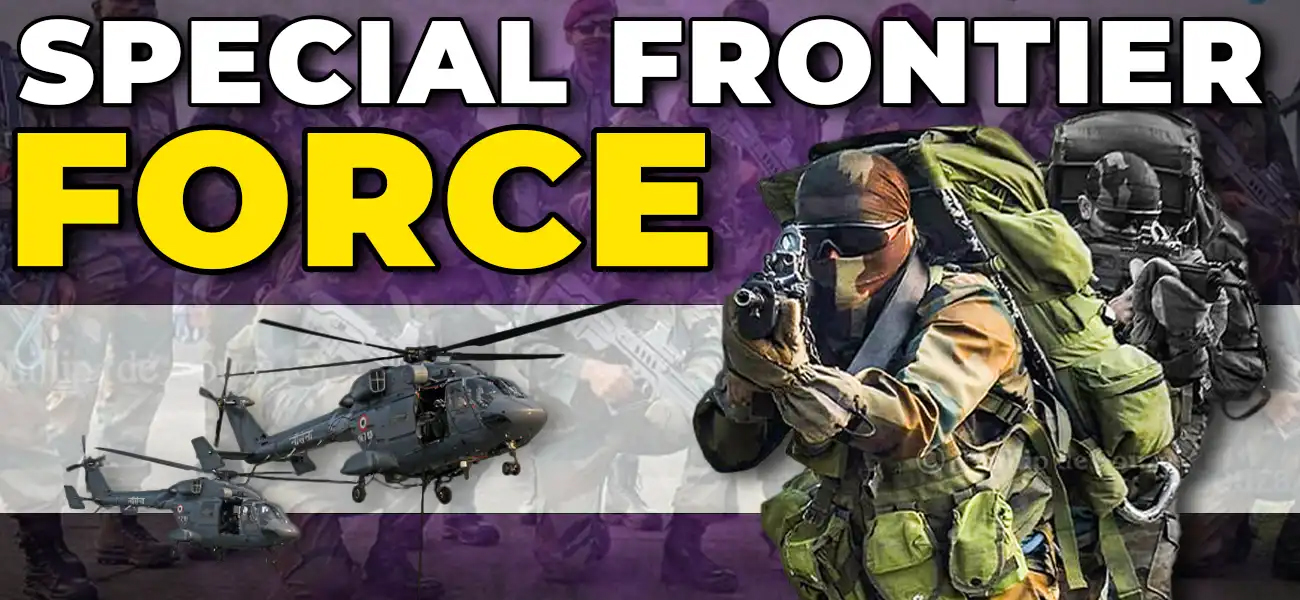
Come 14th November every year , and the day is rung in the sub-continent as marking three landmarks epitomizing the multifaceted personality of the first PM of India , each showcasing his level of empathy with the vast sea of humanity both in the country as well as abroad. The 136th birth anniversary of the first PM Jawaharlal Lal Nehru that happens to fall on 14th November 2025 is one such event that needs no introduction from any citizen inhabiting the national boundaries of India. Known worldwide for his deep affection for the children who lent him the moniker ”ChachaNehru’ , the day was etched into the historical firmament of India as ‘Children’s day’ after Nehru’s death in 1964. That Nehru rode like a colossus into the collective Indian psyche was evident from the fact that even while the country was in the throes of Sino-Indian border war in 1962, the raising of an equally important but secretive force -SFF (Special frontier force) had the date of its raising as 14th November 1962, the date of birth of the first PM. Ostensibly to put a mark of not only authenticity on Indo-Tibet relations but also signaling the strength derived from the name of Nehru who at that time commanded unqualified respect and a halo that even overshadowed Mao’s charisma in the Asian continent. Welcome to the 63rd raising day anniversary of one of India’s elite specialized forces manned by foreign troops of Tibetan origin which happens to coincide with the birth anniversary of our first PM.
Established during the cold war, the idea of SFF was a continuation of the CIA’s ‘Tibetan initiative’ which recruited, trained and infiltrated ‘Khampa’ rebels into TAR (Tibetan autonomous region/ China) to combat the occupying Chinese forces. ‘ In the early 1950s , when the US decided to support the Tibetan cause , the CIA set up training facilities in the US to prepare Tibetan soldiers for guerrilla operations against the PLA within Tibet. To be able to strike from a much shorter distance into the heartland of Tibet, CIA established a TGB (Tibetan Guerrilla base) deep into the northern Nepalese territory of ‘Mustang’ along the Tibetan border. This region in Nepal, unlike Indian areas that were contiguous to the TAR was culturally and geographically more aligned to the Tibetan mainland and hence deemed fit as a suitable base for continued Tibetan resistance. ‘Establishment 22’ or SFF was a joint Indo–US initiative on Tibet encompassing various intelligence operations. This despite the fact that India had visibly started demonstrating its leanings towards the Soviet camp during the cold war era as also not forming part of the SEATO &CENTO pact that the US had tried to push forward to enmesh many of the regional countries of Asian continent into including India’s bête noire Pakistan.The founding of SFF as mentioned by me above is a cold war classic, where India , US & Tibet came together to confront China. It demonstrated that Indo-US intelligence cooperation during the cold war era went beyond individuals with B.N Mullick (IB chief) playing a crucial role in shifting US collaboration on the Tibetan front from Pakistan to India. While the US interests in ‘containment of china’ policy was reduced after Henry Kissinger’s secret visit to China facilitated by Pakistan in February 1972, India continued its own engagement of China with a plethora of efforts on its part-‘SFF’ being one such covert effort to stymie China in its nefarious designs of hegemony in the TAR( Tibetan autonomous region) that continues even to this day.
Despite India having a unique organization in the form of SFF, the kind of which no other country in its neighbourhood possess, has it harnessed the full potential of the ‘force multiplier’ for all of us to appreciate? I have my reservations about it, by virtue of having served in this elite organization decades back and having a ring side view of its functioning. This 63 rd anniversary of raising of SFF will be a fit case to have a quick review of its very existence evaluated from all angles. Having fled along with their spiritual leader HH Dalai Lama in March 1959 to India under the relentless pressure of the PLA, the core of SFF formed part of these Tibetans. It was but natural that they harboured a bitter sense of resentment against their occupiers’ aka Chinese army of their homeland. It was with this premise that SFF got its blessings from our first PM Nehru to channelize this hidden angst and take on the PLA in guerrilla operations. Though a specialized force with ‘mountain warfare’ and ‘Guerrilla operations’ as its domain, the force hadn’t seen much action when the border war with China in 1962 was in full swing; for the simple reason that the communist giant declared a unilateral ceasefire on 21st November 1962. Though it was used in later decades of 1960s & 70s in covert intelligence operations , ‘Operation Blue mountain’ in the mid-1960s remains an abiding example of its relevance , when its crack mountaineering members were employed in placing a listening device powered by nuclear batteries atop Nanda Devi mountain to snoop around Chinese nuclear facility at ‘Lop Nor’. Leaving aside 1965 Indo-Pak war , this elite organization had its teeth cut from the shimmering greens of CHT ( Chittagong Hill tracts) during the liberation war of 1971 and had the singular credit of teaming up with the BLF( Bangladesh liberation force) under its redoubtable commander FazlurHaqueMonito wreck mayhem in East Pakistan( Bangladesh) by taking on not only the Pakistan army but also an equally formidable enemy of India-the MNF( Mizo national front.) SFF also has the unique distinction of training the ‘MujeebBahini’ a splinter group of MuktiBahini in the early stages of resurrection of Bangla resistance against the notorious Pakistan army.
‘Project SunRay’ , ‘Project Sunrise’ and ‘Operation Sundown’ are some of the code names for operations associated with the SFF/ Est 22 under the cabinet secretariat of India. Many of the readers may not be aware that the above projects codenamed were pertaining to raising the ‘Special group’ in 1982, rescuing the six foreign tourists along with their guides in the custody of ‘AlFaran’ aka HarkatUlAnsar in J&K in 1995, and kidnapping of Sikh leader JarnailsinghBhindranwale from the Golden temple complex in 1984 respectively. It’s another matter that the last two operations never took off ostensibly due to pussyfooters sitting in the corridors of power at Raisina hills. One of the longest and most brutal military operation that is still an ongoing saga of courage, fortitude and human endurance in the Karakorum mountains i.eSiachen glacier ( OPMeghdoot) since 1984 was again spearheaded by some hardy troops of vikas units of SFF. Coming closer, the actions of SFF during the Galwan clashes in mid-2020 rekindled public interest in this force. Vikas battalions of the SFF were used in the capture of ‘Kailash range’ in eastern Ladakh on the night of 29/30 August 2020. The SFF’s involvement in ‘operation Snow leopard’ became widely known after Nyima Tenzin , a company leader stepped on an old mine and died while patrolling the south bank of PangongTso lake in early September 2020. Like 1971 ‘Operation Eagle’ in Chittagong Hill tracts wherein more than 580 cash prizes were given to the Tibetan soldiers and not a single gallantry award despite SFF losing 56 men and 190 wounded , similarly not much appreciation came in the way of SFF during ‘Op Snow leopard’ too in 2020,except three MID( Mention in despatches .This is very far and few considering the fact that it was the dare devilry of a vikas battalion in the frigid environs of eastern ladakh that turned the tables against the Chinese army whose ‘Moldo’ garrison was under effective check both by fire and observation.
Be that as it may, SFF remains a national asset, integral to achieving specific foreign policy and national policy goals. Originally tasked with infiltrating deep into china to harass the PLA,it has evolved as a strategic tool for India to challenge china in Tibet. The moot point is– SFF should be refashioned again to either return to its original mandate i.e to act as a bulwark against Chinese hegemony in the TAR (Tibetan autonomous region) or it should be given more remit and brought totally under the realm of armed forces of India; with an equal chance to its personnel to prove their worth under the Indian skies.The SFF was & remains a China -oriented force. This primary mission of the force was explained by me in the paragraphs above. Although both India & China are currently engaged in discussions on a multilateral front involving a raft of irritants, the one irritant that has the biggest chance of bedeviling the relations between the two Asian giants relate to the boundary issue. More importantly, china’s actions, such as its policy on Tibet, reincarnation of HH Dalai Lama and the ongoing infra buildup in the TAR underscore the ever relevancy of SFF as a covert arm / bulwark against the communist giant. With PLA now recruiting Tibetans from the TAR , it is but natural that the SFF of Nehruvian days be cast aside , only to wear a new attire that may blunt the Chinese in their own game plan.The original objective of raising the SFF for use under the DGS( Director General of security) against the Chinese has been diluted over the years. After the creation of the R&AW in the late 1960s , the DGS was brought under secretary ( R ) -a logical move as external intelligence and associated operations fell under the R&AW’s mandate. While the employment and deployment of the SFF under the cabinet secretariat is thus appropriate, it is essential to concentrate these forces on operations against China. Has India been employing SFF as mandated which reflects the essence of the Tibetan national army from where it derives its very existence i.e ‘ChushiGungdruk’way back in the early 1950s? I have my sincere doubts about it. To cut the long story short—‘If India has to have an edge over China in the TAR , which is its Achilles heel , SFF has to be revitalized’.
(The writer is a retired army officer.)
 Follow our WhatsApp channel
